
16 min 29 sec
Stop Self-Sabotage: Six Steps to Unlock Your True Motivation, Harness Your Willpower, and Get Out of Your Own Way
By Judy Ho
Stop Self-Sabotage offers a six-step clinical program to identify and overcome the psychological barriers that prevent personal success. Dr. Judy Ho explains how to rewire the brain's survival instincts for lasting change.
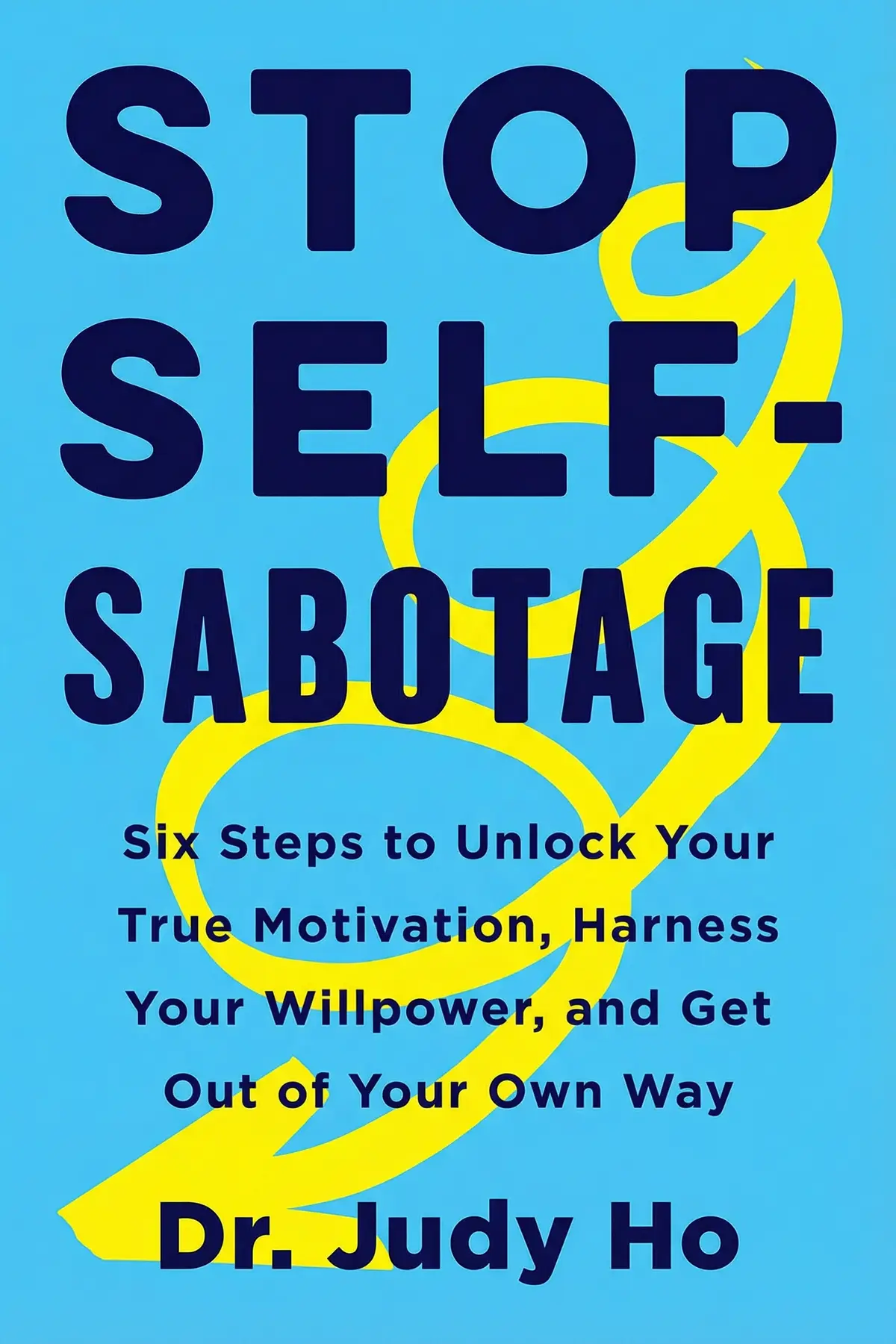
Table of Content
1. Introduction
1 min 44 sec
Imagine it is the start of a brand new year. You are filled with a sense of possibility, and you have set a series of clear, ambitious goals for yourself. Maybe you have decided that this is the year you will finally get your finances in order, or perhaps you have committed to a rigorous new fitness routine. In those first few days, your motivation is at an all-time high. But then, as the weeks pass, something subtle begins to happen. You start making small exceptions. You find yourself indulging in impulsive purchases or skipping the gym for a night of mindless television. Before you know it, those resolutions have vanished, and you are right back where you started, feeling a deep sense of frustration and confusion.
This experience is incredibly common, and it points to a phenomenon known as self-sabotage. It is the strange habit we have of getting in our own way just when things are starting to look up. But why do we do this? According to Dr. Judy Ho, the answer lies in our biology. Self-sabotage is actually rooted in two fundamental survival instincts: the drive to seek rewards and the drive to avoid potential threats. While these instincts were essential for our ancestors, they can become unbalanced in the modern world, leading us to favor short-term comfort over long-term success.
In this summary, we are going to explore Dr. Judy Ho’s comprehensive six-step method for breaking these cycles. You will discover how to identify the specific thought patterns that trigger your self-destructive behaviors, and you will learn practical tools for shifting your mindset. By the end, you will have a clear blueprint for aligning your actions with your values and finally reaching the goals that have eluded you for so long. Let’s dive into how you can stop being your own worst enemy and start becoming your own best advocate.
2. Identifying the Mental Triggers of Sabotage
2 min 30 sec
Before you can change your behavior, you must recognize the specific cognitive distortions that lead you astray. Learn the six common types of toxic thinking that fuel self-sabotage.
3. Disrupting the Automatic Sequence
2 min 21 sec
Your actions are the result of a chain reaction starting with a single event. Discover how to create a ‘pause’ to prevent a trigger from turning into a disaster.
4. Mastering the ABCs of Habit Change
2 min 21 sec
Examine the context of your self-destructive habits by breaking them down into three parts. Learn how to identify the hidden rewards of procrastination.
5. Goal Setting with Realistic Optimism
2 min 15 sec
Motivation and willpower alone aren’t enough to sustain change. Discover the MCII method for turning vague desires into concrete, resilient plans.
6. Using Values as a Compass
2 min 09 sec
Goals can be reached and then forgotten, but values provide a lifelong direction. Learn how to identify your core principles to maintain your long-term focus.
7. Visualizing the Blueprint for Change
2 min 04 sec
Bring all the elements of your growth together into a single, visual map. Discover how to track your progress and manage the four factors of ‘LIFE.’
8. Conclusion
1 min 05 sec
Overcoming self-sabotage is not about achieving sudden perfection; it is about developing a new relationship with your own mind. By following Dr. Judy Ho’s six-step process, you have moved from a state of unconscious reaction to one of conscious intention. You have learned that your self-defeating habits are often just mismanaged survival instincts, and that by identifying your triggers and slowing down your mental sequence, you can choose a different path.
Remember the tools you now have at your disposal: the ability to deemphasize toxic thoughts, the ABC framework for analyzing behavior, and the MCII method for building resilient plans. Most importantly, you have learned to anchor your progress in your core values and to keep your eyes on the ‘blueprint’ for the life you want to build. As you move forward, expect challenges and setbacks, but do not let them signal a return to old habits. Instead, use them as data points to refine your plan. With consistent practice and self-compassion, you can break the cycle of self-sabotage for good and finally step into the success you deserve.
About this book
What is this book about?
Have you ever wondered why you consistently undermine your own progress just as you are about to reach a major milestone? Stop Self-Sabotage explores the biological and psychological roots of self-destructive behavior, revealing that these habits are often misfired survival mechanisms designed to seek rewards or avoid perceived threats. Dr. Judy Ho provides a comprehensive toolkit for breaking these cycles. The book outlines a practical six-step method rooted in cognitive behavioral therapy and neuropsychology. Readers learn how to identify their specific 'trigger thoughts,' restructure their responses to stress, and align their daily actions with their deepest personal values. By combining scientific research with actionable exercises, the book promises to help individuals move from a state of frustration and stagnation to one of intentionality and achievement.
Book Information
About the Author
Judy Ho
Dr. Judy Ho, PhD is an accomplished, triple board-certified neuropsychologist and an associate professor at Pepperdine University. In addition to her private practice, she is a well-known media personality and has twice been honored with the National Institute of Mental Health Services Research Award. Dr. Ho has served as a host and expert guest on prominent television programs, including The Doctors, Face the Truth, and The Dr. Drew Show.
Ratings & Reviews
Ratings at a glance
What people think
Listeners find that this self-help guide offers actionable advice and activities, backed by clear research, and is simple to navigate through a direct six-step method. The material is an engaging read that aids in positive personal growth, as one listener notes it divides exercises into bite-size chunks. Listeners value its transparency, with one mentioning it leaves little room for confusion.
Top reviews
Samart
Dr. Judy Ho really hit the nail on the head with her analysis of why we become our own worst enemies. I’ve read a lot of self-help, but the way she connects biological triggers to daily habits felt fresh and actionable. Unlike other books that just tell you to 'be better,' this one gives you a literal roadmap with specific homework that actually makes sense. Personally, I loved the self-assessments because they weren't just fluff; they actually forced me to look at my fear of failure in a new light. It’s written in a very supportive, encouraging tone that makes you feel like she’s right there in the room with you. If you’re tired of failing at your New Year’s resolutions by February, buy this. It’s a well-written and insightful journey into the mind.
Show moreNitaya
Truth is, I wasn't expecting much from another self-help book, but Dr. Judy’s approach to self-sabotage is genuinely insightful. She doesn't just tell you what to do; she explains the why behind our most self-destructive tendencies in a way that is easy to digest. I’ve started using her 'quick' exercises whenever I feel a spiral coming on, and they’ve honestly helped me stay on track with my healthy eating goals. The book is well-paced and moves quickly from theory to practice, which I appreciated. It feels like having a private therapy session for a fraction of the cost. Highly recommend for anyone who feels stuck in a cycle they can’t seem to break on their own. It transforms your thought patterns into something more effective.
Show moreRosa
After hearing Dr. Ho speak on a podcast, I knew I had to get her book, and it did not disappoint. The way she breaks down the science of motivation into bite-sized chunks makes the daunting task of self-improvement feel actually achievable. I’ve always been my own worst critic, but this book taught me how to recognize those internal sabotage voices before they take over. The 6-step plan is straightforward and leaves very little room for confusion, which is exactly what I need when I’m feeling overwhelmed. It’s an empowering read that puts the control back in your hands. If you’re ready to actually do the work and stop making excuses, this is the perfect guide to help you get out of your own way.
Show morePannipa
Finally got around to reading this after seeing it everywhere, and I have to say the structured six-step plan is actually quite effective. I usually struggle with self-help books that are too 'woo-woo,' but this one feels grounded in actual research and clinical experience. The way Dr. Ho breaks down our psychological triggers helped me realize why I always sabotage my fitness goals right when I start seeing progress. Not gonna lie, some of the middle chapters felt a bit repetitive, and I did skim a few of the longer anecdotes. However, the exercises are manageable and don't feel like a second job. If you’re looking for a straightforward guide to getting out of your own way without too much fluff, this is a solid choice. It gives you the language to understand your own brain.
Show moreSuthinee
Picked this up on a whim during a particularly bad week of procrastination and found it surprisingly grounded. The author avoids the usual 'just think positive' nonsense and instead focuses on how our brains are literally wired to keep us safe, even when that safety is holding us back. Look, the exercises do take effort—you can't just read it and expect to change—but the steps are clear enough that you won't get lost. I particularly liked the distinction between short-term and long-term habits. My only real gripe is that the tone can be a bit 'TV personality' at times, which might not be everyone’s cup of tea. Still, for a practical guide on behavior change, it's one of the better ones out there. It’s clear, researched, and very easy to follow.
Show moreHannah
Ever wonder why you start checking Instagram the minute you have a big deadline looming? This book dives deep into those exact behaviors and provides a very logical explanation for why our willpower fails us so often. I found the sections on triggers to be incredibly eye-opening because I never realized how much my environment was dictating my choices. It’s a very practical, no-nonsense kind of read that focuses on results rather than just theory. While I think some of the case studies were a bit simplified, the actual tools for managing stress in real-time are excellent. It's definitely a book you need to sit down with and actually do the work for it to be worth your time. The self-assessments are especially helpful for finding your specific starting point.
Show moreDaranee
The chapter on identifying primary motivators was definitely the highlight for me, as it provided a clear framework for understanding my own behavior. That being said, the book often feels a bit long-winded for the amount of unique information it actually provides. While I appreciated the 'bite-size chunks' of the exercises, some of the language used felt a bit dated or overly clinical for a general audience. To be fair, I did find a few useful tips regarding my work procrastination habits, but I’m not sure I needed over 200 pages to get there. It’s a decent introductory text for those new to psychology, but hardened skeptics might find the tone a bit too much like a motivational speech. It’s okay, but it didn't quite revolutionize my life the way the marketing suggested it would.
Show moreOwen
Not what I expected given the high praise, but it’s certainly not a bad book by any means. The structure is very logical and the Six Steps are easy to follow, but I felt like I had heard a lot of this advice before in other podcasts and articles. It’s a very Western, individualistic approach to change—very much about 'harnessing willpower' and 'controlling the self.' While that works for some, I think it misses the mark on how our relationships and community impact our success. The writing is clear and the research is definitely there, but it didn't quite provide the 'Aha!' moment I was hoping for. It’s a good starter guide, but maybe not for those who have already read extensively in this genre or been in therapy for years.
Show moreLuke
As someone who has spent years in therapy, I found this book to be a bit of a letdown in terms of depth. It heavily relies on the 'ego' as a tool for change, which often just reinforces the very patterns of self-judgment that lead to sabotage in the first place. The 'Beth' case study felt like a cardboard cutout designed to make the doctor look good rather than a nuanced look at human struggle. I’m also skeptical of any book that promises a simple six-step cure for complex psychological issues. It feels very aimed at a specific demographic of women who have First World problems but lack the tools for deeper introspection. There’s some okay advice on willpower, but it lacks the soul of more holistic or relationship-based approaches to growth. I felt like I was being sold a product rather than being helped.
Show moreJeeranan
Maybe it’s just me, but I found the entire premise of the fictional character 'Beth' to be incredibly grating and obviously fabricated to fit a specific narrative. Dr. Ho’s approach feels like another attempt to capitalize on a Westernized self-help culture that completely ignores systemic issues like class or race. It focuses so heavily on the ego and personal willpower that it actually feels counterproductive to true self-acceptance. If you’re struggling with deep-seated addiction or trauma, a few journaling prompts won’t replace the community found in a 12-step program or intensive therapy. Frankly, the advice is quite basic—things like breaking your goals into steps—which anyone could find for free online. It felt more like a promotional tool for her TV career than a serious psychological manual. The constant 'shoulding' in the text just adds more pressure to an already stressed reader. It’s an egocentric look at change that misses the forest for the trees.
Show moreReaders also enjoyed

A Guide to the Good Life: The Ancient Art of Stoic Joy
William B. Irvine
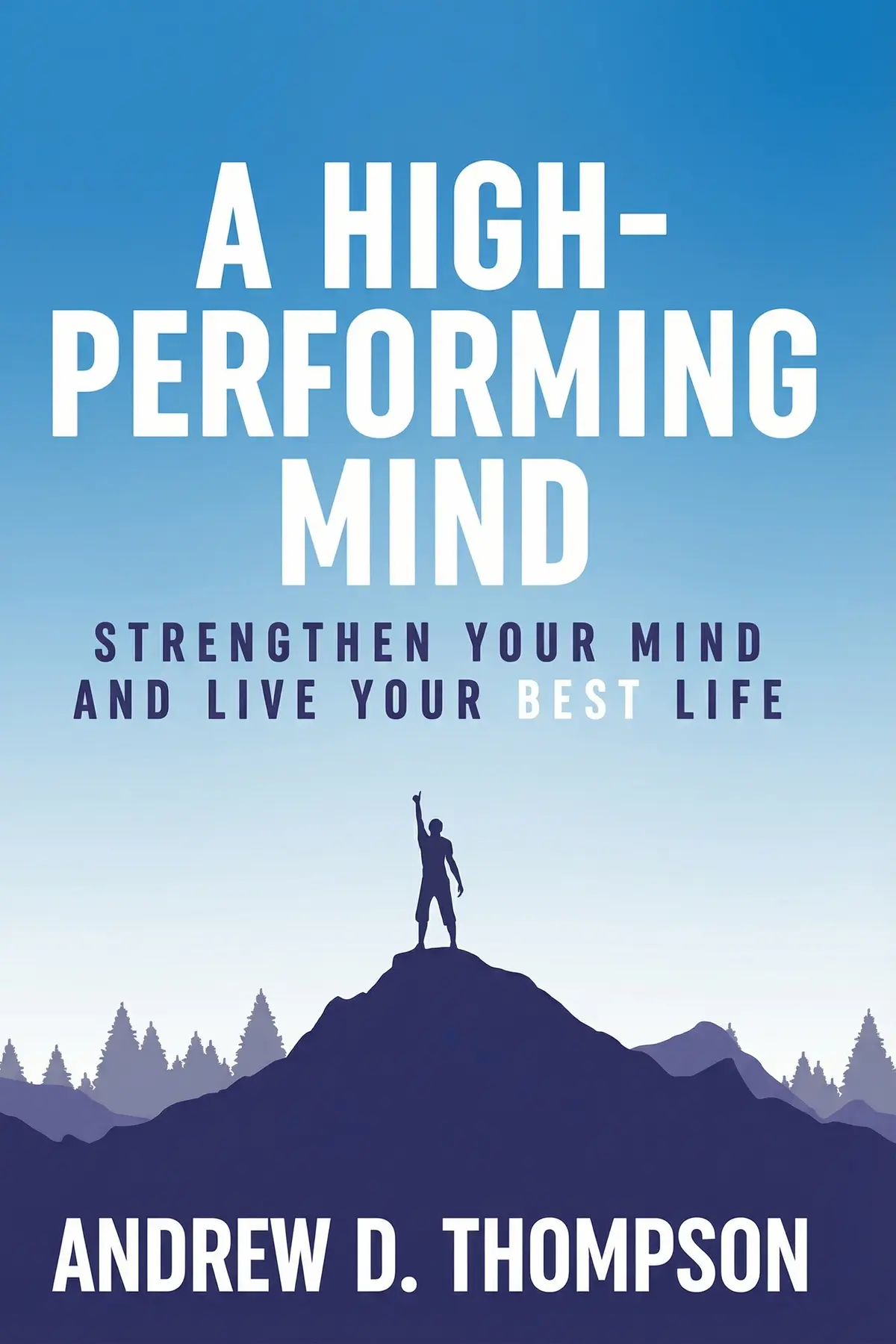
A High-Performing Mind: Strengthen Your Mind and Live Your Best Life
Andrew D. Thompson
Abundance: The Inner Path to Wealth
Deepak Chopra
59 Seconds: Change Your Life in Under a Minute
Richard Wiseman
AUDIO SUMMARY AVAILABLE
Listen to Stop Self-Sabotage in 15 minutes
Get the key ideas from Stop Self-Sabotage by Judy Ho, plus 5,000+ more titles in English and Thai.
- 5,000+ titles
- Listen as much as you want
- 7-day free trial
- Cancel anytime







