

15 min 55 sec
Strangers and Intimates: The Rise and Fall of Private Life
Explore the historical evolution of privacy, from its origins in religious conscience to its modern erosion in the digital age, revealing how our personal lives became a public commodity.
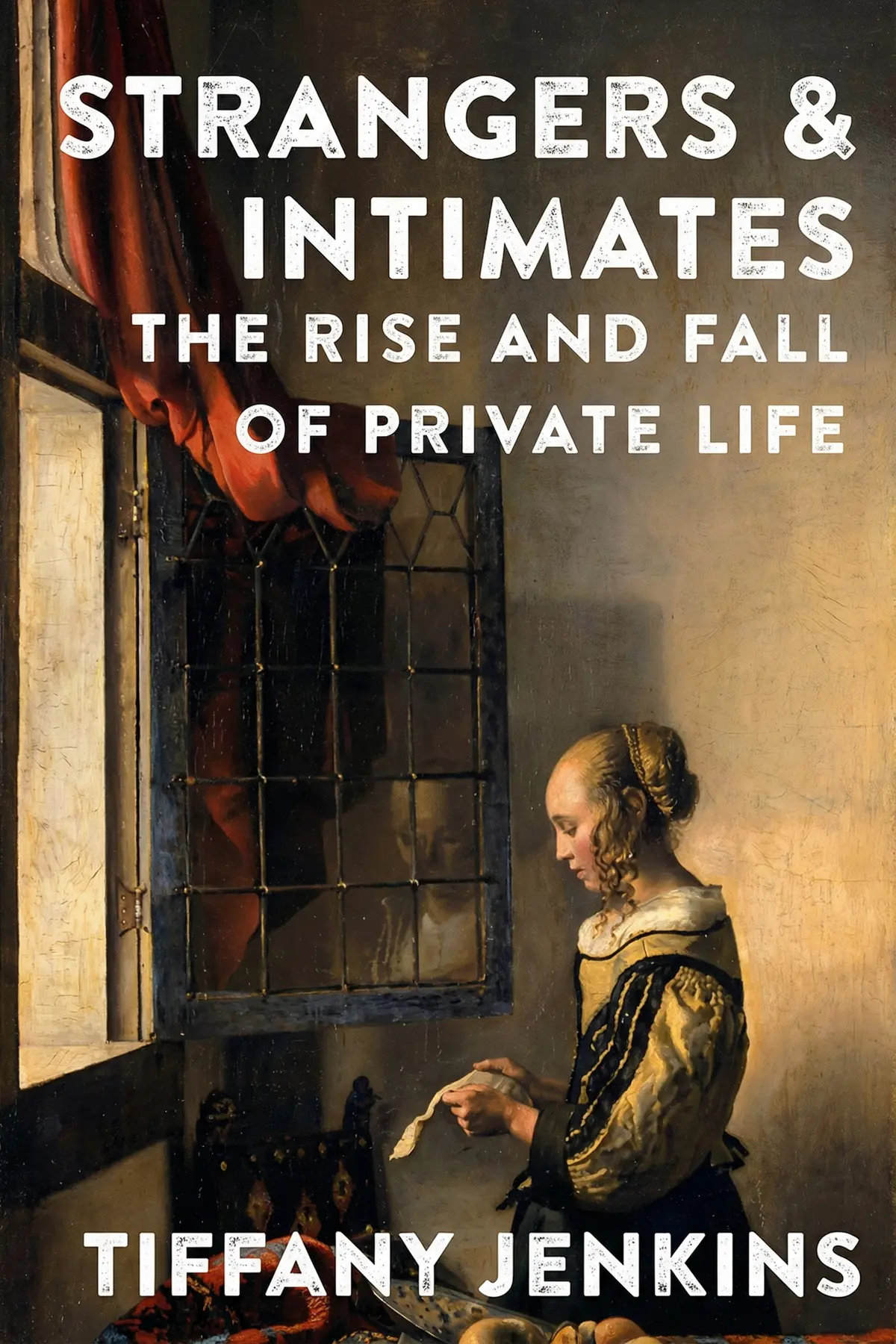
Table of Content
1. Introduction
2 min 07 sec
In the early months of 2020, the world watched as Prince Harry and Meghan Markle made a stunning announcement: they were stepping back from their roles as senior members of the British Royal Family. Their stated reason was a desire for a more private life, away from the relentless scrutiny of the tabloid press. However, what followed was a series of high-profile, deeply personal interviews and a tell-all memoir. To many observers, this felt like a glaring contradiction. How could someone claim to want privacy while simultaneously baring their soul to a global audience?
This modern puzzle serves as a perfect entry point into a much deeper investigation of what it actually means to have a private life. We often assume that privacy is a fundamental human right or even a biological necessity, but as we look closer, we realize that the concept of a ‘personal life’ is actually a relatively recent invention. For most of human history, the idea of keeping a part of oneself hidden away from the community would have seemed not only strange but potentially dangerous.
In ancient societies like Athens, the world was sharply divided between the public sphere of the polis—where citizens debated law and politics—and the private realm of the household, or oikos. But even then, the household wasn’t a place of individual solitude; it was a space for family management and survival. Fast forward to the medieval period, and privacy was often viewed with suspicion, associated with clandestine plots or dark secrets.
Today, we find ourselves in a unique historical moment. We are caught in a tug-of-war between our desire for authenticity and transparency and our fear of being constantly watched by digital eyes. By looking back at the milestones that shaped our modern understanding of privacy, we can start to see that our current struggles aren’t just modern glitches—they are part of a long-running story about how we define the self. Over the next few chapters, we will explore the major shifts that built the walls of our private lives and the forces that are now threatening to tear them down. This isn’t just a history of laws and buildings; it’s a history of the human heart and how we decided which parts of it belong to us alone.
2. The Birth of the Inner Sanctuary
1 min 58 sec
Discover how a 16th-century monk’s act of defiance created the modern concept of an individual conscience and a private relationship with the divine.
3. The Architecture of Distinction
2 min 10 sec
Travel back to the 18th century to see how the physical separation of work and home life gave rise to the distinct public and private spheres we know today.
4. The Post Office and the Right to Be Left Alone
1 min 59 sec
A 19th-century scandal involving intercepted mail reveals the moment privacy transformed from a suspicious secret into a cherished personal right.
5. The Sanctuary of the Hearth
1 min 59 sec
Explore the Victorian ‘cult of domesticity’ and how it both protected the family and limited the individual, leading to a new demand for personal freedom.
6. When the Bedroom Became a Political Battlefield
1 min 54 sec
Understand the radical shift of the 1960s, where private experiences were brought into the public eye to spark social revolution and challenge systemic power.
7. The Paradox of the Digital Panopticon
2 min 13 sec
Analyze our modern dilemma: why we are voluntarily trading our hard-won privacy for the convenience and visibility of the digital world.
8. Conclusion
1 min 35 sec
The history of privacy is a winding road that has led us from the communal life of the ancient world to the hyper-individualized, yet hyper-exposed, world of today. If there is one thing we can learn from Tiffany Jenkins’s exploration in Strangers and Intimates, it’s that privacy is not a static thing. It is a living concept that we must constantly define and defend.
We’ve seen how privacy grew from a spiritual spark of conscience into a physical sanctuary of the home, and then into a powerful political tool for social change. But we’ve also seen how easily those boundaries can erode when they are traded for convenience or fame. Today, as we navigate the complexities of big data and social media, we are at a crossroads.
The takeaway is clear: privacy is essential for human flourishing. It is the soil in which individuality and creativity grow. Without a private space—both physical and mental—we risk becoming mere performers in a world that never stops watching. As you go about your day, consider the boundaries you set for yourself. What parts of your life are truly yours? In an age of total transparency, perhaps the most radical and necessary thing we can do is to keep some things just for ourselves. After all, the journey of the human soul requires a quiet room where the world cannot follow.
Thank you for listening to this BookBits summary. If you found these ideas valuable, please consider leaving us a rating or feedback. Your engagement helps us continue to bring these deep dives into the world’s most influential ideas to light. We look forward to seeing you in the next summary!
About this book
What is this book about?
Have you ever wondered why we feel so protective of our personal lives while simultaneously sharing our every move on social media? Strangers and Intimates traces the fascinating, often contradictory history of privacy in Western civilization. It argues that having a private life isn’t a natural state of being, but a carefully constructed historical invention that has been constantly reshaped by politics, technology, and social shifts. From the revolutionary spiritual interiority of Martin Luther to the domestic sanctuaries of the Victorian era and the radical 'personal is political' movements of the twentieth century, this summary explores how the boundaries between our public and private selves have been drawn and redrawn. It ultimately challenges us to consider what we lose—and what we might gain—as we navigate a modern world defined by digital surveillance and voluntary self-exposure. The promise of this journey is a deeper understanding of the very concept of the 'self' in an age where the walls of our private lives are becoming increasingly transparent.
Book Information
About the Author
Tiffany Jenkins
Tiffany Jenkins is a distinguished writer and academic specializing in the intersection of culture, politics, and social history. She is widely recognized for her ability to translate complex historical developments into accessible narratives that resonate with contemporary debates. Her work often explores the evolving nature of privacy, the impact of surveillance, and the cultural shifts brought about by the digital age.
Ratings & Reviews
Ratings at a glance
What people think
Listeners find this to be a thoroughly researched and evocative study of the way privacy has transformed from the ancient world to the modern day. They value the deep historical context, with one listener highlighting the captivating look at how the Reformation and Martin Luther’s focus on individual conscience helped define the modern private self. Furthermore, while perspectives on the author's interpretation of the digital age are mixed, many find the writing style absorbing and the extensive scope very informative. They also note that the book provides a singular and detailed outlook on the "rise and fall" of private life.
Top reviews
James
Tiffany Jenkins has managed to turn a dry sociological concept into a gripping narrative that tracks the very soul of Western individuality. I was particularly struck by the sections on Martin Luther and the Reformation; the idea that privacy began as a sanctuary for the individual conscience was a revelation to me. The writing is incredibly polished and compelling, making a complex historical evolution feel like a real page-turner. While some might find the later chapters on digital surveillance a bit cynical, I found her analysis of how we trade our dignity for convenience to be chillingly accurate. It is rare to find a non-fiction book that balances academic rigor with such an engaging, accessible tone. If you want to understand why we feel so exposed in the 21st century, start here.
Show moreAlejandra
Finally got around to reading this, and it’s easily one of the most provocative books of the year. Jenkins takes you on a high-level journey from the ancient Greeks to the smartphone age without ever feeling rushed. I was especially fascinated by the discussion on how the home became a sanctuary during the industrial revolution, and how those boundaries are now being systematically dismantled. The writing style is sophisticated yet very readable—it’s the kind of non-fiction that stays with you long after you close the cover. She doesn't just give you dates and names; she gives you a new lens through which to view your own daily interactions. An absolutely essential read for anyone worried about the erosion of the private self in our hyper-connected world.
Show moreTantipat
The chapter on Queen Victoria’s leaked sketches was a total eye-opener for me, showing how even the most powerful figures struggled with the boundaries of the domestic sphere. Jenkins does a masterful job of weaving together specific historical anecdotes—like the Mazzini mail-opening scandal—with broader philosophical shifts. I appreciated the nuance she brought to the 'personal is political' era of the 1970s, though at times I felt the focus was a bit too centered on the UK and US experience. The transition from the Victorian 'home as a castle' to our current era of oversharing is handled with great care and research. It’s a dense read but well worth the effort for anyone interested in cultural history. My only minor gripe is that I wished for more diverse perspectives from outside the Western bubble.
Show moreKiattisak
Ever wonder why we’re so obsessed with sharing every meal on Instagram while simultaneously fearing government surveillance? Jenkins explores this exact paradox with a sharp, analytical eye. I loved the way she connected Virginia Woolf’s 'room of one's own' to the broader movement for individual autonomy, showing that privacy isn't just about hiding secrets—it's about the freedom to grow. The prose is lively, and the research into how coffeehouses transformed 18th-century sociability was fascinating. I did find some of her conclusions about modern technology a bit pessimistic, but she raises questions that are impossible to ignore. It’s a thought-provoking look at how our internal lives have been shaped by external laws and architectural shifts over hundreds of years.
Show moreArjun
After hearing several podcasts mention Jenkins, I decided to see if the hype was real. I’m glad I did. The way she links the invention of the postal system to the modern expectation of inviolate correspondence was brilliant. It makes you realize that what we consider 'natural' rights are actually very recent social inventions. The book is dense with historical detail, from the oikos to the Mazzini affair, and it really makes you think about who controls the terms of our social exchanges. Look, it’s not a light read, and the author definitely has some strong opinions on the 'death' of privacy that I don't entirely agree with, but the historical groundwork she lays is undeniable. A very strong four stars for the research alone.
Show moreNikolai
Picked this up on a whim and was pleasantly surprised by the intricate depth of the research. Jenkins succeeds in showing that privacy is a shifting target, constantly redefined by technology and social norms. The transition from the communal living of the Middle Ages to the 'Englishman's castle' was particularly well-handled. I also liked the critique of how we've moved back toward a world where visibility is synonymous with existence. While I think she misses some of the nuances of modern digital resistance—like the rise of VPNs and encrypted messaging—her core thesis about the blurring of public and private life is hard to argue with. The book is an excellent account of how we got here, even if the ending feels a bit unfinished.
Show moreCarter
As much as I enjoyed the deep dive into the Middle Ages and the early concepts of the 'oikos' versus the 'polis,' the book lost significant steam once it hit the 21st century. Jenkins provides plenty of provocative reflections on how privacy fits within historical norms, but her arguments become noticeably flimsier as she approaches the modern digital world. There are several odd takes and over-generalizations regarding social media that feel like they were written by someone with only a cursory understanding of how these platforms actually function. The adage about realizing the limits of a commentator as soon as they enter territory you know well definitely applies here. It’s a decent historical overview, but the lack of focus in the final third prevents it from being truly great.
Show moreBird
Truth is, I found the early sections of 'Strangers and Intimates' much more robust than the concluding chapters. The historical work on how the concept of 'secrecy' evolved from being a sign of sin to a mark of dignity was excellent. However, I felt the book had an overly narrow focus, occasionally leaning too heavily on a specific feminist viewpoint at the expense of a broader perspective on how privacy affects different social classes today. It also lacked any real analysis of Eastern or Middle Eastern views on private life, which would have provided a much-needed contrast to the Western narrative. It’s a well-written book, but it feels somewhat under-researched when it reaches the era of data exfiltration and modern algorithms. A mixed bag, but still worth a look for the history.
Show moreAubrey
This book offers a fascinating look at the 'rise and fall' of private life, though it’s a bit of a slog in the middle. The level of detail regarding the 17th-century legal frameworks is impressive, but it can be quite dry if you aren't a dedicated history buff. I appreciated the case study on Meghan and Harry, as it perfectly illustrated the modern struggle for 'controlled' privacy versus total secrecy. That said, the author sometimes drifts into straw-man arguments when discussing pro-privacy advocates and the power of technology to manipulate. I ended up feeling quite neutral about the book overall. It's informative and well-researched, but the narrative voice can be a bit detached, making it hard to stay consistently engaged throughout the longer chapters.
Show morePhu
Not what I expected from a cultural history, to be perfectly frank. While the early chapters on the Tudor court and the evolution of architecture were informative, the author’s tone eventually turns into a weirdly condescending scolding of individuals for the current state of privacy. She seems to suggest that we’ve simply 'given up' our private lives for likes and convenience, which completely ignores the massive collective action problems and the predatory nature of big tech. Her minimization of the Cambridge Analytica scandal was particularly hard to swallow, framing it more as 'elite anxiety' than a genuine violation of trust. It felt like she was trying to force a specific narrative about the 'fall' of private life that doesn't account for the grassroots movements fighting for digital rights today. Disappointing and a bit out of touch.
Show moreReaders also enjoyed


1491: New Revelations of the Americas Before Columbus
Charles C. Mann

A Year in the Life of William Shakespeare: 1599
James Shapiro

1929: Inside the Greatest Crash in Wall Street History--and How It
Andrew Ross Sorkin
Age of Anger: A History of the Present
Pankaj Mishra
A Biography of Loneliness: The History of an Emotion
Fay Bound Alberti

Agent Sonya: The Spy Next Door
Ben Macintyre


Alexander Hamilton
Ron Chernow
AUDIO SUMMARY AVAILABLE
Listen to Strangers and Intimates in 15 minutes
Get the key ideas from Strangers and Intimates by Tiffany Jenkins, plus 5,000+ more titles in English and Thai.
- 5,000+ titles
- Listen as much as you want
- 7-day free trial
- Cancel anytime







