
23 min 56 sec
Strangers Drowning: Grappling with Impossible Idealism, Drastic Choices, and the Overpowering Urge to Help
Larissa MacFarquhar explores the lives of radical altruists who push the boundaries of self-sacrifice. This deep dive examines the moral, emotional, and psychological complexities of living for the sake of others.
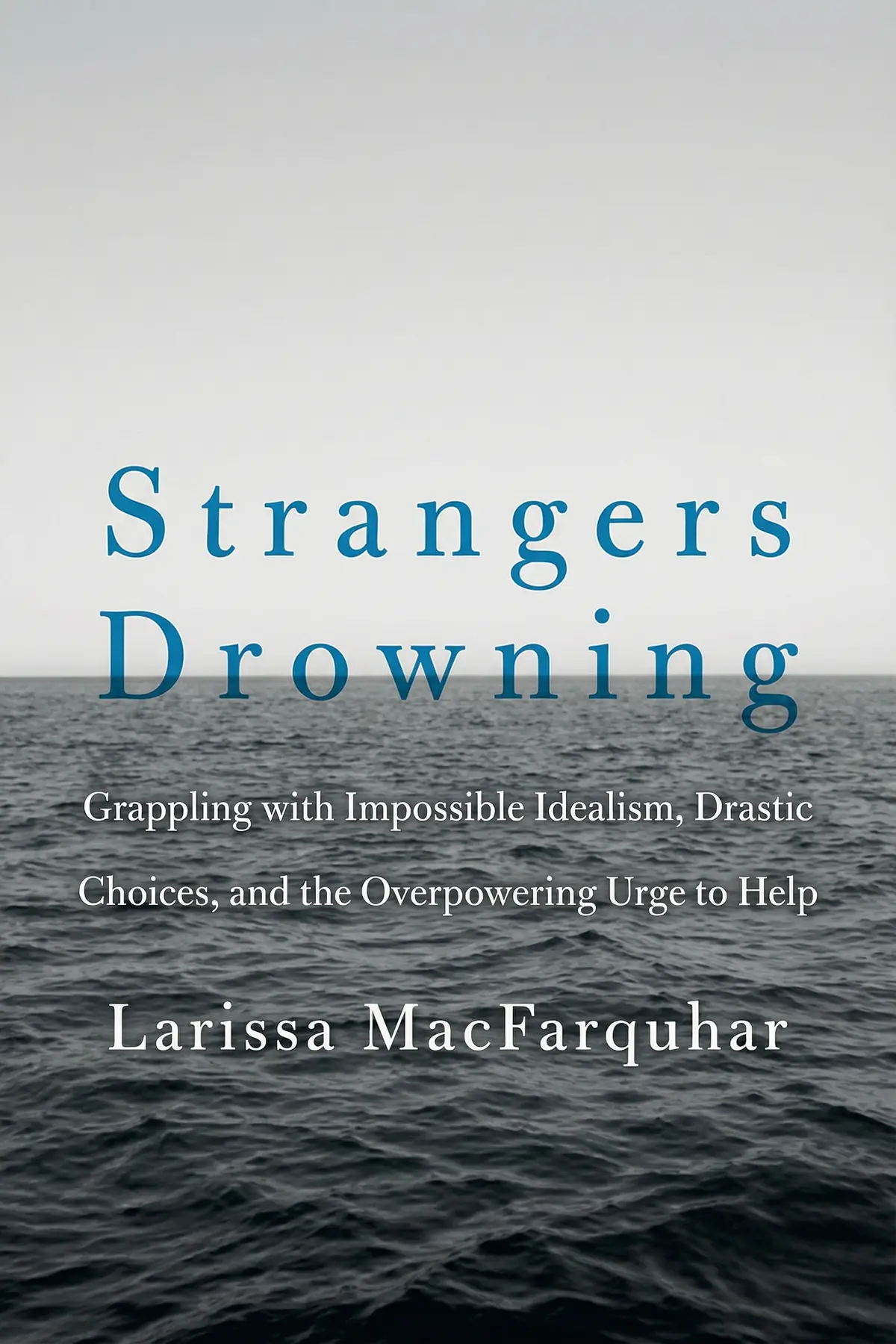
Table of Content
1. Introduction
1 min 40 sec
Imagine you are walking along a path and see a person in desperate need. Your natural instinct is to help. But what if helping that person meant you had to give up your own security, your savings, or even your health? Most of us draw a line somewhere, prioritizing our own lives and the lives of those we love. However, there is a rare group of people who refuse to draw that line. These are the individuals often referred to as do-gooders, or more formally, extreme altruists. They operate on a moral plane that most of us find both inspiring and deeply unsettling.
In this exploration of Larissa MacFarquhar’s work, we are going to look closely at the lives of people who have decided that the needs of the world are just as important—if not more so—than their own. We will look at what happens when someone decides that a stranger’s life is worth exactly as much as a family member’s. This journey will take us through war-torn clinics, the difficult choices of utilitarian philosophy, and the controversial intersection of altruism and mental health.
The throughline of our discussion today centers on a fundamental question: Is extreme selflessness a virtue, or does it come at too high a cost to the individual and the people closest to them? By looking at real-life stories and the philosophical frameworks that support them, we will try to understand why some people feel an inescapable obligation to help others at any cost. We will also examine how society views these individuals—alternating between reverence and suspicion—and what their choices reveal about our own common moral standards. Get ready to challenge your assumptions about what it means to be a good person in a world full of suffering.
2. Indiscriminate Altruism and the Duty to Help Enemies
2 min 52 sec
Discover how a dedicated nurse in a conflict zone risked everything to treat wounded enemies, and how this radical commitment to humanity eventually led to an unexpected miracle.
3. The Strict Logic of Utilitarian Ethics
2 min 33 sec
Explore the challenging philosophy of utilitarianism, which argues that spending on luxuries is morally equivalent to letting a child drown, and why strangers might deserve your loyalty more than family.
4. The Sacrifice of Vocation and Personal Comfort
2 min 33 sec
Follow the journey of a wealthy lawyer who abandoned his status to care for lepers, and the heart-wrenching moment he prioritized his patients over his own sick child.
5. The Physical and Emotional Cost of Organ Donation
2 min 31 sec
What drives someone to give a kidney to a stranger? Learn about the complex emotional aftermath of radical generosity and the struggle to find purpose once the sacrifice is made.
6. Sustainability and the Limits of Helping
2 min 15 sec
Even the most devoted altruists can break. Discover why a Japanese monk dedicated to preventing suicide had to learn the hard way that you can’t help others if you’re dead.
7. Pathological Altruism and the Need to Be Needed
2 min 37 sec
Is it possible to be ‘too’ helpful? Examine the controversial link between altruism and codependency, and how the desire to save others can sometimes stem from our own wounds.
8. The Cultural Skepticism Toward the Do-Gooder
2 min 37 sec
Why do we find saints so annoying? Explore how literature and popular culture often portray altruists as ridiculous or even dangerous, and what that says about our own insecurities.
9. Evolution, Survival, and the Search for Pure Altruism
2 min 37 sec
Was Darwin wrong about the nature of kindness? Explore the scientific debate over whether true selflessness exists and the inspiring evidence from those who risked everything in the Holocaust.
10. Conclusion
1 min 41 sec
As we conclude our journey through the world of extreme altruism, it is clear that the life of a do-gooder is far more complex than it appears on the surface. We have seen that radical selflessness can lead to extraordinary acts of heroism, like Dorothy Granada’s clinic or the organ donations that save strangers’ lives. We have also seen the heavy toll these choices take, from the strain on family relationships to the physical and emotional exhaustion of the helpers themselves.
The throughline of these stories is the radical idea that every human life is of equal value. This is a simple concept to state, but an almost impossible one to live by. It challenges the very foundations of how we organize our lives, from how we spend our money to how we prioritize our children. Whether we view these individuals as saints to be emulated or as people struggling with an overwhelming moral burden, their existence forces us to look at our own lives with more scrutiny.
The ultimate takeaway is not necessarily that we should all give up our kidneys or move to war zones. Rather, it is a call to recognize the immense capacity for goodness within the human spirit. We can start by making smaller altruistic gestures—helping someone without being asked or giving when there is no expectation of return. By understanding the challenges and motivations of the extreme altruist, we can find a way to bring a little more selflessness into our own corners of the world, balancing our personal lives with a greater awareness of the needs of the strangers drowning all around us.
About this book
What is this book about?
What does it truly mean to live a life of total selflessness? In this examination of extreme moral commitment, we look at individuals who go far beyond typical charity, often sacrificing their personal comfort, family stability, and even their own physical health to help people they have never met. This summary explores the fascinating and often controversial world of the do-gooder—those who believe that every life carries equal weight, regardless of whether that life belongs to a child in their own home or a stranger on the other side of the planet. Through various case studies, we analyze the philosophy of utilitarianism and the real-world implications of choosing a vocation based on radical empathy. You will encounter stories of medical workers in war zones, organ donors who seek out strangers, and people who dedicate their lives to social outcasts. The promise of this exploration is to challenge your understanding of morality and ask whether extreme altruism is a heroic ideal to strive for or a pathological state that threatens the very fabric of human relationships and personal well-being.
Book Information
About the Author
Larissa MacFarquhar
Larissa MacFarquhar is an accomplished editor and staff writer for The New Yorker, a position she has held since 1998. Throughout her career, she has specialized in detailed features on influential figures, including filmmaker Quentin Tarantino and fashion icon Diane von Furstenberg. MacFarquhar currently resides in New York City. Strangers Drowning represents her first full-length book, showcasing her talent for deep journalistic inquiry and psychological portraiture.
Ratings & Reviews
Ratings at a glance
What people think
Listeners find the book accessible and thoroughly investigated, particularly valuing its in-depth examinations of radical selflessness. It is described as mentally stimulating, with one listener mentioning how it encourages contemplation of these individuals, and many deem it truly motivating. The storytelling is captivating, as one listener notes that every chapter provides a compelling story. While the caliber of the writing earns favorable remarks, the stylistic approach to the narrative draws varied responses from listeners.
Top reviews
Roydao
Larissa MacFarquhar has a staggering ability to strip away the veneer of normal life to reveal the uncomfortable machinery of our morals. This book isn't just a collection of profiles; it’s a deep, philosophical interrogation of what we owe the world. I was particularly struck by the stories of the couple adopting twenty children and the monk in Japan running a suicide prevention site. By removing all physical descriptions of her subjects, MacFarquhar forces you into an uncomfortable intimacy with their thoughts. You aren't distracted by what they look like, only by what they do. Some might find the clinical tone off-putting, but I found it essential for the subject matter. It keeps the focus on the weight of their choices. This is easily one of the most challenging books I’ve read in years, making me question every frivolous purchase I make. It is a brilliant, unsettling look at the limits of human empathy.
Show moreSarocha
Ever wonder what happens when someone actually takes 'loving your neighbor' to the extreme? Strangers Drowning provides the answer, and it isn't always pretty or comfortable. These are people who don't just feel bad about the drowning child in the pond; they feel responsible for every drowning child on the planet. I was deeply moved by the case studies, especially the leper colony in the jungle. MacFarquhar writes with a quiet grace that allows the drama of these lives to speak for itself. Her research is clearly exhaustive, yet the narrative never feels bogged down by dry facts. Instead, it moves like a series of intense, short films. To be fair, I felt a massive amount of guilt while reading, which I suppose was the point. It’s an inspiring read that doesn't offer easy answers. Highly recommended for anyone who thinks they're doing enough for the world.
Show moreSupaporn
Wow, I am still reeling from the story of the couple who adopted twenty children. MacFarquhar captures the sheer chaos and the incredible commitment required for that kind of life without making it look like a fairytale. This is what makes the book so authentic; it shows the grime, the exhaustion, and the domestic strain that comes with radical kindness. The structure of the book, alternating between these intense lives and chapters of historical context, works perfectly. It gives you a chance to breathe and process the 'moral extremity' being described. The research into how psychology has viewed altruism over the years was a total eye-opener. I’ve never thought about 'do-gooding' as a form of rebellion before, but this book makes a compelling case for it. Truly inspiring and masterfully written.
Show moreScarlett
The most striking thing about these profiles is the intentional absence of physical descriptions. At first, it bothered me, but then I realized it was a clever narrative trick to prevent us from judging these 'do-gooders' on a superficial level. The book explores that thin line between incredible altruism and what some might call pathology. Why do these people feel a duty that the rest of us simply ignore? The storytelling is engaging, and the research into the history of altruism in literature was a highlight for me. However, I did find the chapters on philosophy a bit dense compared to the vivid personal stories. Sometimes the transition between the character sketches and the academic theory felt a little jarring. Still, the questions raised about our responsibilities to strangers will haunt me. It’s a well-researched, thought-provoking piece of journalism that avoids being preachy.
Show moreSamuel
Finally got around to this after seeing it on several 'best of' lists, and it certainly lived up to the hype. MacFarquhar’s profiles are less like standard journalism and more like deep psychological x-rays. She presents these lives without an ounce of judgment, which is impressive given how extreme some of their choices are. The discussion on Peter Singer’s drowning child experiment was particularly well-handled. It really makes you look at your own life through a different lens. My only minor gripe is that the book feels a bit repetitive toward the end. After the seventh or eighth profile, the 'extreme sacrifice' theme starts to lose a bit of its initial shock value. But the writing is undeniably sharp and the insights into the 'moral narcissist' were fascinating. It’t a solid, intellectual read that demands your full attention.
Show morePairot
As someone who has always felt a nagging guilt about global poverty, this book was a gut punch. It asks the terrifying question: if you can save a life, why aren't you doing it right now? MacFarquhar doesn't let the reader off the hook. The storytelling is dramatic and the case studies are selected for maximum impact. I appreciated the lack of authorial presence; she stays out of the way and lets the subjects' inner minds take center stage. Truth is, it’s a bit of a heavy read. You can't exactly breeze through it because every few pages you have to stop and re-evaluate your own moral compass. I gave it four stars instead of five only because the ending felt a bit abrupt. I was looking for a final synthesis that never quite came. Regardless, it’s a vital piece of work.
Show moreRod
Gotta say, I didn't expect to be this gripped by a book about ethics. The narrative style is unique, focusing on the internal logic of people who live for others. It’s fascinating to see how they justify their sacrifices, often at the expense of their own families or personal happiness. The conflict between 'duty' and 'attachment' is the heart of the book. One moment you admire these people, and the next you find them completely alien. This push-and-pull is what makes the reading experience so engaging. MacFarquhar’s prose is understated but powerful, avoiding the sensationalism that usually accompanies stories about 'saints.' It’s a well-rounded exploration of a very niche human experience. It definitely makes you think about what it means to be a 'good' person in a world full of suffering.
Show moreSomrutai
To be fair, the research here is impeccable, but I found myself struggling to connect with the subjects. The author’s choice to leave out physical details made everyone feel a bit like ghosts or abstract concepts rather than real people. I understand the goal was objectivity, but for me, it just created a sense of detachment that made the reading experience a bit dry. The stories themselves are wild—the woman donating a kidney to a stranger is especially intense—but I wanted more 'flavor' in the prose. Also, the chapter on how novelists hate do-gooders felt like it belonged in a different book. It was very academic and broke the flow of the personal narratives. It’s definitely a thought-provoking work, and I can see why it’s highly praised. It just didn't fully click with my personal taste for more grounded, descriptive non-fiction.
Show moreDimitri
Truth is, I have very mixed feelings about this collection of 'do-gooders'. On one hand, the case studies are undeniably fascinating and the writing is clear and accessible. On the other hand, the tone is so neutral that it almost feels cold. I found it hard to stay invested in the philosophical interludes, which felt a bit like being back in a college seminar. The book is definitely thought-provoking, but it also felt a bit repetitive after a while. Every subject seems to have the same origin story involving a non-functional parent and a childhood sense of responsibility. By the end, I felt like I was reading the same psychological profile over and over. It's an interesting read for sure, but I don't think I'd call it life-changing. A decent look at a strange subculture, but maybe a bit too long for the points it was making.
Show moreHenry
Look, I appreciate the effort, but focusing on these isolated 'saints' felt like a massive missed opportunity. The book treats altruism as a solo sport, ignoring the systemic and political ways we actually solve global problems. Reading about individuals living on peanut butter to save money for bed nets is fine, I guess, but it felt more like a study in eccentricity than a guide to doing good. The writing style is also incredibly sparse—almost to a fault. Without physical descriptions or much dialogue, the subjects started to blend together in my mind. I found the whole thing a bit depressing and, frankly, quite annoying at times. These people are described as heroes, but they often seem like they’re just suffering from extreme guilt. It lacked the philosophical rigor I was expecting from a New Yorker writer. Not my favorite.
Show moreReaders also enjoyed
A Guide to the Good Life: The Ancient Art of Stoic Joy
William B. Irvine

A Little History of Philosophy
Nigel Warburton
A Theory of Justice
John Rawls

Anarchy, State, and Utopia
Robert Nozick
Antifragile: Things That Gain from Disorder
Nassim Nicholas Taleb

Areopagitica: Philosophy)
John Milton
AUDIO SUMMARY AVAILABLE
Listen to Strangers Drowning in 15 minutes
Get the key ideas from Strangers Drowning by Larissa MacFarquhar, plus 5,000+ more titles in English and Thai.
- 5,000+ titles
- Listen as much as you want
- 7-day free trial
- Cancel anytime







