
21 min 43 sec
Stretch: Unlock The Power of Less and Achieve More Than You Ever Imagined
Stretch challenges the conventional wisdom that more resources lead to better results. By adopting a resourceful mindset, you can unlock hidden potential within your current circumstances to achieve extraordinary success and fulfillment.
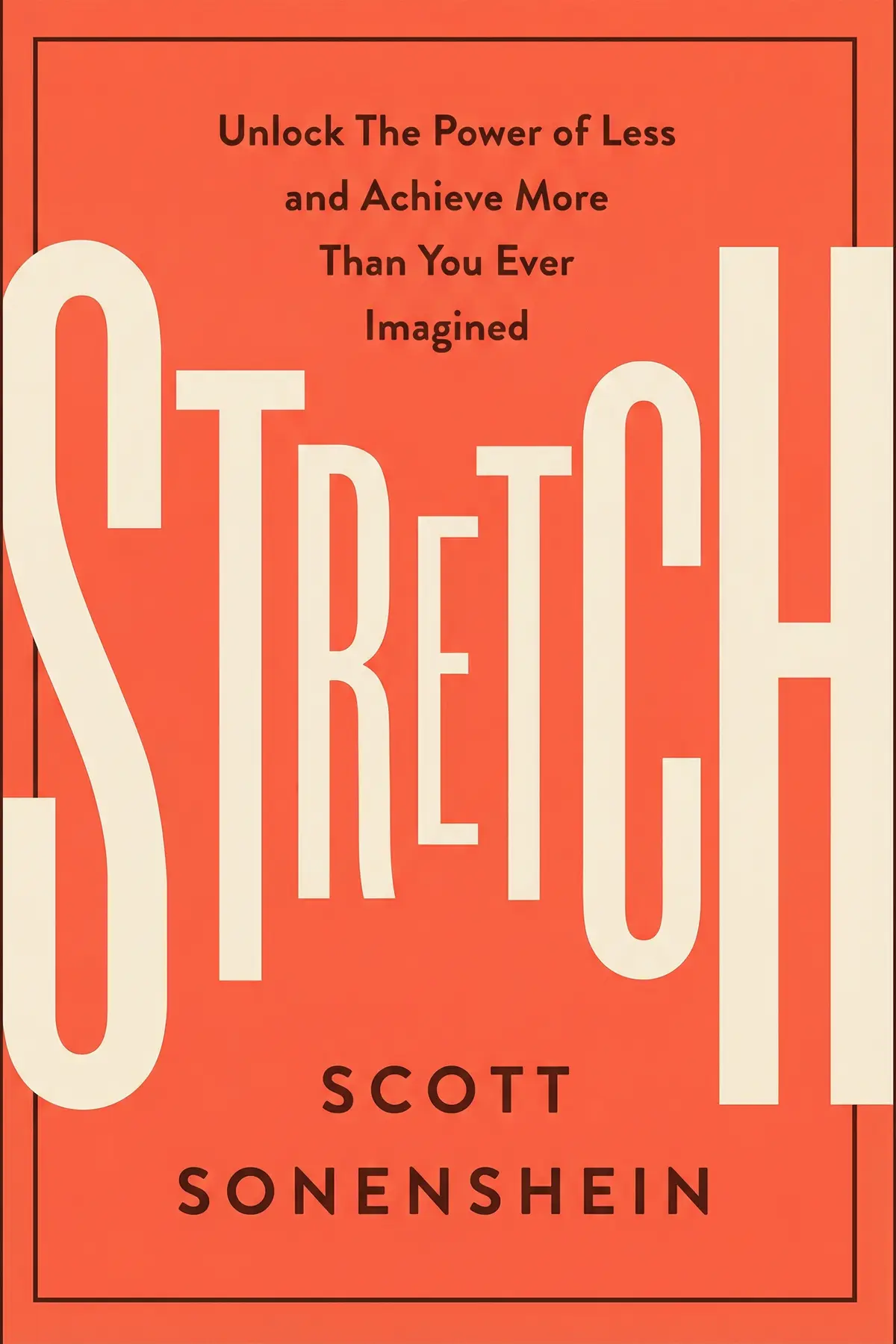
Table of Content
1. Introduction
1 min 36 sec
Have you ever felt like you were just one resource away from true success? Maybe you’ve told yourself that if you just had a bigger budget, a more experienced team, or even just a few more hours in the day, everything would finally fall into place. It’s a common sentiment in our modern world, where the prevailing narrative tells us that ‘more’ is always better. We are conditioned to believe that accumulation is the only path to progress, leading us to spend our lives chasing after what we don’t have rather than looking at what we do.
But what if this relentless pursuit of more is actually what’s holding us back? What if the secret to achieving your most ambitious goals isn’t about acquiring new assets, but about fundamentally changing how you view the ones already at your disposal? This is the core premise of our discussion today. We’re going to look at the concept of ‘stretching’—a mindset that prioritizes resourcefulness over resources.
In the following segments, we will explore why we get trapped in the cycle of chasing and how to break free. We’ll look at the surprising reasons why being an expert can sometimes be a disadvantage and why the most detailed plans can often lead us astray. We’ll also dive into the power of expectations and how they shape our reality, as well as the importance of maintaining a balance so we don’t push ourselves too far. By the end, you’ll see that the tools you need to succeed aren’t hidden in some future acquisition; they are right in front of you, waiting to be stretched to their full potential.
2. The Trap of Chasing and the Power of Stretching
2 min 35 sec
Discover why the human tendency to compare ourselves to others often leads to a cycle of wasted energy and missed opportunities for true innovation.
3. Why Outsiders Often Outperform the Experts
2 min 39 sec
Explore the counterintuitive reality that deep experience can sometimes blind us to the most effective and creative solutions in a given field.
4. The Hidden Costs of Over-Planning
2 min 27 sec
Learn how rigid roadmaps can actually obstruct your progress and why improvisation is often a more effective strategy for navigating an uncertain future.
5. How Expectations Create Your Reality
2 min 35 sec
Discover the profound impact that your beliefs about yourself and others have on performance and the ability to overcome challenges.
6. Boosting Success Through Creativity and Connection
2 min 40 sec
Find out how small injections of creativity and a collaborative approach to competition can dramatically increase your effectiveness and revenue.
7. The Dangers of Overstretching
2 min 34 sec
Recognize the warning signs of pushing too hard and learn how to distinguish between healthy resourcefulness and counterproductive habits.
8. Strengthening Your Mind Through Balance and Gratitude
2 min 50 sec
Learn practical exercises to keep your mind sharp, including how to find ‘sleeping beauties’ in your own life and why walking is a key to productivity.
9. Conclusion
1 min 47 sec
The journey from a ‘chaser’ to a ‘stretcher’ is one of the most transformative shifts you can make in your life. It is the move from a world of perceived scarcity and constant comparison to a world of abundance and creative agency. Throughout our discussion, we’ve seen that success isn’t about the sheer volume of resources you can amass. Instead, it’s about the ingenuity with which you apply the resources you already have.
We’ve learned that being an outsider can be a superpower, and that the most meticulous plans can sometimes be our biggest obstacles. We’ve explored how our own expectations can act as a bridge or a wall, and how a little bit of creativity and collaboration can go much further than a large budget. Most importantly, we’ve seen that stretching is a skill that can be cultivated and refined over time through practice and balance.
As you move forward, I want to leave you with one actionable step. The next time you feel the urge to start a new project by asking for more—more money, more help, or more time—pause. Instead, take a short trip or a walk away from your desk. Use that space to reflect on your last project. Ask yourself what you already have that you aren’t using. Look for the ‘sleeping beauties’ in your own toolkit. By focusing on how you can stretch what you have, you’ll find that you are capable of achieving much more than you ever imagined, with far less than you thought you needed.
About this book
What is this book about?
Many of us operate under the assumption that success is directly tied to the accumulation of resources. We believe that if we only had more money, more time, or more staff, we could finally reach our goals. Scott Sonenshein argues that this pursuit of 'more'—which he calls chasing—actually limits our creativity and performance. Instead, he proposes the 'stretching' mindset: the art of getting the most out of what you already have. This book provides a roadmap for shifting your perspective from resource-seeking to resource-using. It explores why experts often fail while outsiders succeed, how excessive planning can blind us to opportunities, and why constraints can actually be a catalyst for innovation. By learning to stretch, you can transform your personal and professional life, finding creative solutions in places you previously overlooked and achieving more than you ever imagined possible.
Book Information
About the Author
Scott Sonenshein
Scott Sonenshein is an esteemed, award-winning researcher, educator, and consultant. He serves as a professor at Rice University and has shared his expertise on business strategy with global organizations, including major corporations like AT&T and Microsoft.
Ratings & Reviews
Ratings at a glance
What people think
Listeners find that the author successfully connects academic findings with practical daily scenarios, creating a high-quality and absorbing experience. The prose is gripping, and listeners consider it both revitalizing and motivating; one listener points out that it includes several drills to assist with stretching. They prize the central premise, as one listener emphasizes its brilliant logical framework, while another notes its simple yet powerful idea.
Top reviews
Game
This book completely shifted my perspective on what it means to be successful without constantly 'chasing' the next big resource. Sonenshein’s captivating style makes complex organizational behavior research feel accessible and, more importantly, applicable to everyday challenges. I particularly loved the idea that having fewer resources can actually lead to better results because it forces you to be scrappy and creative. As a parent, I even found myself thinking about how I can apply these 'stretching' techniques to help my kids value what they have instead of always wanting the newest toy. The book is an inspiring read that provides various exercises to help you break out of your comfort zone. It’s not just about business; it’s about a fulfilling outlook on life that finds beauty in the ordinary.
Show moreBig
Wow, this was a breath of fresh air. In a world obsessed with 'the chase' for more money and tech, STRETCH offers a simple yet powerful alternative. The author masterfully links scholarly research with vibrant examples that actually stick. I found the contrast between 'Stretches' and 'Chasers' to be a brilliant way to categorize how we approach problems. Unlike many dry business books, this one is genuinely engaging and provides practical techniques you can use immediately. Highly recommended for those who want to do more with what they already have.
Show moreAir
In my experience, it’s rare to find a business book that balances academic rigor with such a light, breezy writing style. Scott Sonenshein has managed to create something truly special here by bridging the gap between ivory-tower research and real-world application. The section on 'Go Explore' was exactly what I needed to hear; it reminded me that varied experiences are the key to innovation. I loved the Steve Jobs quote about the 'bag of experiences'—it perfectly encapsulates the book's message. While some might find the number of stories overwhelming, I thought they made the concepts much more relatable and easier to digest. The book is full of common-sense advice that somehow feels brand new because of the way it's framed. It’s an empowering read that makes you realize you already have everything you need to succeed.
Show moreDek
The section on 'Picking New Neighbors' and diversifying your experiences hit home for me. STRETCH provides a brilliant logical framework for anyone feeling stuck in the rat race of seeking more resources. I found the warnings about 'Leaping without Learning' to be a necessary reality check for my career. Sonenshein’s writing is captivating, and the way he weaves stories of scientists and artists creates a diverse approach to resourcefulness. The 'Workout' exercises are a fantastic touch, turning the book into an active tool. It’s refreshing to see an academic provide such practical, everyday life examples. This is a must-read for achieving profound outcomes.
Show moreLayla
Picked this up during a particularly lean month at my design studio, and it actually provided some much-needed perspective. The story of Dr. Seuss writing 'Green Eggs and Ham' on a bet using only fifty words was a great reminder that constraints can actually fuel creativity rather than stifle it. While some of the business examples felt a bit detached from my reality, the general message of 'stretching' what you have is empowering. I do wish there were fewer stories and more focus on the 'how-to' aspect, as the narrative can get a bit repetitive after a few chapters. However, Sonenshein's writing is engaging enough to keep you moving through the filler. It’s a refreshing take for anyone tired of the constant 'more, more, more' culture of modern business.
Show moreAisha
Finally got around to reading this, and I have to say the practical 'Workout' section in Chapter 9 saved it for me. While the first half of the book is very heavy on anecdotes, the exercises offered at the end provide a brilliant logical framework for applying these concepts to your own life. Personally, I found the advice on 'Picking New Neighbors' and changing your environment to be much more useful than the standard tropes found in most management books. There is a bit too much filler, and I agree with other reviewers that some stories are a bit extreme, but the core psychological principles are sound. If you can look past the occasionally verbose writing, there are some real gems here about being a jack-of-all-trades. It’s a 4-star book that could have been a 5-star book with a tighter edit.
Show moreGiulia
As someone who recently finished Marie Kondo’s 'Joy at Work,' I was curious about her co-author’s solo effort, but it didn't quite hit the same notes. The concept of 'Stretching' versus 'Chasing' is a solid framework, yet the book feels like it’s being stretched itself to meet a page count. I appreciated the advice on making do with what you have, but the writing jumps from story to story so quickly that it becomes hard to process the actual lessons. I was hoping for more diverse examples applicable to personal relationships or home life, but nearly everything is centered on corporate success. While Sonenshein’s style is light and breezy, the lack of depth in the practical application left me feeling a bit bogged down by the sheer volume of anecdotes. It’s an okay read if you’re new to the genre, but it won't challenge your views.
Show moreJong
Ever wonder why some teams do more with less while others waste millions? That’s the core question here, and while the answer is interesting, it’s not exactly groundbreaking stuff. Sonenshein essentially takes the growth mindset and applies it to resource management, which is useful but feels very similar to other books like 'Range.' I did enjoy the section on how 'outsiders' can often see solutions that specialists miss, but the reliance on extreme anecdotes makes the advice feel less practical for the average person. The truth is, the world actually needs a healthy balance of planning and doing, rather than the 'just jump in' approach the author seems to favor. It's a decent, quick read with some novel research, but it’s definitely not a life-changing manifesto.
Show moreArjun
After hearing Scott Sonenshein on a podcast, I expected a lean, actionable guide on resourcefulness, but this was a tedious disappointment. The writing is incredibly verbose, and the author seems obsessed with telling long-winded stories that don't always land or even relate to the core point. For instance, the anecdote about the 'Just Do It' campaign felt totally irrelevant and, honestly, a bit gross given the context of the slogan's origin. Why include that specific story? I also struggled with the false dichotomy between planning and doing; the world definitely needs more careful planning, not less. To be fair, some of the psychological experiments were interesting, but they didn’t provide enough new insight to justify the time spent reading. It feels like a 'white man business book' that packages basic cliches—like 'think outside the box'—as if they are revolutionary discoveries. If you’ve ever had to actually be thrifty, you won't find anything illuminating here.
Show moreSomkid
The premise is just so deeply flawed and, frankly, reeks of a very privileged point of view that ignores the reality of actual poverty. Sonenshein tries to paint living in a van in a parking lot as a romantic, resourceful 'stretch,' but when the subject is a millionaire baseball player like Daniel Norris, the comparison falls flat for anyone actually struggling to make ends meet. To make matters worse, the author includes blatant factual errors, like the old myth about getting tetanus from rusty nails, which really undermined his credibility for me. I was expecting a rigorous look at resourcefulness, but instead, I got a collection of 'poor-is-cool' anecdotes from someone who clearly hasn't had to worry about a real budget in a long time. It feels like the whole book could have been squeezed into a single blog post rather than this verbose, repetitive mess that ultimately still prioritizes global business growth over any kind of sustainable success. If you've ever actually been poor, this book will likely just annoy you.
Show moreReaders also enjoyed

59 Seconds: Change Your Life in Under a Minute
Richard Wiseman
A Guide to the Good Life: The Ancient Art of Stoic Joy
William B. Irvine
A High-Performing Mind: Strengthen Your Mind and Live Your Best Life
Andrew D. Thompson
Abundance: The Inner Path to Wealth
Deepak Chopra
AUDIO SUMMARY AVAILABLE
Listen to Stretch in 15 minutes
Get the key ideas from Stretch by Scott Sonenshein, plus 5,000+ more titles in English and Thai.
- 5,000+ titles
- Listen as much as you want
- 7-day free trial
- Cancel anytime







