
5 min 26 sec
Summa Theologica
Discover how Thomas Aquinas bridged the gap between religious faith and human reason. This summary explores his logical approach to complex theological mysteries, transforming abstract beliefs into a structured system of understanding.
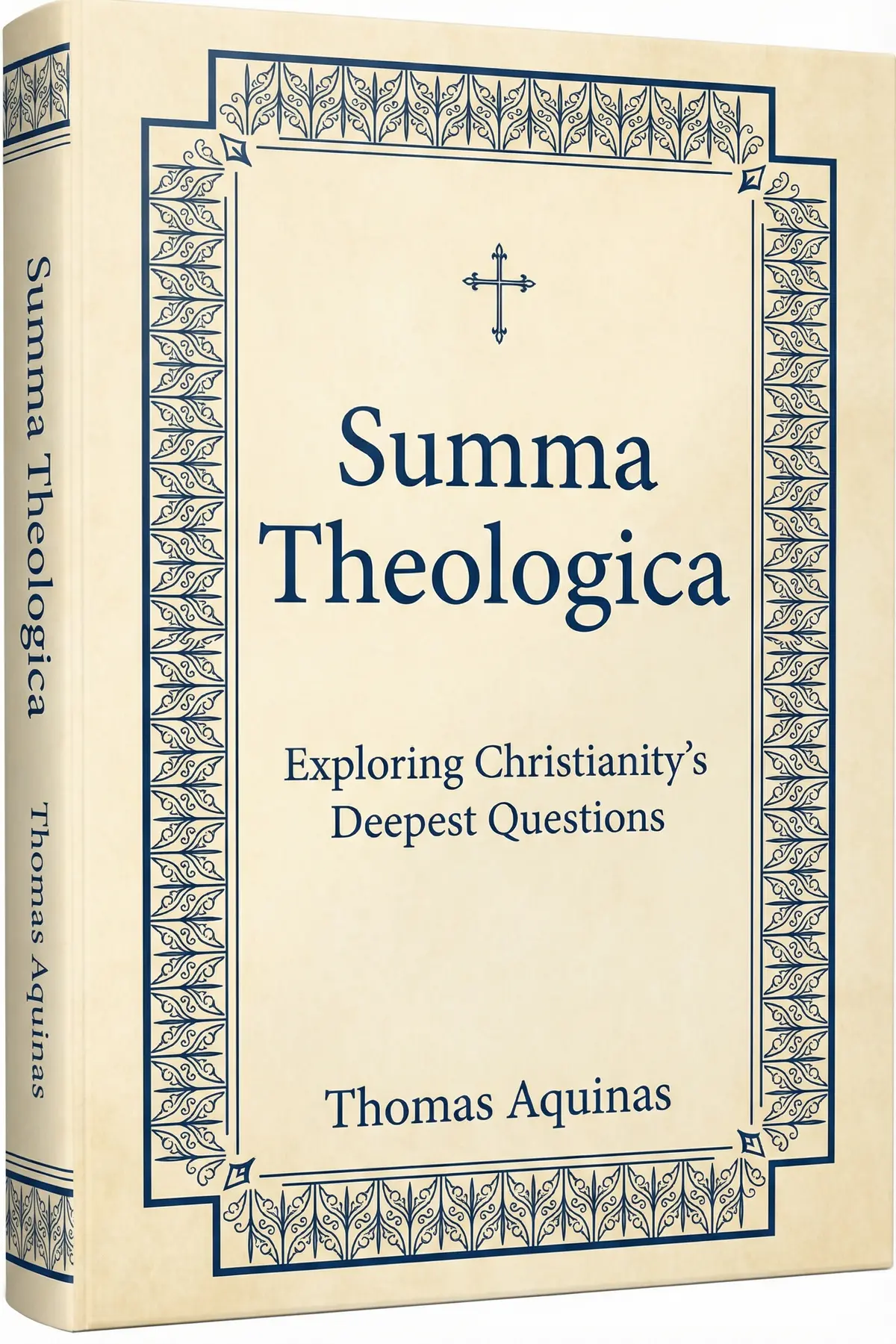
Table of Content
1. Introduction
56 sec
For much of history, humans have treated faith and reason as if they were two different languages that could never truly communicate. One was about what you feel and believe in your heart, while the other was about what you can prove with your mind. But in the thirteenth century, a thinker named Thomas Aquinas challenged this divide. He believed that if God created the human mind, then logic itself must be a tool that can help us understand the divine.
His masterwork, the Summa Theologica, is essentially an attempt to map out the entire landscape of religious thought using the tools of philosophy. Instead of asking people to simply accept mystery, he uses reason to pull back the curtain on complex ideas. In this summary, we are going to explore how Aquinas used this systematic approach to demystify some of the most difficult concepts in Christianity, showing us that our intellect and our spirit can walk hand in hand.
2. A Rational Framework for the Divine
1 min 08 sec
Explore why Aquinas believed that human logic is not the enemy of faith, but rather the perfect tool to uncover the structural beauty of theological truths.
3. The Anatomy of Grace
1 min 20 sec
Go beyond the surface definition of grace to see how it can be broken down into specific, logical functions that guide human behavior.
4. Applying Logic to the Trinity
1 min 13 sec
Discover how Aquinas uses the concept of self-reflection to explain the mystery of the Father, Son, and Holy Spirit.
5. Conclusion
49 sec
Through the Summa Theologica, Thomas Aquinas demonstrated that the human intellect is a powerful companion to spiritual life. By meticulously breaking down abstract concepts like grace and the Trinity, he replaced confusion with a structured system of thought. His work reminds us that seeking understanding is not an act of doubt, but a profound way to honor the truth.
What we can take away from his methodology is the value of clear, systematic thinking when facing life’s biggest questions. Whether we are looking at ethics, faith, or our own nature, applying logic can help us turn overwhelming mysteries into manageable, understandable insights. Aquinas leaves us with the enduring idea that reason is a light that, far from dimming our beliefs, can actually help them shine more clearly.
About this book
What is this book about?
Summa Theologica serves as a monumental bridge between the world of spiritual belief and the world of logical inquiry. For centuries, theology was often seen as a matter of pure, unquestioning faith, while philosophy was the realm of hard evidence and human intellect. Thomas Aquinas sought to prove that these two disciplines are not rivals, but partners in the search for truth. In this work, Aquinas systematically breaks down the nature of the divine, the complexities of human ethics, and the role of reason in understanding the universe. The promise of the text is a comprehensive framework where the most profound mysteries of Christianity are explored through a rigorous, step-by-step logical lens. By reading this summary, you will see how Aquinas categorizes invisible concepts like grace and attempts to explain the internal logic of the Trinity, ultimately making the divine more accessible to the human mind.
Book Information
About the Author
Thomas Aquinas
Thomas Aquinas was a 13th-century Italian Dominican friar and Catholic priest who became one of the most influential figures in the history of Christian theology. Recognized as a Doctor of the Church, his work left an indelible mark on Western philosophy and the Roman Catholic tradition. Beyond his most famous work, he also authored Summa Contra Gentiles.
Ratings & Reviews
Ratings at a glance
What people think
Listeners consider the Summa Theologica a visually appealing collection that facilitates the study of Aquinas and offers a superb introduction to Catholic theology. They also value the profound philosophy within and view it as a premier theological achievement, with one listener highlighting its role as a cornerstone for fully grasping the Catholic faith. Nevertheless, reactions to the book's readability are varied; some find the content clear, while others find it difficult to grasp. Furthermore, the font size is often criticized for being extremely small.
Top reviews
Charles
This work is the absolute mountain peak of Western thought. St. Thomas manages to synthesize Aristotelian logic with Christian revelation in a way that feels both inevitable and miraculous. It’s certainly not for the faint of heart, as the sheer volume of articles and objections can become dizzying after a few hundred pages. Truth be told, I found his precision on the nature of God more compelling than some of the later sections on specific civil laws. You really have to appreciate the rigor he brings to every single question, no matter how minute it might seem to a modern eye. It serves as an essential foundation for anyone who wants to understand why the Catholic Church thinks the way it does. Even if you disagree with his conclusions, the intellectual firepower is undeniable. I just wish the academic world today was half as rigorous as this 13th-century saint.
Show moreOrawan
What a breathtaking experience it is to watch a master architect build a cathedral out of words and logic. I started with the famous Five Proofs, which everyone talks about, but the real meat is in the subtle arguments that follow hundreds of pages later. Aquinas doesn't just give you answers; he forces you to engage with the strongest possible objections to his own positions before he even starts his defense. This kind of intellectual honesty is rare in modern discourse, and it makes the Summa feel surprisingly fresh despite its age. Some of the metaphysics can be a bit dry, but the payoff for your patience is a totally transformed worldview. It is easily the most important theological work I have ever encountered. Every proof is a key that unlocks a much larger door further down the road.
Show moreTar
As someone who has spent years studying philosophy, I find that Aquinas offers more substance in a single reply than most modern authors do in an entire career. His work is the definitive introduction to Catholic theology, serving as a bridge between the ancient world and the development of the university system. The way he defines law as something rational directed toward the common good provides a foundation for ethics that we still rely on today. Frankly, calling this "medieval" as a pejorative is a sign of ignorance once you’ve seen the sheer intellectual firepower on display here. It is an entire library contained within a single title, and it demands your full attention. The print in the physical volumes is a bit small, but the content is worth the eye strain. He truly was a beautiful human being.
Show moreClaire
After hearing about this work for years, I finally committed to reading a portion of it every day for the last year. It is a slow-burn journey that requires immense discipline, but the reward is a deepened appreciation for the logic of the faith. Aquinas doesn't take anything for granted; he builds his case from the ground up with a precision that reminds me of an advanced mathematics textbook. The Kindle edition made this portable enough to read in those odd moments of downtime, like waiting for a plane or even at a long traffic light. While some of the linguistic fallacies and medieval biological assumptions are a bit painful to read now, the core metaphysical insights remain unshakable. He truly left the world an incomparable treasure. St. Thomas Aquinas, pray for us on this long intellectual road!
Show moreMingkwan
Picking this up on my phone was the only way I was ever going to finish even a fraction of it. The convenience of a digital copy allowed me to chip away at the Treatise on Law while waiting in line at the grocery store or during my lunch breaks. Thomas Aquinas has a way of being incredibly laconic yet exhaustive at the same time, which is a bizarre paradox to experience. I particularly loved the sections on the virtues, though some of his views on human nature feel very much like a product of the 13th century. If you are looking for a deep dive into the roots of Catholic doctrine, there is no better starting point than this. Just be prepared for the fact that it might take you a decade to get through the whole thing. It is much bigger from within than from without.
Show moreAndrei
Wow, I didn't expect a book of medieval logic to move me to tears, but here we are. Treat this less like a textbook and more like a long-form meditation on the beauty of the Divine. When Aquinas speaks about the nature of charity and the friendship between God and man, his insight is truly spiritual and profound. Personally, I found it helpful to read just one article every morning as a form of devotion rather than trying to power through entire questions. The language is definitely slanted toward a specific Aristotelian framework, which takes some getting used to. However, the clarity of his vision regarding the soul's orientation toward the Good is something every seeker should experience. It's a pure view on life and love that transcends the centuries, even if the academic bits get a little vicious.
Show moreMason
Finally got around to reading the Treatise on Grace, and it completely reframed my understanding of how faith and reason can coexist. St. Thomas has this incredible ability to be both a rigorous scientist of the soul and a humble servant of the Word. His approach to Socratic philosophy is blended with a unique spiritual insight that makes even the most technical arguments feel grounded in reality. I did find the sections on marriage and continence to be a bit dated and overly ascetic, which is a common critique for a reason. Still, the breadth of topics—from the nature of angels to the ethics of war—is staggering. If you want to know why Western civilization looks the way it does, you have to read Aquinas. It’s a road through this life worth taking, even if you just skim the boring parts.
Show moreNoi
Ever wonder what it feels like to have your brain slowly squeezed by thirteen centuries of logic? Reading this physical set was a struggle, primarily because the font size in these editions is practically microscopic. I spent more time squinting at the page than I did actually contemplating the divine essence. While the philosophy is clearly brilliant, the density of the Scholastic method makes it a very slow grind for the average reader. To be fair, I appreciate the question-and-answer format, but the constant references to "The Philosopher" assume a background in Aristotle that I just don't fully have. It's a classic for a reason, but it is arguably more of a reference tool than something you'd enjoy on a Sunday afternoon. I suspect I'll be seventy-five by the time I actually finish every single question.
Show moreChatchai
The section on the Empyrean heaven being a corporeal place was where I realized just how different the medieval mind really was. It's fascinating, but also incredibly boggling to follow some of these tangents about the physical properties of the afterlife or the exact nature of angelic communication. Look, Aquinas is a genius, but his relentless pursuit of every possible inane question makes this a very dense forest to navigate. I struggled with the dry, repetitive structure of the Scholastic method after about the third volume. While I respect the erudition and the massive scope of the project, it often feels like an intellectual exercise for people with way more free time than I have. It's a monumental achievement that I’m glad I sampled, but I’m not sure I’ll ever finish the whole thing without skipping the replies.
Show morePaisley
Not what I expected at all, and frankly, I found the experience more frustrating than enlightening. I understand that this is foundational for the Church, but the writing style is so bogged down in jargon that it feels inaccessible to the layperson. Every time I thought I was making progress, I would hit a wall of Aristotelian concepts like "suppositum" or "accidents" that required a separate dictionary to decode. I suppose it’s a great resource for academics or those with a deep interest in 13th-century hair-splitting, but for the average person seeking spiritual growth, it's a hard pass. The tiny font in the paperback version didn't help matters either. It’s certainly an impressive feat of human intellect, but the readability is near zero for anyone outside of a seminary. It’s too slanted toward ancient logic for my taste.
Show moreReaders also enjoyed
A Guide to the Good Life: The Ancient Art of Stoic Joy
William B. Irvine
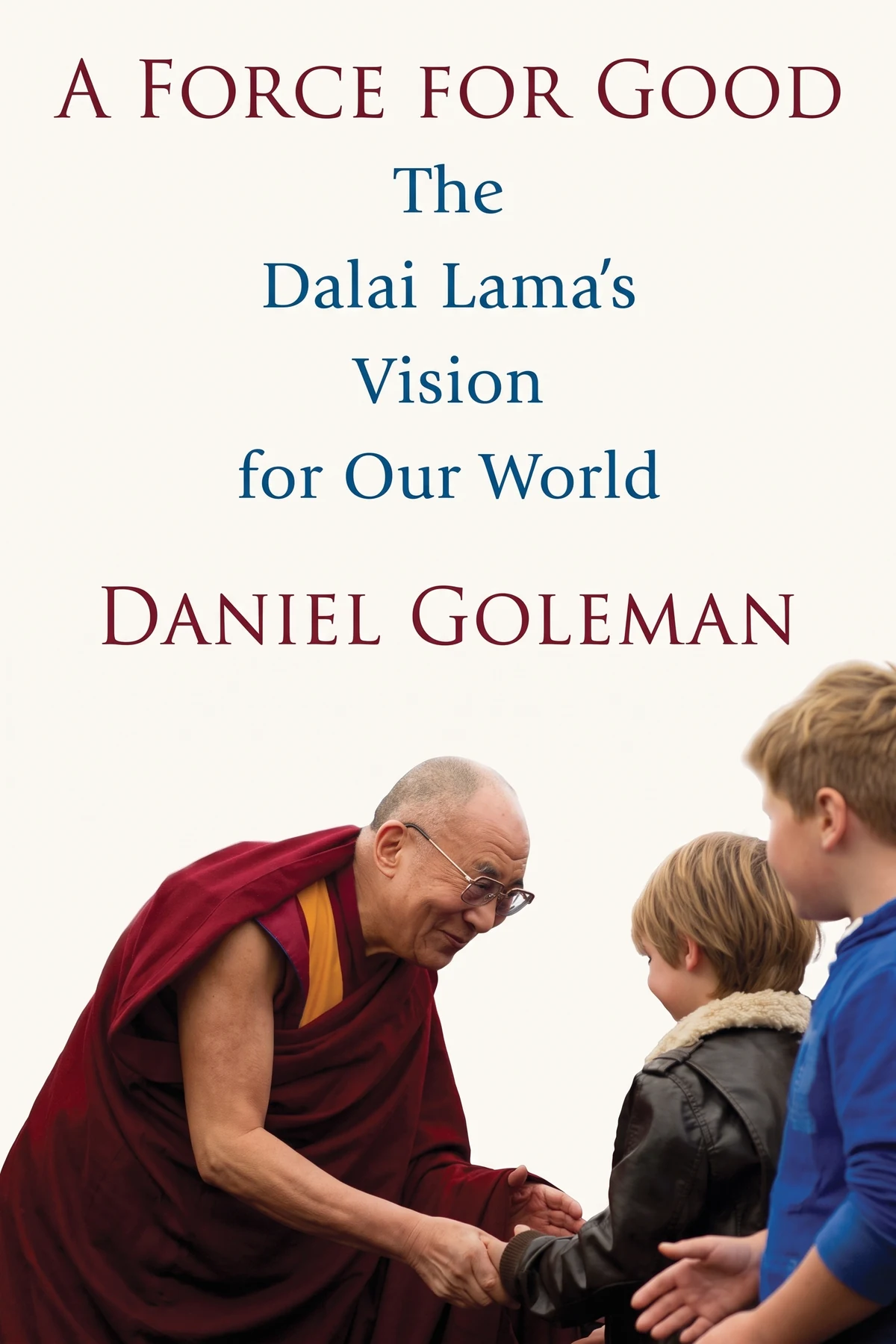
A Force for Good: The Dalai Lama's Vision for Our World
Daniel Goleman
A Little History of Philosophy
Nigel Warburton
A Theory of Justice
John Rawls
A New Earth: Awakening to Your Life’s Purpose
Eckhart Tolle
AUDIO SUMMARY AVAILABLE
Listen to Summa Theologica in 15 minutes
Get the key ideas from Summa Theologica by Thomas Aquinas, plus 5,000+ more titles in English and Thai.
- 5,000+ titles
- Listen as much as you want
- 7-day free trial
- Cancel anytime







