
15 min 18 sec
Sun Tzu and the Art of Business: Six Strategic Principles for Managers
Sun Tzu and the Art of Business offers a strategic roadmap for modern managers by adapting ancient military wisdom. It reveals how to outmaneuver competitors, lead effectively, and achieve sustainable market dominance.
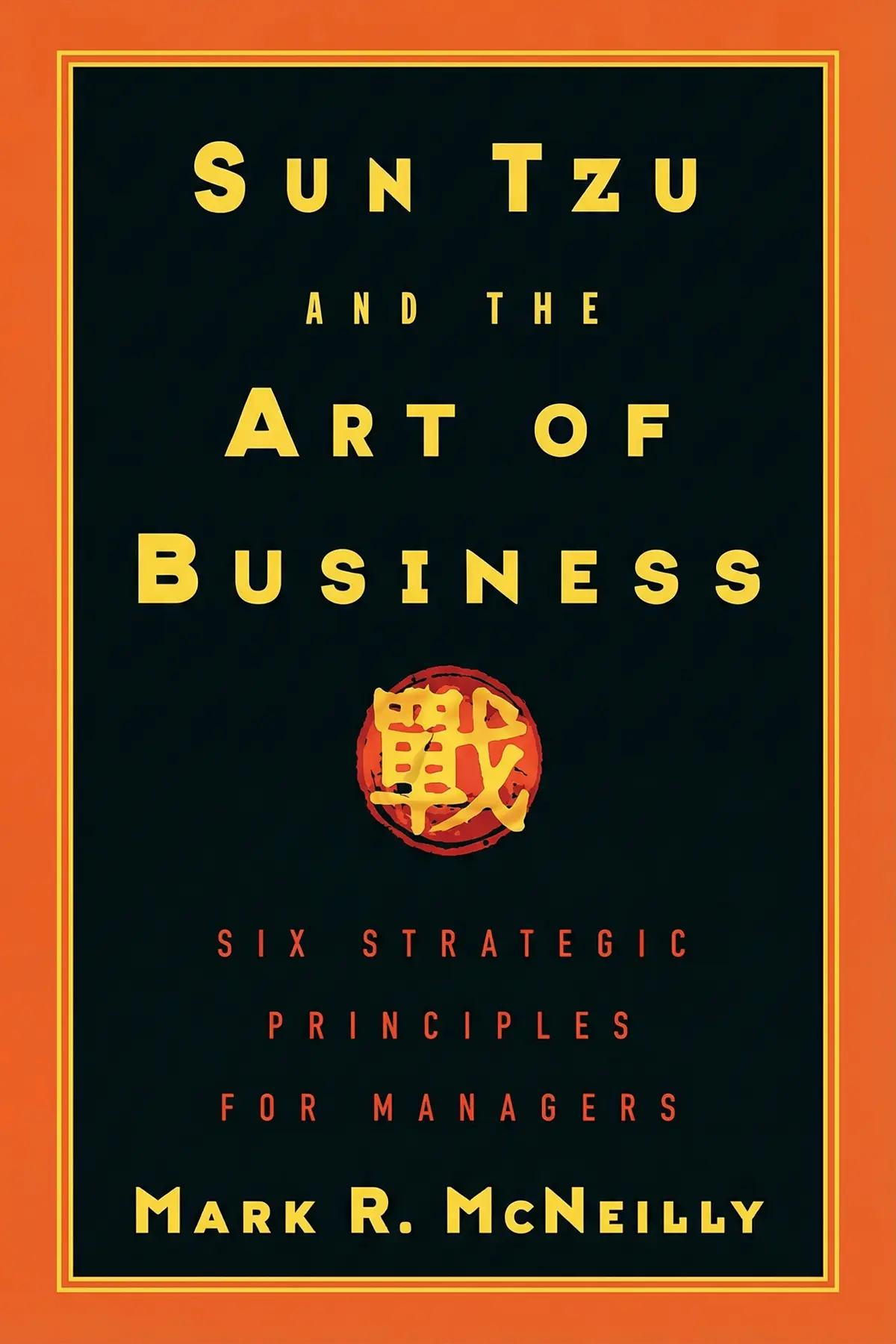
Table of Content
1. Introduction
1 min 35 sec
Imagine the modern corporate landscape not as a series of spreadsheets and meetings, but as a vast, high-stakes battlefield. Every day, companies engage in a relentless struggle for territory, fighting for the attention of customers and the loyalty of shareholders. In this environment, the difference between prosperity and collapse often comes down to strategy. How do you emerge victorious when the competition is just as hungry and well-resourced as you are? The answer might not lie in the latest tech trend, but in wisdom that is over two millennia old.
Sun Tzu, the legendary Chinese military general, wrote The Art of War as a guide for commanders to navigate the chaos of combat. Yet, his insights transcend the physical battlefield. In the business world, the principles of positioning, psychological advantage, and resource management are just as vital today as they were in ancient China. The goal is not just to survive, but to thrive by outthinking, rather than outmuscling, the opposition.
In this exploration of Sun Tzu and the Art of Business, we will look at how these timeless strategies apply to the challenges of modern management. We will move through a series of tactical shifts that prioritize intelligence over brute force and speed over sheer size. You will discover why the most successful leaders avoid direct confrontation, how they turn an opponent’s strength into a liability, and what it truly means to lead with a balance of wisdom and discipline. This is a journey into the heart of strategic mastery, showing you how to secure long-term prosperity without destroying the very market you wish to inhabit.
2. The Principle of Intact Victory
2 min 00 sec
Discover why winning a price war can be a losing strategy and how to dominate your market without destroying its profitability.
3. Exploiting Weakness over Strength
2 min 04 sec
Learn how to flow like water toward the easiest path to victory by avoiding head-on collisions with your rival’s best assets.
4. The Strategic Value of Foreknowledge
2 min 06 sec
Information is the ultimate weapon; find out how to look beyond the numbers to understand the psychology of your competition.
5. Using Speed to Maximize Resources
1 min 53 sec
In a battle between the fast and the large, the fast often win. Explore how velocity can act as a powerful multiplier for your business.
6. The Art of the Indirect Attack
2 min 01 sec
Master the two-pronged offensive to distract your rivals with a direct move while delivering the winning blow from the side.
7. The Five Pillars of Strategic Leadership
2 min 11 sec
What qualities separate a great leader from a reckless one? Uncover the essential traits of wisdom, courage, and discipline.
8. Conclusion
1 min 28 sec
As we close this exploration of Sun Tzu and the Art of Business, the throughline becomes clear: strategy is not about being the loudest or the largest, but about being the most prepared and the most adaptable. The marketplace is an ever-shifting landscape where the rules of engagement are constantly being rewritten. By applying these six principles, you move away from the exhausting cycle of direct competition and toward a more intelligent form of leadership.
Remember that true victory is one that leaves the market intact and profitable. Seek the path of least resistance by focusing on your competitor’s weaknesses rather than their strengths. Prioritize deep foreknowledge over surface-level data, and use speed as a multiplier for your existing resources. Never forget the power of the indirect attack to catch your rivals off guard. And finally, cultivate the character of a leader who is wise, brave, humane, sincere, and disciplined.
The wisdom of Sun Tzu has endured for over two thousand years because human nature and the nature of conflict do not change. Whether you are leading a team of five or a company of fifty thousand, these lessons offer a roadmap to not just winning the day, but securing a prosperous future. Now, it is time to take these insights off the page and into your professional life. Look at your current challenges through the lens of the ancient general, and you may find that the path to victory is already right in front of you.
About this book
What is this book about?
Sun Tzu and the Art of Business bridges the gap between ancient eastern philosophy and the fast-paced world of modern commerce. Based on the foundational principles found in The Art of War, this guide explains how business leaders can apply military strategies to the boardroom and the marketplace. It moves beyond simple competition, teaching managers how to win without the destructive consequences of price wars or corporate burnout. The book outlines six core strategic principles, ranging from the importance of attacking an opponent's weaknesses to the necessity of speed and foreknowledge. By following these insights, leaders can learn how to capture market share intact, utilize indirect attacks to catch rivals off guard, and cultivate the specific character traits required for successful leadership. Whether you are navigating a small startup or a global corporation, these timeless lessons provide a framework for achieving victory while preserving the value of the industry you seek to lead.
Book Information
About the Author
Mark R. McNeilly
Mark R. McNeilly is an author, academic, and seasoned business executive. He currently serves as a professor of marketing at the University of North Carolina. His professional background includes extensive experience in the corporate world, having previously held positions with major global technology companies IBM and Lenovo.
Ratings & Reviews
Ratings at a glance
What people think
Listeners view this book as a beneficial guide for managers, specifically those who didn't study business. It also earns praise for being accessible, with one listener describing it as a perfect supplement to Sun Tzu's original treatise. Additionally, listeners are pleased with the specific translations and explanations provided within the work.
Top reviews
Wit
McNeilly does a fantastic job of translating ancient military wisdom into a language that modern corporate leaders can actually use. For those of us without an MBA, the way he breaks down complex strategies into readable, actionable steps is a godsend. Truth is, most business books are fluff, but this acts as a legitimate companion to the original text. I particularly liked the focus on winning without direct, resource-depleting conflict. It is a manual for long-term prosperity rather than just short-term gains. If you want to understand the competitive landscape, start here.
Show moreEli
The chapter on capturing territory without destroying it changed my entire approach to my startup's expansion strategy. It’s easy to get caught up in the "war" for customers and forget that you need a functional market once the battle is over. Mark McNeilly avoids the cheesy tropes usually found in these types of crossover books. Instead, he offers a sharp, disciplined look at how to be a more humane and wise leader. Not gonna lie, this is one of the few business books I plan on revisiting every single year for inspiration.
Show moreSuphan
After hearing about this book in a strategy seminar, I picked it up to see if the hype was real. The wisdom regarding leadership qualities—specifically boldness and discipline—is something every entrepreneur needs to hear repeatedly. It’s a great book for anyone wanting to better adapt their strategies to conquer more market share without fighting a war of attrition. The way McNeilly connects the battlefield to the marketplace is genuinely insightful and very easy to follow. It’s definitely a valuable resource that makes the ancient texts feel surprisingly relevant today.
Show moreWanida
Ever wonder why some companies thrive while others burn through cash in useless marketing wars? This book answers that by focusing on Sun Tzu’s principle of attacking where the enemy is not. The author explains that rushing head-on into a rival’s strength is a recipe for disaster. While some of the corporate examples feel a little bit like a stretch, the underlying logic is sound. It’s a very thoughtful analysis of how to use speed to compensate for limited resources. If you are responsible for strategy, you need this.
Show moreBam
As a project manager with no formal business background, I found this incredibly accessible compared to other dry strategy guides. The book focuses heavily on the five key qualities of a leader, emphasizing wisdom and sincerity over raw power. Frankly, the interpretation of the 'Art of War' here is much easier to digest than trying to decode the original manuscript on your own. My only minor gripe is that the writing can feel a bit repetitive in the middle chapters. However, the concrete examples of market capture make the concepts stick.
Show moreTim
This book provides a much-needed bridge between ancient philosophy and the cutthroat reality of today's market. McNeilly emphasizes that the ultimate goal is to conquer territory without destroying the very infrastructure you want to inherit. That's a vital lesson for anyone involved in mergers or acquisitions. Gotta say, the section on conducting in-depth research into competitors was particularly illuminating for my current role. It’s not just about fighting; it’s about knowing when the circumstances are shifting in your favor. A solid resource for any entrepreneur's shelf.
Show moreYongyut
Finally got around to reading this one, and I was pleasantly surprised by the depth of the case studies provided. Many books try to adapt Sun Tzu, but this one actually provides a deep-dive analytics approach rather than just quoting the famous lines. In my experience, the chapters on surprise attacks and engaging the enemy in two places at once are the most practical. The tone is mostly analytical, which helps keep the focus on strategy rather than just motivational fluff. It definitely serves as a high-quality manual for securing market supremacy.
Show moreTar
To be fair, the core concepts here are brilliant because they stem from one of the greatest military minds in history. However, McNeilly’s adaptation feels like it could have been trimmed down by about fifty pages without losing any real substance. The repetition of "avoiding strength and attacking weakness" starts to feel a bit stale by the end. Still, the translations are quite good and the modern context helps visualize the battleground of the business world. It’s a decent read for beginners, though seasoned strategists might find it a bit basic.
Show moreVera
Look, if you have already read 'The Art of War' multiple times, you might find this book a bit redundant. It follows the source material so closely that it occasionally fails to carve out its own identity as a business text. Personally, I think the author did a good job with the interpretations, but some of the specific examples are starting to feel dated. The world of business has changed significantly since this was first published. It’s still a useful companion, but don't expect it to revolutionize your entire worldview.
Show moreTariq
Not what I expected given the high praise from colleagues who suggested this was a "must-read" for managers. While the initial premise is interesting, the analytics felt quite out of date for the current digital landscape. I expected a more modern take on the principles, but it felt like a direct port of ancient tactics without enough adaptation for today's speed. The truth is, you could probably just read the original Sun Tzu text and get the same value in half the time. It was way too repetitive for my taste.
Show moreReaders also enjoyed
A Year with Peter Drucker: 52 Weeks of Coaching for Leadership Effectiveness
Joseph A. Maciariello



Acting with Power: Why We Are More Powerful Than We Believe
Deborah Gruenfeld
All In: How Great Leaders Build Unstoppable Teams
Mike Michalowicz
7 Powers: The Foundations of Business Strategy
Hamilton Helmer
AUDIO SUMMARY AVAILABLE
Listen to Sun Tzu and the Art of Business in 15 minutes
Get the key ideas from Sun Tzu and the Art of Business by Mark R. McNeilly, plus 5,000+ more titles in English and Thai.
- 5,000+ titles
- Listen as much as you want
- 7-day free trial
- Cancel anytime







