

18 min 18 sec
Superbosses: How Exceptional Leaders Master the Flow of Talent
Discover how legendary leaders across diverse industries find and develop elite talent. This guide reveals the unconventional strategies of Superbosses, showing you how to inspire teams and build a legacy of leadership.
Table of Content
1. Introduction
1 min 42 sec
Step into any corporate breakroom, and you’ll likely overhear the same tired complaints about management. It’s a common refrain: the boss is too demanding, too distant, or simply doesn’t understand the work. But while most managers struggle to be liked, a very small, elite group of leaders chooses a different path entirely. They aren’t focused on being popular; they are focused on being transformative. These are the superbosses.
When we look at the most successful people in any given field—whether it’s the high-stakes world of venture capital, the creative intensity of jazz, or the fast-paced kitchen of a Michelin-starred restaurant—we often find that a single individual stands at the center of a massive network of talent. These leaders have a peculiar gift for finding raw potential and refining it into gold. They don’t just build companies; they build people. This summary explores the specific traits and behaviors that set these exceptional individuals apart from the average manager.
We will dive into the different archetypes of superbosses and look at how they approach hiring, motivation, and team dynamics. What you will find is that their methods are often counterintuitive. They might be incredibly tough, or they might be intensely nurturing, but they all share a singular obsession: the flow of talent. By the end of this journey, you’ll understand the ‘superboss quotient’ and how you can apply these principles to your own leadership style. The goal here isn’t just to help you run a better meeting; it’s to help you spark a movement of creativity and productivity that will define your career and the careers of everyone you lead. Let’s explore what it truly takes to master the art of leadership at the highest level.
2. The Three Archetypes of Elite Leadership
2 min 30 sec
Leadership isn’t a one-size-fits-all endeavor, and superbosses generally fall into three distinct categories based on their primary motivations.
3. The Core Trio of Superboss Qualities
2 min 22 sec
Behind every great superboss is a set of three non-negotiable personality traits that drive their every action.
4. Charisma Through Integrity and Authenticity
1 min 53 sec
Real leadership presence isn’t about being loud; it’s about being true to oneself and one’s mission.
5. Recruiting for the Three C's of Talent
2 min 09 sec
Finding the right people is the foundation of any superboss’s empire, and they look for things most HR departments ignore.
6. The Power of High Expectations and Infectious Confidence
1 min 57 sec
Superbosses understand that people are capable of far more than they think, and they use that belief as a primary motivator.
7. Balancing Deep Bonds with Healthy Competition
1 min 58 sec
A great team needs both the security of a family and the fire of a rivalry to truly thrive.
8. Assessing Your Own Superboss Quotient
1 min 53 sec
Becoming an elite leader starts with an honest look in the mirror and a commitment to three core areas of growth.
9. Conclusion
1 min 54 sec
As we wrap up our look at the world of superbosses, the most important takeaway is that leadership is not about maintaining the status quo; it’s about being an engine for growth. Whether you identify more with the creative focus of an Iconoclast, the competitive drive of an Inglorious Bastard, or the nurturing spirit of an activist mentor, the goal remains the same: to find great people and help them become even better.
We’ve seen that these leaders aren’t just lucky. They are intentional about their vision, fearless in their pursuits, and deeply authentic in their interactions. They hire for the ‘three C’s’—intelligence, creativity, and flexibility—and they create a culture where high expectations are matched by infectious confidence. They understand that the strongest teams are those that balance deep emotional bonds with the fire of healthy competition.
So, where do you go from here? The first step is to take what you’ve learned and put it into practice. Consider trying a ‘superboss day.’ Choose a specific archetype—perhaps the one that feels most outside your comfort zone—and adopt that persona for a day. If you’re usually very hands-off, try being a Nurturer and spend the day focused entirely on teaching. If you’re usually very soft, try being an Inglorious Bastard and push for a level of perfection you’ve never asked for before. This isn’t about changing who you are permanently; it’s about expanding your leadership toolkit.
Ultimately, being a superboss is about building a legacy. When you look back on your career, the measure of your success won’t just be the profits you made or the titles you held. It will be the number of leaders you helped create. It will be the people who are out in the world right now, achieving great things because they spent time in your orbit. By embracing these principles, you can start building that legacy today. You have the blueprint; now it’s time to start the work.
About this book
What is this book about?
Have you ever wondered why some leaders seem to produce a disproportionate number of industry stars? In the business world, these figures are known as superbosses. They don't just manage projects; they cultivate entire ecosystems of excellence. This exploration into their methods reveals that the secret to their success isn't just about being a pleasant manager or a hard-driving executive. Instead, it’s about a unique combination of vision, competition, and a deep commitment to teaching. By examining the lives of iconic figures in music, sports, and business, we see a clear pattern emerge. Superbosses prioritize talent development above almost everything else, viewing their employees not as temporary workers, but as the future of their industry. They hire differently, they push harder, and they maintain relationships that last decades. Whether they are nurturing mentors or demanding perfectionists, their ultimate goal is to see their protégés succeed on the highest possible stage. If you are looking to move beyond traditional management and start building a world-class team, the promise of this study is a blueprint for becoming a leader who leaves a permanent mark on the world.
Book Information
About the Author
Sydney Finkelstein
Sydney Finkelstein is a recognized authority on the topics of business leadership and strategic management. He has authored 19 books throughout his distinguished career, with notable titles including Why Smart Executives Fail and Think Again: Why Good Leaders Make Bad Decisions and How to Keep It from Happening to You. In addition to his prolific writing, Finkelstein serves as the Steven Roth Professor of Management at the Tuck School of Business at Dartmouth College, where he also holds the position of faculty director.
Ratings & Reviews
Ratings at a glance
What people think
Listeners describe this work as exceptionally educational and motivating, featuring excellent anecdotes that act as a quality manual for developing into an effective manager. They view it as essential material for every supervisor.
Top reviews
Somrutai
Every manager currently struggling with retention and team morale needs to read this book immediately. It completely flipped my perspective on what it means to be a leader. It’s not about your own ego or your personal success; it’s about what you can do for your employees to make them great. Finkelstein uses wonderful examples from comic books to finance to show how the best bosses act as teachers and mentors. This 'superboss' methodology is exactly what the modern workplace needs. I felt super energized after finishing it. Unlike other business books that are just dry data, this one is inspirational and provides a vision to aspire to. It’s a masterclass in how to build a team that doesn't just perform, but actually transforms the entire industry around them. I can’t recommend it enough for new leaders.
Show moreAndrei
Finally, a business book that focuses on the human element of mentorship rather than just spreadsheets and KPIs. I’ve read a lot of management literature, and 'Superbosses' stands out because it highlights the 'apprenticeship' model that has been lost in many modern corporations. The way Finkelstein chronicles these industry legends is fascinating. He shows that by being a teacher-leader, you create a cycle of success that far outlasts your own tenure. I found the stories about the culinary world and fashion industry particularly vibrant. This is a must-read for all bosses who want to understand how to motivate and enable others. It's inspirational, deeply researched, and provides a fresh lens on leadership. Even if you don't agree with every personality trait of these 'superbosses,' the core message about investing in people is undeniable and powerful.
Show moreClaire
The chapter regarding high-end restaurants and the apprentice model was a total game-changer for my own management style. Personally, I love storytelling as a way to learn, and this book delivers that in spades. Finkelstein explains how exceptional leaders master the flow of talent by essentially becoming a talent magnet. They don't just hire the best; they make people the best. While some reviewers think it’s repetitive, I think the repetition helps drive home the core principles. You start to see the patterns in how these disparate leaders—from different industries and eras—all share the same fundamental obsession with growth. It made me want to be the kind of boss that people look back on as the turning point in their careers. If you're looking for a book that is both a guide and a source of inspiration, this is it. It's an absolute gem.
Show moreDimitri
Not what I expected, but in a mostly good way. Finkelstein, a professor at Dartmouth, takes a very academic look at how 'supermanagers' operate differently than your average boss. I was fascinated by the idea of the apprenticeship format. He shows how junior managers are trained not just to stay, but to eventually leave and dominate the industry. This creates a powerful network that benefits the original boss in the long run. While the book can be a bit dense and repetitive—I definitely think some chapters could have been trimmed—the overarching message about nurturing protégés is vital. It made me realize that my current approach to retention might be too narrow. If we focus too much on keeping people in their seats, we miss the opportunity to build a legacy. It’s a solid, informative read for any director looking to scale their influence.
Show moreTod
Wow, the insights on talent pipelines really resonated with me and my current team. Picked this up after a colleague mentioned Finkelstein's work on why executives fail, and this is a great companion to that. The book is full of fantastic stories that serve as a guide for anyone who wants to be more than just a manager. I particularly liked the focus on how superbosses aren't afraid to let their best people go. That’s a scary concept for most of us! By fostering these 'alumni networks,' they actually increase their own power and reach. The writing style is generally engaging, though I'll admit the middle section drags. You have to be willing to sift through some academic fluff to get to the gems. Still, it’s a must-read for bosses who want to leave a lasting mark on their industry.
Show moreNong
Gotta say, Finkelstein’s research into the different 'types' of superbosses—the Iconoclasts, Glorious Bastards, and Nurturers—is brilliant. It provides a much-needed framework for understanding why some abrasive leaders still manage to produce incredible talent. I found the section on the 'Glorious Bastard' type especially eye-opening. It explains how even difficult personalities can be superbosses if they truly prioritize the development of their people. The book is informative and well-crafted, though it definitely suffers from the common business-book trope of repeating the main thesis in every single chapter. If you can get past the redundancy, there's a lot of wisdom here. It’s a great guide for anyone trying to understand the flow of talent in high-stakes environments like professional sports or high-end kitchens. This is definitely a book you have to chew on word by word to get the full value.
Show moreCarter
As someone who has spent a decade in corporate management, I found the concept of the 'talent flow' to be the only truly redeeming part of this work. Finkelstein does a fair job explaining how certain managers create a 'mafia' of successful alumni, but the rest of the book feels like a repetitive loop. He focuses on these high-profile business deities but fails to account for simple 'dumb luck' or the errors of competitors. It's the classic fundamental attribution error in business writing. I enjoyed some of the anecdotes about the fashion and football industries, but they didn't provide a roadmap for a regular manager. It’s a fine read if you want some light inspiration, but don't expect a step-by-step guide to transforming your leadership style. To be fair, the research is extensive, but the actual takeaways are few and far between.
Show moreLincoln
Is there anything new to say about Larry Ellison or the same handful of CEOs we always talk about? Honestly, that was my biggest gripe with this book. While the storytelling is used to emphasize concepts, many of the anecdotes felt bland and lacked a real punch. I did appreciate the breakdown of the three types of superbosses, as it helped me categorize the leaders I've worked for in the past. However, the advice is quite thin on the ground. It’s more of a descriptive study than a prescriptive guide. I felt exhausted just imagining working for some of these people, as many of their traits seem borderline toxic or at least incredibly idiosyncratic. It’s an okay book if you’re interested in the theory of management, but it didn't apply to my daily grind as much as I hoped it would.
Show moreMan
Truth is, I desperately wanted to enjoy this book when I first picked it up, but it was a massive letdown. The core idea is decent—that some leaders are exceptional at fostering talent—but that concept is repeated ad nauseam for hundreds of pages. In my experience, the entire argument could have been effectively condensed into a 20-page Harvard Business Review article without losing any of the substance. It felt like a chore to get through the case studies. Why do we need more analysis on Larry Ellison or high-end gourmet restaurants? We’ve heard these stories a thousand times before. The book attempts to frame these managers as unique industry-shapers, yet it uses a standard, repetitive trade-book approach that drains the excitement out of the subject. If you have 10 hours for an audiobook, spend them elsewhere; a five-minute summary of this would be far more efficient.
Show moreCholada
This book unfortunately prioritized personal political leanings over objective management theory in a way that I found incredibly distracting. The author cites Hillary Clinton as a primary example of a 'superboss' while relegating Donald Trump to the status of a 'bad boss,' which feels dated and biased given the 2016 publication window. Beyond the politics, I struggled with the sheer lack of actionable advice. Finkelstein repeats the same tired generalities about leadership and talent without ever providing a manual for how to actually implement these changes. I stopped reading about halfway through because the writing style felt incredibly sleepy and relied on the word 'superboss' far too often without defining the actual purpose for the reader. It felt less like a research-backed business guide and more like a collection of bland anecdotes that failed to leave any lasting impression on me.
Show moreReaders also enjoyed
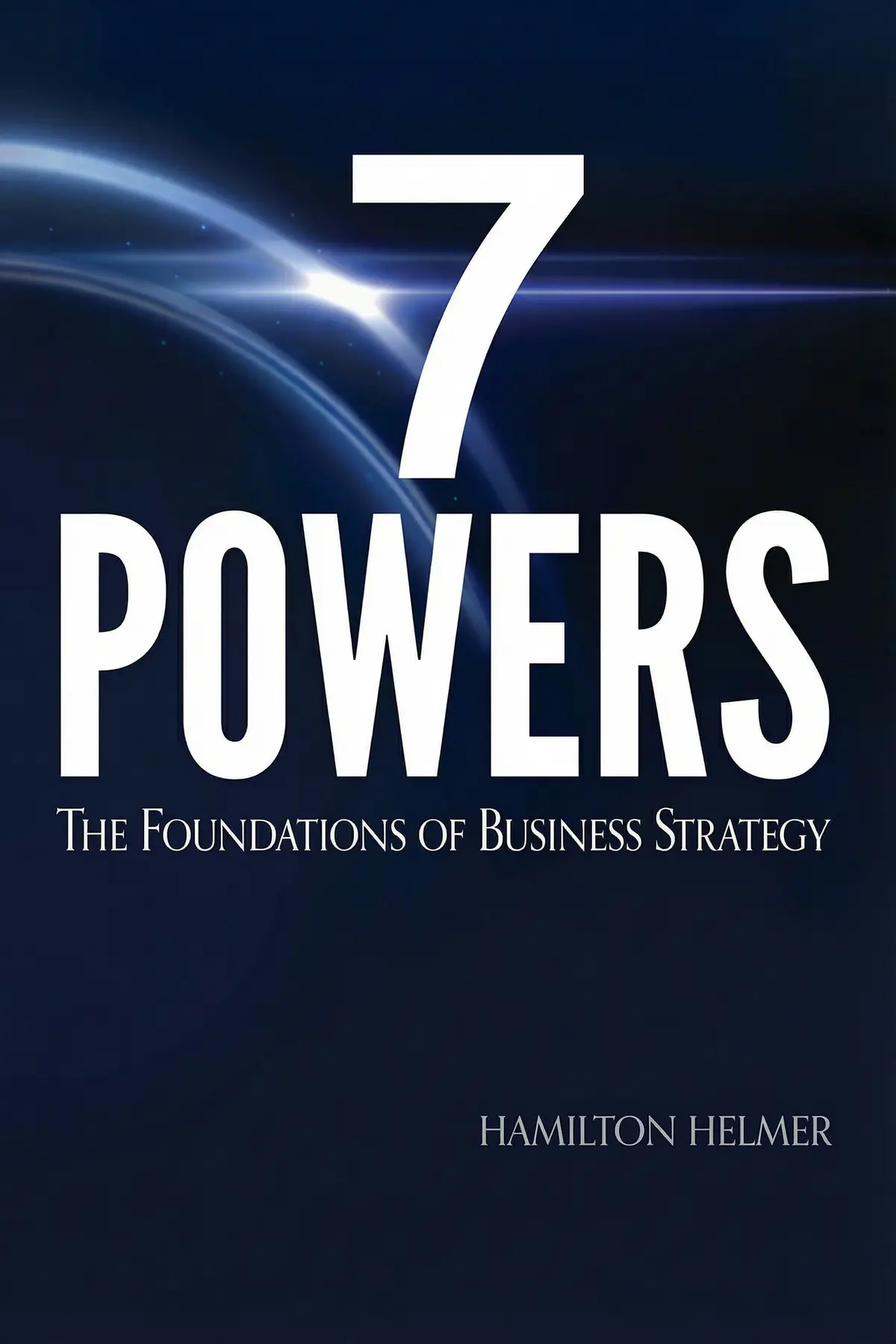
7 Powers: The Foundations of Business Strategy
Hamilton Helmer

A Bigger Prize: How We Can Do Better Than the Competition
Margaret Heffernan
A Year with Peter Drucker: 52 Weeks of Coaching for Leadership Effectiveness
Joseph A. Maciariello
AUDIO SUMMARY AVAILABLE
Listen to Superbosses in 15 minutes
Get the key ideas from Superbosses by Sydney Finkelstein, plus 5,000+ more titles in English and Thai.
- 5,000+ titles
- Listen as much as you want
- 7-day free trial
- Cancel anytime







