
14 min 50 sec
Supercommunicators: How to Unlock the Secret Language of Connection
Discover the hidden science behind meaningful connection as Charles Duhigg reveals how anyone can master the art of conversation through identifying the three core types of human dialogue and achieving neural alignment.
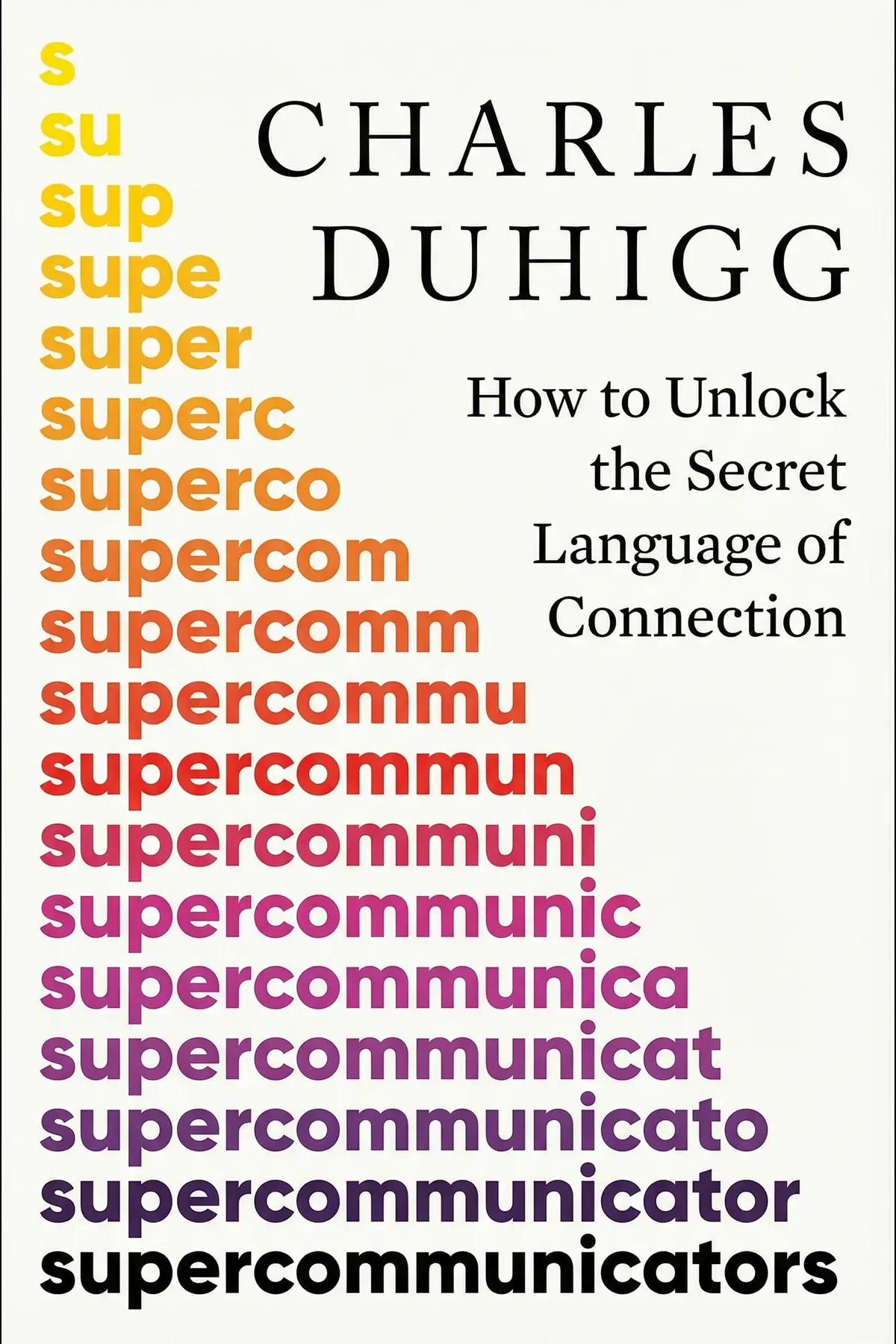
Table of Content
1. Introduction
1 min 44 sec
Think about the one person in your life you always turn to when things go sideways. Maybe you just received some difficult news at work, or perhaps a personal relationship is feeling strained. When you pick up the phone to call this person, what is it that you’re looking for? It’s usually not the person who gives the most logical advice or the one who makes the funniest jokes. Instead, it’s the person who makes you feel completely seen. They have a way of listening that makes your thoughts feel clearer and your burdens feel lighter. We often think of these people as having a natural gift, a sort of social magic that they were born with. But what if that ability wasn’t a mystery? What if the art of connecting deeply with others was actually a set of skills that anyone could learn?
In this summary of Charles Duhigg’s work, we are going to explore the mechanics of what it means to be a supercommunicator. We’ll move beyond the idea that communication is just about the words we say and look at the underlying structures that make a conversation successful. You will discover that every interaction we have actually falls into one of three specific buckets: practical, emotional, or social. The secret to those people who seem to ‘get’ everyone is that they have learned how to identify which bucket a conversation is in and how to match the person they are talking to.
We’re going to walk through the science of neural coupling—how our brains actually sync up when we truly understand each other—and look at the specific rules for turning any awkward exchange into a ‘learning conversation.’ By the end of this journey, you’ll have a toolkit for navigating everything from high-stakes negotiations to the most delicate emotional moments with your loved ones. The goal isn’t just to talk better; it’s to connect in a way that changes the quality of your relationships and your life. Let’s begin by looking at the fundamental foundation of every great connection: the ability to recognize exactly what kind of conversation you’re having in the first place.
2. Achieving Neural Alignment through Conversation Matching
2 min 05 sec
Discover the biological phenomenon that occurs when two people truly connect and why the secret to success lies in matching your partner’s wavelength.
3. The Three Essential Layers of Dialogue
1 min 48 sec
Every interaction we have operates on one of three distinct levels, and failing to recognize which one you’re in can lead to total communicative breakdown.
4. The Practical Conversation and the Power of Shared Goals
2 min 07 sec
Mastering logical discussions requires more than just facts; it involves uncovering the hidden motivations that drive every decision.
5. Emotional Connection through Deep Questions and Vulnerability
1 min 52 sec
Learn why the most effective teams in the world, including astronauts, prioritize emotional intelligence and how deep questions can bridge any social gap.
6. Navigating Social Identity and Group Dynamics
1 min 51 sec
Identity is the invisible guest in every room. Discover how addressing social backgrounds can resolve deep-seated workplace and personal conflicts.
7. The Four Rules of the Learning Conversation
1 min 43 sec
Becoming a master communicator isn’t about luck; it’s about following a specific set of four rules designed to maximize understanding and minimize friction.
8. Conclusion
1 min 40 sec
As we wrap up our look into the world of supercommunicators, it’s important to remember that these skills are like a muscle. At first, trying to categorize every conversation or asking deep, vulnerable questions might feel a bit forced. You might find yourself pausing to wonder if you should be in a practical or emotional mode. But with practice, this awareness becomes your new normal. You will start to see the hidden structures in every meeting, every dinner date, and every phone call. You’ll notice when someone is reaching out for empathy and you’ll know exactly how to give it. You’ll see when a project is stalled because of a clash of identities, and you’ll have the tools to address it directly.
The core message here is that connection is a choice. It’s a choice to be present, a choice to be curious, and a choice to be vulnerable. By paying attention to the three layers of dialogue—the practical, the emotional, and the social—you gain the ability to bring people together rather than pushing them apart. You move away from the frustration of being misunderstood and toward the incredible power of neural alignment.
So, as you go about your day, try to put one of these rules into practice. Start by simply asking a deep question instead of a shallow one. Or, the next time you sense a conflict brewing, ask yourself what the other person is actually seeking. Communication is the most important tool we have for building a meaningful life, and by becoming a supercommunicator, you are opening the door to deeper, more fulfilling relationships with everyone you meet. You have the ability to make people feel heard—and in doing so, you will find that the world begins to listen to you in a whole new way.
About this book
What is this book about?
Have you ever wondered why some people can walk into a room and instantly make everyone feel understood? In this exploration of high-level interaction, you will learn that effective communication isn't a personality trait, but a technical skill rooted in deep empathy and structural awareness. The book breaks down every exchange into three distinct categories: practical, emotional, and social. By understanding these layers, you can move past superficial talk and enter what is called a 'learning conversation.' The promise here is transformative: you will learn to synchronize your brain activity with others, navigate difficult identity-based conflicts, and use the power of deep questions to build lasting bonds. Whether you are leading a corporate team, navigating family dynamics, or simply trying to be a better friend, these tools provide a roadmap for truly being heard and hearing others in return.
Book Information
About the Author
Charles Duhigg
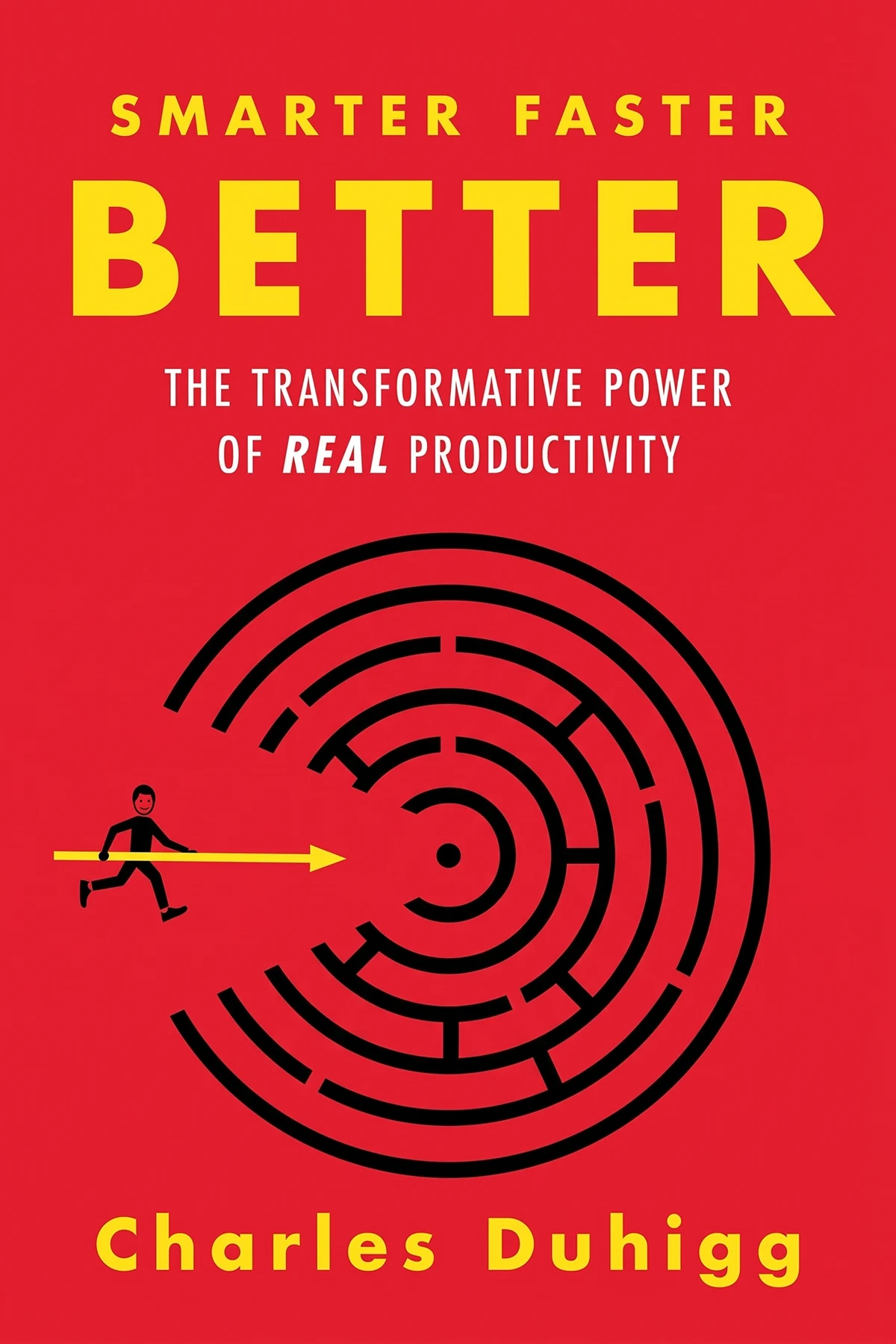
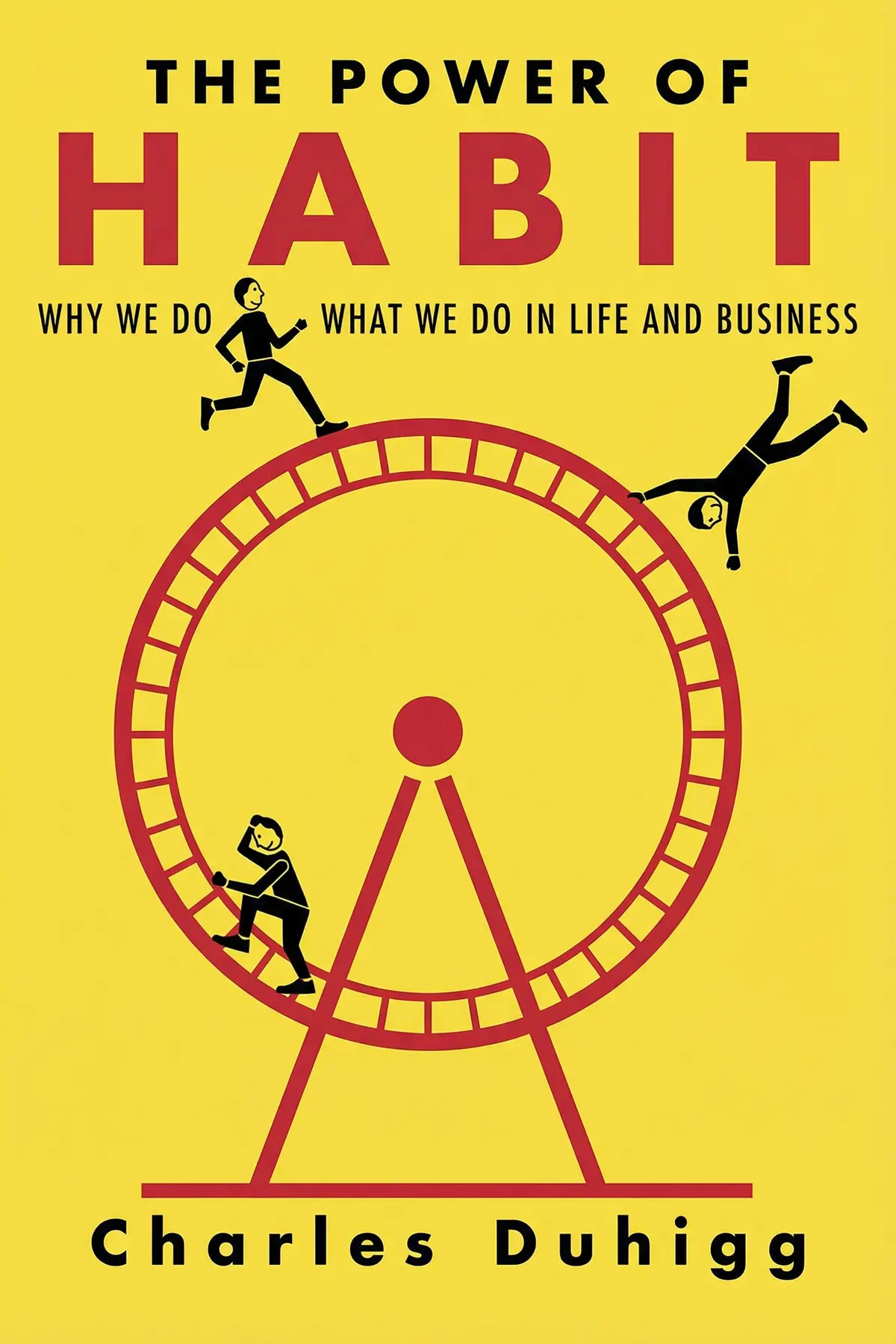
Charles Duhigg is a Pulitzer Prize–winning investigative journalist and the acclaimed author of bestsellers like The Power of Habit and Smarter Faster Better. Known for his deep-dive reporting for The New York Times, his work has earned him the National Journalism Award and the Investigative Reporters and Editors’ Medal, particularly for his influential coverage of global business practices and technology.
Ratings & Reviews
Ratings at a glance
What people think
Listeners find the material deeply engaging and value its hands-on guidance, which incorporates actual examples and tactics. They admire how it expertly explores powerful communication and offers significant insights supported by detailed research. The delivery is succinct, and listeners appreciate the use of anecdotes, with one listener highlighting the way it blends smart science with engaging narratives. Although many find the accounts gripping, views on the overall quality of the stories are divided.
Top reviews
Rungtip
After staying up until the sun came back up just to finish the final chapter, I can say this was worth the sleep deprivation. I bought a physical copy before I even finished the ebook because I knew I’d want to highlight the hell out of it. The storytelling is just masterful. From CIA operatives to the writers of The Big Bang Theory, the examples show exactly how 'supercommunicators' navigate high-stakes tension. It’s not just about what you say, it’s about making the other person feel like you’re actually in sync with them. Some people might find the anecdotes a bit long, but they really help the data sink in. I’ve already started using the 'matching' technique at work and the results are pretty immediate. This is pop-science at its absolute best.
Show morePloy
Picked this up because I’m a fan of pop-psychology and I’ve been feeling a bit socially rusty lately. This book is a literal goldmine. The chapter on the Netflix culture clash was fascinating and provided a really nuanced look at how communication breaks down in high-pressure environments. I loved the concept of 'looping for understanding'—it sounds so simple, but it’s actually really hard to do correctly. The writing is punchy and the research feels rigorous without being dry. Some reviews mentioned it’s too American-centric, and while the examples are definitely US-based, the underlying psychology of human connection is universal. This is a must-read for anyone who works in a team setting or just wants to be a more empathetic friend. It’s captivating, practical, and deeply human.
Show moreAna
Finally got around to reading this, and it’s a masterclass in research-backed storytelling. I love how Duhigg takes these high-stakes scenarios—like CIA recruiting or NASA selection processes—and shows how they apply to our boring everyday lives. It’s brilliant. The book argues that communication is a skill we can all learn, not just a personality trait we're born with. That’s a very empowering message. The 'three kinds of conversations' framework is something I’ve already started teaching my team at work. It helps everyone get on the same page before a meeting even starts. If you want a book that combines smart science with riveting narratives, this is it. It’s easily one of the best books I’ve read this year. Highly recommended for managers and leaders.
Show morePrayoon
Look, communication is more of a skill than a talent, and this book proves it. I’m a naturally introverted person, and I often feel like I’m 'missing' something in social situations. This book gave me a map. It explained the 'tells' I was missing and helped me realize that most of the time, I was having a 'practical' conversation when the other person wanted an 'emotional' one. That realization alone was worth the price of the book. The stories about the Big Bang Theory writers were especially fun and highlighted how even the best communicators have to work at it. It’s captivating, well-researched, and full of insights that you can actually use. Ignore the haters—if you want to connect better with people, buy this book.
Show moreJack
Duhigg has this incredible knack for distilling complex social science into stories that actually stick. After reading his previous work, I had high expectations, and for the most part, he delivered. The book breaks down communication into three distinct layers: practical, emotional, and social. This framework is a game-changer because it explains why so many of our arguments feel like we're speaking different languages. One person wants to solve a problem, while the other just wants to feel heard. I did find the transition into identity politics in the later chapters a bit of a stretch, and some of the examples felt more like persuasion tactics than genuine connection. However, the core message about active listening and asking deep questions is invaluable. It’s a captivating read that makes you look at every conversation differently.
Show moreSaranya
Ever wonder why some people just 'get' it while others struggle to connect? This book attempts to answer that by looking at how the brain processes connection. It’s a very smart piece of science writing that manages to stay engaging throughout. I appreciated how Duhigg emphasized that listening isn't just about being quiet; it's an active, physical process. To be fair, if you’ve read David Brooks’ 'How to Know a Person,' some of this will feel like familiar territory. They cover very similar ground regarding empathy and the importance of being seen. Duhigg’s approach is a bit more structured with his 'three kinds of conversations' rules, which I found helpful for my analytical brain. A solid four stars for the research quality alone, even if a few of the stories dragged on a bit too long.
Show moreBook
The chapter on identity really changed my perspective on how we approach difficult topics. As someone who often avoids conflict, learning about how to bridge gaps by focusing on shared identities rather than differences was eye-opening. Duhigg uses real-world examples, like courtroom drama and political mediation, to show that connection is possible even in the most polarized settings. I do agree with some critics that the book can be a bit 'wordy.' Some of the narratives could have been trimmed by twenty pages without losing the point. Still, the core strategies are solid. The way he explains the 'Who are we?' conversation helped me navigate a recent family argument much more effectively. It’s a valuable resource for anyone seeking to enhance their communication skills in a divided world.
Show moreSangduan
In my experience, Duhigg is usually the gold standard for non-fiction, but this one left me feeling a bit conflicted. The first half is fantastic. It sets up a clear premise about how to identify the goal of a conversation. But then it gets messy. The 'rules of four' and various frameworks started to feel contradictory and a bit amateur compared to his earlier work. I also struggled with how some of the 'supercommunication' examples felt borderline manipulative. Using psychological 'tells' to extract information or change minds feels a bit icky when applied to personal relationships. It’s an entertaining read, but I’m not sure it actually gave me the tools to be a better communicator. It felt more like a collection of interesting stories than a cohesive manual. Decent, but not a masterpiece.
Show moreYui
As someone living in Europe, I found parts of this a bit jarring because it relies so heavily on American social patterns. In my culture, some of the 'tactical' advice about asking deeply personal questions right away would be seen as intrusive or even rude. While the general concepts of empathy and listening are universal, the implementation felt very US-centric. Also, the book is a bit long-winded. I felt like the same point was being made three different times with three different anecdotes. It's a nice enough refresher if you haven't read anything by Brene Brown or Chris Voss, but if you're already familiar with the world of emotional intelligence, there isn't much 'new' here. It’s an okay read, just don't expect it to change your life.
Show moreBoss
Not what I expected from the author of The Power of Habit, which I absolutely adored. This felt like a significant step down in terms of actionable advice. Frankly, the book leans too heavily on a specific political worldview, especially in the later sections regarding identity and vaccines. The anecdote about the doctor 'navigating' a patient’s religious beliefs felt more like psychological manipulation than healthy communication. If you're looking for a toolkit to improve your marriage or talk to your kids, you might find yourself frustrated by the heavy focus on corporate environments and legal cases. It felt tailored for executives rather than everyday people. I was hoping for a new 'Habit' style breakthrough, but this felt more like a collection of magazine articles that don't quite mesh together. There are better books on this subject.
Show more

Readers also enjoyed

AUDIO SUMMARY AVAILABLE
Listen to Supercommunicators in 15 minutes
Get the key ideas from Supercommunicators by Charles Duhigg, plus 5,000+ more titles in English and Thai.
- 5,000+ titles
- Listen as much as you want
- 7-day free trial
- Cancel anytime







