
21 min 06 sec
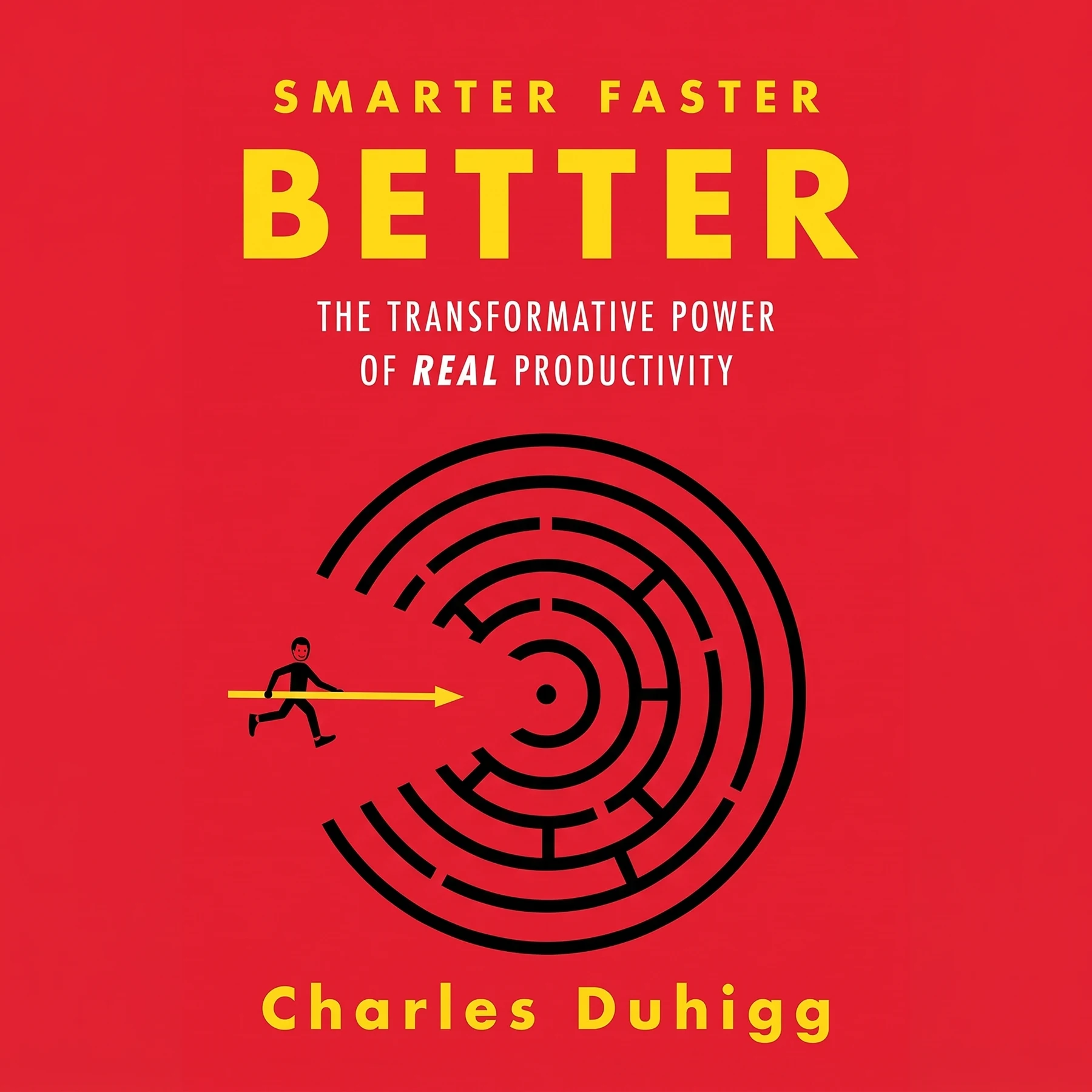
Smarter Faster Better: The Transformative Power of Real Productivity
Explore the science of productivity with Charles Duhigg as he reveals how specific choices, mental models, and team dynamics can transform your efficiency and help you reach your most ambitious goals.
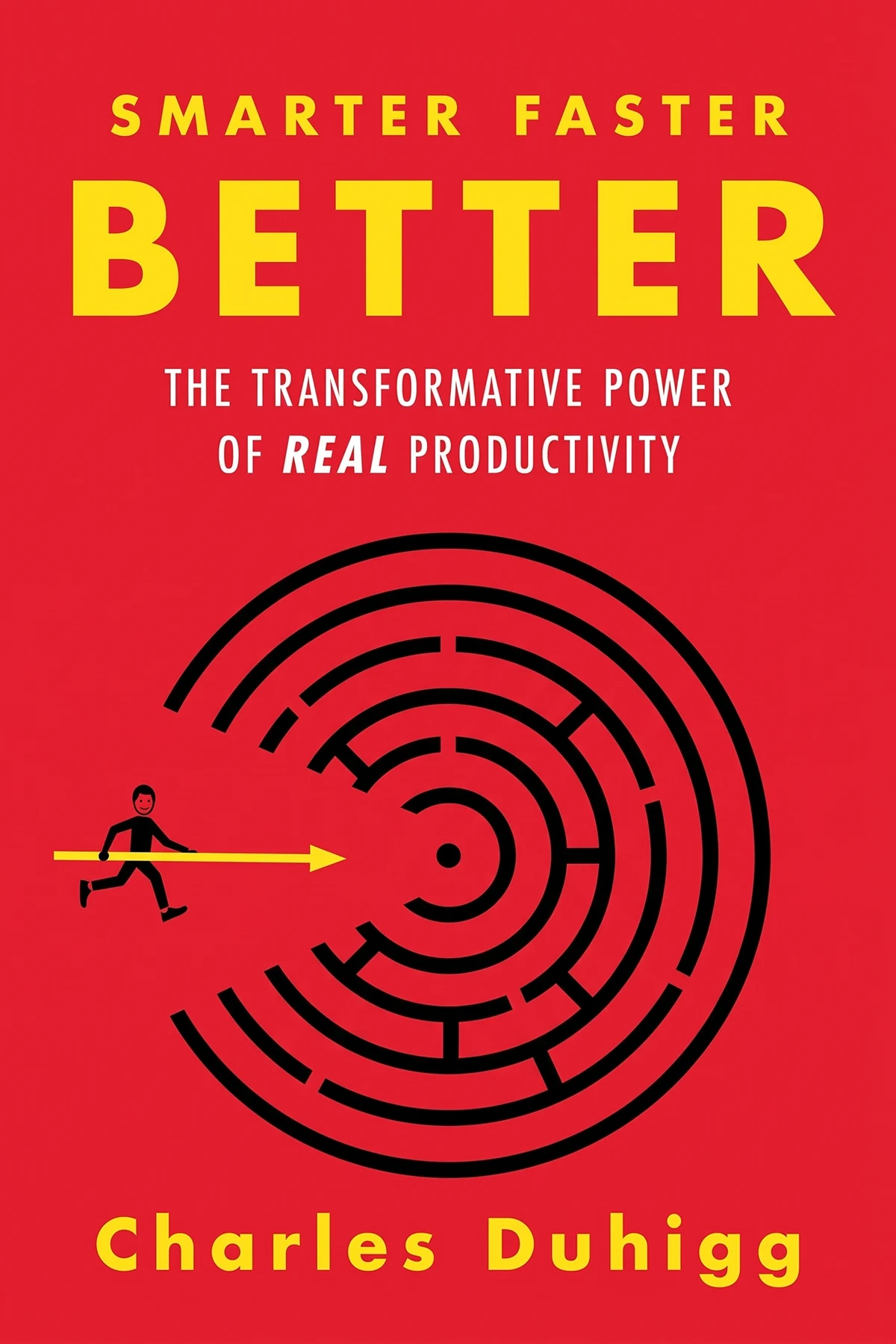
Table of Content
1. Introduction
1 min 57 sec
In our modern world, we are often obsessed with the idea of being busy. We fill our calendars, answer endless emails, and rush from one meeting to the next, yet at the end of the day, we often feel like we haven’t actually moved the needle on our most important dreams. We all know that one person who seems to operate on a different level—someone who handles immense pressure with grace, finishes their projects ahead of schedule, and still finds time for their personal passions. It’s easy to assume they possess some innate talent or a superhuman level of self-discipline, but the reality is far more interesting and accessible. Productivity isn’t about working more hours or pushing yourself to the point of exhaustion; it’s about making specific cognitive choices that allow your brain to function at its peak.
This exploration into the mechanics of efficiency reveals that being productive is actually a skill that can be learned and refined. It involves understanding how our brains process motivation, how we set our sights on the future, and how we interact with the people around us. By shifting our focus from the quantity of our work to the quality of our thinking, we can unlock a new level of performance. We are going to look at the underlying principles that separate the merely busy from the truly effective. Through the lens of neuroscience and behavioral economics, we’ll discover how to reclaim our time and our focus. The goal isn’t just to do things faster, but to do them smarter and better, ensuring that every ounce of effort we exert is actually moving us toward the life we want to lead. Let’s dive into the strategies that can turn your loftiest ambitions into your daily reality.
2. The Power of Self-Directed Choice
3 min 01 sec
Discover why having a sense of agency is the secret fuel for long-term motivation and how even small decisions can restart your internal engine.
3. Balancing Ambition with Actionable Steps
2 min 50 sec
Learn how to bridge the gap between your wildest dreams and your daily to-do list by using a two-tiered approach to goal setting.
4. The Art of Mental Modeling
2 min 54 sec
See how the simple act of telling yourself stories about your day can shield you from distractions and sharpen your focus.
5. Cultivating Psychological Safety in Teams
2 min 56 sec
Uncover the surprising research that proves group harmony and emotional security are more important for success than individual talent.
6. The Long-Term Success of Commitment Cultures
2 min 33 sec
Explore why companies that prioritize trust and employee loyalty consistently outperform those focused on high-pressure competition.
7. Leveraging Old Ideas for New Breakthroughs
3 min 03 sec
Find out how to boost your creativity by combining existing concepts and tapping into your personal emotional experiences.
8. Conclusion
1 min 52 sec
The journey toward becoming smarter, faster, and better is not about finding more hours in the day, but about fundamentally changing how we approach the hours we already have. We’ve seen that productivity is a byproduct of how we think. It starts with the internal drive that comes from exercising our agency and making choices that remind us we are in control. It continues with the discipline of setting high-reaching stretch goals while grounding them in the practical reality of SMART objectives. By narrating our lives through mental models, we can insulate ourselves against the chaos of the modern world and maintain a laser-like focus on our priorities.
Furthermore, we’ve learned that our success is inextricably linked to the people around us. Whether we are leading a team or building a company culture, the foundation must be one of trust, psychological safety, and mutual commitment. When we feel safe and valued, we perform at our best. And finally, we’ve seen that creativity isn’t a mysterious gift, but a process of connecting the dots and being honest about our human experience.
As you move forward, remember that the most productive choice you can make is to stop and reflect on your process. Don’t just rush into the next task. Take a moment to ask yourself why it matters and how it fits into your larger vision. Use the strategies we’ve discussed to build a life that is not just busy, but deeply meaningful and effective. You have the tools to transform your productivity; now it’s simply a matter of making the choice to use them every single day.
About this book
What is this book about?
Smarter Faster Better investigates the psychological and neurological underpinnings of productivity. Rather than focusing on simple time-management hacks, Charles Duhigg explores how the most successful people and organizations think differently. The book promises to shift your perspective from being a busy person to being a truly effective one by mastering the art of decision-making and focus. Through a series of compelling case studies and research findings, Duhigg outlines eight key concepts that drive productivity. You will learn why certain teams flourish while others fail, how to maintain motivation when tasks become tedious, and why the most innovative ideas are often just old concepts viewed through a new lens. It is a roadmap for anyone looking to optimize their personal and professional life.
Book Information
About the Author
Charles Duhigg
Charles Duhigg is a Pulitzer Prize-winning reporter for the New York Times. His first book, The Power of Habit, stayed on the Times’ bestseller list for over 60 weeks, establishing him as a leading voice in the science of human behavior and productivity.
Ratings & Reviews
Ratings at a glance
What people think
Listeners find this book engaging and a swift read, offering high-quality, data-driven observations and examples that help boost efficiency. The prose is remarkably polished, and listeners enjoy the way the writer weaves together narratives and proof. They prize the actionable tips and inspiring material, mentioning its benefits for personal growth and sharpening judgment.
Top reviews
Saowalak
Duhigg has a gift for taking dry data and turning it into a thriller-level narrative. The chapter on Air France Flight 447 was absolutely gripping; I found myself holding my breath while reading about mental models on my morning commute. While the book covers familiar ground like Pixar and the Toyota Way, the way he connects these case studies to the science of productivity is seamless. Frankly, it’s much more than just a list of 'hacks' to get more done. It’s about understanding the psychology behind why we focus on the wrong things. My only minor gripe is that it occasionally feels like a collection of long-form articles rather than one unified theory, but the insights are too good to ignore. The writing style is exceptionally well-crafted, blending high-stakes stories with hard evidence.
Show morePan
The concept of psychological safety is something every leader needs to understand, and Duhigg’s breakdown of Google’s Project Aristotle is the best I’ve read. He manages to synthesize complex organizational sociology into something that feels urgent and applicable. I loved how he explored the idea that how a team works matters far more than who is on it. The book is dense with evidence, yet the pacing remains fast. My experience with the 'mental models' section has already changed how I approach my daily stand-up meetings. It’s an analytical deep dive that avoids the fluff usually found in this category. Truly an essential read for modern managers looking to improve their decision-making skills and team dynamics.
Show moreSofia
Wow. This might be the most influential book I’ve read this year. The exploration of the internal locus of control completely changed my perspective on my own career path and personal motivation. I used to think productivity was just about doing more, but Duhigg proves it’s actually about making better choices and managing your attention. The writing style is vivid and the research is remarkably thorough. I found myself highlighting passages on every other page, especially regarding how to avoid cognitive tunneling during stressful situations. It’s rare to find a book that is both this entertaining and this deeply practical. A masterclass in storytelling and science that genuinely guides you to be better.
Show moreNarumon
After finishing The Power of Habit, I had massive expectations for this follow-up. It doesn’t quite hit that same level of life-changing clarity, but it’s still a fantastic read for anyone obsessed with efficiency. The distinction between SMART goals and Stretch goals was the biggest 'aha' moment for me. I realized I was using my to-do lists for mood repair instead of actual progress. The writing is incredibly polished and the research feels rigorous, even if a few of the anecdotes felt a bit recycled from other popular business books. If you can get past the occasional repetition, there is a wealth of practical advice here on how to tilt your internal locus of control. It’s motivational without being cheesy.
Show moreSukit
Look, I’m a sucker for pop-psychology, and this book hit the spot for me. The way it weaves together the tragic crash of Air France with the success of the Marine Corps is nothing short of brilliant. I appreciated that it wasn't just a 'rah-rah' motivational book; it actually looks at the mechanics of our brains and how we allocate attention. I did find the section on 'disfluency' and absorbing data particularly helpful for my own study habits. Even if the book feels a bit disjointed at times—almost like eight separate blog posts—the individual chapters are so strong that I didn't mind the lack of a singular thread. It's entertaining, evidence-based, and highly readable for a weekend project.
Show moreFort
Finally got around to this after seeing it on every must-read list for the last few years. It’s a solid book that offers a lot of value if you’re looking to improve your decision-making skills. The research-based insights are excellent, and the case studies are framed in a way that makes them feel fresh, even when the topics like the Toyota production system are familiar. I particularly enjoyed the section on probabilistic thinking and how to use forecasting to manage uncertainty. In my experience, the book is at its best when it provides concrete frameworks like the SMART/Stretch goal combo. It’s a quick, engaging read that actually leaves you with a plan for self-improvement. Definitely worth the time for the appendix alone.
Show moreYongyut
Truth is, I almost skipped the appendix, but I’m so glad I didn’t. That’s where Duhigg actually shows you how he applies these lessons to his own life, and it bridged the gap between the stories and reality for me. The book is wonderfully crafted, blending high-stakes drama with scientific evidence. I was especially moved by the section on the Yom Kippur War and how it relates to decision-making under pressure. Some might find the diverse range of topics a bit scattered, but I think the variety keeps it from getting stale. It’s a great tool for self-improvement that doesn't feel like a chore to get through. Not perfect, but the research-based insights are top-notch.
Show moreChanpen
Is this book actually about productivity, or is it just a collection of interesting stories? I found myself asking that throughout. Some of the anecdotes are genuinely fascinating—like the history of the Marine Corps training—but they don’t always tie back to the main theme as tightly as I wanted. To be fair, Duhigg is an excellent writer, and the book is a quick read despite its length. However, if you’ve already read The Checklist Manifesto or anything by Carol Dweck, you might feel like you’re retreading old ground. It’s a decent primer for the genre, but it lacks the cohesive punch of his first book. It's entertaining, but perhaps a bit over-stuffed with familiar case studies like Pixar and the Post-It note.
Show moreGin
As a manager trying to build a better culture, I found the chapters on team norms and innovation quite useful. However, the book as a whole feels a bit bloated. Many of these points could have been made in half the page count. I liked the focus on 'equality in distribution of conversational turn-taking' as a marker for team success, but I struggled to see how some of the other stories, like the one about the movie Frozen, really added much new information. It's an okay read, but it lacks the laser-focus that the title promises. If you have a long flight, it’s worth a look for the entertainment value, but don't expect it to reinvent your entire life or productivity system.
Show moreJack
Not what I expected at all. While the storytelling is undeniably top-tier, the book suffers from a lack of original thought. It feels like a high-end repackaging of ideas that have been circulating in the pop psychology world for years. For instance, the chapter on focus just feels like a rewrite of existing research on cognitive tunneling and mental models. I was particularly disappointed by the section on Pixar—does every single business book need to interview them? It’s hard to stay engaged when the examples are this overused and the overarching theme feels paper-thin. Unless this is your very first foray into productivity literature, you’ve likely heard these stories several times before. It misses the mark for anyone looking for truly new research.
Show moreReaders also enjoyed
AUDIO SUMMARY AVAILABLE
Listen to Smarter Faster Better in 15 minutes
Get the key ideas from Smarter Faster Better by Charles Duhigg, plus 5,000+ more titles in English and Thai.
- 5,000+ titles
- Listen as much as you want
- 7-day free trial
- Cancel anytime







