

12 min 49 sec
SYSTEMology: Create Time, Reduce Errors and Scale Your Profits with Proven Business Systems
By David Jenyns
Discover a proven seven-step method to systemize your business, reclaim your personal time, and build a scalable operation that thrives independently of its owner’s constant daily involvement.
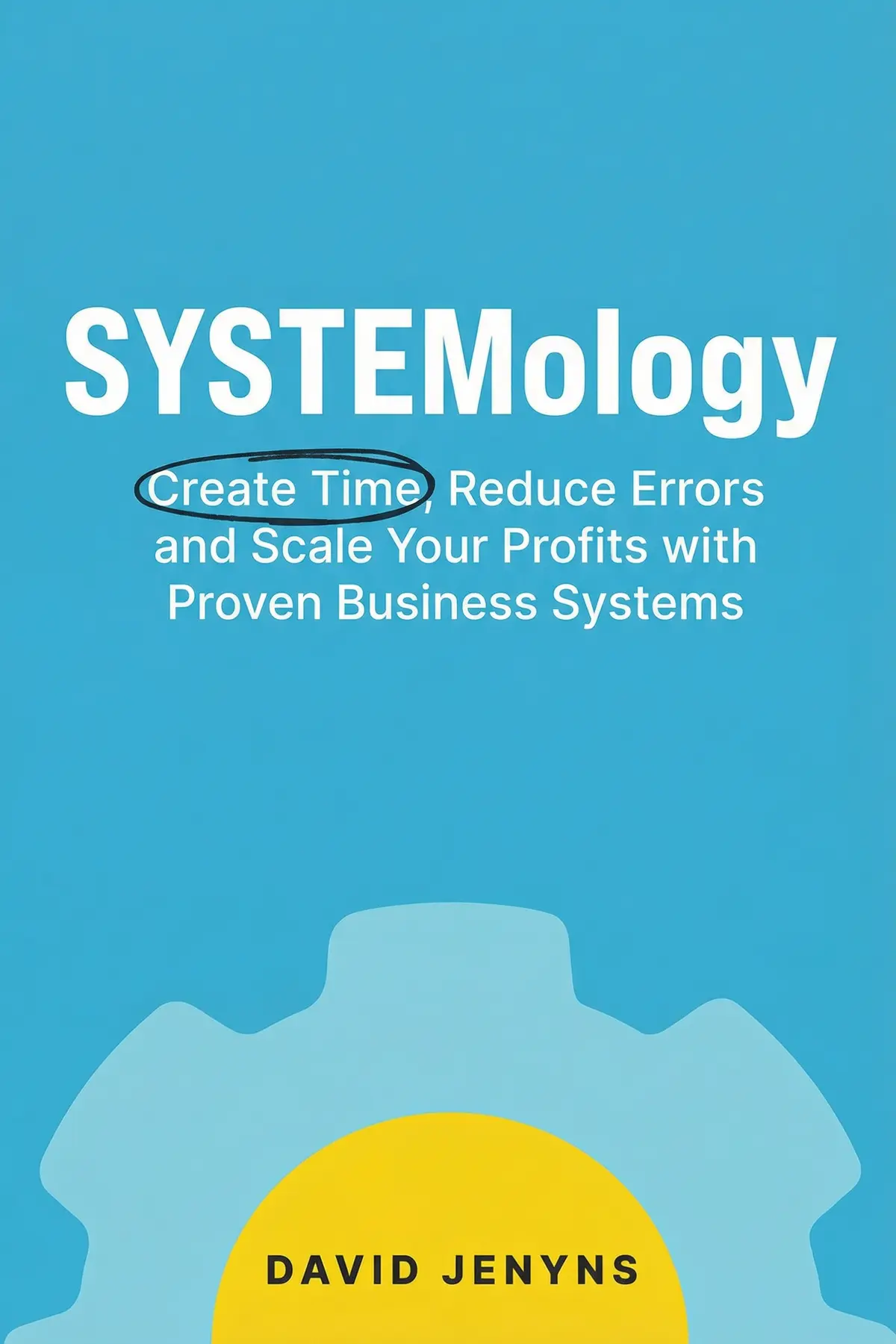
Table of Content
1. Introduction
1 min 47 sec
Think back to the day you decided to start your own business. Chances are, you weren’t dreaming of eighty-hour work weeks, constant fires to put out, or the feeling that if you took a single afternoon off, everything would come crashing down. Most entrepreneurs set out in search of freedom—freedom of time, freedom of finances, and freedom of purpose. Yet, the reality for many is what David Jenyns calls the owner’s trap. This is a state where the business is so dependent on the founder’s personal touch, expertise, and constant oversight that the owner becomes the primary bottleneck preventing growth.
But there is a different way to operate. Imagine a business that runs with the precision of a Swiss watch, where every team member knows exactly what to do, errors are minimized, and profits grow even when you aren’t in the office. This isn’t just a dream for multinational corporations; it is a reality available to any small or medium-sized business willing to embrace systemization. Jenyns discovered this first-hand when he realized he needed to step away from his own successful digital agency. By creating a repeatable protocol, he managed to extract himself from the daily operations in just one year.
In this summary, we are going to explore the core pillars of the SYSTEMology method. We will walk through the essential stages of defining your core processes, assigning them to the right people, and extracting the hidden knowledge already existing within your team. We’ll also look at how to organize these systems using modern tools and, perhaps most importantly, how to integrate them into your company culture so they actually stick. This journey is about more than just writing manuals; it’s about a fundamental shift in how you view your business and your role within it. It is time to stop being the engine of your business and start being the driver. Let’s look at how you can begin that transformation today.
2. Mapping the Critical Client Flow
1 min 40 sec
Identify the high-level path your customers take from first discovery to a successful referral. This simplified map highlights the essential steps that drive your business and generate consistent revenue.
3. Assigning Responsibility Without Micromanagement
1 min 36 sec
Break free from the owner’s trap by delegating key tasks to your team members. Use a structured chart to clarify who owns which department and who holds the necessary expertise.
4. Extracting Expertise as a Team Effort
1 min 39 sec
Don’t let valuable business knowledge stay trapped in people’s heads. Use a two-person recording and documentation process to turn hidden skills into accessible, step-by-step guides for everyone.
5. Creating a Centralized Digital Home
1 min 33 sec
Move beyond cluttered email inboxes and scattered files. Establish a dedicated platform to store and manage your systems, ensuring that every team member can find the information they need.
6. Differentiating Between Leaders and Managers
1 min 35 sec
Scale effectively by recognizing the unique roles of the visionary leader and the process-driven manager. Balance big-picture thinking with the daily discipline required to keep systems running.
7. Cultivating a Systems-Thinking Culture
1 min 46 sec
Transformation requires more than just documentation; it demands a change in mindset. Build a culture where every team member values and contributes to the continuous improvement of processes.
8. Conclusion
1 min 13 sec
The journey through SYSTEMology is a path from chaos to clarity. By starting with the Critical Client Flow, you identify the heartbeat of your business. By assigning responsibilities and extracting knowledge, you empower your team and safeguard your company’s intelligence. Through organization and integration, you turn these processes into the very fabric of your daily operations.
This transformation doesn’t happen overnight, and it requires a dedicated commitment to move past the old habits of micromanagement and ‘hero’ culture. However, the rewards are immense. When you systemize, you aren’t just making your business more efficient; you are making it more human. You are removing the stress of uncertainty, reducing the burden of repetitive tasks, and creating an environment where everyone can excel.
As you move forward, remember that systemization is a journey, not a destination. It is an ongoing process of refinement and improvement. But with the first five steps under your belt, you have already laid the foundation for a business that can scale, thrive, and eventually even succeed without you. You’ve taken the first major step toward reclaiming your time and building a legacy that lasts. Now, take that clarity and start building the freedom you’ve always wanted.
About this book
What is this book about?
Many entrepreneurs start a business in search of freedom, only to find themselves trapped in the relentless cycle of daily operations. SYSTEMology provides a comprehensive roadmap to break this cycle by transforming individual expertise into documented, repeatable processes. The book challenges the myth that the business owner must be the smartest person in the room or the one doing all the heavy lifting. By following this structured protocol, business owners learn how to identify their most critical client journeys, delegate responsibilities based on team strengths, and use technology to organize and manage systems effectively. The promise of this approach is a shift from a person-dependent business to a system-dependent one, allowing for greater efficiency, fewer errors, and significantly higher profit margins. Ultimately, it offers a way to build a company that is not only scalable but also valuable enough to be sold, giving the founder the ultimate freedom they originally sought.
Book Information
About the Author
David Jenyns
David Jenyns is a seasoned entrepreneur known for his expertise in business systemization. After successfully building Melbourne SEO Services into one of Australia’s top digital agencies, he realized he needed a way to step back from the daily grind. This led him to develop the SYSTEMology method, which allowed him to successfully systemize himself out of his own company’s operations. Today, he is a consultant, keynote speaker, and mentor who helps other business owners embrace systems-thinking to achieve sustainable growth and operational excellence.
Ratings & Reviews
Ratings at a glance
What people think
Listeners find that the book serves as an excellent reference resource and value its hands-on strategy for developing systems. The text is simple to navigate and helps optimize operations, with one listener noting how it successfully puts systems and processes into action. Listeners describe the writing as clear, brief, and effective, with one listener highlighting how it assists in reaching more uniform outcomes. They consider it essential reading for business organization, with one listener noting its usefulness across many different sectors.
Top reviews
Surasit
Finally, a business book that doesn't just preach high-level theory but actually gives you the blueprints to step away from the daily grind. I’ve spent years trapped in an 80-hour week cycle of client acquisition and service delivery, feeling like I could never truly take a vacation. This book changed my perspective on what a 'system' actually is. The Department, Responsibilities & Team Chart (DRTC) was a game-changer for my small agency because it finally clarified who owns what. I appreciate how Jenyns emphasizes using a centralized management platform rather than relying on a cluttered email inbox. My team is now more accountable, and our results are finally consistent across the board. It is easily the most practical reference guide I have ever purchased for my professional library. Highly recommended for any owner feeling burnt out.
Show moreSuphan
Picked this up because I was drowning in client work and felt like a prisoner to my own success. David Jenyns has a way of making the 'holy grail' of scalability feel attainable for the average small business owner who isn't a tech genius. I love how he breaks down the mapping of the target client journey into high-level progressions rather than tedious manuals. Not gonna lie, I was skeptical about the 'Systems Champion' idea, but it really is about finding that one person to drive the process. Since implementing the CCF templates from the website, our onboarding process has become significantly smoother. This isn't just another business book you read and forget; it’s a manual you keep on your desk. It has helped me reclaim at least ten hours of my week already. Total game changer.
Show moreAstrid
This book is so obvious that it’s brilliant. We all know we need systems, but David Jenyns is the first person to actually explain how to build the system that builds the systems. I love the focus on the CCF and specifying one target client to keep things simple. It’s so easy to get overwhelmed by the details, but this book keeps you focused on the high-level progression that matters most. In my opinion, the advice on establishing mechanisms for accountability is the strongest part of the whole text. We’ve already started mapping out our journey from initial discovery to repeat business. The result? We are finally seeing the consistent results we’ve been chasing for years. If you want to gin up your business to befitting levels of today's industry titans, buy this book now.
Show moreNora
Truth is, I've read dozens of business books this year, but this is the only one I’ve actually taken action on. The 80-hour week cycle is a trap, and SYSTEMology provides the ladder to climb out. I especially appreciated the part about specifying one core product to systemize first rather than trying to fix the whole company at once. It’s a very practical, hands-on guide that doesn't waste your time with fluff or endless anecdotes. The focus on consolidation and oversight is exactly what I needed to hear to get out of my inbox. Some might find the capitalist focus a bit much, but if you want a scalable business, this is the manual. It’s efficient, well-organized, and incredibly useful across almost any industry. I’m already seeing a difference in my team's autonomy.
Show moreCholada
As a longtime fan of the EOS framework and the Traction methodology, I found this to be the missing operational manual for my business. While Traction sets the vision, David Jenyns provides the literal step-by-step blueprints for capturing the 'how-to' of every daily task. The concept of the Critical Client Flow is brilliant because it forces you to ignore the noise and focus only on the essential systems that actually generate revenue. Look, the book isn't perfect; it sometimes feels like it assumes you already have a medium-sized team ready to catch the ball. However, the distinction between a leader and a manager was a lightbulb moment for me. If you’re tired of being the bottleneck in your own company, this provides a very practical way out. It’s succinct, well-structured, and easy to implement immediately.
Show moreApichat
The concept of 'systems for creating systems' might sound a bit redundant at first, but Jenyns makes a very compelling case for it. In my experience, most business owners fail at systemization because they try to document every single tiny detail at once. This book teaches you to start with the Critical Client Flow, mapping the journey from discovery to referral without getting lost in the weeds. I did find it slightly odd that the book seems to only dive deep into the first five steps of his seven-step process, leaving some of the later optimization for his paid resources. Still, the advice on consolidated management and moving away from email for task tracking is solid. It’s a very fast read with zero fluff, which I appreciated given my schedule. It’s a great companion piece for anyone trying to scale a service-based business.
Show morePla
Gotta say, I'm one of those people who actually enjoys building spreadsheets and organizing folders, so this was right up my alley. Jenyns correctly identifies that most owners are 'freestylers' who hate the idea of rigid processes because they think it kills the fun. However, he proves that systems actually create the freedom to be more creative. My only real critique is that he gets a massive dopamine rush from systemizing things, and he assumes everyone else will too. For a 'regular' person, maintaining this level of documentation quality could be a massive chore without a dedicated team member. But the lessons on defining critical tasks and specifying a single target client are invaluable. Even if you don't plan to exit your business tomorrow, building it as if you were going to is just smart strategy. It’s well-written and very efficient.
Show moreYuwadee
After hearing the author on a podcast, I decided to dive into the full methodology to see if it lived up to the hype. The book is remarkably easy to follow and avoids the typical 'consultant speak' that plagues this genre. I particularly liked the section on why your email inbox is a terrible place to manage projects. Personally, switching to a specialized software like Asana as suggested made an immediate impact on our missed deadlines. The distinction between being a leader and a manager is something I had shied away from for far too long. To be fair, some might find the tone a bit cold or overly focused on 'hands-off' wealth, but the efficiency gains are undeniable. It provides a structured approach to delegating tasks that actually works in the real world. A must-read for anyone looking to streamline their operations.
Show moreEmma
Ever wonder why some businesses seem to run on autopilot while you’re stuck answering client emails at 11 PM? This book explains exactly why, and it's usually because you haven't defined your Critical Client Flow. Jenyns argues that you don't need to be a systems expert to start; you just need to identify the core path your customers take. I found the templates provided on the website to be a huge bonus that adds real value to the purchase. The writing style is direct and punchy, making it easy to consume in a few sittings. While I wish there was more focus on how solo creators can use these tools without a huge team, the core principles of organization still apply. It’s a very solid four-star read for anyone wanting to move from 'hustle' to 'business owner'.
Show morePacharapol
Is it just me, or does this book completely ignore the reality of being a solopreneur? Jenyns claims to fill a void in the business world, but his entire methodology relies heavily on having an army of employees to delegate to. To be fair, I was looking for ways to automate my workflow using modern tools, yet the author spends barely a page on automation. In fact, he actually warns readers not to rely on it, which feels incredibly dated in today's tech landscape. Frankly, I didn't find anything particularly ground-breaking here that hasn't been covered better in other business podcasts or blogs. If you don't already have a team of five or more people, you might find the 'Systems Champion' advice—which is just a fancy way of saying hire an assistant—to be totally unhelpful. It felt like an advertisement for his consulting services.
Show moreReaders also enjoyed

A Bigger Prize: How We Can Do Better Than the Competition
Margaret Heffernan
A Year with Peter Drucker: 52 Weeks of Coaching for Leadership Effectiveness
Joseph A. Maciariello
Acting with Power: Why We Are More Powerful Than We Believe
Deborah Gruenfeld
AUDIO SUMMARY AVAILABLE
Listen to SYSTEMology in 15 minutes
Get the key ideas from SYSTEMology by David Jenyns, plus 5,000+ more titles in English and Thai.
- 5,000+ titles
- Listen as much as you want
- 7-day free trial
- Cancel anytime







