

Adults in The Room: My Battle With Europe’s Deep Establishment
Yanis Varoufakis
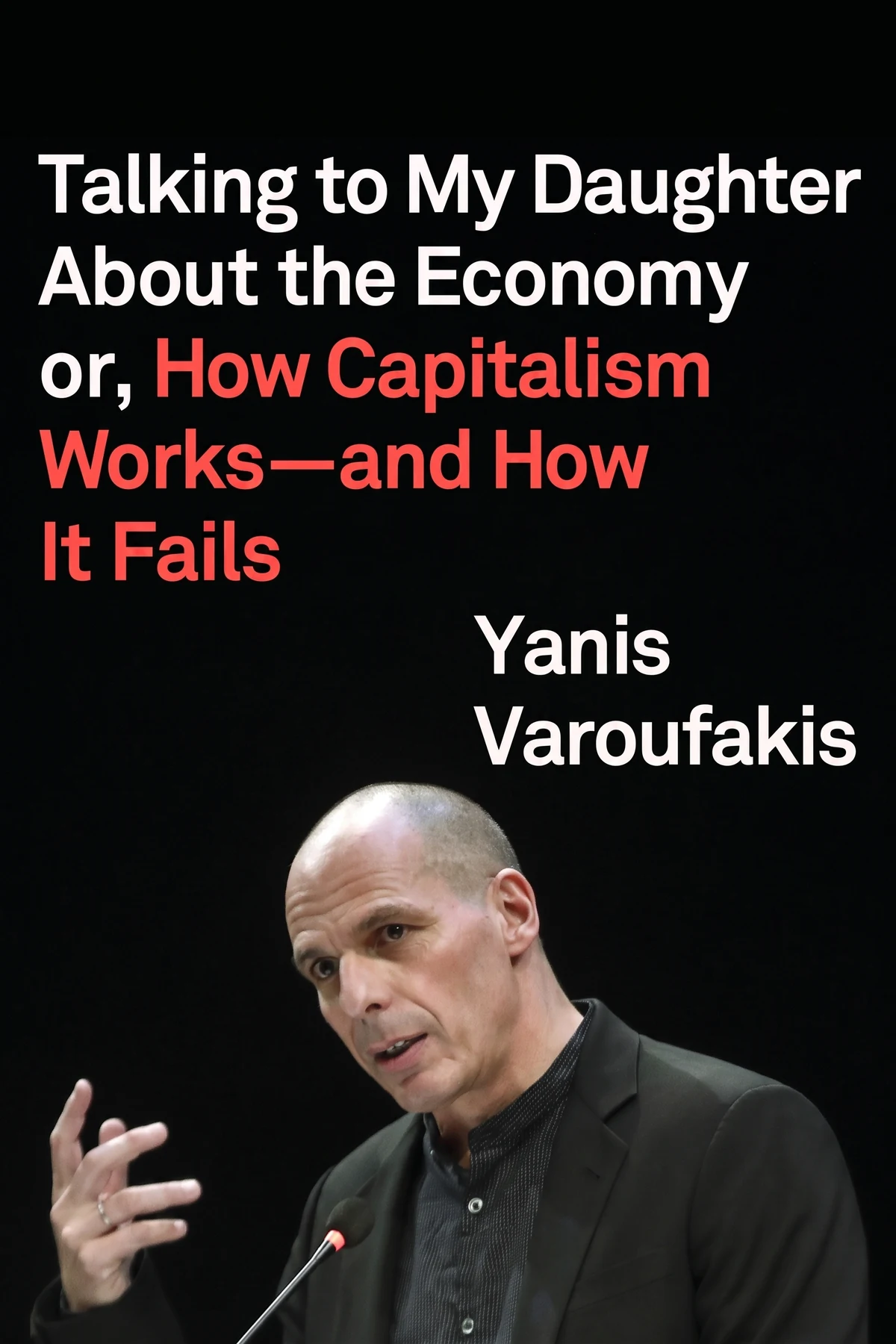
Yanis Varoufakis demystifies the complex world of finance, explaining how our global economy evolved and why understanding market logic is essential for anyone wanting to navigate or change the modern world.
2 min 03 sec
Imagine you are trying to explain the entire world to a child. You wouldn’t start with complex mathematical formulas or dense academic jargon. Instead, you would look for the stories behind why things are the way they are. This is exactly the challenge taken up in the following exploration. Economics is often treated like a secular religion, a field so specialized and shrouded in mystery that the average person feels they have no right to question it. We hear terms like aggregate demand, credit default swaps, and yield curves, and we tend to tune out, assuming these things are best left to the experts. But as we will see, economics isn’t just about numbers; it’s about power, history, and the very way we relate to one another.
In this journey, we are going to peel back the layers of the global financial system. We’ll look at why some nations became incredibly wealthy while others were exploited, and we’ll trace the moment when human life transitioned from a world governed by traditions and needs to a world governed almost entirely by market prices. We will investigate the strange magic of banks, the looming shadow of automation, and why our current way of doing business is putting the very planet at risk.
The goal here isn’t just to learn definitions. It is to develop a narrative understanding of the economic forces that shape our lives. Whether you’re a student, a concerned citizen, or just someone who has ever wondered why money seems to disappear even as we produce more than ever before, these insights provide a roadmap. We are looking for the throughline—the connection between the first farmers thousands of years ago and the high-frequency traders of today. By the end, the world might look a little different. You’ll see that the economy isn’t an unchangeable force of nature like gravity; it is a human invention, and because we invented it, we have the power to change how it works.
2 min 46 sec
Explore how the shift from hunting to farming created the first economic hierarchies and why geography, not genetics, determined which civilizations conquered others.
2 min 48 sec
Learn the crucial distinction between things made for enjoyment and things made for sale, and how our society shifted its focus entirely to the latter.
2 min 24 sec
Understand why debt is the secret fuel of the modern economy and how the legal obligation to pay back more than you borrowed creates a never-ending cycle of competition.
2 min 33 sec
Discover the ‘miracle’ of how banks create money from nothing and why the government often ends up saving the very people who caused financial disasters.
2 min 24 sec
Learn why the standard rules of supply and demand fail when it comes to human work and why cutting wages can actually make a recession worse.
2 min 39 sec
Investigate the strange reality where technology that should make our lives easier actually threatens our livelihoods, and how we might fix it.
2 min 27 sec
Demystify the world of central banking and learn why the value of the currency in your pocket is a reflection of political power, not just economic luck.
2 min 34 sec
Examine why a system focused on endless growth and exchange value is fundamentally at odds with a finite planet and what a more sustainable approach might look like.
2 min 07 sec
As we reach the end of this exploration, the central message is clear: the economy is not a mysterious, natural force that we must simply submit to. It is a set of rules and structures that humans have built over centuries, and it reflects our history, our power struggles, and our values. We have seen how the simple act of storing a surplus thousands of years ago set off a chain reaction that led to writing, money, and the deep inequalities we see today. We’ve watched as our world transformed from a place where things were valued for their use to a place where everything has a price. We’ve unmasked the magic of banks and the double-edged sword of automation, and we’ve seen how our current obsession with profit is clashing with the physical limits of our planet.
But there is a hopeful side to this realization. If the market society is something we created, it is also something we can redesign. We don’t have to accept a world where banks are saved while families lose their homes, or where machines take our jobs instead of giving us freedom. The path forward lies in democratization—taking the power over money, technology, and natural resources out of the hands of a small elite and putting it back into the hands of the community. This isn’t just an abstract idea; it’s a practical necessity for our survival and our dignity.
Understanding these concepts is the first step toward that change. When we stop being intimidated by economic jargon, we can start asking the important questions: Who does this system serve? Why is it organized this way? And most importantly, how could it be better? By looking at the economy through the eyes of a child—with curiosity and a refusal to take ‘that’s just how it is’ for an answer—we can begin to imagine a world that prioritizes human life and the health of our planet over the endless pursuit of exchange value. The future of the economy is not yet written, and it is up to us to decide what the next chapter will be.
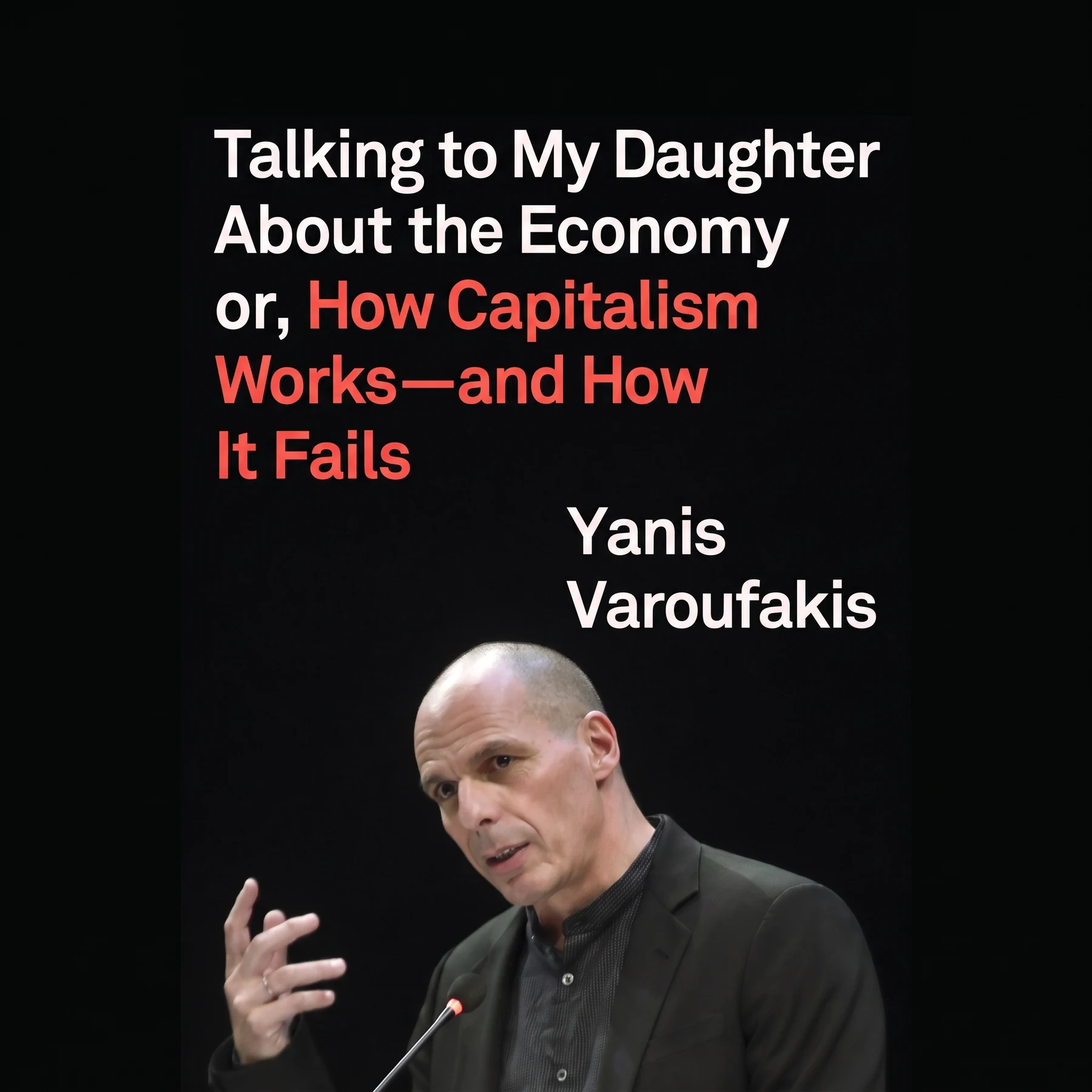
This guide breaks down the massive, often intimidating structures of global economics into a relatable narrative. By stripping away the jargon of high finance, it explores the fundamental shift from societies with markets to market societies where everything—from the land we walk on to the time we spend working—has a price tag. The book promises to reveal the hidden machinery of debt, the alchemy of banking, and the historical accidents that led to global inequality. It offers a provocative look at why the current system often serves a small elite and suggests how a more democratic approach to money and technology could create a fairer future for everyone.
Yanis Varoufakis is a world-renowned economist and political activist. He holds a PhD in economics from the University of Essex but is best known for serving as Greece’s Minister of Finance in the Syriza government of 2015.
Yanis Varoufakis
Yanis Varoufakis
Listeners find the book highly engaging and accessible, offering straightforward explanations of economic principles. They value its educational worth as an excellent primer for critical thinking, and one listener highlights how it simplifies the complexities of economies and markets. The writing is skillfully crafted, and listeners appreciate the inclusion of historical context alongside an empathetic tone. They also find the humor enjoyable, with one listener mentioning the entertaining analogies taken from history.
Wow. This is the first time an economics book actually felt like a conversation instead of a lecture. Varoufakis manages to weave Greek myths and sci-fi references like Blade Runner into a narrative about why our world is so unequal. I loved the distinction between a 'market society' and just having markets for goods. He explains how land and labor became commodities in a way that just clicks, stripping away the jargon you usually find in textbooks. My only tiny gripe is that he glosses over some of the successes of the system, but the core message is vital. It’s accessible, punchy, and pretty moving towards the end.
Show morePicked this up because I wanted a way to talk to my own kids about why things are the way they are. The way he describes the 'Great Reversal'—where debt comes before production—is a lightbulb moment for anyone who thinks the economy is just about bartering eggs for flour. He makes the history of the British Empire and the industrial revolution feel urgent and relevant to today’s environmental crisis. It’s not just about numbers; it’s about power and how we’ve allowed exchange-value to eclipse the actual experience of living. This should be mandatory reading in high schools across the country.
Show moreAs someone who struggled through ECON101 in college, this was a breath of fresh air. There are no abstract formulas or dry graphs here, just a flow of stories grounded in real-world history. He uses the metaphor of 'The Matrix' to explain how we’ve become enslaved to our own financial creations, which is a bit dramatic but totally effective. I particularly liked his explanation of how labor is a 'peculiar' market because humans aren't produced for sale. It’s a deeply empathetic book that refuses to treat people as mere digits in a spreadsheet. Engaging, humorous, and deeply thought-provoking throughout.
Show moreFinally got around to reading this and I’m struck by how much ground he covers in such a small space. From 'Guns, Germs, and Steel' to the Greek myth of Oedipus, the references are high-brow but never pretentious. He breaks down the 2008 crash in a way that actually makes sense to a layperson, focusing on the inherent instability of private banking. The central conflict between 'democratize everything' and 'commodify everything' is the defining struggle of our time. It’s a passionate, urgent plea for a more human way of organizing our world. It is simply the best introduction to political economy I’ve ever found.
Show moreEver wonder where money actually comes from? This book answers that by comparing bankers to a sort of 'magic' that conjures debt out of thin air to fuel the future. It’s a fascinating read that doesn’t require a degree to understand, which is exactly the point. The author argues that if you can't explain it to a teenager, you don't really know it yourself. I found the sections on 'fictitious commodities'—human labor and nature—to be the most eye-opening part of the whole thing. It’s definitely got a political slant, but even if you disagree with his solutions, the historical perspective on the enclosures is worth the price of admission.
Show moreThe chapter on the environment was easily the most sobering part of the entire book for me. Varoufakis argues that the very logic of our market society requires us to turn the planet into a commodity to be exploited. He dismantles the 'Tragedy of the Commons' myth with such ease it’s almost frustrating that we aren't taught this in school. While the book is short, it packs a massive punch by focusing on the 'why' rather than just the 'how' of money. I did feel the ending was a bit rushed, leaving me wanting more concrete alternatives, but it’s still a masterclass in communication.
Show moreAfter hearing Varoufakis speak online, I had high expectations for this book and he didn’t disappoint. It’s rare to find an economist who treats his readers with such respect, avoiding jargon while tackling massive themes like the 'Enclosures' and the birth of wage labor. The way he connects the commodification of land to modern real estate markets is brilliant. He makes you realize that the way we live isn't 'natural'—it's a specific historical development that can be changed. It’s a short read that will haunt your thoughts for weeks, especially when you look at your own bank balance or the news cycles.
Show moreFrankly, I wish I'd had this book twenty years ago when I was first trying to make sense of the news. It turns 'the economy' from a boring, scary monster into a story that humans actually wrote and can therefore rewrite. The discussion on blood donation and how paying for it can actually reduce the supply was a fascinating look at how markets can destroy social solidarity. It’s not just about money; it’s about what we value as a society. Some parts are definitely repetitive, but the clarity of the prose makes it very hard to put down. Truly an essential primer for the modern age.
Show moreTo be fair, Varoufakis is a brilliant writer, but this feels more like a manifesto than a neutral introduction to the economy. He spends a lot of time attacking the 'market society' and paints a very grim picture of banking. While I enjoyed the references to Greek tragedy, I think he oversimplifies the role of the entrepreneur and the benefits of innovation. It's a great read if you want to understand the radical perspective, but maybe pair it with something more mainstream to get a balanced view. It’s a quick read, at least, and the metaphors are quite clever despite the clear bias.
Show moreLook, the writing is undeniably smooth and the analogies from history are amusing, but I found the tone a bit too condescending toward anyone who believes in free markets. It starts off as a fatherly explanation but quickly turns into a one-sided critique of capitalism without much room for nuance. The idea that bankers just 'conjure' money from a vacuum is a massive oversimplification that ignores the complexity of modern risk management. If you’re already an anti-capitalist, you’ll love it. If you’re looking for a serious, objective look at economic theory, you might find yourself rolling your eyes at the political agenda.
Show more
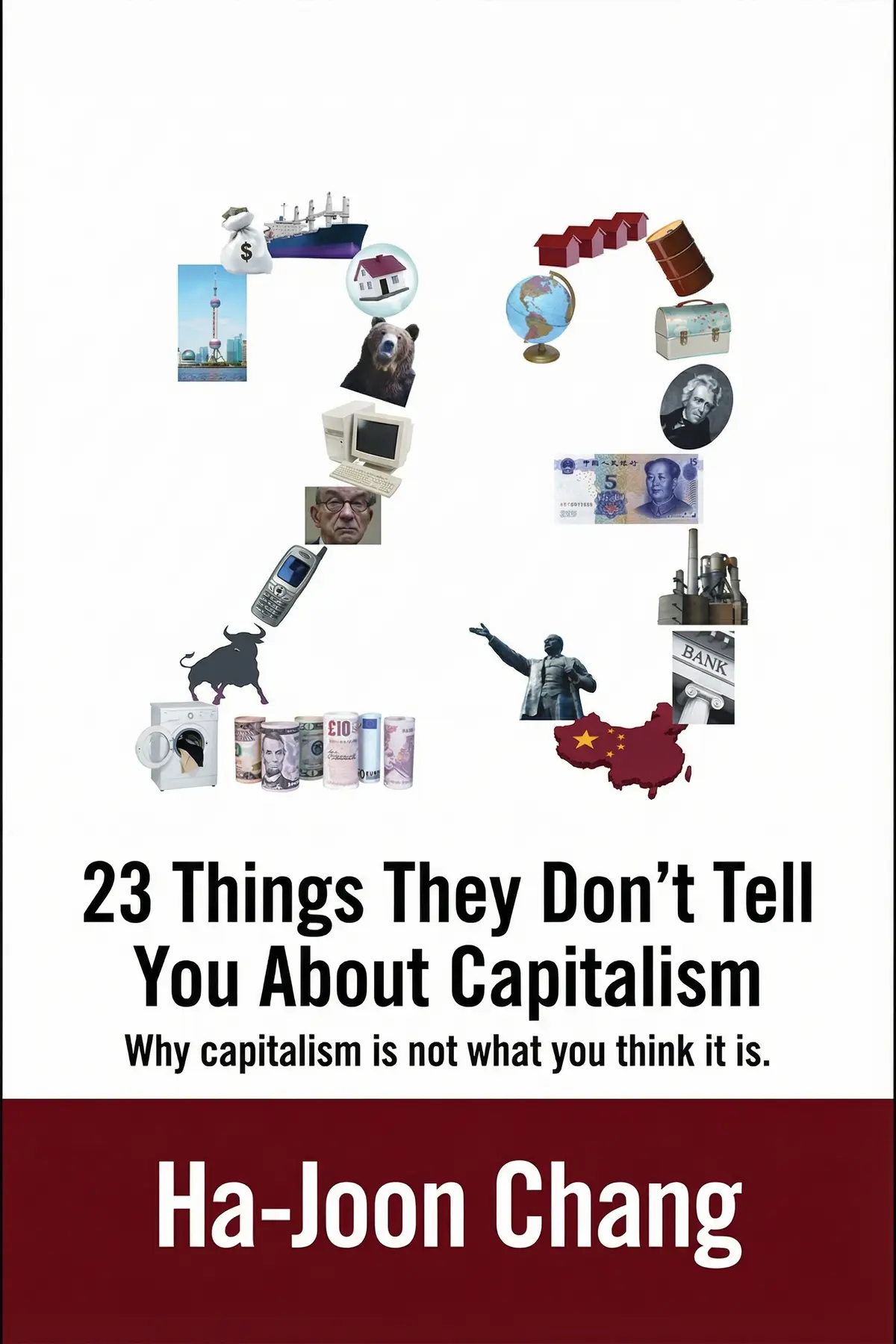
Ha-Joon Chang
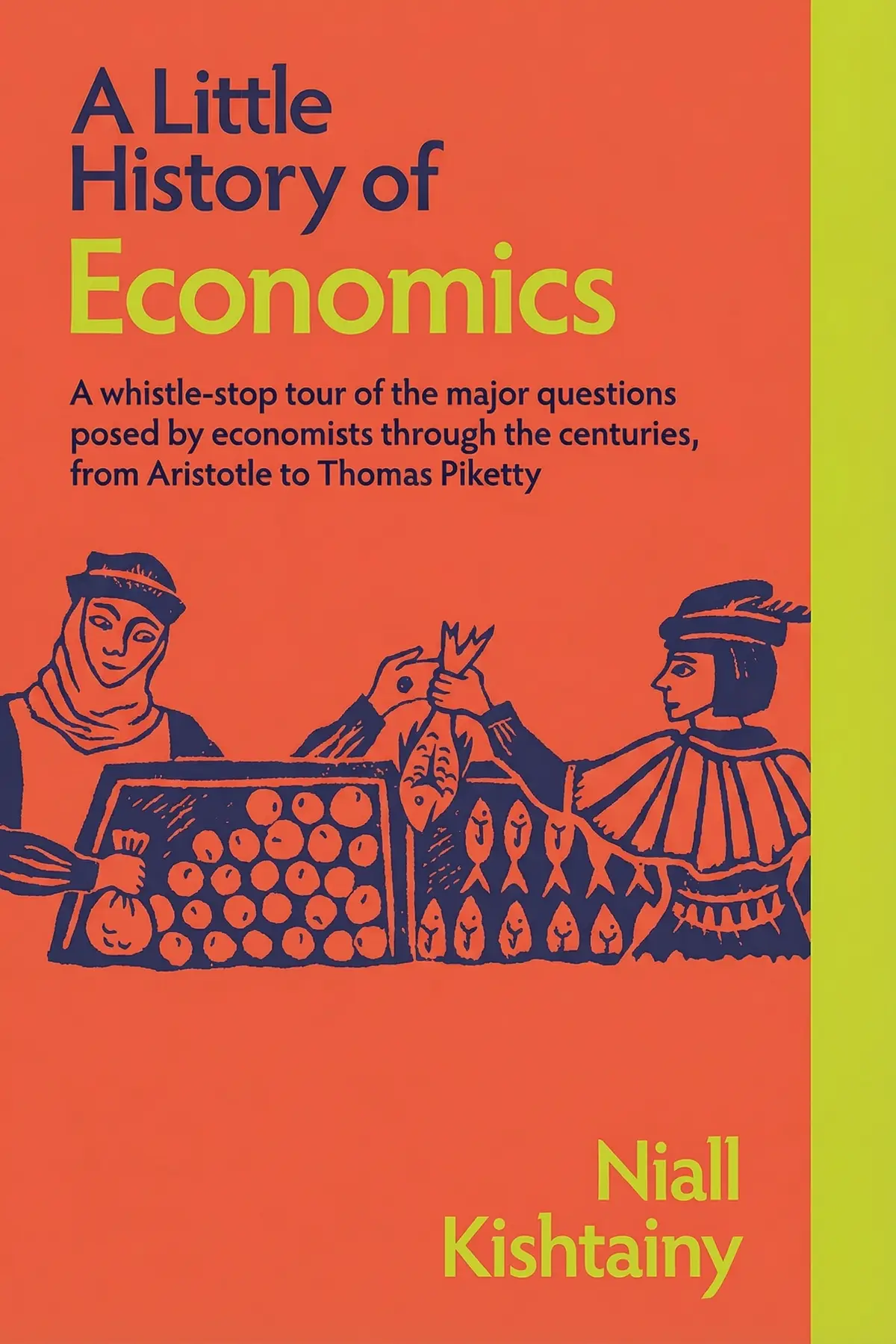
Niall Kishtainy
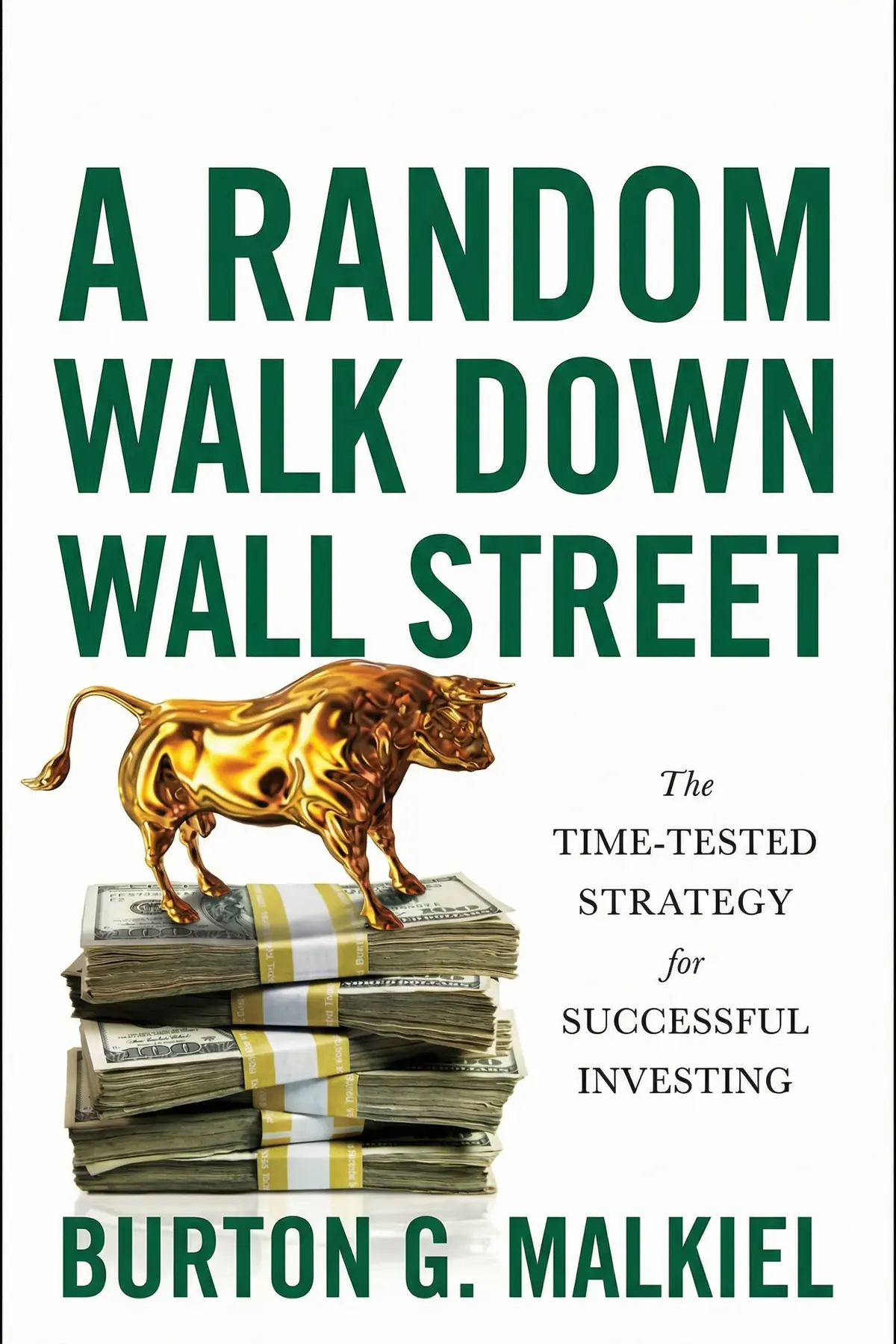
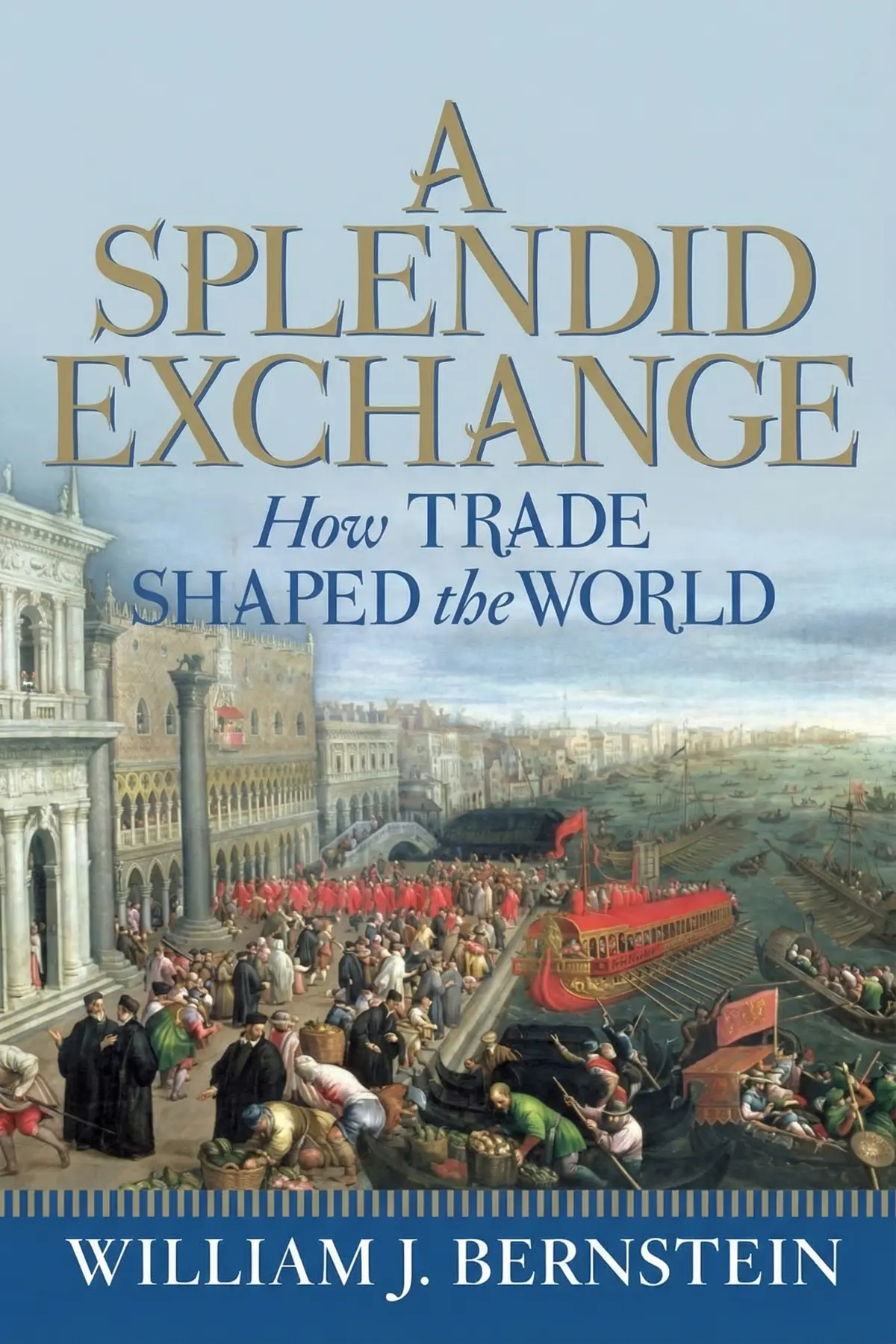
William J. Bernstein
Yanis Varoufakis
AUDIO SUMMARY AVAILABLE
Get the key ideas from Talking to My Daughter About the Economy by Yanis Varoufakis, plus 5,000+ more titles in English and Thai.







