
15 min 16 sec
Team: Getting Things Done with Others
Discover how to apply the principles of productivity to group dynamics. This guide explores how clear roles, shared purpose, and structured communication can transform a chaotic workplace into a high-performing collaborative environment.
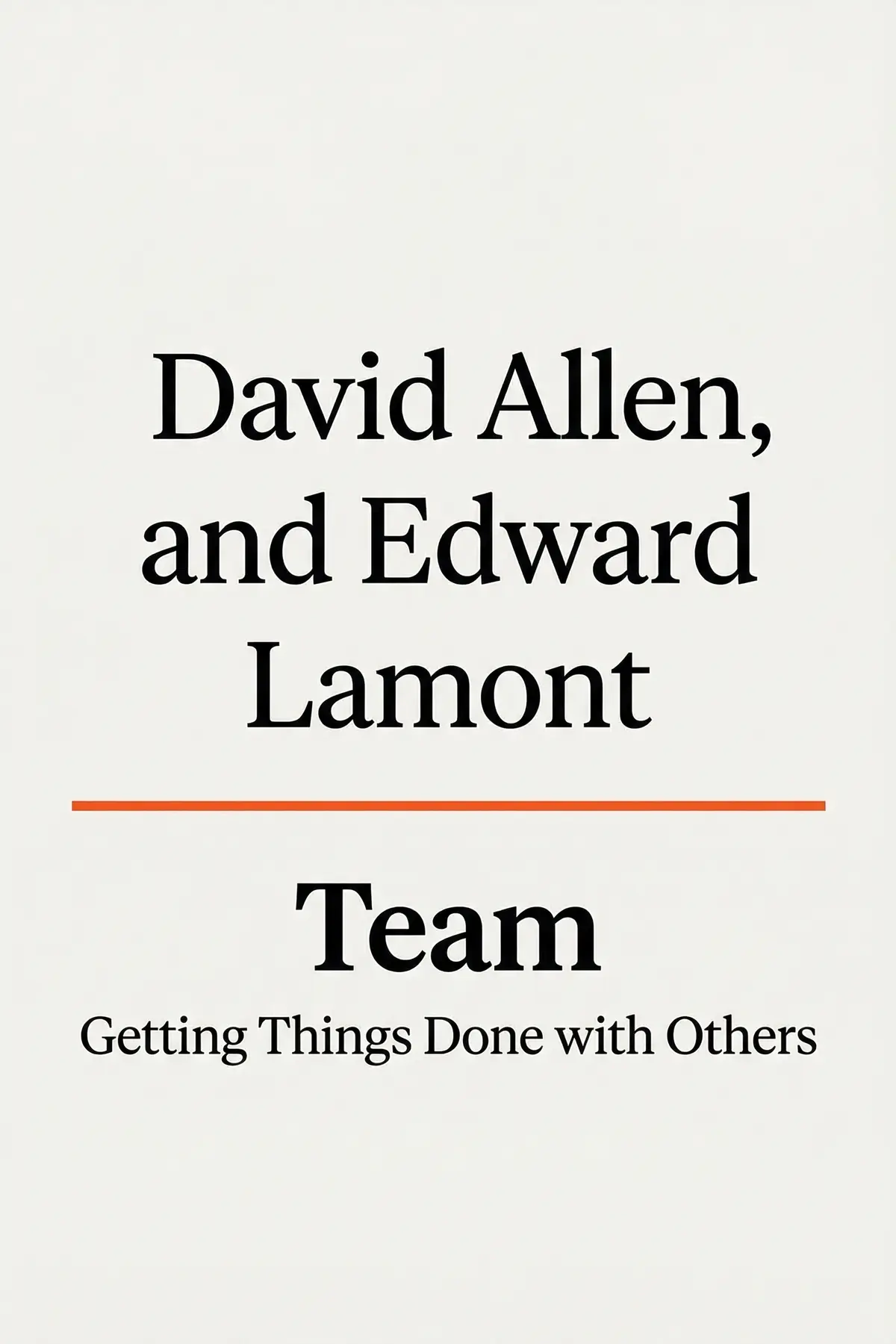
Table of Content
1. Introduction
1 min 55 sec
Have you ever walked into an office and immediately felt the weight of unspoken stress? You can see it in the way people hurry between meetings, the way their eyes glaze over while checking their phones, and the collective sigh that seems to hang in the air. In many modern organizations, the default state of a team is one of frantic reactivity. We are constantly trying to keep our heads above water, reacting to the latest ping, the newest urgent request, or a calendar that looks like a game of Tetris gone wrong. But what if there was a different way? Imagine a group of people working with such synchronization and clarity that the friction of daily life simply melts away. This isn’t just a dream; it’s the result of applying a disciplined system to the way we work together.
In the following pages, we are going to explore the art and science of collaborative efficiency. Most of us are familiar with the idea of individual productivity—getting our own tasks done and managing our own schedules. But when you add other people into the mix, the complexity doesn’t just double; it grows exponentially. Without a shared framework, even the most talented individuals can end up working at cross-purposes, wasting energy on redundant tasks, or letting critical balls drop because everyone assumed someone else was catching them.
We will examine how to build a foundation of trust not through vague team-building exercises, but through the hard, practical work of defining roles and setting standards. We’ll look at how a shared vision acts as a magnetic force, pulling a team toward a common future even when the daily path gets rocky. And perhaps most importantly, we will discuss how to create the space necessary for people to actually do their best work. This is a journey from the chaos of the modern workplace to a state of high-performance flow. By the end of this exploration, you’ll have a clear understanding of how to align your team’s energy, clarify your collective goals, and build an environment where everyone can thrive together.
2. Confronting the Digital Deluge
2 min 22 sec
Modern teams are drowning in a sea of data and constant interruptions that threaten their collective sanity and productivity. Discover how to identify the hidden costs of our hyper-connected workplace.
3. Establishing Clear Working Agreements
2 min 13 sec
Vague expectations are the primary killers of team momentum. Learn how to create a structured framework that defines exactly how your group communicates and operates.
4. The Anchoring Power of Purpose
2 min 27 sec
Shared goals are not just corporate jargon; they are the fuel for motivation and the compass for decision-making. Explore how a clear ‘why’ changes everything.
5. Charting the Path with Vision and Goals
2 min 16 sec
A vision pulls a team toward the future, while small, achievable goals provide the stepping stones to get there. Learn how to balance inspiration with practical action.
6. The Leader as a Curator of Space
2 min 16 sec
Effective leadership isn’t about doing more work; it’s about removing the obstacles that prevent others from doing theirs. Discover the power of strategic pruning and co-designed delegation.
7. Conclusion
1 min 47 sec
As we wrap up our look at the dynamics of high-performing teams, it’s worth reflecting on the central theme that ties all these ideas together: the move from accidental collaboration to intentional design. Most teams form by accident, with habits and patterns that emerge based on convenience or immediate crisis. But the most successful groups are those that take a step back and decide, purposefully, how they want to work together.
By addressing the reality of information overload, you protect your team’s most valuable asset: their attention. By establishing clear roles and working agreements, you eliminate the friction that causes frustration and burnout. When you anchor everything in a shared purpose and a vivid vision, you provide the ‘north star’ that keeps everyone moving in the right direction, even when things get difficult. And by focusing on small, achievable goals, you build the momentum necessary to reach your most ambitious targets.
Remember that building a great team is not a one-time event; it is an ongoing practice. It requires constant tending, regular check-ins, and a willingness to adjust the rules as the environment changes. But the rewards are immense. When a group of people truly clicks—when they work with clarity, trust, and a shared sense of mission—there is almost nothing they cannot achieve.
Take a moment to consider your own team. Which of these areas needs the most attention right now? Is it the clarity of your roles? Is it the way you handle your digital communication? Or perhaps it’s time to revisit your ‘cathedral’ and remind everyone why their work matters. Whatever the first step is, take it with the knowledge that a more efficient, more fulfilling way of working together is within your reach. Start small, be consistent, and watch as your team transforms from a collection of individuals into a powerful, synchronized force.
About this book
What is this book about?
Modern work is often a storm of endless notifications, poorly managed meetings, and vague expectations. This summary dives into the core strategies for building a cohesive and efficient team by focusing on the mechanics of collaboration. It moves beyond individual productivity to show how groups can synchronize their efforts through shared standards and a clear sense of direction. You will learn how to combat information overload and prevent burnout by establishing concrete working agreements. The promise here is a roadmap for shifting from a reactive, crisis-driven culture to one where every member knows their role, understands the team’s larger vision, and feels empowered to contribute meaningfully. By implementing structured processes and defining clear boundaries, any group can achieve its goals without sacrificing the well-being of its members. This is about making teamwork feel effortless, ensuring that the collective output is far greater than the sum of its individual parts.
Book Information
About the Author
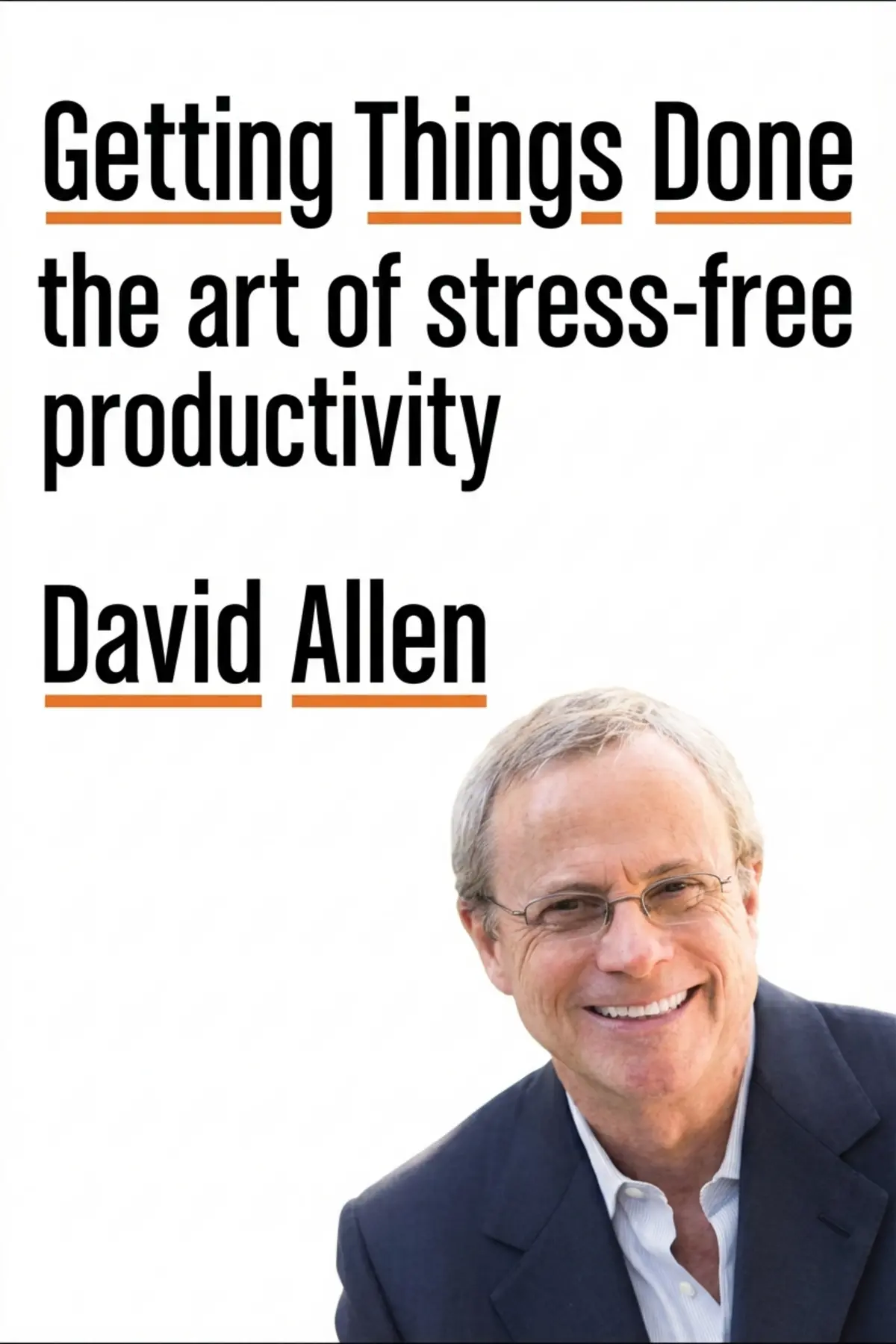
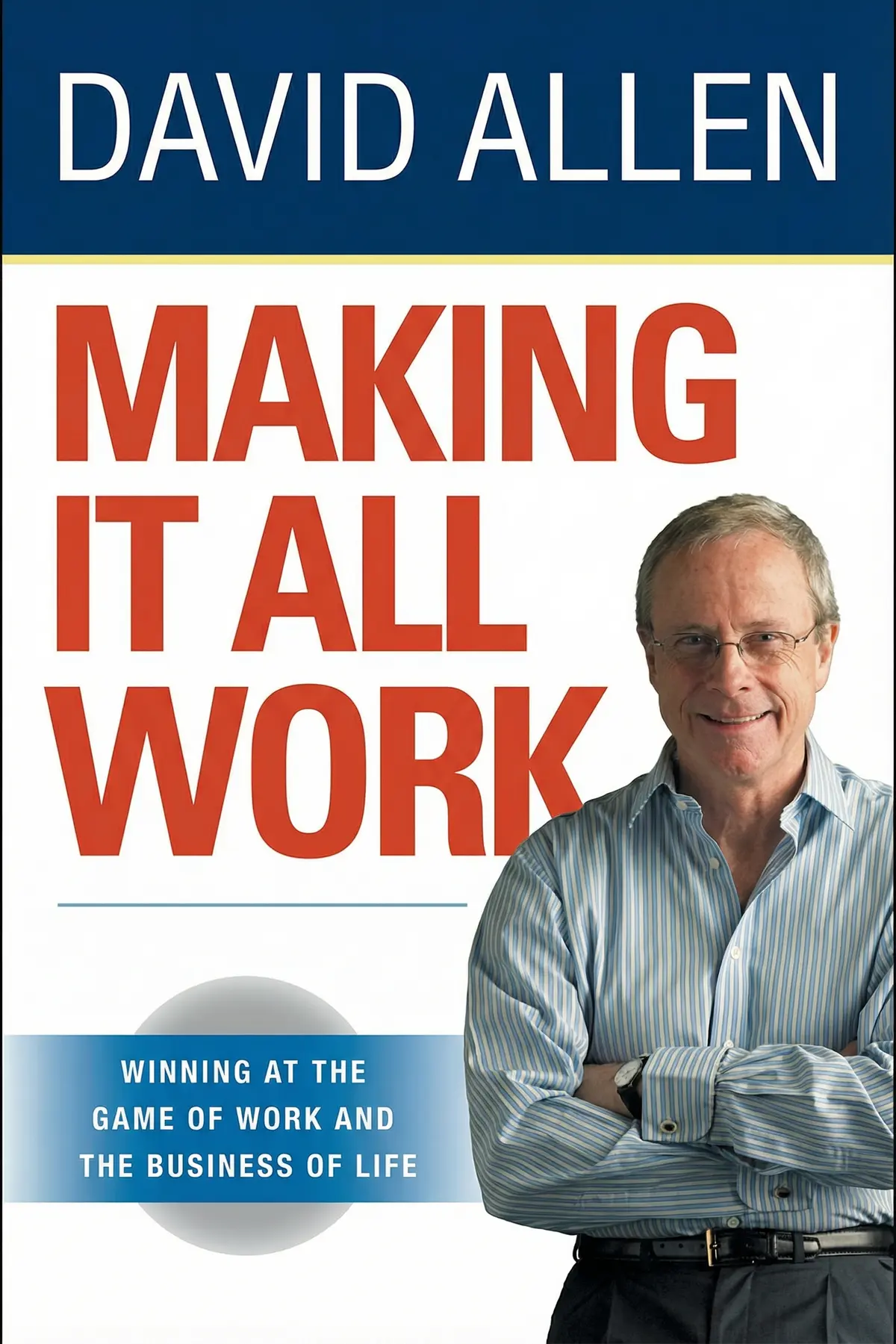
David Allen
David Allen is a world-renowned productivity expert and the creator of the Getting Things Done methodology, a system that has revolutionized how individuals and organizations manage tasks and focus. His work is recognized globally for its practical impact on efficiency. Edward Lamont is a seasoned executive coach and leadership specialist with over two decades of experience. As a cofounder of Next Action Associates, he has been instrumental in bringing productivity systems to major markets in the UK and Ireland. His background includes time as a contributor to the Financial Times.
Ratings & Reviews
Ratings at a glance
What people think
Listeners find the book exceptionally functional, with one review highlighting the insights shared by veteran consultants and another noting its emphasis on broad principles rather than stories. They value how the work broadens teamwork concepts, and one listener specifically mentions its inclusion of remote collaboration.
Top reviews
Pacharapol
Finally got around to reading Allen’s latest, and it feels like the natural evolution for anyone who has lived by the GTD methodology for years. While the original was about clearing your own head, this version tackles the messy reality of trying to stay productive when your calendar is at the mercy of twenty other people. The authors don't just rely on fluffy anecdotes; they focus on universal principles that apply whether you are in a skyscraper or a home office. Personally, I appreciated how they addressed the friction of remote collaboration without making it the entire personality of the book. It’s a grounded, tactical guide for turning a group of reactive individuals into a cohesive unit that actually understands its shared purpose. Some might find the horizons concept repetitive if they've studied Allen's previous work, but seeing it applied to group dynamics gave me several aha moments.
Show morePridi
Remote collaboration is the new frontier, and Allen and Lamont actually provide a roadmap that works for the modern age. I’ve read a lot of management books lately, and most of them feel like they were written in 1995, but Team understands the nuances of the digital workspace. They break down the five steps of a team through these inter-related horizons—purpose, vision, goals, areas of focus, and projects. It’s a systematic approach that forces you to define what done looks like for a group, which is much harder than doing it for yourself. Gotta say, the emphasis on building trust through making and keeping promises was a highlight for me. It’s a simple concept, but seeing it laid out as both an input and an output of a healthy team was eye-opening. This is essential reading for anyone managing a distributed power structure.
Show moreKwame
David Allen has successfully translated his durable individual system into a framework for collective action that feels both timeless and timely. As someone who has obsessed over personal efficiency for years, I was skeptical about how GTD would scale, but Lamont and Allen make a persuasive case. They highlight how the constant demand for reactivity in the modern workplace has crippled our ability to do strategic work. The book is filled with consultant-level wisdom that focuses on building trust and clarity rather than just providing a checklist of tasks. It's a must-read if you have more than one person in your business and you want to stop being the bottleneck. While it might feel repetitive to those who have read every management book on the market, the synthesis of these ideas into the GTD framework is uniquely valuable and supremely practical.
Show moreMint
As a consultant who has lived in the trenches of corporate dysfunction, I found this remarkably grounded and packed with wisdom. The truth is, most teams fail not because they lack talent, but because they lack a shared system for processing work. Allen and Lamont do a great job of explaining how a boss’s unwillingness to delegate can become the primary bottleneck for an entire organization. They dive into the founder’s card phenomenon, which I’ve seen kill morale in countless startups. The book is supremely practical, moving past simple productivity hacks to look at the structural culture that either unleashes or stifles motivation. It’s not a quick fix, and it requires a level of honesty from leadership that many might find uncomfortable. If you are tired of tactical fires and want to do the strategic work of building a healthy environment, this is your field guide.
Show moreChamlong
The chapter on distributed power and the founder's card alone is worth the price of admission for any frustrated middle manager. It is tempting to blame a bad culture on one bad person at the top, but the authors argue it’s usually just a reaction to extreme pressure and a lack of structure. I found the distinction between average, good, and best teams to be incredibly helpful for auditing my own department’s progress. An average team does the high-level thinking but fails at implementation, while the best teams link every day-to-day decision to their ultimate vision. While the book can be a bit wordy in places, the practical tips for creating controlled explosions of diversity and challenge are gold. It’s about creating a culture where people can speak freely without fear, which is easier said than done. I’ll be keeping this on my desk as a reference.
Show morePichaya
Ever wonder why your team meetings feel like a constant battle against interrupt-itis where nothing actually gets decided? This book tackles that head-on by applying the durable principles of Getting Things Done to the collective group dynamic. I’ve been a GTD practitioner for a decade, and I was worried this would just be a rehash of the old stuff, but it’s a necessary expansion. It’s less about your personal filing system and more about how you negotiate the we space. The focus on open communication as the ability to speak freely without fear of punishment is something every leader needs to hear. Not gonna lie, some parts feel a bit like common knowledge, but as the authors say, common knowledge is rarely common practice. It’s a solid field guide for those starting the journey of improving their team’s overall output and sanity.
Show moreMind
This book isn't going to revolutionize your life overnight, but it offers a systematic approach that most managers desperately need to stay afloat. I particularly liked the focus on how interrupt-itis has reduced our collective ability to discern what is actually important versus what is just loud. The authors provide a very clear hierarchy of horizons, from purpose down to projects, that helps align a team’s daily actions with their long-term vision. It’s very practical and avoids the overly emotional fluff found in many leadership books today. I did find the sections on collaboration tools a bit brief, but the universal principles they lay out should outlast any specific software trend. If you’ve ever felt like your team is just a collection of individuals spinning their wheels, this book will help you build the structure needed to move forward together.
Show moreBank
Is it just me, or does this feel like a word salad of every toxic company observation ever written? I walked into this with high hopes because the original GTD changed my life back in the mid-2000s, but this felt surprisingly thin. If you’ve spent any time in a corporate environment, you already know about the interrupt-itis and the lack of strategic thinking at the top. To be fair, Section 3 has some decent advice, but getting there felt like a chore through chapters of common sense rebranded as new insights. It offers a couple of thoughtful bits of advice regarding team clarity, yet it lacks the groundbreaking impact of Allen's earlier work. If you're brand new to the workforce, you might find this revolutionary. For the rest of us, it’s mostly a reminder of things we’re already struggling with without providing a truly fresh solution.
Show moreKom
To be fair, there are some kernels of helpful information here, but it lacks the nuance and depth I expected from David Allen. The book provides a decent framework for thinking about how to enable a team to meet its goals, but it often feels like it's skimming the surface of much larger issues. For instance, the discussion on psychological safety and Lean principles felt a bit like a greatest hits compilation of things you can find in any basic management blog. I would have appreciated much more evidence or case studies to back up their claims. It’s a helpful resource if you need a quick overview of how to organize work with others, but it's somewhat shallow compared to the deep-dive nature of the original GTD. It serves its purpose as a broad overview, but don't expect it to solve complex organizational psychology issues.
Show moreAudrey
Look, I love the original GTD for my personal life, but this attempt to scale it up feels fundamentally flawed at its core. The authors use an analogy comparing the obesity epidemic to workplace productivity, suggesting that system change is required rather than just individual willpower. This is a great point! However, they immediately pivot back to telling individuals they need to discipline themselves better to make better choices all day long. It feels like they are missing their own point about how passive prevention and systemic shifts are what actually move the needle for groups. Frankly, GTD is a great coping mechanism for a person, but it isn’t a magic wand that can fix a truly horrible or toxic work environment. I gave up halfway through because the logic felt circular and disconnected from the reality of how large systems actually change.
Show moreReaders also enjoyed
7 Powers: The Foundations of Business Strategy
Hamilton Helmer

A Bigger Prize: How We Can Do Better Than the Competition
Margaret Heffernan

AUDIO SUMMARY AVAILABLE
Listen to Team in 15 minutes
Get the key ideas from Team by David Allen, plus 5,000+ more titles in English and Thai.
- 5,000+ titles
- Listen as much as you want
- 7-day free trial
- Cancel anytime







