
24 min 57 sec
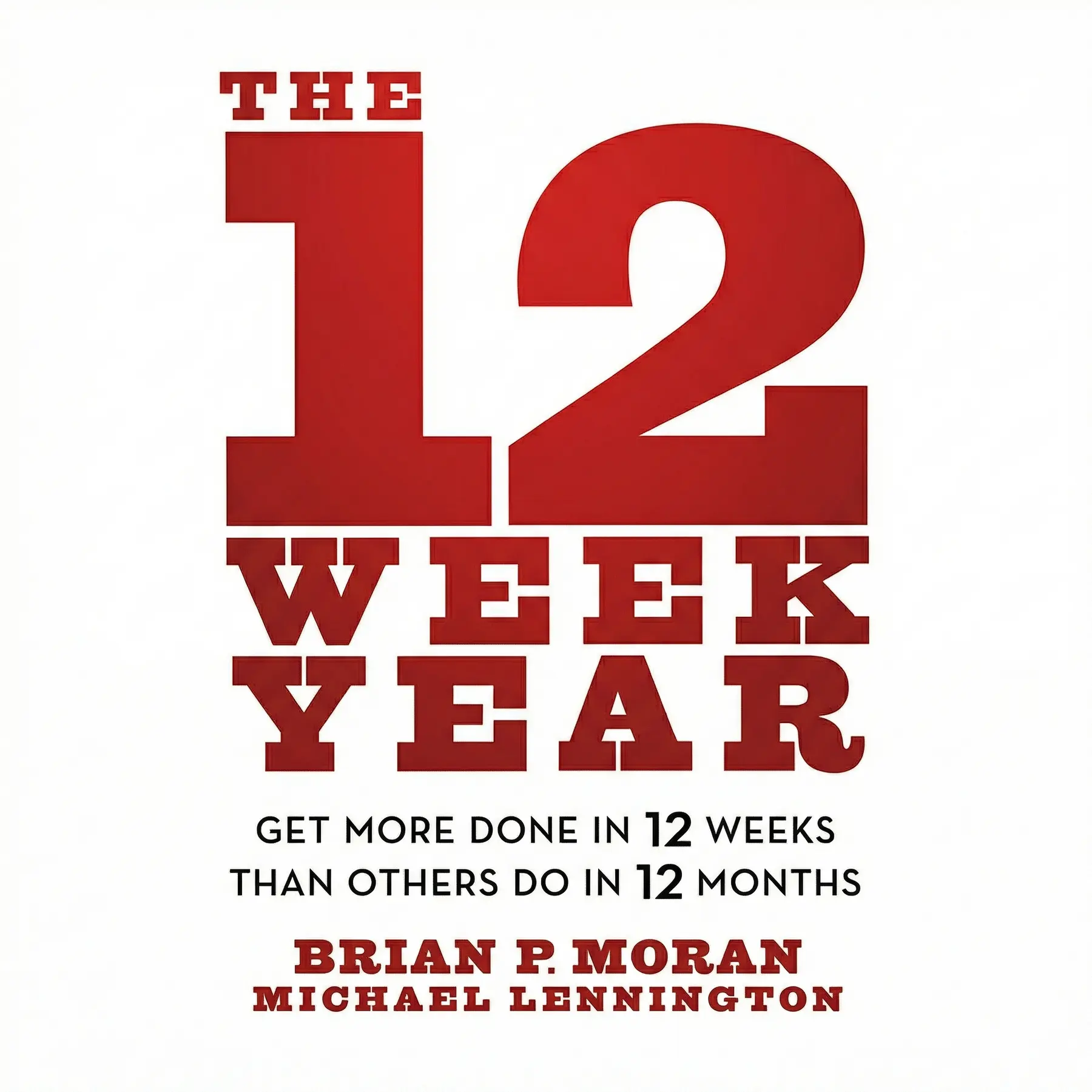
The 12 Week Year: Get More Done in 12 Weeks than Others Do in 12 months
Discover how to collapse your annual goals into intensive 12-week cycles, eliminating procrastination and driving peak performance through focused execution, strategic time blocking, and radical personal accountability.
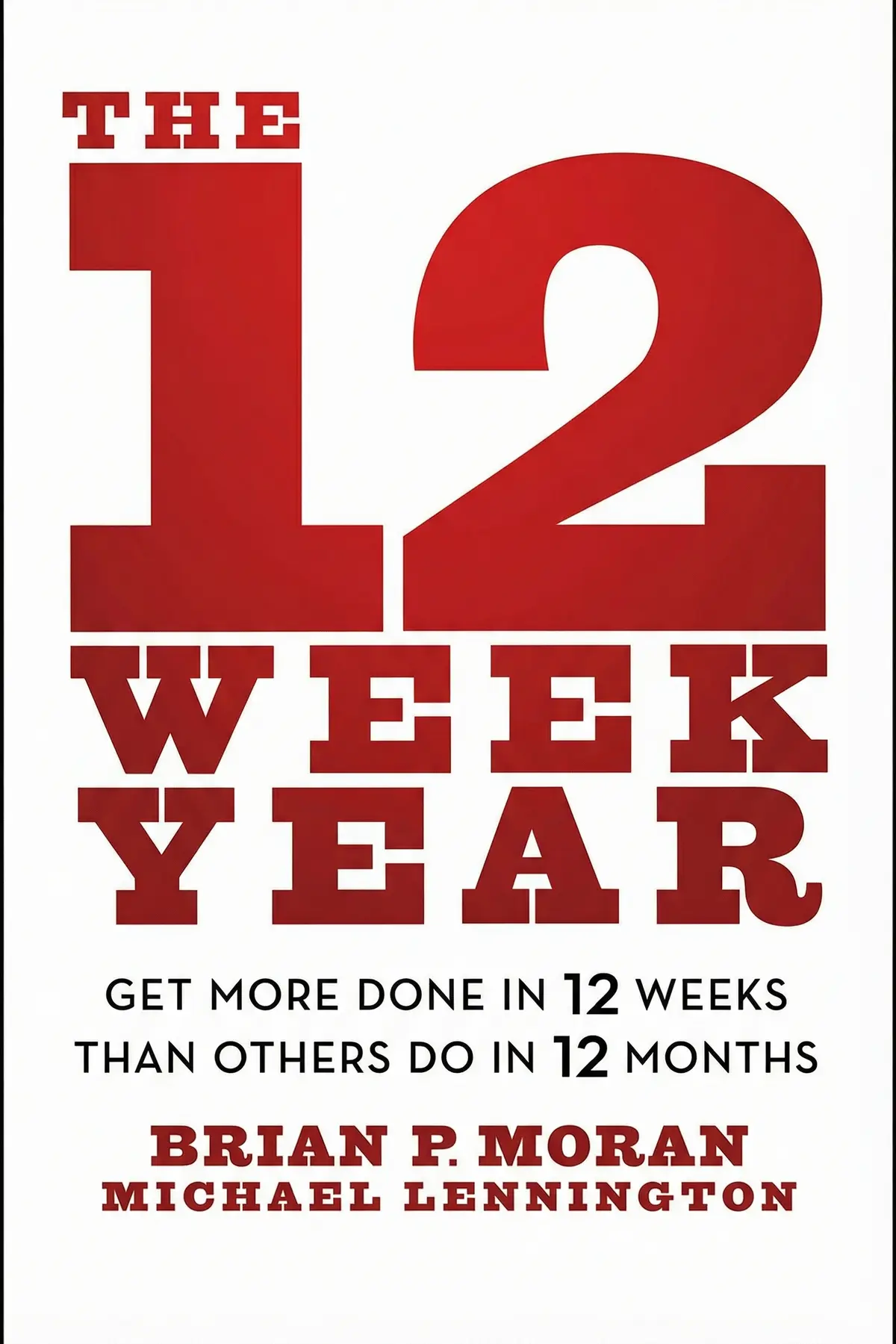
Table of Content
1. Introduction
2 min 05 sec
Have you ever paused to consider what your life would look like if you actually performed at your absolute maximum capacity every single day? Most of us are familiar with that spark of potential—the feeling that we are capable of much more than our current results suggest. As Thomas Edison famously reflected, if we truly did everything we were capable of doing, the results would be nothing short of astounding. Yet, for the vast majority of people, that potential remains untapped. We often find ourselves drifting, moving through our tasks with a sense of routine rather than a sense of purpose. We fall short not because we lack talent or intelligence, but because we lack a system that bridges the gap between our intentions and our actions.
This is where the concept of the 12 Week Year comes into play. It’s a radical departure from how most of us have been taught to think about time, productivity, and success. For generations, we’ve been conditioned to view our progress through the lens of a twelve-month calendar. We set New Year’s resolutions in January and wait until December to see if we’ve met them. But what if that very structure—the annual cycle—is the biggest obstacle standing in your way?
In this summary, we are going to explore a new way of operating that replaces the long, lethargic annual cycle with a focused, high-intensity twelve-week framework. We’ll look at why knowledge alone isn’t power, how to develop a vision that actually pulls you forward, and how to structure your days so that every moment counts. By the end of this journey, you’ll understand how to create a permanent sense of urgency that allows you to accomplish more in a single season than most people manage to achieve in a full trip around the sun. Let’s dive into the mechanics of collapsing time and magnifying your results.
2. Closing the Execution Gap
2 min 34 sec
Possessing knowledge is only the starting point; the real secret to success lies in how consistently you act on what you already know.
3. The Trap of Annualized Thinking
2 min 31 sec
The traditional twelve-month calendar creates a false sense of security that drains our urgency and leads to year-end scrambles.
4. Starting with a Compelling Vision
2 min 48 sec
A clear and ambitious vision is the fuel for your daily actions; without it, even the best plan will eventually falter.
5. Structuring Your 12-Week Plan
2 min 31 sec
Transform your broad vision into a concrete roadmap by identifying the critical activities that will yield the greatest impact.
6. Building a Support System for Consistency
2 min 38 sec
Willpower is a finite resource, so you must create systems and find peer support to maintain your momentum when motivation fades.
7. Using Measurement to Face Reality
2 min 34 sec
True progress requires tracking both your results and the actions that lead to them, allowing you to make data-driven adjustments.
8. Mastering Your Time through Blocking
2 min 44 sec
Prevent interruptions from hijacking your productivity by scheduling specific blocks of time for deep work, admin, and recovery.
9. Choosing Radical Accountability
2 min 30 sec
True success begins when you stop blaming external circumstances and start taking full ownership of your actions and their results.
10. Conclusion
2 min 02 sec
As we wrap up our exploration of the 12 Week Year, it’s important to return to the core throughline: success is not about the greatness of your ideas, but the consistency of your execution. We have seen how the traditional annual calendar creates a false sense of time, leading to procrastination and a lack of urgency. By shortening your ‘year’ to just twelve weeks, you create a structure that demands your best every single day.
We’ve covered the essential components of this system—from developing a compelling vision that stretches into the next decade to breaking that vision down into actionable three-year and twelve-week goals. We’ve discussed the importance of measurement, the power of peer accountability, and the necessity of managing your time through strategic blocking. Most importantly, we’ve explored the mindset shift required to take full ownership of your results.
The 12 Week Year isn’t just a productivity hack; it’s a fundamental change in how you approach your life and your work. It requires commitment and a willingness to face the numbers, even when they aren’t what you hoped for. But for those who embrace it, the rewards are profound. You will find yourself achieving more in a few months than you previously thought possible in a year.
To get started today, take one major goal from your current list and break it down. If it feels too big or intimidating, slice it into smaller, more manageable chunks. When a goal seems achievable, your motivation naturally increases. Write out the specific, individual steps needed to complete just one of your tactics this week. By focusing on the small, immediate actions, you build the momentum necessary to reach your largest ambitions. The clock is ticking on your next twelve weeks—it’s time to make them count.
About this book
What is this book about?
The 12 Week Year challenges the traditional concept of annual planning, arguing that a twelve-month calendar actually fosters complacency and low productivity. By redefining a 'year' as just twelve weeks, the authors provide a framework for maintaining a high sense of urgency and focus throughout the entire cycle. This approach promises to help individuals and organizations achieve more in three months than most do in an entire year. It shifts the focus from merely having great ideas to mastering the art of execution. Through specific techniques like lead indicators, strategic time blocks, and weekly accountability structures, the book provides a roadmap for closing the gap between what we know we should do and what we actually get done.
Book Information
About the Author
Brian P. Moran
Brian P. Moran is a seasoned entrepreneur, coach, and public speaker with an extensive corporate background, having held leadership roles at major companies like PepsiCo and UPS. Michael Lennington is a respected consultant and coach. Together, they are leading authorities on productivity and execution, dedicated to helping professionals achieve excellence.
Ratings & Reviews
Ratings at a glance
What people think
Listeners find this title to be a high-quality, brief listen that delivers fantastic techniques and is extremely beneficial for building doable roadmaps. Furthermore, the content transforms their perspective on reaching milestones and assists with both professional and private objectives. They also value the direct style, which keeps the material simple to grasp, and its capability to make success much more probable.
Top reviews
Nuk
Finally got around to reading this productivity classic, and it completely reframed how I view my calendar. The core idea is that 12 months is far too long to maintain focus; by the time October rolls around, you’ve already forgotten your January resolutions. Moran shifts the horizon to 12 weeks, which creates a permanent sense of urgency without being overwhelming. To be fair, some sections feel repetitive, but the 'model week' and the emphasis on measuring execution over results are game-changers. I’ve started implementing the strategic blocks—three-hour chunks of uninterrupted work—and my output has already spiked. If you are tired of the 'New Year, New Me' cycle that never delivers, this is the tactical manual you need. It’s a straightforward approach that makes success feel like a series of small, winnable battles rather than a marathon with no finish line in sight.
Show moreElise
Ever wonder why you're more productive in December than any other month? This book captures that 'year-end' energy and bottles it into a repeatable system. I love the focus on 'intentionality.' We often spend our days reacting to emails and notifications, but Moran argues for a 'model week' where you guard your time like a hawk. The distinction between 'lead indicators' and 'lag indicators' is a crucial mindset shift for anyone in sales or management. Not gonna lie, I was skeptical about the 12-week timeframe at first, but it forces you to confront your lack of execution immediately. You can't hide behind a nine-month buffer anymore. This is a must-read for high achievers who want to stop dreaming and start doing.
Show moreSuthinee
Wow, I didn’t expect a business book to resonate so deeply with my personal fitness goals. While the authors primarily target professional performance, the logic applies to everything from marathons to learning a new language. Gotta say, the focus on 'counting the cost' before you commit is a refreshing take on discipline. It isn't just about 'RA-RA' motivation; it’s about the tactical 'how-to' that many other self-help books miss. The writing style is direct and no-nonsense, which I appreciate. By the time I reached the chapter on 'Process Control,' I was already mapping out my first 12-week cycle. It’s an awesome strategy for anyone who wants to see tangible results quickly. This book definitely changed my mindset about what is possible in a short period of time.
Show moreArjun
The chapter on accountability changed my entire perspective on what it means to take ownership. In my experience, most people view accountability as a punishment, but Moran explains that it is actually a mindset of personal responsibility. I’ve been using the 12-week cycle for two months now, and I’m already hitting benchmarks I thought would take me until next year. The book is very helpful for developing manageable plans that don't just sit on a shelf gathering dust. It forces you to be honest about your 'keystone actions'—those few tasks that actually drive 80% of your results. If you are serious about your personal growth, this provides a clear, actionable roadmap. It’s not just a book; it’s a system for continuous improvement.
Show moreMoon
The concept is undeniably brilliant, even if the execution of the writing feels a bit padded at times. I appreciate how the authors break down the 'execution gap'—the space between what we know we should do and what we actually do. Instead of just 'working harder,' the 12 Week Year asks you to score yourself every week. Truth is, striving for that 85% completion rate on plan tactics is much more motivating than chasing a distant end-of-year revenue goal. The book uses several weight loss analogies which help simplify the complex planning phases, though I wish there were more diverse business case studies. Success is more likely when you have a feedback loop. You could probably get the gist in 50 pages, but the repetition helps cement the habit in your mind. It’s a solid 4-star read for anyone needing a structured system to stay on track.
Show moreOrm
As someone who has always struggled with long-term goal setting, this book provided a much-needed framework that actually feels attainable. Personally, I think the 12 Week Year isn't just a marketing gimmick; it’s a psychological hack. When you treat every week like a month, your focus sharpens, and low-value activities naturally fall away because you simply don't have the luxury of wasting time. I found the 'Breakout Blocks' especially helpful—intentional free time to prevent burnout. My only gripe is that it occasionally feels like a sales pitch for their online services, but the core methodology is strong enough to stand on its own. It turns the daunting task of annual planning into a manageable, 12-week sprint. It’s straightforward, effective, and highly recommended for entrepreneurs who feel stuck.
Show moreLena
Picked this up on a recommendation from my manager, and while some parts felt like a repeat of Grant Cardone’s ideas, the tactical side is far superior. Where other books tell you to 'think big,' this one tells you exactly how to schedule your Tuesday morning to ensure you actually reach that 'big' goal. In all fairness, the scoring system is a bit rigorous, but it provides the feedback loop necessary to adjust your plan before it's too late. To be fair, the weight loss examples are a bit dated, and the tone can be somewhat dry. However, the effectiveness of the 12-week 'year' is undeniable for both business and personal life. It makes success feel less like luck and more like a deliberate process of execution.
Show moreGor
Frankly, this could have been a long-form blog post or a pamphlet. I don't mean that the advice is bad—it’s actually quite effective—but the authors repeat the same three or four points for nearly 200 pages. It felt a bit like a middle school book report where the student is trying to hit a word count. However, the section on 'Accountability' was surprisingly profound; it’s not about external consequences but about taking personal ownership of your choices. If you can move past the repetitive nature of the text, there are real gems here regarding time use and 'buffer blocks' to handle low-value tasks. I’d recommend skimming the middle sections or finding a summary if you’re short on time. It’s a useful tool, but be prepared for a bit of a slog through the fluff.
Show moreFon
Look, the core advice here is gold, but you have to dig through a lot of fluff to find it. I gave it three stars because while the 12-week structure is a fantastic way to boost urgency, the book is incredibly repetitious. It feels like the authors were trying to justify the price tag by adding unnecessary pages. That said, the 'strategic blocks' concept is worth the price of admission alone. I also liked the part about moving from 'informed pessimism' to 'informed optimism'—it’s a realistic look at the emotional cycle of change. If you are the type of person who needs constant reinforcement to stay on track, you might enjoy the repetitive style. For me, a more condensed version would have been much more effective for my business planning.
Show moreLincoln
Not what I expected at all given the hype. I found the book to be incredibly oversimplified and, quite honestly, a bit of a bore to read. The authors take a single, decent idea—shortening your goal-setting cycle—and stretch it out until the original point is almost lost in the wordiness. I felt like I was being pitched a subscription service for their website every other chapter. If you've read standard productivity blogs from the last decade, you've already heard 90% of what's in here. I struggled to finish it because the narrator on the audio version was so dry and monotonous. Save your money and just read a summary online; you'll get the same value in five minutes that I got in five hours of listening to this repetitious sales pitch.
Show moreReaders also enjoyed
AUDIO SUMMARY AVAILABLE
Listen to The 12 Week Year in 15 minutes
Get the key ideas from The 12 Week Year by Brian P. Moran, plus 5,000+ more titles in English and Thai.
- 5,000+ titles
- Listen as much as you want
- 7-day free trial
- Cancel anytime







