
59 Seconds: Change Your Life in Under a Minute
Richard Wiseman
Explore the psychological evolution of modern partnership. This summary reveals how marriage transitioned from a survival-based contract to a path for self-actualization, requiring new tools for lasting fulfillment and deep connection.
1 min 33 sec
In the modern age, we often hear that marriage is a dying institution, a relic of a time when social norms and economic necessity forced people together. Yet, if we look closer at the data, a different story emerges. We aren’t moving away from marriage because it has failed; we are demanding more from it because we believe it can succeed on a much higher level. Eli J. Finkel argues that we have entered an era of the “all-or-nothing” marriage.
Think of marriage as a mountain. In the past, we were content to live at the base, where the air was thick and the requirements were simple: food, shelter, and basic security. Today, we are attempting to scale the summit of Mount Everest. We want our partners to be our best friends, our passionate lovers, and our primary cheerleaders in our quest for self-discovery. This throughline—the transition from survival to self-actualization—defines the modern marital experience.
This summary will guide you through the historical shifts that changed our expectations, the psychological mechanisms that keep us committed, and the practical strategies needed to maintain a thriving partnership in a world full of distractions. We will explore why the stakes are higher than ever and how, with the right effort, the rewards of a modern marriage can exceed anything our ancestors could have imagined. By the end, you’ll understand that a successful marriage today isn’t just about avoiding conflict; it’s about actively facilitating each other’s growth while navigating the complexities of individual identity.
1 min 52 sec
How marriage shifted from a practical survival contract to a quest for personal liberation and individual identity.
1 min 42 sec
Discover how a committed partnership can actually serve as a powerful engine for reaching your personal potential.
1 min 37 sec
How our brains use creative perception to protect our relationships from the lure of outside temptations.
1 min 45 sec
Understanding the high-stakes trade-off that defines the modern ‘all-or-nothing’ approach to love.
1 min 27 sec
Why shared interests matter less than your willingness to support your partner’s evolving life goals.
1 min 34 sec
Why seeing your partner through rose-colored glasses might be the best thing you can do for your future.
1 min 35 sec
Simple psychological shifts to boost gratitude and overcome the barriers of personal insecurity.
1 min 27 sec
How modern distractions and a false sense of busyness are starving our relationships of the time they need.
1 min 30 sec
Why protecting your personal identity and independence is vital for a resilient and healthy marriage.
1 min 31 sec
Navigating the risks and surprising findings associated with non-monogamous marital models.
1 min 37 sec
The journey through the landscape of modern marriage reveals a profound truth: we are living in an era where the potential for marital fulfillment is higher than at any point in history. We have moved from the base of the mountain, where survival was the only goal, to the high-altitude regions of self-actualization and personal growth. But as we have seen, this “all-or-nothing” reality means that the work required to maintain a relationship has also increased significantly.
A successful marriage today isn’t something that just happens; it’s something that is built, day by day, through intentionality and effort. It requires using psychological “love hacks” to bridge the gap between our insecurities and our partner’s love. It demands that we reclaim our time from the digital distractions that threaten to pull us apart. Most importantly, it asks us to be each other’s greatest supporters, helping our partners become the best versions of themselves while we also tend to our own individual identities.
As you move forward, remember the metaphor of the mountain. The climb is demanding, and the air is thin, but for those willing to put in the effort, the view from the top is breathtaking. A great marriage today is a partnership of equals, a shared journey of discovery, and a testament to the power of human connection. By focusing on active engagement, mutual respect, and the support of each other’s dreams, you can ensure that your marriage isn’t just a social contract, but a thriving, life-affirming adventure that brings out the best in both of you.
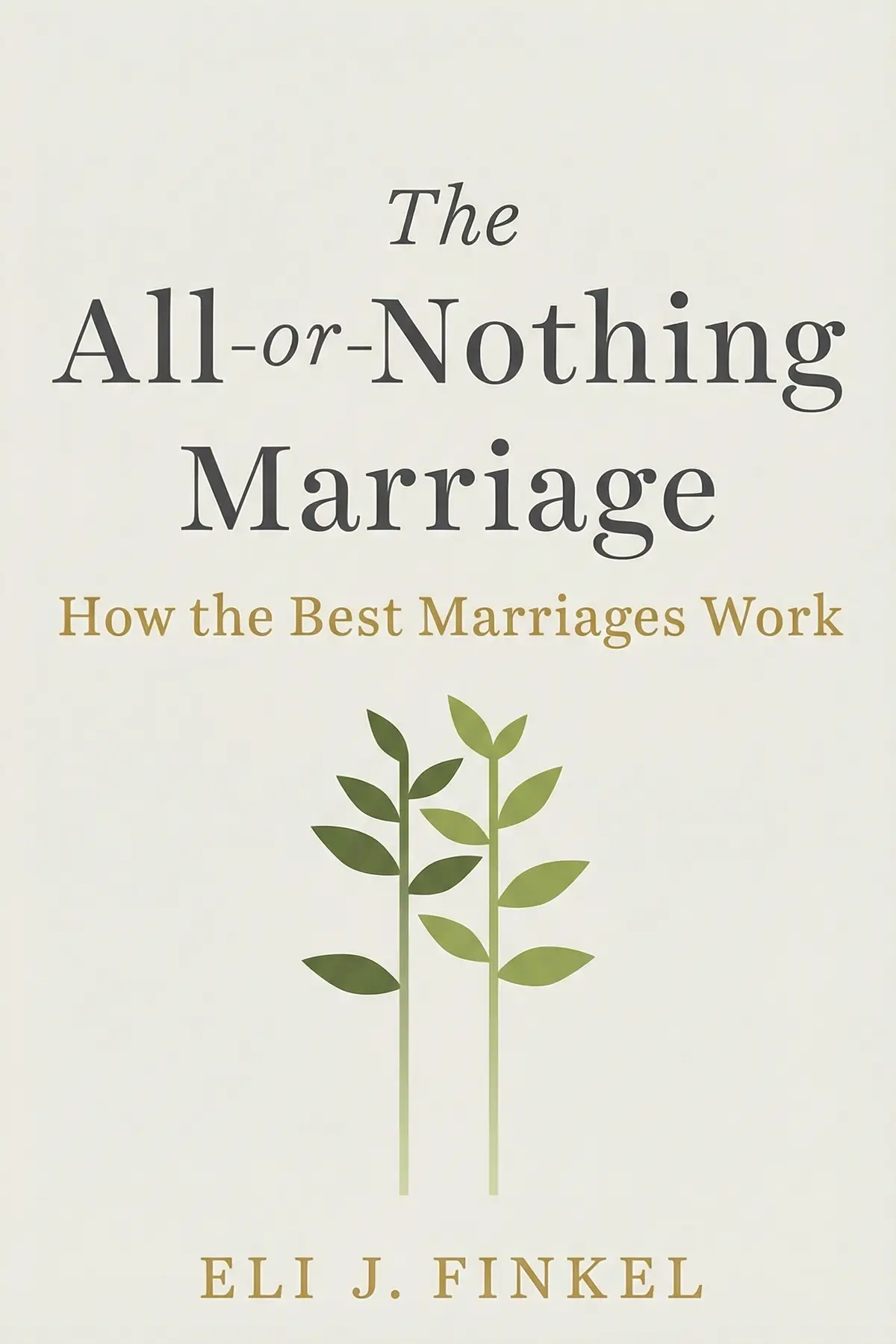
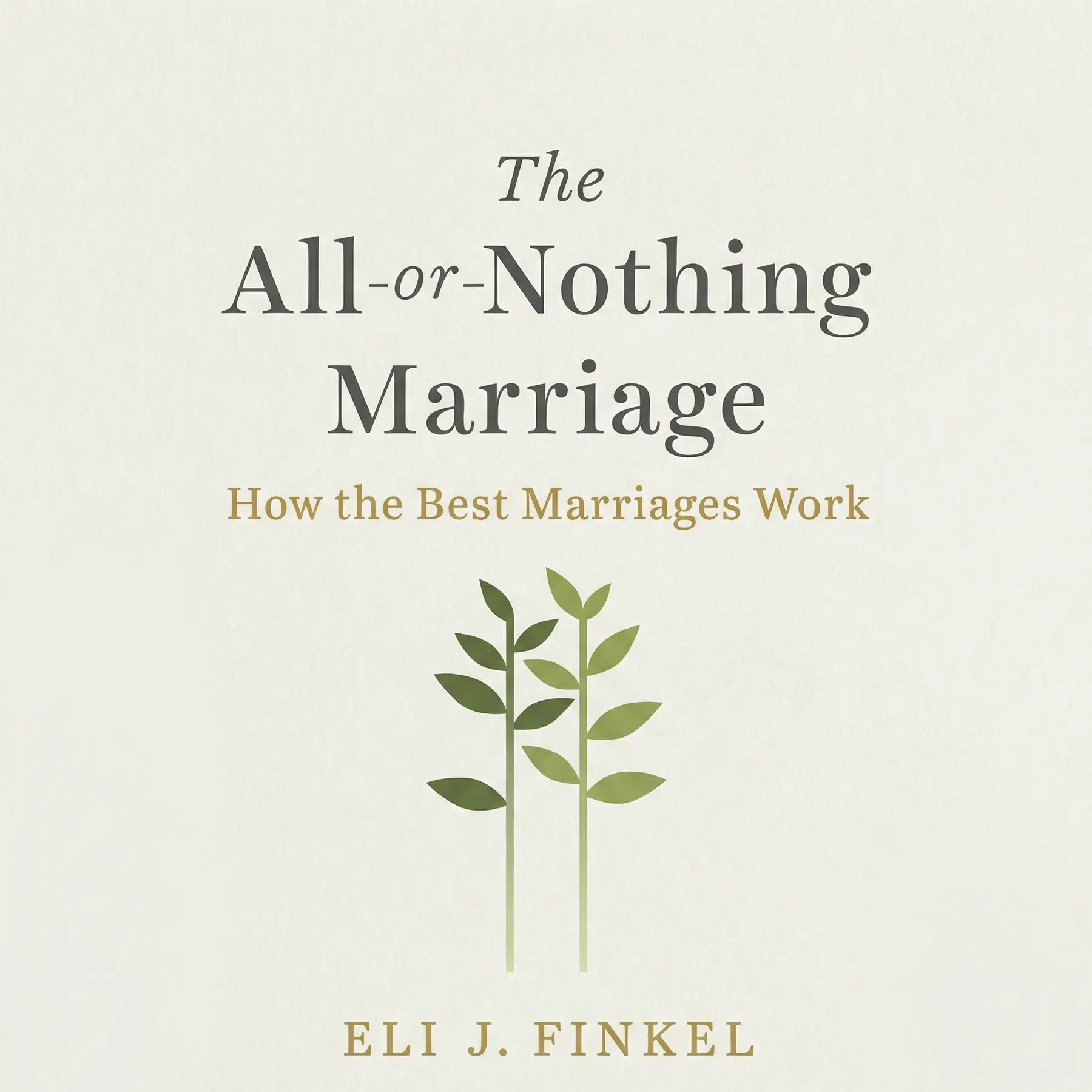
The All-or-Nothing Marriage examines the shifting landscape of matrimony through a historical and psychological lens. In the past, marriage was primarily a pragmatic arrangement focused on physical safety and economic stability. Today, however, we look to our spouses for personal growth, emotional support, and self-actualization. This shift has created a unique paradox: while the average marriage may be under more pressure than ever, the best modern marriages are significantly more satisfying than those of previous generations. Eli J. Finkel provides a research-backed roadmap for navigating these high expectations. He introduces the concept of the "Mount Everest" of marriage, suggesting that while the climb to the summit of self-fulfillment is steep and demanding, the view from the top is unparalleled. The book offers practical "love hacks" and strategies to bridge the gap between our high standards and the reality of daily life, ensuring that partnerships remain resilient in an era of intense individualism.
Eli J. Finkel is a distinguished professor of psychology at Northwestern University and an award-winning researcher specializing in social relationships. He serves as the director of Northwestern’s Relationships and Motivation Lab and has contributed over a hundred scientific papers to the field. Beyond his academic work, he is a frequent contributor to the New York Times editorial section, bringing psychological insights to a broad public audience.
Listeners find the writing to be both articulate and intellectually stimulating, featuring research-backed insights and actionable advice for building successful relationships. They consider it an essential resource on marriage, with one listener highlighting the discussion on how personal self-esteem strengthens a union. While the historical context is widely praised as fascinating, views remain divided on the text's overall readability and accessibility.
Finkel’s research-backed approach is a breath of fresh air in a genre usually filled with vague platitudes and anecdotal nonsense. This isn't just a list of 'do this, not that' tips; it's a profound examination of how healthy self-esteem and mutual growth nurture the modern bond. I loved the concept of the 'All-or-Nothing' marriage, which explains why the best marriages today are better than ever, while the average ones feel more precarious. The 'love hacks' are surprisingly effective because they are grounded in psychological data rather than just opinion. Not gonna lie, it changed how I perceive my own role in supporting my wife’s personal goals. This is easily one of the most important books on marriage I’ve read in the last decade. It’s thoughtful, provocative, and ultimately very hopeful about what a committed partnership can achieve.
Show moreAs someone who appreciates a marriage book that treats the reader like an adult, I found this incredibly empowering. The concept that we can 'recalibrate' our expectations during difficult seasons instead of just giving up is a vital perspective for anyone in a long-term commitment. Finkel writes with a charismatic tone that makes the scientific data feel accessible and relevant to everyday life. I especially enjoyed the part about how we can help our spouses become their best selves; it framed marriage as a partnership in personal growth rather than just a legal contract. The historical context actually helped me feel less guilty about the high demands I place on my relationship. It turns out we are all just trying to navigate a new era of intimacy. Highly recommended for anyone who wants a smarter approach to love.
Show moreEver wonder why modern marriages feel so much more high-stakes than those of our grandparents? Eli Finkel provides a fascinating deep dive into how we've climbed Maslow’s hierarchy of needs within our domestic lives. He argues that we used to marry for survival or economic stability, but now we seek self-actualization through our partners. It’s a compelling thesis, though the first 75% of the text feels more like a sociological history lesson than a guide. While the academic tone might be a bit much for some, the insights into how cultural shifts changed our expectations are eye-opening. The latter part of the book provides some solid, research-backed strategies that felt more grounded than your average self-help fluff. It’s a dense read, but worth it if you want to understand the 'why' behind the 'how' of modern relationships.
Show moreFinally got around to reading this and I appreciate how Finkel doesn't sugarcoat the effort required to reach the 'summit' of a modern marriage. The data he presents suggests that while we ask more of our partners than ever before, the payoff for those who put in the work is unparalleled. I found the concept of the 'supply-and-demand' model of marriage very helpful for understanding why some seasons of life feel so draining. Sometimes you just have to descend the mountain and lower your expectations when resources are low. The book is heavily focused on the American experience, which is worth noting if you're looking for a more global perspective. Still, the strategies for 'investing additional resources' were practical and easy to implement. It’s a thought-provoking read that balances theory with a few actionable takeaways.
Show moreThe chapter on 'love hacks' actually provided some of the most practical, low-effort strategies I’ve seen in recent years. By focusing on how we attribute motives to our spouse's behavior, Finkel offers a way to shift the entire dynamic of a relationship without needing a three-hour therapy session. I liked the analytical approach to 'supply and demand' within a marriage; it takes the emotion out of it for a second so you can look at the logistics of your life together. The book is definitely a bit top-heavy with the history, and some might find the Maslow's mountain metaphor a bit tired. However, the core message about the potential of modern marriage is inspiring. It’s a well-researched, thought-provoking piece of work that offers a unique perspective on why we struggle the way we do.
Show moreThe truth is, this book feels like two different projects stitched together with varying degrees of success. While the academic exploration of the 'self-expressive' era of marriage is intellectually stimulating, the actual practical application felt somewhat thin. I appreciated the section on recalibrating expectations, but I found myself wanting more depth in the strategy department. To be fair, Finkel is an academic, so the writing style reflects that—it’s very well-written but can be quite dense and slow-moving at times. It’s a good overview for someone interested in the history of the institution, but it lacks the emotional resonance of something like Esther Perel’s work. I’d recommend it for the history, but don’t expect a total relationship transformation just from the few tips at the end. It's a solid 3-star read for the curious mind.
Show moreTo be fair, if you aren't living in the United States, a lot of the cultural context here might feel a bit alien or irrelevant. Finkel focuses heavily on the American shift from pragmatic to romantic unions, which is interesting, but it ignores the global diversity of the institution. I read this as someone from a non-Western background and found the 'self-actualization' goals to be very individualistic. The writing is clear and the research is obviously top-tier, yet I struggled to connect with the 'love hacks' because they felt like small patches for much larger structural issues. It’s a well-constructed argument, but the 'all-or-nothing' premise seems to apply to a very specific socioeconomic class. I’d say it’s worth a skim for the data, but it didn't quite hit the mark for me personally.
Show moreNot what I expected given the title, as I was looking for something more immediate and actionable for my own relationship struggles. It’s well-written and Finkel is clearly a brilliant guy, but I found myself constantly wishing he’d spend less time on the 1800s and more on the present. The middle section drags quite a bit with all the talk about Maslow’s hierarchy, which felt a little repetitive after the third chapter. When he finally gets to the 'love hacks,' they are actually quite good—especially the advice about seeing your partner’s actions through a positive lens. However, those gems are buried under a lot of academic scaffolding. It’s more of a sociological study than a self-help manual. If you have the patience for a slow build, you'll find some value here.
Show moreFrankly, if you’ve already read Gottman or Sue Johnson, you’ve heard a lot of these insights before. Finkel does a decent job of synthesizing the current state of relationship science, but I didn't find much here that felt truly revolutionary. The 'love hacks' are essentially just reminders to be kind and attentive, which is useful but not exactly groundbreaking. The historical analysis is the strongest part of the book, but it takes up so much space that the actual 'how-to' feels like an afterthought. It's a bit of a kitchen-sink approach where he throws in every study he's ever conducted or read. It’s not a bad book by any means, but it’s definitely more for people who like to understand the theory behind things rather than those looking for quick fixes.
Show moreLook, I really wanted to like this, but the first three-quarters of the book is a dry history lesson that feels more like a sociology textbook than a guide for couples. The author spends way too much time on the evolution of marriage from the colonial era through the industrial revolution. I was looking for practical advice on how to fix my relationship, not a lecture on agrarian society and cultural shifts. By the time I finally reached the 'love hacks' in the last section, I was already checked out. Frankly, the advice provided—like giving your spouse the benefit of the doubt—felt incredibly basic and pedestrian compared to the work of John Gottman or Sue Johnson. If you want an academic history of marriage in America, buy this. If you want to actually improve your marriage, look elsewhere.
Show moreRichard Wiseman
Steven C. Hayes
Deborah Gruenfeld
bell hooks
Anthony Pratkanis
AUDIO SUMMARY AVAILABLE
Get the key ideas from The All-or-Nothing Marriage by Eli J. Finkel, plus 5,000+ more titles in English and Thai.







