

Afropean: Notes From Black Europe
Johny Pitts
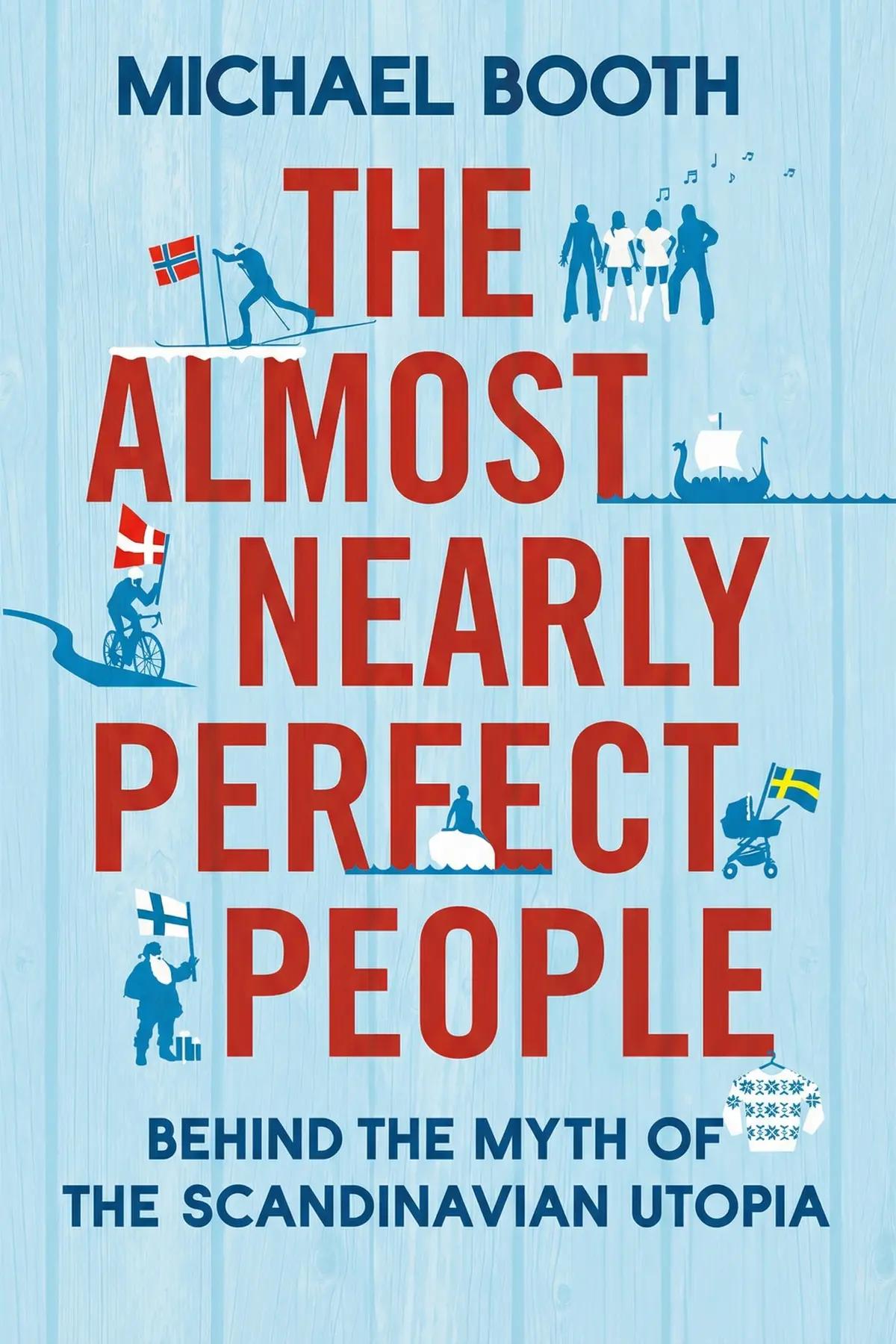
A deep, witty investigation into the Nordic nations that challenges the global image of Scandinavia as a perfect utopia, revealing the complex cultural truths and contradictions behind their famous success.
1 min 54 sec
When we think of Scandinavia, a very specific image often comes to mind. We imagine sleek, minimalist furniture, vast landscapes of untouched snow, and a collection of nations that have somehow cracked the code of human happiness. To the rest of the world, countries like Denmark, Sweden, and Norway seem like a modern-day utopia—a place where poverty is minimal, gender equality is a given, and the government takes care of everyone from cradle to grave. It is a region that consistently sits at the top of every international index, from wealth distribution to environmental sustainability. For many, it is the gold standard of what a modern civilization should look like.
But as any traveler or resident knows, the view from the outside rarely matches the complicated reality on the ground. This is exactly what Michael Booth, a journalist who has spent decades living in and observing the region, set out to investigate. He wanted to know if the “Nordic miracle” was actually as flawless as it appeared or if the media had simply fallen in love with a carefully curated brand. Was the region truly a paradise, or were there hidden cracks in the ice?
Through a journey across the five Nordic nations—Denmark, Iceland, Norway, Finland, and Sweden—we are invited to look past the IKEA catalogs and the viking legends. We start to see the nuances that make these people who they are. We’ll explore the deep-seated cultural rules that govern social behavior, the historical events that shaped their national identities, and the surprising contradictions that exist within their borders. From the immense oil wealth of Norway to the resilient grit of the Finns, this journey is about understanding the human side of the statistics. It’s about discovering why these people are considered almost nearly perfect, and what costs they pay for that reputation. Along the way, we’ll see how geography, religion, and history have conspired to create a group of nations that are both incredibly similar and fiercely distinct.
2 min 16 sec
Discover how the Nordic countries lead the world in wealth and gender parity, potentially drawing on a deep-seated legacy of egalitarianism from their distant past.
2 min 10 sec
Uncover the unwritten rules of Nordic modesty and the strange literary ‘laws’ that discourage individuals from standing out too much from the crowd.
2 min 05 sec
Explore how the deep sense of shared identity in Nordic nations creates a high level of trust but can also lead to friction with outsiders.
2 min 04 sec
Witness the unique blend of ancient myths and modern ambition in Iceland, a country that bounced back from a catastrophic financial collapse.
2 min 08 sec
See how Norway’s jaw-dropping natural beauty and its status as an oil-rich powerhouse have created a culture that is both deeply rural and incredibly wealthy.
1 min 56 sec
Examine the unique ‘sisu’ spirit of Finland, a nation that balances high rates of violence and drinking with the world’s most successful education system.
2 min 13 sec
Unveil the truth behind Sweden’s legendary welfare state, uncovering a history of total conformity and disturbing social engineering programs.
2 min 03 sec
Investigate why the Danes consistently rank as the world’s happiest people despite having astronomical tax rates and surprising health challenges.
1 min 41 sec
In the end, our journey through the Nordic countries reveals a truth that is far more interesting than the myth of a perfect utopia. We have seen that these nations are not some magical exceptions to the human condition, but rather societies that have made very specific choices and trade-offs. They have chosen equality over extreme wealth, collective security over individual ostentation, and social cohesion over radical diversity. These choices have led to some of the most stable, wealthy, and peaceful societies in history, but they have also created their own unique sets of problems—from the stifling pressure to conform to the challenges of integrating outsiders.
The Nordic people are “almost nearly perfect” because they have managed to build systems that work for the majority of their citizens. They have turned harsh landscapes and difficult histories into foundations for resilience and trust. Whether it is Norway’s careful management of its natural resources, Finland’s investment in its children’s minds, or Denmark’s commitment to social joy, there is much for the rest of the world to learn from this region.
However, the ultimate takeaway is that no society is without its shadows. The same unity that provides comfort can also feel like a cage. The same history that provides identity can also harbor secrets. By looking at Scandinavia with clear eyes, we can appreciate their incredible achievements while recognizing that the search for a perfect society is always a work in progress. What they offer is not a finished blueprint, but a powerful example of what happens when a community decides to prioritize the well-being of the many over the ambitions of the few. It is a reminder that while perfection may be impossible, a better, fairer, and more connected way of living is well within our reach.
The Nordic countries—Denmark, Norway, Sweden, Finland, and Iceland—regularly dominate global rankings for happiness, equality, and quality of life. From the outside, they look like a flawless paradise of progressive politics and stunning landscapes. But is the reality on the ground as perfect as the statistics suggest? In this exploration, journalist Michael Booth dives beneath the surface of the Scandinavian myth to find the human stories, historical traumas, and social quirks that define the region. You will go on a journey through each nation, uncovering how Norway’s vast oil wealth has changed its soul, why Finland balances extreme violence with world-leading education, and how Sweden’s pursuit of a rational society led to some very dark chapters in history. Along the way, you’ll encounter the unwritten social laws that keep these societies cohesive but also sometimes stifling. This narrative offers a balanced look at the strengths and flaws of a region that the rest of the world often admires but rarely fully understands, providing a nuanced portrait of what it really means to live in an almost nearly perfect society.
Michael Booth is an award-winning English journalist and author whose work is frequently featured in major British and international newspapers and magazines. Having lived on and off in Scandinavia for several decades, he possesses a unique perspective as both an insider and an outsider. He currently resides in Denmark with his wife and children and has authored several books exploring European culture and travel.
Listeners find this audiobook to be a highly pleasant and accessible listen that is exceptionally well-documented, offering numerous insights into Scandinavian life. The narrative approach is engaging, with listeners highlighting the author’s sharp powers of observation, and they value the work's stimulating subject matter. Furthermore, the volume delivers a solid grasp of Nordic nations and their traditions, and listeners consider it witty, featuring several hilarious moments. Conversely, the treatment of cultural diversity draws varied opinions, as some listeners like the deep dive into social and cultural challenges while others feel it comes close to being racist.
Michael Booth manages to do for the Nordics what Bill Bryson did for the UK, blending sharp wit with genuine curiosity. I found myself laughing out loud at his descriptions of the Danish obsession with their flag and the surreal experience of a Finnish sauna. While he’s clearly biased toward his adopted home in Denmark, the insights into the 'Jante Law' and the pressure to conform are eye-opening. The book successfully strips away the glossy 'utopia' veneer we usually see in lifestyle magazines. Truth is, I expected a dry sociological study but got a hilarious travelogue instead. It’s a superb balance of historical context and modern observation. My only gripe is that Sweden gets a bit of a rough ride, but his self-deprecating British charm makes it digestible. This is essential reading for anyone who has ever felt a twinge of 'Scandi-envy' while scrolling through Instagram.
Show moreWow, what a ride. This is easily one of the most engaging non-fiction books I’ve read in years. Booth has this incredible talent for taking statistics and turning them into vivid stories about real people. From the bizarre etiquette of Swedish gender equality to the stoic silence of the Finns, he covers it all with a dry, self-deprecating wit. I found the 'Somali Pizza' chapter in Sweden to be a brave, if controversial, look at the challenges of multiculturalism in a homogenous society. He doesn't pull his punches, yet you can tell he has a deep-seated affection for the region. The comparison to 'The White Album' at the end was the perfect way to wrap up his findings. It’s messy, it’s long, and it’s got some weird tracks, but it’s still a masterpiece. I’ve already started pestering my friends to borrow my copy. If you want to understand the modern North, start here.
Show moreFinally got around to reading this and I’m so glad I did! It’s basically Bill Bryson meets social anthropology. Booth is a fantastic narrator who isn’t afraid to look like an idiot in the name of research. Whether he’s getting naked in a sauna or trying to understand the 'elves' of Iceland, he’s always entertaining. What I appreciated most was how he challenged the 'utopia' label. He shows that while these countries are successful, they also deal with high suicide rates, alcoholism, and a lack of social mobility in some areas. It’s a balanced view presented with a lot of heart and even more humor. The way he describes the Swedish 'totalitarian' politeness was both hilarious and slightly terrifying. This book is a rare treat: it’s educational without being boring and funny without being shallow. A must-read for any armchair traveler or fan of cultural studies.
Show moreEver wonder why the people paying the highest taxes in the world are supposedly the happiest? Booth dives deep into this paradox, exploring the nuances of the Nordic model across five distinct nations. He avoids the typical worshipful tone, instead opting for a slightly jaded, British perspective that feels much more authentic. The chapters on Iceland’s economic collapse and the subsequent 'elf' sightings were particularly fascinating to me. Frankly, the author’s ability to weave complex history with silly personal anecdotes kept me turning pages late into the night. He doesn't shy away from the darker corners either, like the rise of the far-right or the struggles with integration in Malmö. It’s not a perfect academic text, and some arguments feel a bit thin, but it’s a brilliant starting point for understanding our northern neighbors. A thought-provoking read that will definitely spark some dinner table debates.
Show morePicked this up before a trip to Copenhagen and found it incredibly helpful for setting expectations. Booth’s writing style is punchy and entertaining, making even the discussion of Norwegian oil wealth feel engaging. He captures that strange Nordic mix of extreme modesty and quiet national pride perfectly. I particularly enjoyed the segments on Finland—the 'macho' culture and the silence were described with such vivid, humorous detail. To be fair, he does spend a disproportionate amount of time on Denmark since he lives there, but the other countries get enough screen time to keep it interesting. There’s a certain 'nudge-nudge-wink-wink' quality to his observations that makes you feel like you're in on a secret. It’s a refreshing change from the usual 'everything is perfect in Scandinavia' narrative. Definitely recommended for travelers or anyone curious about what lies behind the hygge.
Show moreAs a Canadian who has always admired the Scandinavian social safety net, this book provided a much-needed reality check. Michael Booth uses his outsider-insider status to poke holes in the myths of egalitarianism and progressive paradise. The truth is, these countries are complex, sometimes insular, and occasionally quite weird. I loved the exploration of why the Danes are so content despite the monotony of their landscape and the high cost of living. His interviews provide a 'fuzzy impressionistic' view, which works well for a general audience even if it lacks deep rigour. I did find the pacing a bit uneven—the Iceland section felt rushed compared to the deep dive into Danish life. However, the humor is top-notch. It’s a light, enjoyable read that makes you think about your own society’s values. It’s not a textbook, and it doesn't try to be. It’s just a very good, very funny observation of people.
Show moreAfter hearing so much about hygge and lagom lately, I wanted to see what the catch was. Booth provides exactly that—the catch. He explains the 'Jante Law' brilliantly, showing how the pressure to not be 'better' than anyone else creates both harmony and a stifling sense of sameness. The book is superbly researched, even if the author prefers anecdotes over spreadsheets. I was fascinated by the descriptions of the Norwegian Constitution Day and the sheer scale of the celebrations. It’s a very easy read, broken into digestible chapters that focus on specific, often quirky, cultural traits. Personally, I found the section on the high taxes and the 'obedient' nature of the citizens to be the most thought-provoking part. It makes you question if you’d trade your own freedom for that level of security. A few parts drag, especially toward the end, but the payoff is worth it.
Show moreTo be fair, the author’s British perspective is both the book's greatest strength and its biggest weakness. On one hand, the humor is delightful and the observations are sharp. On the other, his constant 'Britishly shocked' reactions can get a bit tiresome after three hundred pages. I felt like the chapter on Norway focused way too much on the Breivik tragedy, which felt like a strange choice for a book that is otherwise quite lighthearted. He also seems to have a bit of a chip on his shoulder regarding Sweden’s social policies. Some of the generalizations about Swedish women and 'feminism run amok' felt a little dated and close-minded. It’s a very readable book, but you have to take his conclusions with a grain of salt. He’s a journalist, not a sociologist, and it shows. Good for a plane ride, but don't expect it to change your worldview entirely.
Show moreThe chapter on Finland was the highlight for me, but the rest of the book felt a bit hit-or-miss. I appreciate that Booth tried to cover all five countries, but the depth varies wildly. He clearly knows Denmark inside and out, but his take on Iceland felt like a quick tourist visit in comparison. Not gonna lie, I was disappointed by the lack of focus on the Sami people in Norway; it felt like a missed opportunity to talk about actual diversity issues. The writing is definitely entertaining, and there are some genuinely funny lines that made me laugh out loud. However, the author’s tendency to run away from difficult interviews—like the one with the Swedish Democrat—left me wanting more backbone. It’s a bit light and frivolous for such a meaty topic. Still, it’s a decent overview if you’re new to the subject. Just don't expect a deep dive.
Show moreNot what I expected at all, and unfortunately, not in a good way. I was looking for a rigorous analysis of social democracy, but this felt more like a collection of loosely connected, somewhat cynical blog posts. The author relies far too heavily on anecdotal evidence and brief chats with a few professors rather than presenting hard data. Look, his 'Mr. Bean-like' antics in a sauna might be funny to some, but it distracted from the actual social science I was craving. It felt frivolous and, at times, bordered on being mean-spirited toward the cultures he was visiting. The section on Sweden felt particularly biased and lacked the objectivity needed for a book making such bold claims. If you want a long, slightly grumpy magazine article, this is for you. Otherwise, look for something with more academic weight. It’s a great concept for a book that unfortunately got buried under too much 'British shock' and not enough substance.
Show moreJohny Pitts

bell hooks

Fay Bound Alberti
Daniel Goleman


Virginia Woolf

Tracy Rosenthal
Jessica Valenti
AUDIO SUMMARY AVAILABLE
Get the key ideas from The Almost Nearly Perfect People by Michael Booth, plus 5,000+ more titles in English and Thai.







