
A Little History of Philosophy
Nigel Warburton
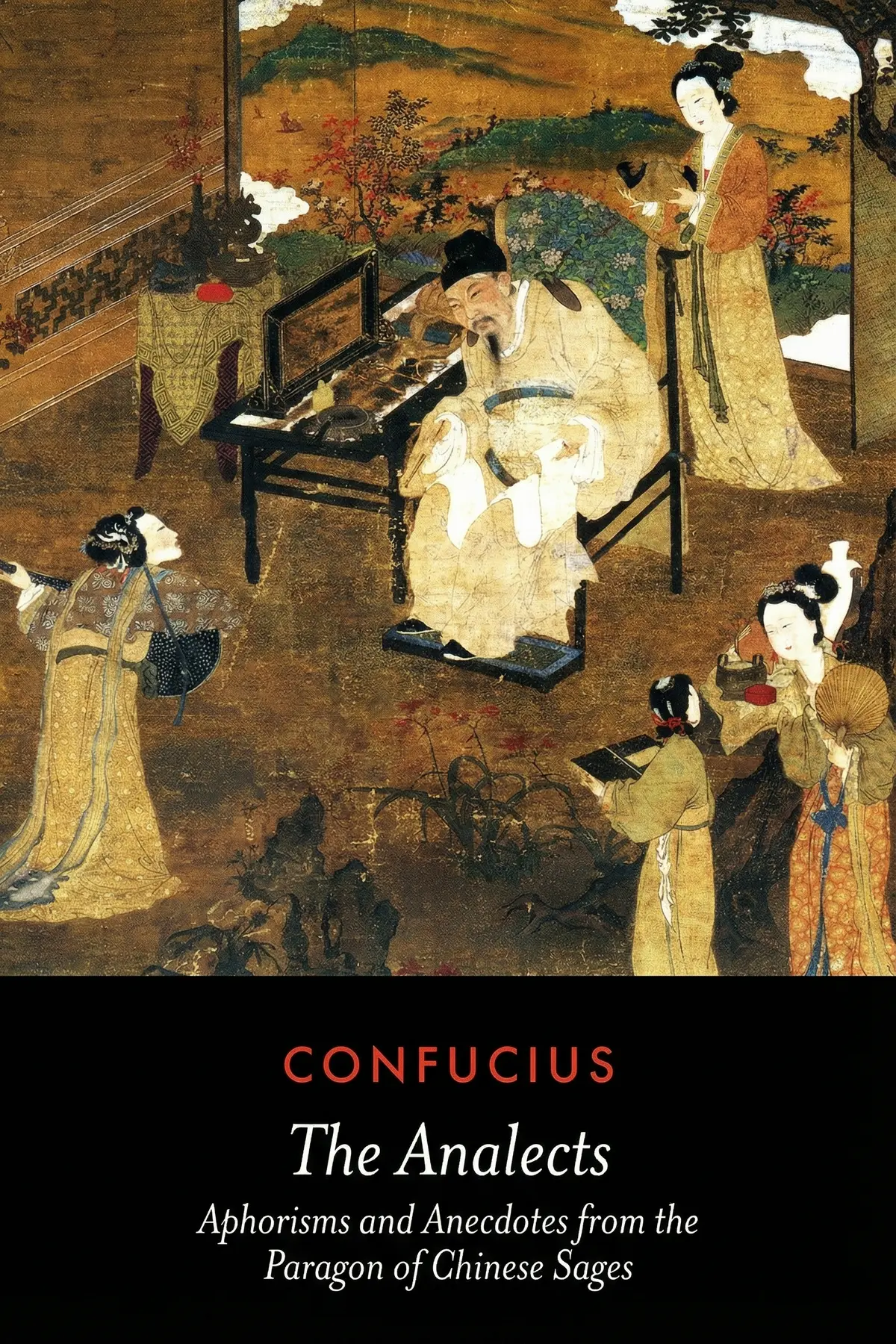
Explore the foundational wisdom of ancient China through a collection of dialogues and observations. This summary delves into the ethical framework, social harmony, and personal virtue advocated by one of history's greatest philosophers.
1 min 47 sec
Few texts in human history have wielded as much cultural and philosophical influence as the one we are about to explore. Often referred to as a collection of scattered sayings and brief anecdotes, this work is far more than just a list of quotes. It is a comprehensive roadmap for living a life of integrity, balance, and profound social impact. Compiled by the students and followers of the man known to history as Confucius, these writings offer a glimpse into a mind that sought to heal a fractured society through the power of individual virtue.
At its heart, this exploration is about the quest for ‘The Way’—a path of moral correctness that leads to harmony both within the self and throughout the state. Confucius wasn’t interested in abstract metaphysical theories or distant gods; he was a practical guide who focused on the here and now. He believed that if a person could master their own character through ritual, study, and empathy, they could change the world around them without ever having to raise their voice or use a sword.
As we move through these ideas, you will see how ancient wisdom from the State of Lu remains startlingly relevant to our modern struggles. We will look at how ritual provides a structure for respect, why a leader’s character is more powerful than any law, and how the simple act of learning can be a revolutionary moral force. This journey isn’t just about history; it’s about a throughline of human decency that connects us across centuries. By the end of this summary, you will understand the ‘single thread’ that Confucius claimed bound all his teachings together, providing a clear perspective on how to be a better person, a better citizen, and a better leader. Let’s begin by stepping back into the turbulent world that shaped these timeless lessons.
2 min 07 sec
Uncover how a period of social upheaval and the decline of ancient rituals inspired a new moral philosophy focused on restoring harmony through tradition.
1 min 53 sec
Learn about the high standards of the ‘Junzi,’ a model of moral excellence who prioritizes character and ethics over material gain and social status.
1 min 51 sec
Discover how a leader can influence an entire nation through the quiet power of personal example rather than the force of law.
1 min 55 sec
Explore why performing the right actions is meaningless without a genuine, sincere heart behind them, and how to spot a ‘petty person.’
1 min 47 sec
Find out why education isn’t just about gaining knowledge, but about transforming your character and putting your beliefs into practice.
1 min 44 sec
Understand why respect for parents and ancestors is considered the foundation of all other virtues and the key to a stable civilization.
1 min 57 sec
Uncover the ‘single thread’ that connects all of the sage’s teachings: a simple yet powerful combination of duty and empathy.
1 min 43 sec
Discover how the true character of a gentleman is revealed not in times of prosperity, but in how he handles failure and difficulty.
1 min 51 sec
See how the personal interactions and observations of a humble teacher evolved into a state-sponsored philosophy that defined an empire.
1 min 48 sec
As we conclude our journey through these ancient dialogues, it’s worth reflecting on the central message that ties everything together. The wisdom of Confucius is a call to take personal responsibility for the state of the world by first taking responsibility for ourselves. He showed us that the ‘Way’ is not a destination we reach, but a journey of constant refinement. Whether it’s through the rituals that give our lives structure, the sincerity that gives our actions meaning, or the empathy that connects us to our neighbors, the path to a better society starts with the individual heart.
We have seen how a leader’s character can move mountains without the need for force, and how the simple act of honoring our families creates the foundation for a stable civilization. Most importantly, we’ve learned that virtue is not a fair-weather pursuit. It is a commitment that must hold firm even in the face of hardship and failure. The gentleman is not a perfect being, but one who is perpetually ‘walking the Way’ and who is never too proud to learn from a mistake.
To bring this wisdom into your own life, you might consider the three stages of learning mentioned at the very beginning of the sage’s work. First, dedicate yourself to study and, crucially, to the practice of what you learn; this brings a deep sense of satisfaction. Second, find a community of friends and peers to discuss and master these principles with; this brings joy. And finally, share what you have learned with others, doing so with the patience and understanding that marks a true gentleman. By following these steps, you don’t just study history; you become a part of the ‘single thread’ of human goodness that has endured for over two thousand years. Thank you for listening, and may your own journey on the Way be one of continuous growth and enduring virtue.
The Analects offers a profound window into the philosophical system of Confucius, a man whose ideas have shaped Eastern civilization for over two millennia. This summary explores the core tenets of his thought, focusing on how individuals can cultivate moral excellence and how leaders can inspire harmony without the need for force. It transitions through the historical landscape of ancient China, explaining why Confucius felt the need to revive traditional rituals as a remedy for social decay. Listeners will discover the concept of the Gentleman, the power of effortless leadership, and the critical importance of sincerity and lifelong learning. The promise of this summary is to distill these ancient, often cryptic aphorisms into practical, modern wisdom that emphasizes personal responsibility, empathy, and the pursuit of a virtuous life. By understanding the 'Way' and the 'Single Thread' that binds these teachings, you can learn to navigate contemporary life with the grace and integrity of a sage.
Confucius, known to his followers as Kǒngzǐ, was born in the ancient state of Lu during a period of significant social transition. He lived from 551 to 479 BC. Despite his later fame, he began his life in humble circumstances and spent years working as a minor public official. Primarily a teacher and philosopher, his life's work was dedicated to education and the preservation of ethical traditions, leaving behind a legacy that was eventually recorded by his devoted disciples.
Listeners find the text highly accessible and value its remarkable compilation of lessons on virtue and wisdom, including one listener who notes it contains 512 Confucian sayings. Furthermore, the work provides excellent value for its low price, and listeners appreciate the historical precision of this essential reference. They also commend the ethical substance, with one specifically highlighting the guidance on honor and morality. However, the translation quality is a point of contention; some listeners find it satisfactory, while others describe it as lacking.
Picking up this volume felt like stepping into a conversation that has been echoing for over two millennia. There are over five hundred individual sayings here, each acting as a small window into a world governed by honor and ritual. I was particularly struck by the distinction between the 'superior man' and the 'petty man.' One seeks justice, while the other only looks for personal gain or profit. It is a dense read, and some passages feel a bit repetitive, but the core message of self-improvement is timeless. Truthfully, it challenges you to look at your own character with a much more critical eye than most modern self-help books ever would. This is not just a book to read; it is a book to live by if you have the discipline.
Show moreLately, the world feels chaotic and loud, so retreating into these brief, quiet meditations on virtue was exactly what I needed. There is something deeply hopeful about the belief that we can improve ourselves through constant effort and study. Confucius sets a high bar for what it means to be a 'superior man,' emphasizing kindness, fairness, and integrity above all else. I found the passage about investigating people whom everyone loves or hates to be particularly profound in our age of social media outrage. It teaches us to have the strength of character to make our own judgments rather than following the crowd. This book didn't just give me knowledge; it gave me a sense of peace and a better roadmap for living.
Show moreAs a student of history, I found this collection to be an indispensable primary source for understanding the foundations of Eastern thought. You really can't grasp the development of the Chinese state without wrestling with these dialogues. Confucius wasn’t just a philosopher; he was a failed politician trying to restore order to a violent, crumbling society. This edition was incredibly affordable, making it a great value for anyone building a home library of classics. My only complaint is that the translation felt a bit stiff in places, which made the philosophical nuances harder to parse. Still, for the price of a coffee, you get a direct line to one of history's greatest minds. It serves as a necessary reminder of where our modern concepts of meritocracy actually began.
Show moreWhy do we still study a man who died in 479 B.C.? The answer is in the sheer practicality of his ethics. Confucius doesn't talk about gods or the afterlife; he talks about how to be a decent human being in a messy world. His thoughts on 'straightness'—responding to injury with justice rather than just turning the other cheek—feel surprisingly modern and grounded. I found the sections on ritual propriety a bit excessive, as I don’t think we need ancient burial rites to be virtuous today. However, the overarching theme of leading by example is something every modern manager or politician should take to heart. It’s a foundational text for a reason. Anyone interested in leadership needs to read this at least once.
Show moreThe emphasis on family loyalty and respect for ancestors really made me reconsider my own relationships in a way I didn't expect. Confucius argues that if you can't respect your parents, you have no hope of being a loyal citizen or a good leader. That’s a heavy concept in our individualistic age. I loved the idea that a son should protect his father, creating a circle of loyalty that the state shouldn't break. This book is a masterclass in 'filial piety' and the moral roots of humanity. It’s not just about rules; it’s about the affection that holds society together. This was a very emotional read for me, surprisingly enough. It makes you realize that character starts at home before it ever reaches the public sphere.
Show moreEver wonder what it takes to actually 'know' something according to ancient standards? Confucius tells us that admitting what you don't know is the true beginning of knowledge. This book is filled with these little nuggets of wisdom that force you to slow down and think. I found his focus on the 'love of learning' particularly inspiring, especially the idea that education should be for oneself rather than for show. The translation I had was decent, though it did feel a bit 'lecture-y' at times. If you want to understand the moral backbone of an entire hemisphere, you have to start here. It’s a noble, challenging pursuit of character that feels remarkably relevant even in the digital age.
Show moreFive hundred and twelve sayings might sound like a lot, but you can easily digest this over a few afternoons. I picked this up on a whim because it was so cheap, and I was shocked by how much of it stuck with me. The tone is often stern, but there’s an underlying warmth to the Master’s desire for a harmonious society. I did find some of the gender roles and the focus on hierarchy a bit off-putting by modern standards, but you have to read it in its proper context. It’s an incredible collection of teachings on honor that still resonates long after the kings he served have turned to dust. Definitely worth the small investment for the historical perspective alone.
Show moreWhile the wisdom contained within these pages is undeniable, the specific translation I purchased left much to be desired. Reading through the 512 sayings became a chore because the language was so dry and archaic that I lost the poetic flow. It is crucial to find an edition with good commentary, as many of these responses were directed at specific historical figures. Without that context, the Master's advice often feels cryptic or overly simplistic. I appreciate the focus on benevolence and the Golden Rule, but I think I’ll try a different version next time to see if the ideas pop more. It’s an essential book, just be careful which copy you buy. The quality of the translator makes or breaks this experience.
Show moreIt is fascinating to see how these core ethical principles formed the bedrock of an entire civilization’s bureaucracy for centuries. The concept of meritocracy—that a 'gentleman' is defined by his character rather than his birth—was incredibly revolutionary for its time. Confucius was essentially trying to build a government of the virtuous. While I admire the high moral standard, some of the specific rituals regarding clothing and posture felt a bit dated and unnecessary. I also felt the translation was hit-or-miss, with some sections feeling much more vibrant than others. Regardless, it’s a necessary source book for anyone interested in political philosophy or Chinese history. It is a dry read, but there is gold to be found if you are patient enough to dig.
Show moreTo be fair, I knew this wasn't a novel, but the disjointed nature of these short snippets made it an exhausting read. I struggled to find a cohesive narrative thread, and the constant 'The Master said' began to feel incredibly repetitive after the first few chapters. Some of the advice regarding family loyalty feels a bit too subservient for my taste, almost advocating for blind obedience over individual conscience. I can see why it’s historically significant, but as a casual reader, I found it difficult to stay engaged for more than ten minutes at a time. It’s definitely more of a reference book than something you’d read cover to cover. It just wasn't for me, despite the obvious historical importance everyone talks about.
Show moreNigel Warburton
John Rawls
William B. Irvine
Friedrich Nietzsche
AUDIO SUMMARY AVAILABLE
Get the key ideas from The Analects by Confucius, plus 5,000+ more titles in English and Thai.







