
16 min 41 sec
The Art of Living: The Classical Manual on Virtue, Happiness, and Effectiveness
Explore the foundational principles of Stoic philosophy through the teachings of Epictetus. This summary reveals how to achieve personal freedom and tranquility by mastering your internal responses to an unpredictable world.
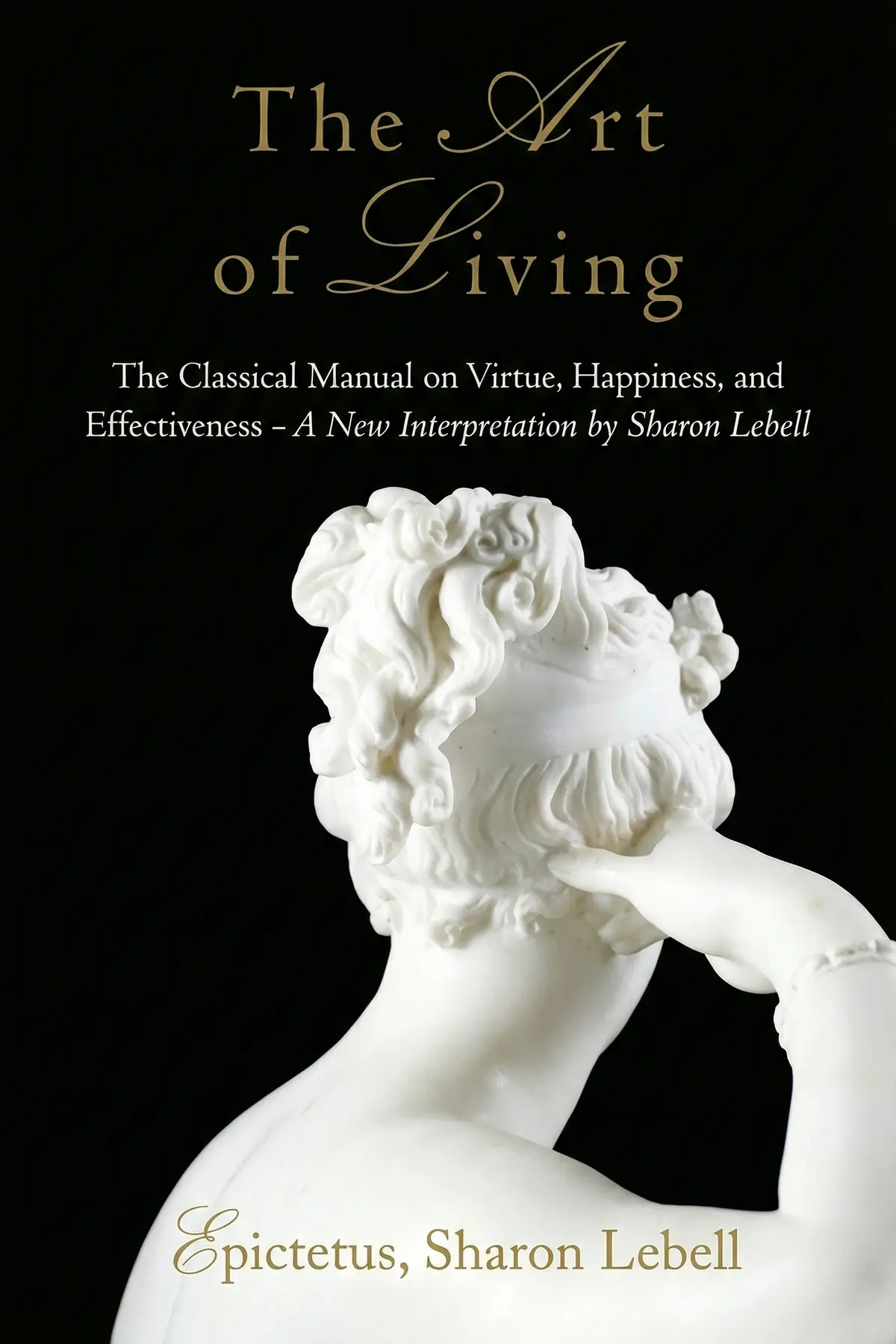
Table of Content
1. Introduction
1 min 32 sec
Have you ever felt like the world is simply too much to handle? We live in an era of constant noise, unpredictable shifts in fortune, and a relentless pressure to succeed by external standards. Yet, these struggles aren’t new. Nearly two thousand years ago, a former slave turned philosopher named Epictetus was asking the same fundamental questions we ask today: How do we find peace? How do we live well? And how do we remain steady when everything around us is in flux?
This exploration of The Art of Living brings the ancient wisdom of Stoicism into the modern light. Stoicism isn’t about being emotionless or cold; rather, it’s a vibrant, practical toolkit for navigating the complexities of human existence. It’s about building a fortress within yourself that no external storm can breach. As we walk through these lessons, we aren’t just looking at dusty historical facts. We are looking at a living manual for effectiveness and happiness.
Throughout this journey, we will explore the profound throughline of Epictetus’s thought: that our power resides entirely in our perspective. We will learn why a broken household item can be a teacher of patience, why the mundane chores of our day are actually sacred opportunities for excellence, and how to view our relationships as a series of duties that define our character. By the end of this summary, you will have a clearer understanding of how to separate your worth from your circumstances, allowing you to move through life with a renewed sense of purpose and a deep, unshakable calm.
2. The Great Divide
2 min 24 sec
What if your happiness wasn’t dependent on the weather, the economy, or your boss? Learn the fundamental Stoic secret of separating the internal from the external.
3. The Ethics of the Banquet
2 min 09 sec
Life is like a grand dinner party where you are a guest, not the host. Discover how to enjoy life’s gifts without becoming enslaved by desire.
4. Intentionality in the Everyday
2 min 12 sec
There are no small tasks in a life lived with virtue. Explore how to turn mundane chores into a path toward personal excellence.
5. The Rigor of Self-Design
2 min 15 sec
Greatness is never an accident. Learn why Epictetus compares the philosophical life to training for the Olympic Games.
6. The Architecture of Connection
2 min 14 sec
We are not islands, but parts of a greater whole. Discover how to fulfill your duties to others without losing your internal peace.
7. The Path to Sincere Virtue
2 min 18 sec
Virtue is not a destination, but a way of walking. Learn why the first step to wisdom is admitting how little you truly know.
8. Conclusion
1 min 37 sec
In concluding our journey through the wisdom of Epictetus, we return to the central promise of Stoic thought: that true freedom is an internal achievement. We have seen that while we cannot dictate the weather, the economy, or the behavior of our neighbors, we are the absolute rulers of our own judgments and intentions. This is the ultimate ‘Art of Living’—the ability to remain centered and effective regardless of the external environment.
The throughline of this work is clear: our character is our destiny. By focusing on the dichotomy of control, treating life like a banquet, and approaching every mundane task with excellence, we build a life that is both happy and meaningful. We have learned that relationships are the handles by which we engage with the world, and that fulfilling our duties to others is the highest expression of our humanity. Most importantly, we have seen that virtue is not a rigid set of rules, but a dynamic, daily practice of alignment and integrity.
As you move forward from this summary, take one simple Stoic practice with you. The next time you feel a surge of frustration—perhaps a spilled cup of coffee or a rude comment from a stranger—pause for just one second. Remind yourself: ‘This is an external event. My reaction is my own.’ In that tiny gap between the event and your response, your freedom lives. By consistently choosing the path of reason and calm, you aren’t just surviving life; you are mastering the art of it. You are becoming the person you were meant to be—tranquil, purposeful, and profoundly free.
About this book
What is this book about?
The Art of Living offers a modern interpretation of the ancient Stoic manual originally delivered by Epictetus. At its core, the book addresses the universal human struggle for a meaningful life amidst chaos. It provides a practical framework for distinguishing between what we can control—our own thoughts and intentions—and what we cannot, such as external events, the opinions of others, and the inevitability of change. By following this philosophical guide, readers are promised a path to inner peace and effectiveness. The book moves away from abstract theorizing, focusing instead on daily conduct, social duties, and the cultivation of a resilient character. It serves as a reminder that while we may be victims of circumstance in the physical world, we remain the absolute masters of our inner emotional landscapes.
Book Information
About the Author
Epictetus
Sharon Lebell is a celebrated author, a classically trained musician, and a respected teacher specializing in the intersection of spirituality and philosophy. Her notable works include Naming Ourselves, Naming Our Children and The Music of Silence, a collaboration with Brother David Steindl-Rast. Epictetus, born as a slave around 50 AD, rose to become a cornerstone of Stoic thought. His enduring wisdom was preserved by his students in the Discourses and the Enchiridion.
Ratings & Reviews
Ratings at a glance
What people think
Listeners find this work to be a functional guide for living that is skillfully composed in contemporary prose, making it a swift and accessible experience. The translation receives praise for its lucidity, as one listener notes how it renders the words of Epictetus in clear modern phrasing. Listeners also value the profound wisdom, with one mentioning how it resonates deeply with their inner knowing and helps them discover tranquility and joy in life.
Top reviews
Hazel
This collection is a masterclass in brevity and punchy, practical advice. Sharon Lebell manages to strip away the archaic academic dust from Epictetus and presents something that feels startlingly contemporary. To be fair, I was skeptical about another "modern interpretation," but this one hits differently because it doesn't over-explain. It focuses on that core Stoic pillar: identifying what we can actually control versus what is merely noise. I found myself highlighting nearly every page. It’s a manual for sanity in a world that feels increasingly out of our hands. If you are tired of long-winded self-help books that promise the moon, just read this instead. It’s grounded, clear, and immensely helpful for anyone struggling with anxiety or social pressure.
Show moreSamroeng
As someone who has struggled with the "hustle culture" of today, reading this was like taking a deep, cleansing breath. The truth is, we spend so much energy on things that don’t matter—our fame, our possessions, and what the neighbors think. Epictetus reminds us that freedom is found in the mind, not in external circumstances. The writing is poetic yet direct. I loved the section on not defending your reputation; it’s such a counter-intuitive but liberating idea. This isn't just a book you read once; it’s a companion for life. It’s rare to find a translation that feels this authentic and urgent 2,000 years later.
Show morePla
Not what I expected from an ancient philosopher. I thought it would be dry and dusty, but Lebell’s interpretation is vibrant and punchy. Each page offers a nugget of wisdom that cuts through the noise of modern life. It’s fascinating to see how the roots of Cognitive Behavioral Therapy are right here in these pages. If you can change your interpretation of an event, you change your emotional response to it. This realization is incredibly empowering. It’s a short read, but the weight of the words stays with you long after you close the cover. Truly a gem for anyone seeking a more serene and intentional existence.
Show moreBook
In my experience, most philosophy books are better at posing questions than providing answers, but this is the exception. It is purely about action. How do you behave when you are insulted? How do you handle loss? Epictetus doesn’t offer theories; he offers a way of being. The modern language used here makes the advice feel immediate and applicable to a modern office or family setting. I especially loved the part about watching what people do rather than what they say. It’s such a simple observation, yet we ignore it all the time. This book is an essential tool for anyone trying to build a resilient character.
Show moreCholada
Ever wonder why ancient Greeks seemed so much more composed than us? This book answers that question by breaking down the Enchiridion into bite-sized, digestible lessons that anyone can use. Frankly, the language is so accessible that it feels like a conversation with a wise friend rather than a lecture from a former slave-turned-philosopher. I especially appreciated the focus on the "dichotomy of control." It reminds us that our reputation and others' opinions are not our business. While some might find it a bit too "light" compared to the original Arrian notes, I think the clarity is its greatest strength. It’s a quick read, but one you’ll want to revisit whenever life starts feeling chaotic.
Show moreCameron
Wow, I didn't expect a book written centuries ago to feel like it was diagnosing my 21st-century problems so accurately. The focus here is entirely on inner tranquility. Not gonna lie, I used to get so triggered by small inconveniences, but the "broken bowl" analogy really stuck with me. Lebell's version is incredibly readable, though purists might complain that it simplifies some of the more complex logical nuances of Stoic thought. Personally, I think the trade-off is worth it for the sheer practicality. It’s a great bedside book to read for five minutes before sleep to recalibrate your perspective for the next day.
Show moreThongchai
After hearing so much about Stoicism on podcasts, I finally decided to see what the fuss was about. This book is a perfect "handbook" in every sense of the word. It’s small, direct, and skips the fluff. The core principle—that our opinions are the only things that truly belong to us—is life-changing if you actually practice it. My only gripe is that some of the modern phrasing feels a bit too casual, which clashes slightly with the image of a rugged philosopher. However, the wisdom itself is undeniable. It’s a great reminder that our happiness shouldn't be a hostage to external events or the judgments of others.
Show moreNuk
Finally got around to finishing this, and I’m impressed by how relevant it remains. It emphasizes that we are the architects of our own distress. If we feel hurt, it’s because we’ve allowed our judgment to label a situation as harmful. While that’s a tough pill to swallow, it’s also the ultimate form of agency. The translation is clear and avoids the "thee and thou" of older versions, making it a very fast read. It might be too simplistic for philosophy majors, but for the average person looking to find some peace in a stressful job or difficult life situation, it’s exactly what’s needed.
Show moreFinn
Picked this up because I wanted a low-barrier entry into Stoicism, and while it delivers on simplicity, it felt a bit repetitive towards the end. Look, the core message is vital—focus on your internal state—but after the tenth variation of "don't worry about things you can't change," the impact started to wane. It’s definitely a better manual than most modern fluff, but I wish there was a bit more of the historical context integrated into the prose. Lebell’s translation is very "New Age" at times, which might turn off those looking for a more traditional or rigorous philosophical text. It’s a decent starting point, but you’ll probably want to move on to Marcus Aurelius or the original Discourses pretty quickly.
Show moreIff
The emphasis on internal character is great, but I found the tone a bit too "self-help lite" in certain chapters. I understand the goal was to make Epictetus modern, but some of the grit of the original Stoic teachings seems lost in this translation. Truth be told, it’s a beautiful little volume and very giftable, but if you’re looking for a deep dive into the logic of the Stoa, this isn’t it. It’s more of a collection of aphorisms. Good for a quick boost of perspective when you are stressed, but it lacks the intellectual "meat" of a full translation. Still, for a total beginner, it’s a solid recommendation.
Show moreReaders also enjoyed
A Guide to the Good Life: The Ancient Art of Stoic Joy
William B. Irvine
A Little History of Philosophy
Nigel Warburton
A Theory of Justice
John Rawls
Anarchism: A Very Short Introduction
Colin Ward
Anarchy, State, and Utopia
Robert Nozick
Antifragile: Things That Gain from Disorder
Nassim Nicholas Taleb
AUDIO SUMMARY AVAILABLE
Listen to The Art of Living in 15 minutes
Get the key ideas from The Art of Living by Epictetus, plus 5,000+ more titles in English and Thai.
- 5,000+ titles
- Listen as much as you want
- 7-day free trial
- Cancel anytime







