
21 min 15 sec
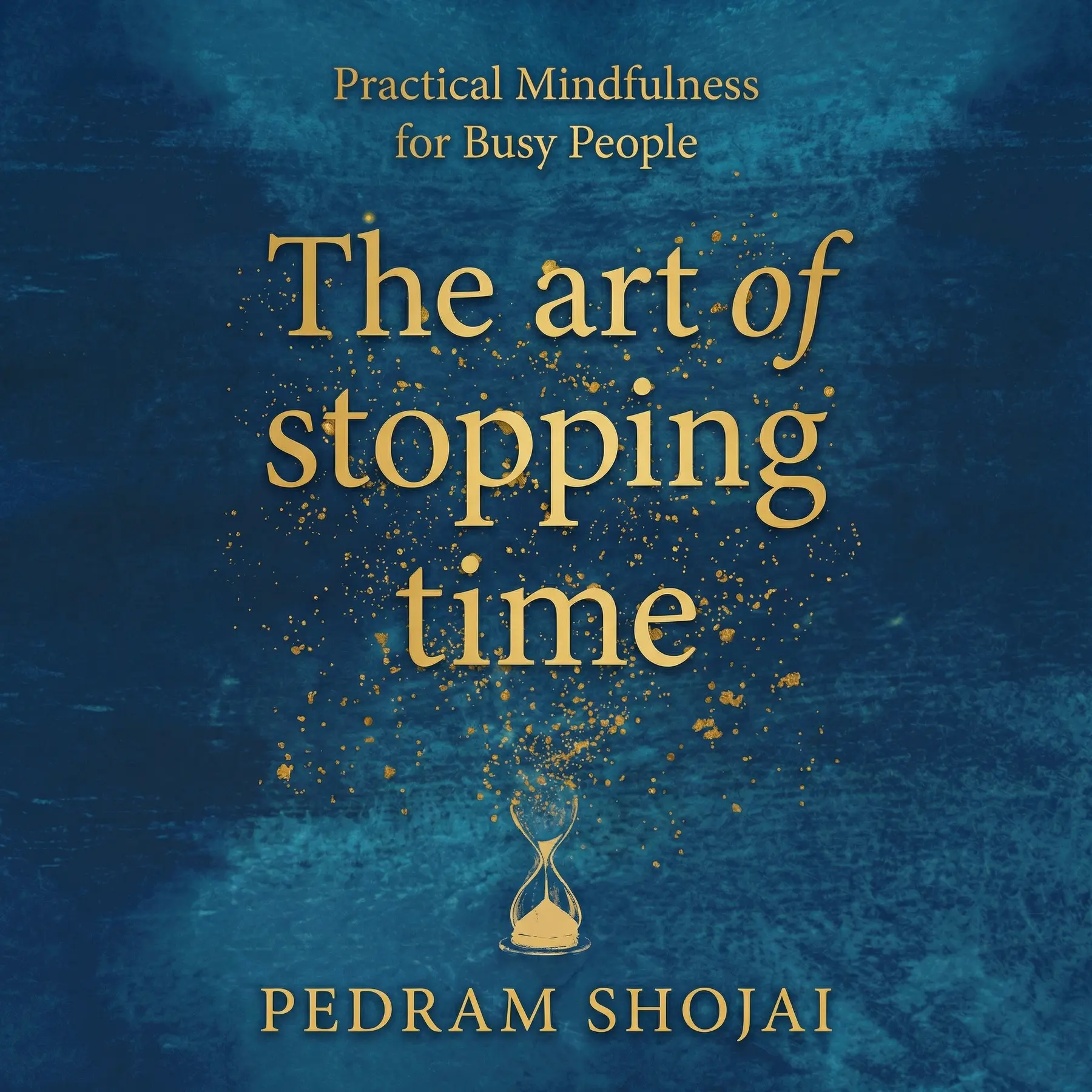
The Art of Stopping Time: Practical Mindfulness for Busy People
Discover how to reclaim your life through The Art of Stopping Time, a guide to mastering your schedule, boosting energy, and finding stillness amidst the modern world's relentless chaos.
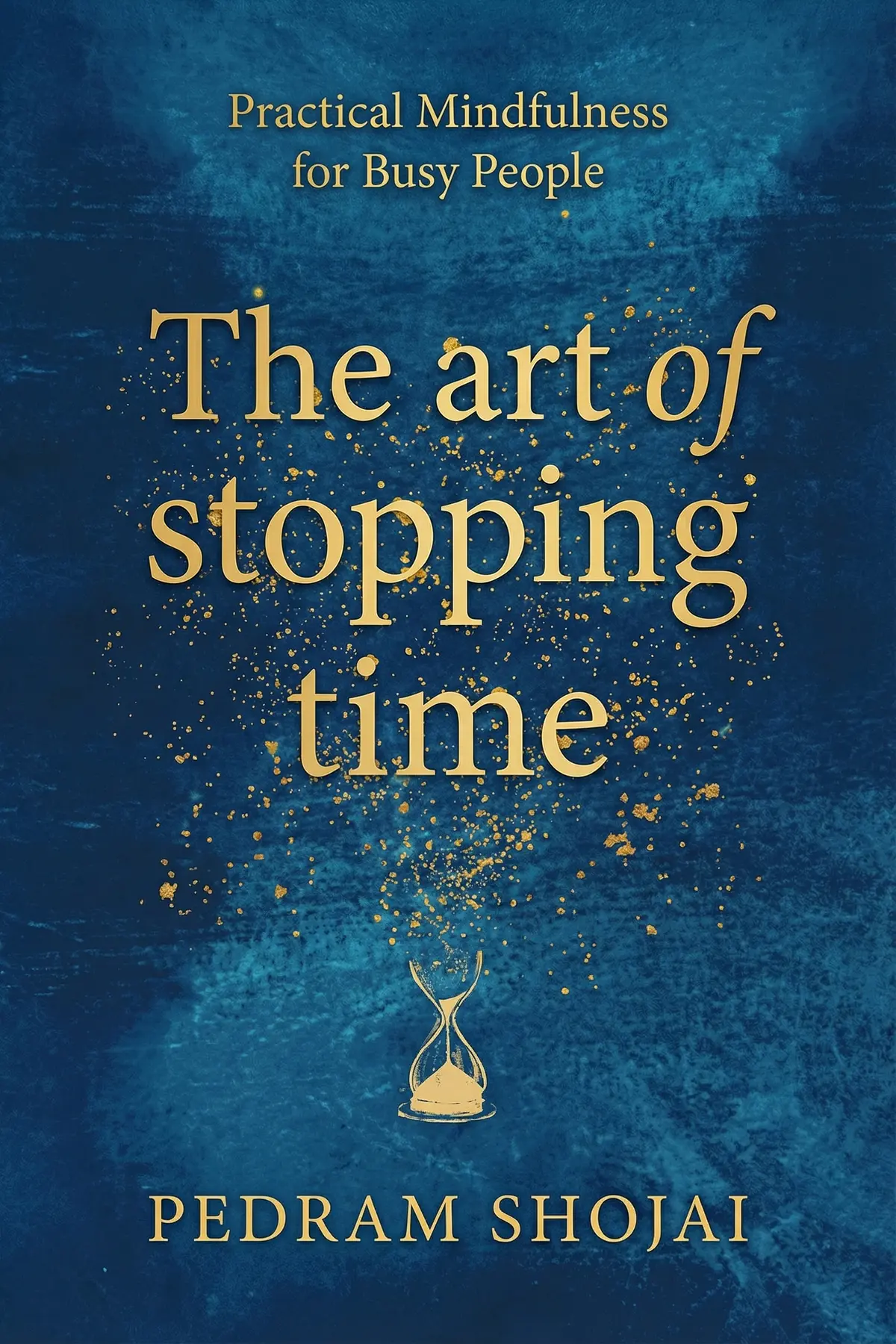
Table of Content
1. Introduction
1 min 50 sec
If we were to survey a thousand people on the street and ask them to name the most valuable substance on the planet, we might hear answers like gold, platinum, or perhaps rare-earth minerals used in high-tech gadgets. Some might point to the fluctuations of the stock market or the balance in their savings accounts. However, all of these people would be overlooking the one resource that makes everything else possible. That resource is time.
You can always mine for more gold or work overtime to earn more cash, but you can never, under any circumstances, manufacture more minutes. Once a second has ticked by, it is gone forever. This makes time the ultimate currency of our existence. Yet, in our modern world, time feels scarcer than ever. Between the demands of our professional lives, the endless pinging of our digital devices, and the social pressures that pull us in a dozen different directions, most of us feel like we are constantly running out of breath, chasing a clock that is always moving faster than we are.
But what if you could actually stop the clock? What if you could step outside the frantic rush and reclaim your sense of agency? This isn’t a science fiction concept. Instead, it is a psychological and spiritual shift that allows you to expand your experience of life within the time you already have.
In the following segments, we are going to explore a new way of interacting with your days. We will move beyond simple time management and into the realm of time mastery. You will learn why you actually have more room in your schedule than you think, why you are currently losing hours to invisible drains, and how you can apply ancient wisdom to the very modern problem of being too busy. We are going to look at how energy and mindfulness act as multipliers for your time, turning a single hour into an experience that feels rich, deep, and truly lived. Let’s begin by looking at the three pillars that determine the quality of your life.
2. The Three Dimensions of Time Quality
2 min 21 sec
Time isn’t just about the ticking clock; its value is determined by how you spend it, your physical vitality, and your level of mental presence.
3. Managing Your Life Garden
2 min 04 sec
View your life as a garden where space and water are limited, requiring you to carefully choose which plants to nourish and which weeds to pull.
4. Calculating the Return on Your Seconds
2 min 20 sec
Apply a financial mindset to your schedule by assessing the Return on Investment for every activity to ensure your time is spent on high-yield goals.
5. Reclaiming Sovereignty Over Your Schedule
2 min 05 sec
Many of our daily burdens are actually optional commitments that we can decline or modify to better suit our personal needs and energy.
6. Finding Growth in the Midst of Transit
2 min 14 sec
Unavoidable tasks like commuting can be transformed into opportunities for learning, physical health, or relaxation by changing how you approach them.
7. Breaking the Digital Trance
2 min 07 sec
Reclaim the small gaps in your day by resisting the urge to check your phone and instead using those moments for mental clarity and presence.
8. The Transformative Power of Presence and Mortality
2 min 20 sec
Deepening your experience of time requires a shift in perspective, often achieved by acknowledging the fleeting nature of every single moment.
9. Designing Rituals for Recovery and Self-Care
2 min 07 sec
Long showers are often a symptom of a lack of true ‘me time’; intentionally scheduling rest and self-care is essential for long-term time prosperity.
10. Conclusion
1 min 47 sec
As we reach the end of our exploration into the art of stopping time, it’s important to bring all these threads together. The core takeaway is that while we are all subject to the same twenty-four-hour clock, we are not all living the same quality of life. Time prosperity isn’t about having an empty calendar; it’s about having a full soul and a focused mind. It is the result of a deliberate cycle: you manage your time to create space for energy-boosting activities, and then you use that newfound energy to become more mindful. That mindfulness, in turn, allows you to experience every moment more deeply, making your life feel longer and more meaningful.
You now have a toolkit of ‘gongs,’ or techniques, to help you achieve this state. But knowledge alone won’t change your experience; only practice will. The author suggests a 100-day commitment to these habits. It takes time to rewire the brain and break the digital trances and social habits that have kept us feeling rushed for so long. Start small. Tomorrow, perhaps you will pull one ‘weed’ from your garden by saying no to an unrewarding task. Or maybe you will turn your commute into a sanctuary of learning.
Remember that your life is not something that happens to you in the future once you’ve ‘cleared your plate.’ Your life is happening right now, in the gaps between meetings, in the flavor of your lunch, and in the breath you are taking at this very second. By claiming sovereignty over your attention and your energy, you can step out of the frantic race and into a life of presence. The clock will keep ticking, but you no longer have to be its slave. You have the power to stop time, to stretch it, and to fill it with the things that truly matter. Your life is in your hands—make sure you are there to live it.
About this book
What is this book about?
Have you ever felt that life is moving too fast? The Art of Stopping Time addresses the universal struggle of feeling overwhelmed and chronically time-poor. The book promises to teach listeners how to stop time not through magic, but through a radical shift in perspective and daily habits. It combines the rigorous discipline of Eastern traditions with the practical realities of a Western schedule. The core promise is a transition from being a victim of your calendar to becoming its master. By exploring the interplay between physical energy, mental focus, and spiritual presence, the author provides a framework for what he calls time prosperity. This isn’t just about productivity hacks; it is about ensuring that every minute of your life counts for something meaningful, allowing you to live with intention rather than reacting to the demands of others.
Book Information
About the Author
Pedram Shojai
Pedram Shojai is a uniquely qualified guide for the modern era. He is an ordained priest of the Yellow Dragon Monastery in China and a master of Qigong. Alongside his traditional training, he holds a degree as a Doctor of Oriental Medicine. He is the author of the New York Times bestseller The Urban Monk and hosts a popular podcast of the same name.
Ratings & Reviews
Ratings at a glance
What people think
Listeners find the material both useful and enlightening, with one listener pointing out that it is organized into chapters of daily wisdom. Furthermore, the book assists in establishing fresh mindfulness habits and offers a new outlook, all while being a very simple listen. They also value the soothing impact it has; one listener mentions it takes less than 10 minutes to read, and one notes it significantly boosted their productivity. The author’s prose earns praise, with one listener emphasizing the positive effect it had on their own creative writing.
Top reviews
Som
Finally got around to finishing this after seeing it on several mindfulness lists, and it surprisingly boosted my creative writing flow. Shojai breaks the concept of 'stopping time' into 100 manageable 'gongs'. These daily practices act as a mental reset button for the modern worker who feels perpetually behind. Personally, I found the short, ten-minute chapters perfect for a morning ritual. While some might find the Eastern metaphors a bit thick, the calming effect they have on a frazzled brain is undeniable. My productivity has actually spiked because I’m no longer reacting to every single notification. Truth be told, I was initially quite skeptical about the 'Urban Monk' branding and how it would translate to my life. It’s an easy read that focuses on perspective rather than just rigid scheduling. If you feel like your life is a blur of errands and screens, this might be the balm you need.
Show moreNook
Wow, this was exactly the mental reset I needed after months of feeling burned out and completely scattered. I’ve been struggling with the constant urge to check my phone, but Shojai’s advice actually stuck this time because it felt so approachable. The chapter on imagining what your older self would say from their deathbed was morbid but strangely motivating. It’s a very easy read, taking less than ten minutes a day. However, the impact on my productivity was dramatic once I actually started practicing the gongs. I’ve learned to carve out stillness in the middle of chaos, which has been a game-changer for my mental health. Even if you don't follow all 100 gongs perfectly, just shifting your awareness makes a world of difference. This book is a recipe for living more deeply in a world that wants us to stay shallow.
Show moreFinn
As someone who constantly feels underwater with tasks, the idea of 'stopping time' sounded like a miracle I desperately needed. The book delivers a series of bite-sized wisdom nuggets that are far more about changing your internal state than your calendar. Look, some of the 100 gongs are definitely more practical than others, but the overall shift in perspective is what matters most. I’ve started implementing the phone-free mornings he suggests, and the reduction in my baseline anxiety is palpable. It’s an insightful look at how we leak energy throughout the day without even realizing it. My only gripe is that it lacks a way to track your progress, which makes it easy to fall off the wagon after a week. Still, the tone is never preachy and often quite funny in its observations of modern life.
Show moreEmily
After hearing about the 'Urban Monk' for years, I decided to give this one a shot for its practical approach to mindfulness. The truth is, the book is less about 'saving' time and more about enriching the quality of the seconds you have. I loved the concept of 'gong roulette,' where you flip to a random page and commit to that specific task for the day. It keeps things fresh and prevents the 100-day structure from feeling like a slog or a boring school assignment. The writing is incredibly accessible, avoiding the dense jargon often found in traditional Eastern philosophy books. While I don't think I'll be doing every single exercise, the core message of mindfulness really resonated with me. It’s a great tool for building small, mindful habits over time without feeling completely overwhelmed by the process.
Show moreChanida
The chapter on phone usage was a total wake-up call for my digital habits and general mental clarity. I didn't realize how much of my 'time' was being sucked away by mindless scrolling until I tried these exercises. This isn't just a list of tips; it's about creating new mindful habits that actually stick in your brain. Gotta say, some of the tasks—like planning a week-long vacation—felt a bit out of reach for a normal budget. The author’s voice is calming and grounded, which helps when you’re feeling particularly frazzled by a long to-do list. I appreciated the emphasis on energy management rather than just watching the clock all day long. It’s been a helpful guide for putting things in perspective during a very busy season of my life.
Show moreOm
This book functions like a series of daily reminders to just slow down and observe the world around you. I found that reading one 'gong' before I start my morning creative writing session helps clear the mental clutter. It’s incredibly easy to read, and the short chapters mean you can’t use 'no time' as an excuse anymore. To be fair, not every single day's lesson is a winner, and some feel like filler to reach 100. However, the cumulative effect of the book is one of peace and significantly increased focus on the task at hand. It’s less about doing more and more about being more present in what you are already doing. I’d suggest it to anyone who feels like their days are just slipping through their fingers like sand.
Show moreJack
Is it a time management guide or a spiritual manifesto? To be fair, it’s a bit of both, but it frequently feels like a repackaged version of 'Essentialism' with a Zen coat of paint. I appreciated the structure of the 100 days, but many of the tasks felt repetitive or slightly out of touch for office workers. Not gonna lie, asking me to go for a sprint in the middle of a workday just isn't happening in my corporate office. The writing style is conversational and pleasant, making it a very light read for your morning commute. However, if you've already read Shojai's previous work, you won't find much groundbreaking territory in these pages. It’s a decent entry point for beginners, though the financial resources required for some 'tasks' are a bit steep for most people.
Show moreAudrey
Picked this up during a particularly stressful month hoping for a quick fix for my hectic and chaotic lifestyle. While the book is a potent speed-reading candidate, it doesn't offer many strategies that you haven't seen on wellness blogs. The author uses a lot of Eastern metaphors to explain things like 'ROI' on your energy, which is occasionally interesting. In my experience, the most valuable part was the reminder to just breathe and be present, though it’s not revolutionary. The short chapters make it easy to digest, but the lack of a cohesive narrative makes it feel a bit disjointed. It’s a 3-star read because it’s helpful but ultimately feels like many other books in the saturated mindfulness market. If you’re brand new to meditation, this is a solid choice, but for veterans, it is likely a skip.
Show moreTariq
Ever wonder why we're all so obsessed with time management despite having more tools than ever before? Pedram Shojai attempts to answer this by merging ancient wisdom with modern productivity hacks, but the result is hit-or-miss. It’s a light lecture that I finished in a few sittings, though the intended 100-day pace is probably better. Personally, I found the constant suggestions to take breaks every 20 minutes to be totally unrealistic for my specific workflow. While the tone is conversational and the advice is generally sound, it feels like it’s following the mindfulness hype train. If you’ve already read Greg McKeown, you’ve likely heard the best parts of this book in a more concise format. It’s a nice enough refresher, but it definitely isn't reinventing the wheel for the modern reader.
Show moreCarlos
The title is incredibly misleading for anyone actually struggling with executive function or a truly packed schedule. Frankly, the author seems totally out of touch with what a 'busy' person actually looks like in the real world. You are expected to stack these 100 tasks on top of each other until your day is just a giant list of chores. How am I supposed to find time to smell my food and do fifty jumping jacks when I’m already late for work? It felt like being lectured by someone who has never had to juggle a toddler and a full-time job simultaneously. If you already have perfect willpower and a surplus of free time, then maybe you will enjoy this book. For the rest of us, it’s just another source of guilt for not being 'zen' enough in our daily lives.
Show moreReaders also enjoyed
168 Hours: You Have More Time Than You Think
Laura Vanderkam
A New Earth: Awakening to Your Life’s Purpose
Eckhart Tolle
Aflame: Learning from Silence
Pico Iyer
AUDIO SUMMARY AVAILABLE
Listen to The Art of Stopping Time in 15 minutes
Get the key ideas from The Art of Stopping Time by Pedram Shojai, plus 5,000+ more titles in English and Thai.
- 5,000+ titles
- Listen as much as you want
- 7-day free trial
- Cancel anytime







