
A River in Darkness: One Man’s Escape from North Korea
Masaji Ishikawa
A comprehensive look into the life and philosophy of Dr. Martin Luther King Jr., tracing his journey from a young boy in Atlanta to a global champion of nonviolent social change.
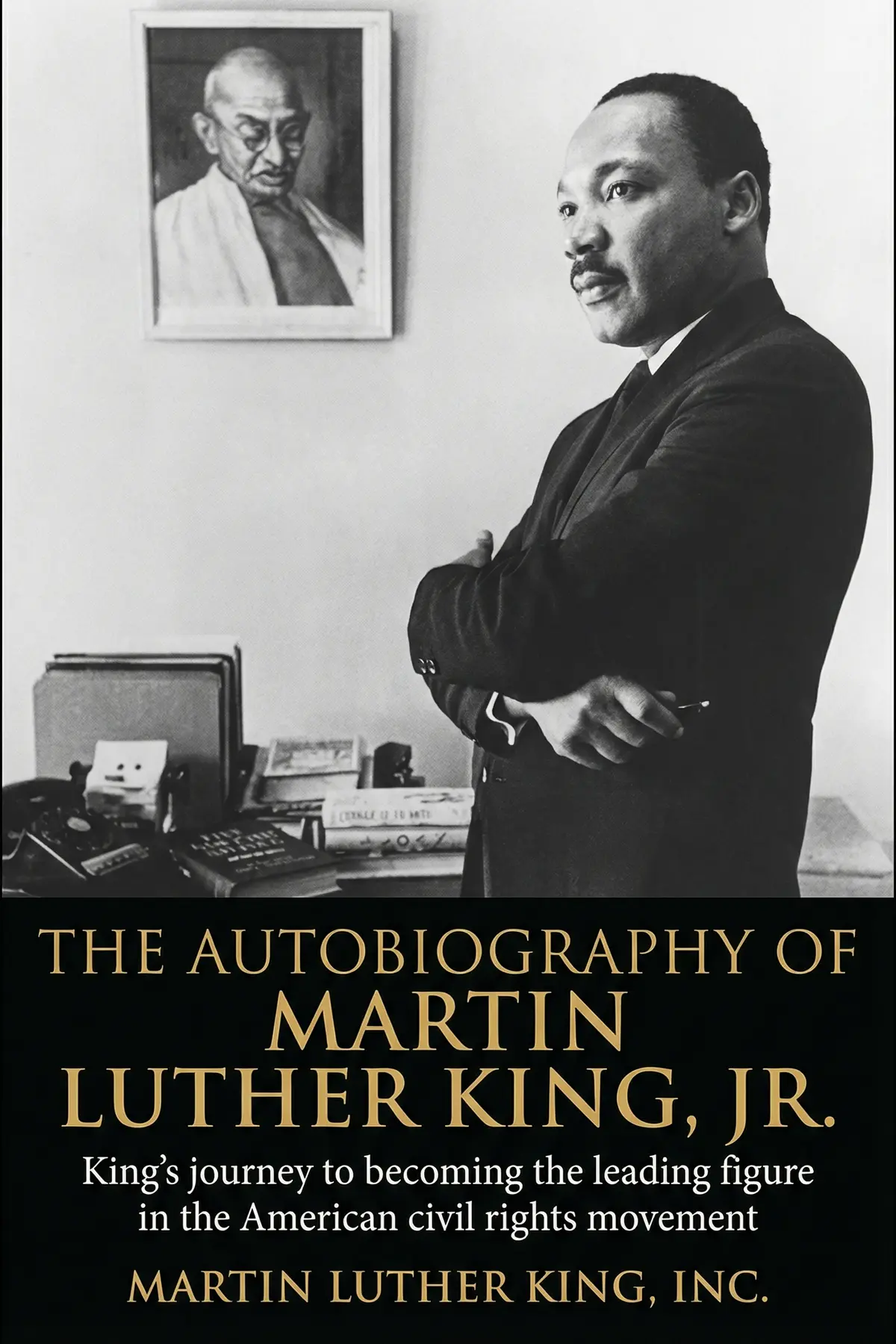
1 min 45 sec
When we think about the history of justice in America, one name usually stands above the rest. We recognize the voice, the cadence of the sermons, and the soaring rhetoric of a dream for a better future. But behind the monument and the national holiday is a complex story of a man who was shaped by a specific time, a specific place, and a deeply held set of convictions. This is the story of Martin Luther King Jr., told not just through the lens of history, but through his own reflections, letters, and experiences.
In this exploration, we’re going to walk through the chapters of a life that redefined what it means to lead. We’ll see how a young boy in Atlanta, experiencing the sting of segregation, grew into a scholar who found a weapon in the philosophy of nonviolence. We’ll follow him into the heat of Montgomery and Birmingham, where theory met reality on the pavement of the American South. We will also look at the later, often overlooked years of his life, where his focus shifted toward the broader issues of economic inequality and the devastation of war.
This isn’t just a recap of a movement; it’s an invitation to understand the throughline of King’s existence. It’s about the internal engine that kept him moving forward even when the threats became personal and the path forward seemed impossible. By looking at his life from the inside out, we can better understand the forces that shaped a national icon of peace and how his private thoughts fueled a public revolution. This journey through his autobiography is an opportunity to get to know the man who believed that love, when organized into a powerful force, could eventually bend the arc of the moral universe toward justice. Let’s begin with the roots of that belief, in the heart of Georgia.
2 min 12 sec
Experience the formative years of a young boy in the segregated South as he discovers the painful reality of racial divisions and the systemic roots of poverty.
2 min 09 sec
Follow the academic journey of a young scholar as he synthesizes the wisdom of philosophers and theologians to find a way to fight social evil without using hate.
1 min 55 sec
Witness the birth of the Montgomery bus boycott and the emergence of a new kind of leadership that turned a simple act of defiance into a mass movement.
2 min 05 sec
Explore the personal and spiritual trials faced by a leader under fire, and how a moment of deep prayer transformed his fear into courage.
2 min 00 sec
Learn how the movement evolved its tactics, moving from broad protests to focused campaigns that forced the nation to confront the brutality of racism.
2 min 12 sec
Discover how the struggle for American civil rights was connected to a worldwide movement for freedom, from the independence of Ghana to the struggles of India.
2 min 07 sec
Relive the historic March on Washington and understand how a spontaneous moment of inspiration created the most famous speech in American history.
1 min 59 sec
Observe the movement’s shift to Northern cities, where the struggle against systemic poverty and ‘hidden’ racism proved even more difficult than fighting Southern laws.
2 min 01 sec
Understand the tension within the civil rights movement as younger activists began to question nonviolence and embrace the more radical concept of Black Power.
2 min 03 sec
See how King’s conscience led him to speak out against the Vietnam War and launch a bold plan for economic justice for all poor people, regardless of race.
2 min 03 sec
The life of Martin Luther King Jr. was not just a series of historical events; it was a testament to the power of a disciplined mind and a compassionate heart. We have seen how his journey began in the domestic warmth of a preacher’s home in Atlanta and ended on a balcony in Memphis, covering a lifetime of intellectual and physical struggle. From the early lessons of segregation to the global stage of the Nobel Prize, King’s throughline remained his unwavering belief that nonviolence was the only moral and effective way to achieve lasting change.
His story reminds us that progress is rarely linear and never easy. It required a constant recalibration of strategy—from the focused boycotts of Montgomery to the national theater of Birmingham and the complicated economic battles of Chicago. King’s legacy is often sanitized into a few famous lines about a dream, but his autobiography reveals a much more radical and challenging figure. He was a man who eventually stood against his own government to oppose a war and who demanded a fundamental restructuring of the American economy to favor the poor.
As we reflect on his life, the takeaway isn’t just admiration for what he did, but a challenge for how we live now. King showed us that leadership means being willing to stand alone when your conscience demands it. He taught us that ‘injustice anywhere is a threat to justice everywhere’ and that our lives are ultimately measured by our service to others.
The arc of the moral universe may bend toward justice, but as King’s life proved, it doesn’t bend on its own. It requires the collective weight of people who are willing to march, to speak, and to love even in the face of hate. His life ended in 1968, but the work he started continues. If there is one final lesson to take from his journey, it is that each of us has the capacity to help bend that arc, ensuring that his dream of a ‘beloved community’ remains a goal worth striving for every single day.
This summary provides a deep exploration of the life, mind, and legacy of Martin Luther King Jr. based on his own words and writings. It follows his evolution from a student of philosophy and theology to the frontline of the American civil rights movement. Listeners will gain insight into the pivotal moments that shaped the 20th century, including the Montgomery bus boycott, the Birmingham campaign, and the March on Washington. More than just a timeline of events, it captures King’s internal struggles, his unwavering commitment to nonviolence, and his later efforts to address global poverty and the Vietnam War. It promises a narrative that moves beyond the iconic speeches to reveal the human being who carried the weight of a movement on his shoulders.
Martin Luther King Jr. was a prominent religious leader and a central figure in the 1960s civil rights movement in America. As an ordained minister, he spearheaded major actions like the Montgomery bus protests and the 1963 March on Washington. His dedication to justice earned him the Nobel Peace Prize in 1964. His life ended tragically with his assassination in 1968.
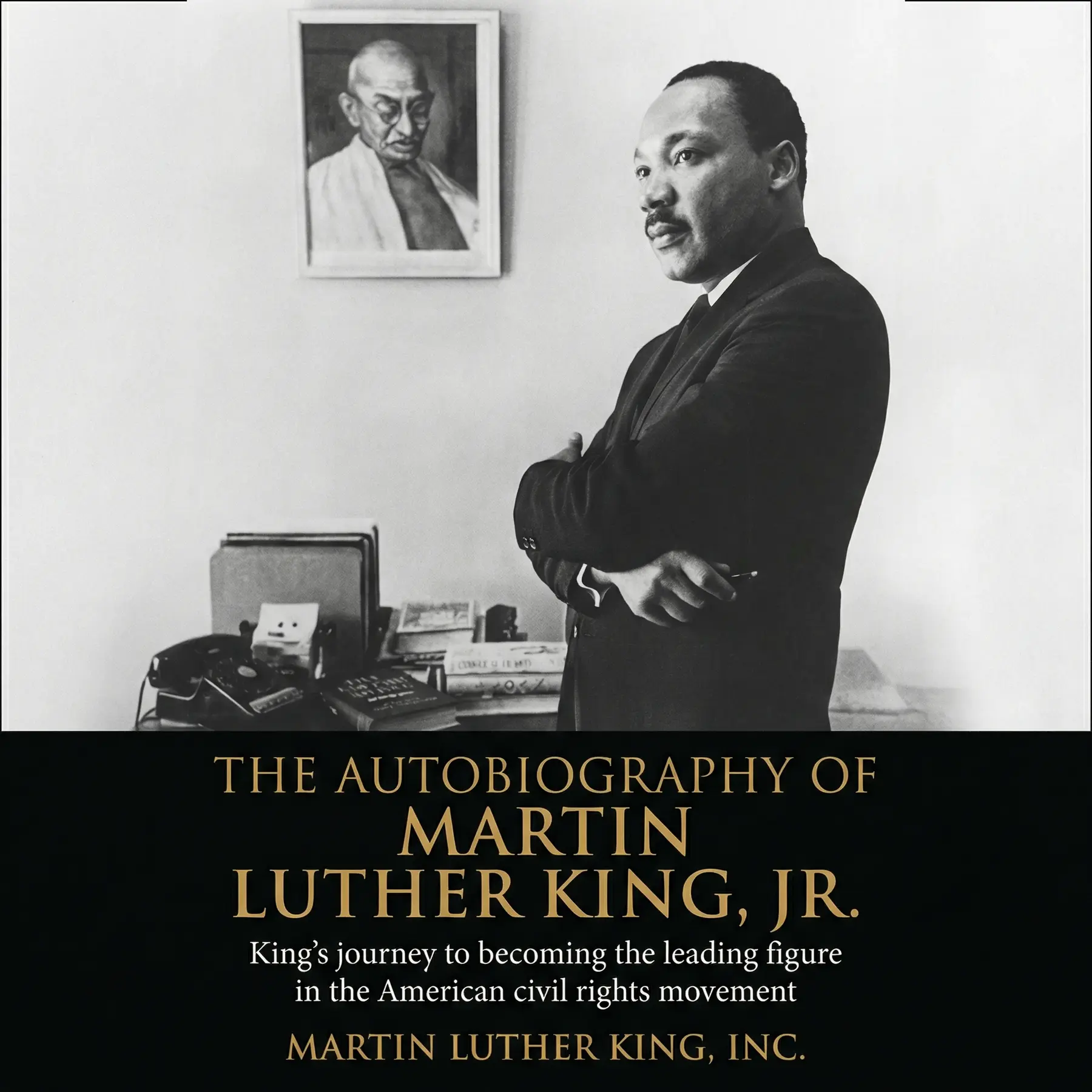
Listeners find this life story to be a fantastic account that offers profound perspectives on the leadership and history of Martin Luther King Jr. The work is skillfully composed and educational, with one listener mentioning that the narrative kept them engaged day and night. They value its Christian morality and bravery, and one review highlights it as a "courageous book."
Wow. Listening to this as an audiobook narrated by LeVar Burton was an absolute religious experience for me. I’ve always admired Dr. King as a historical figure, but hearing these recordings of his actual sermons and speeches makes him feel so much more real. The book isn’t a traditional narrative because it was compiled by Clayborne Carson from various archives, yet it flows with a surprising amount of internal logic. You get to hear King’s voice—literally and figuratively—on everything from the Montgomery bus boycott to his deep philosophical inspiration from Gandhi. It is courageous, deeply informative, and provides a window into the soul of a man who chose love over the easy temptation of hatred. There is a specific power in his 'Letter from Birmingham Jail' that everyone should experience at least once. This isn't just a history lesson; it's a blueprint for moral living in a world that often feels devoid of justice. I found myself hitting the rewind button constantly just to absorb the gravity of his rhetoric. It truly is a masterpiece of curation.
Show moreThis book should be mandatory reading for every single student in the United States, if not the entire world. King’s words echo through time with a relevance that is actually quite terrifying when you look at our current social climate. I was particularly struck by his critique of capitalism and his warnings about the 'giant triplets' of racism, materialism, and militarism. He wasn't just a dreamer; he was a radical thinker who wanted a total revolution of values. The section on the Rosa Parks incident and the subsequent bus boycott showed me a level of community unity that feels almost impossible to achieve today. His ability to maintain a non-violent stance while being physically and verbally abused is a testament to a level of courage I can barely wrap my head around. This book is a gut-punch that forces you to re-evaluate your own commitment to justice. Don't just skim it—read it slowly and let the weight of his convictions sink in.
Show moreKing’s courage drips from every single page of this compilation. I found myself reading this day and night, unable to put down his reflections on the March on Washington and the Civil Rights Act of 1964. The book is incredibly well-written, which speaks to King’s legendary gift as an orator and writer. It’s not just a collection of speeches; it’s a narrative of a man who knew he was likely going to be assassinated but kept going anyway. The sections where he writes to his wife, Coretta, are particularly moving and show a more human, vulnerable side of the leader. It’s informative and provides a historical context that many school textbooks conveniently leave out. If you want to understand the heart of the American civil rights struggle, this is the place to start. It’s a five-star read that will stay with me for a long time. Truly an amazing glimpse into a great life.
Show moreThe depth of research that went into compiling these writings is absolutely staggering. I listened to the audio version and was blown away by the inclusion of high-quality recordings of King’s later sermons. You can actually hear the exhaustion and the determination in his voice as the years go by. This book really highlights his educational background as a philosopher and his dedication to a person-oriented society over a thing-oriented one. His critique of capitalism as a system that takes necessities from the masses to give luxuries to the classes feels incredibly modern. It’s an amazing read that provides deep insights into how a social movement actually functions on the ground. There were moments that felt like a kick to the gut, especially when he discusses the violence faced by unarmed protesters. This is an essential piece of American history that everyone should own. It’s both a heartbreaking and a hopeful journey.
Show moreEver wonder how the leader of a revolution keeps his head when everything is burning down? This collection of writings offers some of the most profound insights into King's psyche that I’ve ever encountered. While technically an 'autobiography' assembled after his death, the way his letters and notes are pieced together creates a very cohesive picture of his Christian ethic. I particularly enjoyed the sections detailing his early educational background and how he wrestled with the concept of non-violent resistance. To be fair, if you aren’t already familiar with the broad strokes of the 1960s Civil Rights Movement, some of the historical context might feel a bit thin. The focus here is much more on his personal motivations and spiritual struggles than on a dry play-by-play of political events. Occasionally, the repetition of certain metaphors in his speeches can slow the pace down, but the overall impact is undeniable. It’s a brilliant, informative read that kept me engaged for several nights straight.
Show moreAfter hearing so much about the icon, I finally got around to reading about the man, and I’m glad I did. This account helped me understand King first and foremost as a preacher and a man of God, rather than just a political figurehead. The way he describes his admiration for Gandhi and how he integrated those principles into the Southern Christian Leadership Conference is fascinating. Look, the book can be a bit dense in the middle when it gets into the minutiae of various protests in Alabama and Georgia. However, the 'Letter from Birmingham Jail' included here is worth the price of admission alone. It exposes the hidden tensions of society with the precision of a surgeon. My only real complaint is that it doesn't spend enough time on his personal life outside of the movement, but that’s a minor quibble given the quality of the primary sources. It’s a courageous book that demands your full attention.
Show morePicked this up because I wanted to understand the strategic side of the non-violence movement beyond the soundbites we hear every January. The truth is, King was an incredibly complex philosopher who was deeply influenced by his studies in Boston and his trips to India. I loved the behind-the-scenes accounts of his interactions with other leaders and his sometimes-tense relationship with the Black Power movement. The book does a great job of showing how his ideas evolved over time, especially his growing opposition to the Vietnam War. Frankly, it’s a bit of a tragedy that he didn’t live to write a proper autobiography himself, as you can feel the gaps where a biographer’s transition was needed. Still, the editor did a commendable job of weaving together a narrative that feels mostly seamless. It’s a long read, but it provides a deep insight into the logistics of organizing for change. Highly recommended for anyone interested in social justice.
Show moreLook, it’s not a perfect 'autobiography' since it was pieced together posthumously, but it’s probably as close as we are ever going to get. The editor, Clayborne Carson, deserves a lot of credit for the amount of research that went into this. You get a firsthand look at King’s feelings and motivations during the most pivotal moments of the 20th century. I was especially impressed by his description of his visit to India and how it cemented his faith in civil disobedience as a tool for political change. Personally, I found some of the theological sections to be a bit repetitive, but that's just because King was so consistent in his message. The book successfully bridges the gap between King the legend and King the human being. It’s a courageous account of a man who fought against institutionalized discrimination with nothing but the truth and a commitment to peace. It’s a solid 4-star read for any history buff.
Show moreFrankly, I didn't realize how much King struggled with his own humanity until reading his letters and personal notes in this collection. We often see him as this untouchable, stoic figure, but this book shows his doubts, his fears, and his frustrations with 'white moderates.' The 'Letter from Birmingham Jail' remains one of the most powerful pieces of literature I have ever read. I did find that the book occasionally glosses over some of the historical context, assuming the reader already knows the details of things like the Albany movement. If you aren't a history student, you might need Google nearby to keep the timeline straight. Also, the archival nature of the text means some sections are much more polished than others. Despite these minor issues, the Christian ethic and the sheer bravery on display are inspiring. It’s a very informative and courageous book that I would recommend to anyone looking for more than just a surface-level understanding of Dr. King.
Show moreTo be fair, I went into this expecting a traditional biography and was surprised to find it’s a montage of documents edited by a third party. While the source material is obviously of monumental importance, the lack of a singular, cohesive authorial voice was a bit jarring for me. There are some frustrating technical oversights that marred the experience, such as the misspelling of 'Gandhi' as 'Ghandi' in several places. I even noticed a glaring geographical error where a trip to the Sabarmati ashram in Ahmedabad was mislabeled as 'Amniabad.' As a King scholar, Carson should have been much more vigilant about correcting these factual inconsistencies in the Stanford archives before publishing. The spiritual tone is heavy, which is expected given King was a pastor, but the constant invocation of God in every other sentence occasionally felt like it diluted the political strategy being discussed. It’s a decent collection for those who want the raw documents, but I found the lack of hindsight perspective from a professional biographer disappointing.
Show moreMasaji Ishikawa


Ben Macintyre

Fay Bound Alberti

Daniel Goleman
James Shapiro


Virginia Woolf
AUDIO SUMMARY AVAILABLE
Get the key ideas from The Autobiography Of Martin Luther King, Jr. by Martin Luther King Jr., plus 5,000+ more titles in English and Thai.







