

18 min 07 sec
The Black Agenda: Bold Solutions for a Broken System
This guide explores how centering Black expertise and perspectives across policy areas creates a more equitable society. It offers a comprehensive framework for addressing systemic racism through actionable, expert-driven solutions.
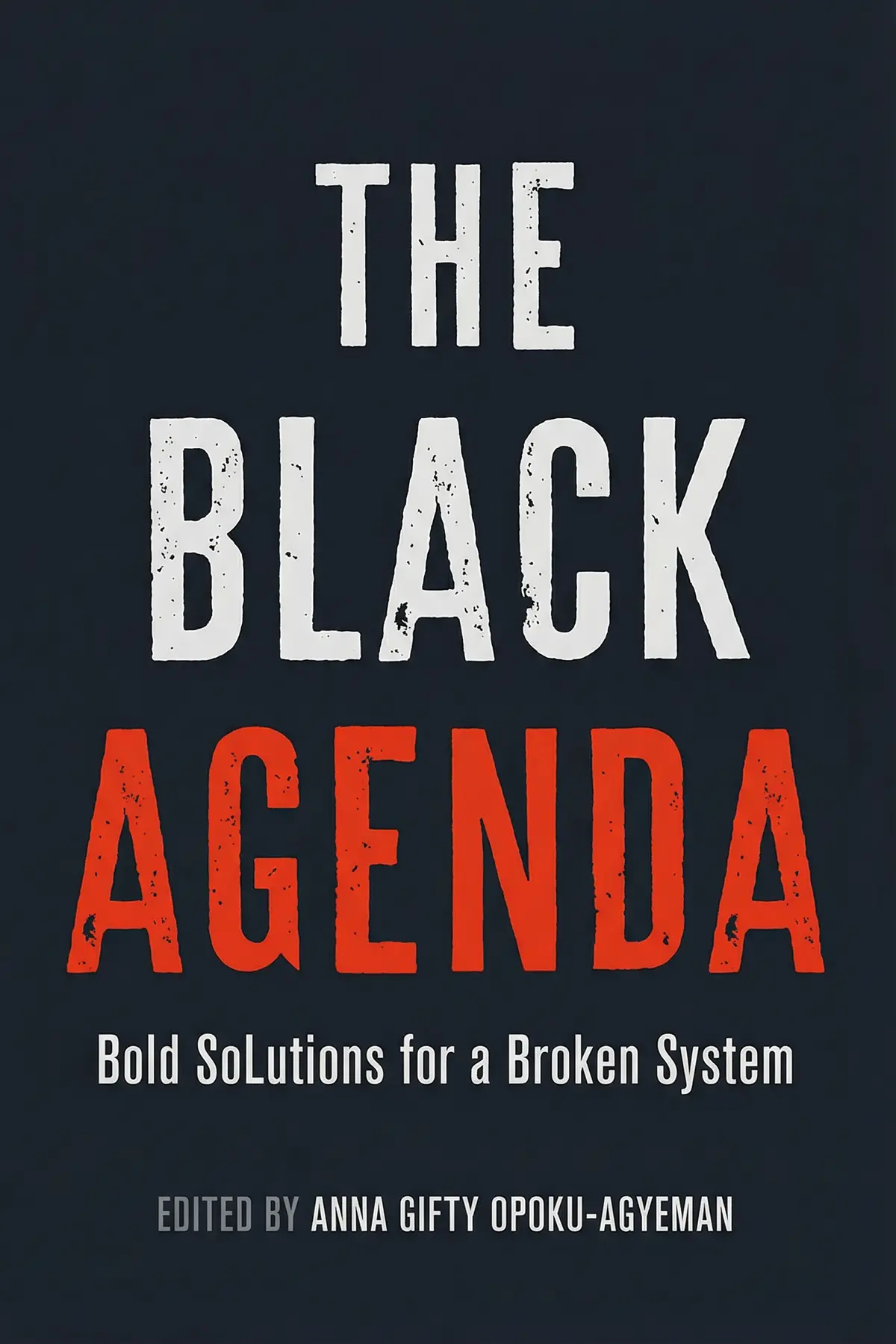
Table of Content
1. Introduction
1 min 50 sec
When we think about progress in society, we often think about broad, universal policies. We imagine that a rising tide lifts all boats. But what if that tide is only rising for some, while others are still anchored to the ocean floor? This is the central provocation of the work we are exploring today. It challenges the traditional approach to policy-making and social justice by proposing a radical but necessary shift: the idea that by centering the voices and the expertise of Black individuals, we can actually solve the most pressing problems facing our entire society.
The throughline of this discussion is the concept of a specific, intentional agenda. It’s not just a list of grievances; it is a strategic framework. This framework suggests that the issues affecting Black people in America are not isolated incidents of misfortune or personal choice. Instead, they are the result of deeply embedded systemic structures. Whether we are looking at the way our cities are built, how our healthcare is delivered, or how our economy functions, there is a recurring pattern of exclusion.
In the following sections, we will walk through various pillars of modern life—from the environment to technology—and see how they are currently failing Black communities. But more importantly, we will see how these failures provide a blueprint for real, transformative change. We will look at how the expertise of those most affected by systemic inequality is the key to unlocking a better future for everyone. This isn’t just about helping one group of people; it’s about fixing a broken system so that it finally works for everyone. By the end of this journey, the goal is to move from passive observation to active participation in a collective movement for equity. We are going to see exactly why the Black Agenda is, in many ways, the agenda that the entire country needs to follow if it wants to live up to its highest ideals.
2. The Economy and the Architecture of the Wealth Gap
2 min 12 sec
Explore why the financial disparities we see today are the result of deliberate historical policies rather than individual choices, and how we can begin to dismantle them.
3. Environmental Justice and the Impact of Place
2 min 06 sec
Discover how the physical environment of Black neighborhoods is often a reflection of systemic neglect, and why climate policy must center those most at risk.
4. The Healthcare Divide and Systemic Bias
2 min 07 sec
Uncover the hidden biases within the medical system that lead to disparate outcomes, and why cultural competency is essential for saving lives.
5. Technology, Algorithms, and the Digital Frontier
2 min 13 sec
Understand how the tools of the future can often replicate the prejudices of the past, and what it takes to build a truly equitable digital world.
6. Education as a Pathway to Collective Liberation
2 min 04 sec
Examine the disparities in our school systems and the vital role that Black-centered educational institutions play in fostering success.
7. Criminal Justice and the Shift Toward Community Safety
1 min 55 sec
Look beyond the traditional punitive model of justice to see how a focus on community well-being and restorative practices can create true safety.
8. The Professional Landscape and the Power of Intersectionality
1 min 57 sec
Discover why true workplace equity requires more than just diversity quotas, and how centering Black women can lead to organizational excellence.
9. Conclusion
1 min 43 sec
As we conclude our look at this comprehensive agenda, it’s clear that the path to a more just and prosperous society isn’t found in broad, colorblind policies that ignore history. Instead, it is found in the intentional, expert-driven work of centering the Black experience. We’ve seen how this approach can transform our economy, our environment, our hospitals, and our schools. We’ve seen how it can make our technology smarter and our justice system more truly just.
The throughline of everything we have discussed is the idea that the ‘Black Agenda’ is not a separate or competing interest. It is an American agenda. When we fix the systems that are most broken for Black people, we are fixing the fundamental flaws that affect us all. We are moving toward a country that finally matches its reality to its rhetoric.
The takeaway for all of us is that we cannot be passive observers in this process. Real change requires us to seek out and elevate Black expertise in our own lives and professional circles. It requires us to look at the structures around us—the places where we work, where we live, and where we vote—and ask who is being served and who is being excluded.
This isn’t just about charity or empathy; it’s about the hard, strategic work of building a better world. It’s about recognizing that the solutions we need for our most complex global problems are already here, held by those who have been navigating systemic obstacles for generations. By listening to those voices and following this agenda, we don’t just move toward equity; we move toward a future that is more resilient, more innovative, and more human for everyone. The invitation now is to take these insights and turn them into action, ensuring that the next chapter of our collective story is one where everyone truly belongs.
About this book
What is this book about?
The Black Agenda is a groundbreaking collection that argues for a fundamental shift in how we approach public policy and social change. Instead of treating Black issues as niche or secondary concerns, the book demonstrates that the challenges facing Black communities are often the most acute symptoms of systemic failures that affect everyone. By centering Black experts and their insights, the book provides a roadmap for addressing problems in economics, education, healthcare, technology, and climate change. At its heart, this work is a call to action for both individuals and institutions. It moves beyond simple awareness toward a concrete, expert-driven agenda designed to dismantle long-standing disparities. The promise of the book is that when we create solutions specifically tailored to improve the lives of Black people, we inevitably strengthen the foundations of democracy and prosperity for the entire nation. It is an essential read for anyone committed to true systemic change and inclusive progress.
Book Information
About the Author
Anna Gifty Opoku-Agyeman
Anna Gifty Opoku-Agyeman is an award-winning Ghanaian-American researcher, entrepreneur, and author known for her work in economics and policy. She is a cofounder of the Sadie Collective, a pioneering nonprofit dedicated to increasing the representation of Black women in fields like economics and finance. Her contributions have earned her widespread recognition, including being the youngest person to receive the CEDAW Women’s Human Rights Award, highlighting her dedication to equity and social justice.
Ratings & Reviews
Ratings at a glance
What people think
Listeners describe this essay compilation as a compelling and informative asset that highlights the knowledge of Black experts in areas such as medicine, finance, and tech. Those engaging with the work value the emphasis on practical remedies, and one listener pointed out that the perspectives on algorithmic bias were particularly enlightening. Furthermore, the data-heavy sections are lauded for offering a distinct and "bold" path forward for tackling structural inequality. While views on the scholarly style of the prose differ, listeners consider the material a vital instrument for societal transformation. They also highlight that the varied background of the authors provides an all-encompassing perspective on the distinct hurdles and prospects currently before Black communities.
Top reviews
Samira
The Black Agenda is a masterclass in expertise-driven advocacy. I was particularly struck by the essays on technology and AI, which revealed how facial recognition software often fails Black communities due to a lack of inclusive design. It’s rare to find a collection that moves so seamlessly from climate change to criminal justice while maintaining a laser focus on actionable policy. Each scholar brings a unique, data-backed perspective that makes the "bold" solutions feel not just possible, but inevitable if we listen. The writing is dense and certainly academic, but that’s exactly why it carries so much weight. This isn't just another book about problems; it’s a blueprint for a future where Black expertise is finally centered in the rooms where decisions are made. A necessary addition to any modern library.
Show moreNam
As someone who has always felt the medical system was opaque, the healthcare section was a revelation. The contributors tackle the terrifying reality of Black maternal mortality with such grace and precision that it's impossible to look away. I had no idea that skin color alone, regardless of income, could so drastically affect health outcomes for infants. The R4P approach—Remove, Repair, Restructure, Remediate, and Provide—is exactly the kind of concrete framework we've been missing in these national conversations. It’s an emotional read at times, but the focus remains steadily on how to heal both the individual and the system. This book should be required reading for every medical student and public health official in the country. It’s bold, it’s urgent, and it’s deeply necessary for our collective wellness.
Show moreEmily
The chapter on climate change completely reframed how I view environmentalism. I’ve always thought of it as a separate issue, but these experts show how it’s tied into everything from prison abolition to urban planning. Anna Gifty Opoku-Agyeman has done a stellar job of curating voices that don't just complain, but offer a path forward through praxis. I loved the emphasis on how Black liberation and queer theory can inform our response to the climate crisis. It’s a brilliant, intersectional approach that makes you realize how many perspectives we’ve been missing by ignoring Black experts in STEM. The book is heavy on research, which I appreciated because it makes the arguments feel unshakeable. It’s the kind of resource you keep on your desk to reference again and again during political debates.
Show morePornpimon
Not gonna lie, I expected this to be a dry policy manual, but the voices here are incredibly vibrant. The concept of "Black Women Best"—the idea that if you build systems that work for those most marginalized, everyone benefits—is a complete game changer for my understanding of economics. I spent years hearing about the wage gap, but Janelle Jones and Angela Hanks frame it in a way that feels urgent and solvable. It’s refreshing to see experts across STEM and economics finally getting the floor to speak on their own terms. Some chapters are a bit technical, especially when diving into Natural Language Processing, but don't let that deter you. You’ll walk away with a much clearer picture of how systemic racism is baked into our infrastructure and how we can actually start to dismantle it.
Show moreNikolai
In my experience, many social justice books stop at identifying the problem without offering a way out. This collection is different because it focuses almost entirely on the "what now?" aspect of reform. From Kristen Broady’s insights on the future of work to the vital need for voting rights protection, the book feels like a living document. I was especially moved by the section on the criminalization of queer Black property and how we need to rethink our approach to incarceration. It’s rare to see so many brilliant minds from diverse fields like economics and technology gathered in one place. While the academic tone might be a bit much for some, the importance of the content cannot be overstated. It’s a powerful tool for anyone looking to understand the mechanics of systemic injustice and how to break them.
Show morePrasarn
Finally got around to reading this collection, and it’s one of the most comprehensive works I’ve found. The way it centers Black women experts, particularly in fields like AI and economics, is both refreshing and long overdue. I was fascinated by the discussion on how facial recognition software struggles with darker skin tones, a detail that has massive real-world consequences for policing. It's a bold and urgent collection that doesn't shy away from complex ideas or difficult truths. Even when the topics got a bit technical, the passion of the contributors kept me turning the pages. This isn't just a book for Black people; it’s a book for anyone who cares about the future of American democracy. It provides a clear, research-backed roadmap for anyone ready to do the work of building a more equitable society.
Show moreMoon
Ever wonder what a roadmap for actual systemic change looks like? This collection isn't interested in just talking about feelings; it’s about hard data and legislative shifts. I found the section on environmental racism particularly eye-opening, especially the way Mary Heglar describes how climate change disproportionately impacts Black families. It’s a lot to take in all at once, and some of the chapters read more like academic journal articles than casual essays. You might need to take breaks between sections to really digest the policy proposals being suggested. However, the sheer breadth of topics—from student loan forgiveness to rural Black representation—is impressive. If you want to move past performative allyship and into the realm of real policy work, this is the book you need to be citing.
Show moreNum
Picked this up for a graduate seminar and found myself highlighting every other page. The discussion on student loan forgiveness as a form of reparations was particularly brilliant and well-argued. Fenaba Addo makes a compelling case for how debt burdens prevent Black families from building generational wealth in a way that feels mathematically sound. I do think the transition from one section to the next could have been smoother, as it sometimes feels like a series of disconnected lectures. But the quality of the insights, especially regarding the automation of jobs held by Black workers, makes it worth the effort. It’s a dense, intellectual climb, but the view from the top is much clearer. We need more collections like this that prioritize expertise over simple narratives.
Show morePenelope
Wait, is every chapter going to follow the exact same structure? While the content itself is incredibly vital, the writing style across these various authors felt strangely repetitive and formulaic. I found myself getting distracted by the constant "first, second, third" transitions that popped up in nearly every essay. It felt more like reading a series of high-level policy briefs than a cohesive book, which might be the point, but it made for a dry reading experience. I did learn a lot about the specific struggles facing Black disabled women and the need for better mental health infrastructure. The insights are there, and the research is undeniably robust, but I wish there had been more stylistic variety to keep me engaged through the denser sections.
Show moreSurasit
Look, I really wanted to get behind the ideas here, but the terminology felt like a barrier. While I appreciate the effort to uplift Black experts, much of the text felt bogged down in academic jargon that makes it hard to connect with the actual solutions. I struggled with the framing of certain sections, especially regarding criminal justice reform, as it felt like it ignored some of the complexities I see in my own community. That said, the section on technology and algorithmic bias was actually quite fascinating and clearly explained. I wish the rest of the book had that same level of accessibility instead of feeling like "woke gobbledygook" at times. It is a dense read, and while the contributors are clearly brilliant, the ideological gap was just too wide for me to bridge.
Show moreReaders also enjoyed
A Warning
Miles Taylor

A Biography of Loneliness: The History of an Emotion
Fay Bound Alberti
A Force for Good: The Dalai Lama's Vision for Our World
Daniel Goleman
Abolish Rent: How Tenants Can End the Housing Crisis
Tracy Rosenthal
AUDIO SUMMARY AVAILABLE
Listen to The Black Agenda in 15 minutes
Get the key ideas from The Black Agenda by Anna Gifty Opoku-Agyeman, plus 5,000+ more titles in English and Thai.
- 5,000+ titles
- Listen as much as you want
- 7-day free trial
- Cancel anytime







