
20 min 11 sec
The Case for Trump
A historian’s analysis of Donald Trump's rise, examining how his unique personality and policies addressed the grievances of a neglected American working class while disrupting the established political and cultural order.
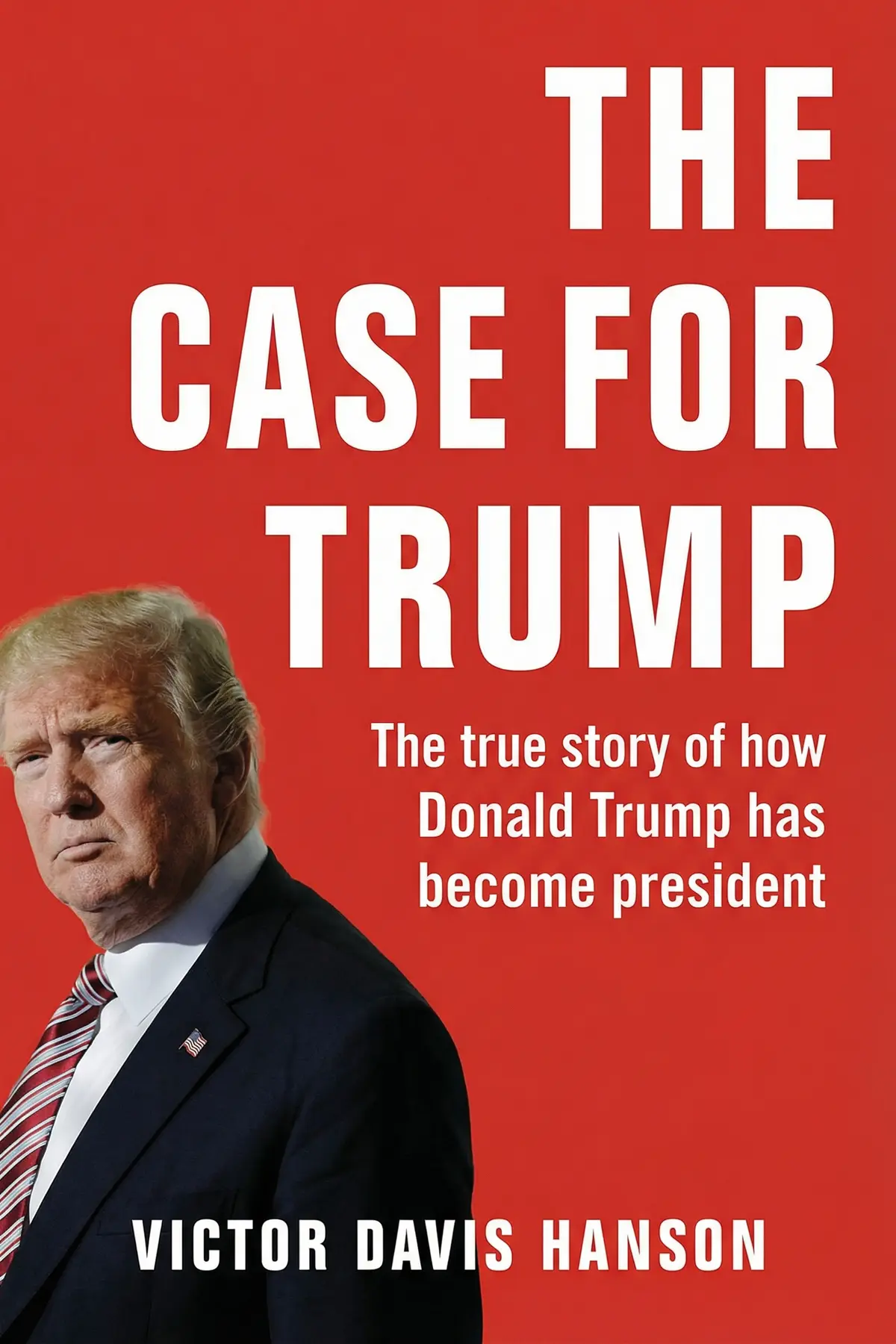
Table of Content
1. Introduction
1 min 42 sec
The election of 2016 was more than just a political upset; it was a cultural earthquake that caught the world’s elite completely off guard. To many observers, the rise of Donald Trump seemed like a chaotic fluke, a strange deviation from the norm of American politics. But as historian Victor Davis Hanson argues, this perspective misses the deeper historical currents that had been building for decades. In the following exploration, we are going to look at why a billionaire real estate mogul from New York became the unlikely champion of the American working class. We will see how the divide between the coastal elite and the inhabitants of the American interior created a vacuum that only a radical outsider could fill.
This isn’t just a recount of political strategies; it is an analysis of a country in transition. Hanson brings his expertise as a classicist and military historian to the table, framing the Trump presidency not as a random occurrence, but as a necessary—if polarizing—response to a stagnant political order. We’ll examine the specific policy shifts, the personality traits, and the historical archetypes that define this era. By the end of this summary, you will understand the forces that propelled Trump to the White House and the reasons why his supporters believed he was the only person capable of taking on the institutional powers of Washington. The throughline here is the idea of the ‘tragic hero’—a figure who is perhaps unrefined and flawed, but whose very nature allows him to perform the difficult tasks that more ‘civilized’ leaders are unable to accomplish. It’s a story of a nation grappling with its identity, its economy, and its place in the world, leading to one of the most significant political realignments in modern history.
2. The Great Geographic and Cultural Divide
2 min 14 sec
Discover how the widening gap between the prosperous coastal regions and the struggling American interior set the stage for a political revolution.
3. The Archetype of the Tragic Hero
2 min 18 sec
Explore why an unconventional and often abrasive personality was exactly what a frustrated electorate felt they needed to fix a broken system.
4. A New Economic Paradigm: Nationalism over Globalism
2 min 15 sec
See how a shift away from traditional free-trade dogmatism helped redefine the Republican Party’s relationship with the working class.
5. The Border as a Symbol of Sovereignty
2 min 02 sec
Understand why the issue of immigration and the construction of a border wall became the defining pillar of the Trump movement.
6. The War with the Administrative State
2 min 02 sec
Analyze the conflict between the elected executive and the permanent bureaucracy, often called the ‘Deep State.’
7. A Revolutionary Foreign Policy Shift
2 min 06 sec
Learn how the ‘America First’ doctrine challenged long-standing international alliances and reshaped the U.S. role on the global stage.
8. The Media and the New Information War
1 min 56 sec
Examine how the total breakdown of trust between the presidency and the press transformed American political discourse.
9. Redefining the Republican Party
1 min 58 sec
Observe the transformation of the GOP from a party of corporate elites to a populist movement focused on the working class.
10. Conclusion
1 min 38 sec
As we look back at the arguments presented by Victor Davis Hanson, we can see that the Trump presidency was far from a random outlier in American history. It was the culmination of decades of growing frustration, geographic division, and institutional failure. By acting as the ‘tragic hero’—the flawed figure who was willing to shatter norms to address deep-seated problems—Trump provided a voice for a segment of the population that felt it had been rendered invisible by the globalist consensus. He didn’t just challenge his political opponents; he challenged the entire structure of American power, from the media to the permanent bureaucracy to the international order.
The throughline of this analysis is that Trump was a symptom of a nation in crisis, but also a catalyst for a necessary conversation about sovereignty, citizenship, and the role of the working class. Whether you agree with his methods or his policies, it is impossible to deny the impact he had on the American political landscape. He forced a realignment of the major parties and broke the hold of a stagnant establishment. The central lesson here is that in a democracy, the concerns of the people—no matter how far they are removed from the centers of power—cannot be ignored indefinitely. Eventually, a figure will emerge to give voice to those grievances. The story of the Trump presidency is a reminder that the health of a republic depends on its ability to listen to all its citizens, not just the ones who live in the right zip codes or speak the right language. As we move forward, the questions he raised about trade, immigration, and the ‘Administrative State’ will continue to define the American debate for years to come.
About this book
What is this book about?
The Case for Trump examines the 2016 election and the subsequent presidency of Donald Trump through the lens of a classicist and historian. It looks beyond the daily headlines to understand the underlying demographic and cultural shifts that made a Trump victory not just possible, but perhaps inevitable. The book posits that Trump functioned as a disruptive force—a tragic hero who, despite personal flaws, possessed the specific temperament required to challenge a stagnant political establishment. By focusing on issues like trade, immigration, and foreign policy, the book explains how Trump tapped into the frustrations of the forgotten man in Middle America. It also analyzes the intense opposition he faced from the media, academia, and the permanent bureaucracy in Washington. Ultimately, the work serves as an explanation of why a large portion of the electorate felt that a radical departure from the status quo was necessary to preserve the American way of life and restore national sovereignty.
Book Information
About the Author
Victor Davis Hanson
Victor Davis Hanson is a renowned American historian and author who serves as the Martin and Illie Anderson Senior Fellow at Stanford University’s Hoover Institution. A professor emeritus at California State University, Fresno, Hanson has specialized in classics and military history. His extensive body of work includes The Second World Wars. For his contributions to the field of humanities, he was honored with the National Humanities Medal.
Ratings & Reviews
Ratings at a glance
What people think
Listeners find this work to be an essential listen that offers both factual depth and great readability. The narrative is easy to follow, as Hanson presents a distinct outlook on Trump’s candidacy. They value the text's historical relevance, with one listener calling it a great history lesson on leaders from the past, while another appreciates its in-depth look at the political climate.
Top reviews
Violet
Picked this up because I wanted to understand the 2016 shift without the usual screaming matches on cable news. Hanson’s application of classical history to modern politics is nothing short of fascinating, even if the Achilles metaphor feels like a bit of a stretch at times. He frames Trump not as a saint, but as a necessary, tragic figure who was uniquely equipped to disrupt a stagnant system. The way he describes the 'hollowing out' of middle America really hit home for me. It’s a dense read, but the historical parallels to leaders like Ajax make the current political climate feel much more grounded in human nature. Truth is, we rarely see this level of intellectual rigor applied to a figure who is usually just mocked or worshiped.
Show moreIff
This book is a masterclass in explaining the 'why' behind the 2016 election without resorting to lazy stereotypes about voters. Hanson argues that Trump was essentially the chemotherapy needed for a cancerous political establishment, a metaphor that is both harsh and incredibly apt. He doesn't shy away from the President's personal flaws or his abrasive 'Queens' personality, but he places them in a context where those traits become assets rather than liabilities. The focus on how identity politics alienated the middle of the country is the strongest part of the narrative. It’s a thick book with a lot of quotes, yet it remains engaging because the stakes feel so high. If you want to understand the current American zeitgeist, this is the definitive starting point.
Show moreJom
The chapter on the 'Deep State' and the weaponization of the IRS and FBI was a real eye-opener for me. We often hear these terms thrown around as slogans, but Hanson provides the actual names, dates, and connections that make the case feel much more concrete. He writes with a level of sophistication that is rare in political books today, avoiding the vitriol that usually clogs up the bestseller lists. Look, you might not agree with everything he says about the 'deplorables,' but his logic is hard to ignore if you're being honest about the state of the country. It’s a long read, and I found myself needing a break every fifty pages or so just to process the sheer amount of information. This isn't just a campaign book; it’s a historical document.
Show moreKasemsan
Finally got around to reading this and I’m genuinely impressed by how Hanson separates the man from the movement. He admits that Trump can be a 'fool and a showman,' which makes his defense of the policies much more credible than the usual sycophants. The way he frames the President as a 'Batman' figure—someone we might not like but who protects our interests—is a really clever way to look at the 2016 outcome. I particularly enjoyed the sections on how the electoral college protects the voices of those in 'flyover country' who were ignored for decades. It’s a very persuasive book that actually tries to bridge the gap between academic theory and the reality of the working class.
Show moreMo
Ever wonder how an academic at Stanford views the MAGA movement? Hanson provides a surprisingly readable breakdown that moves past the 'orange man bad' rhetoric to look at the underlying economic frustrations of the working class. While he clearly has a conservative bias, his analysis of the 'deep state' and the weaponization of federal agencies feels deeply researched. I found the sections on the media's 13-to-1 negative coverage ratio particularly enlightening, though I suspect some of his ancient history references are just there to flex his credentials. It’s not a perfect book—some of the defense for Trump's tweets feels like a reach—but it’s an essential perspective for anyone tired of the mainstream narrative. Worth the time for the history lesson alone.
Show morePornpimon
Wow, I didn't expect a book about a modern president to involve so much Thucydides and ancient Greek warfare. Hanson successfully argues that Trump's 'crude' behavior is actually part of a long lineage of populist leaders who were brought in to do the dirty work that polite society refused to touch. Personally, I think the comparison of Trump to a tragic hero like Ajax is a bit of a flight of fancy, but it makes for a provocative thesis. The writing is incredibly dense, often jumping between economic stats and classical philosophy in a way that can be jarring. Still, the breakdown of how the 'Swamp' works and why the media reacted the way they did is worth the price of admission. It’s a solid 4-star read.
Show moreSuda
After hearing so much about 'Trump Derangement Syndrome,' I wanted to see if anyone could actually articulate the pro-Trump side with some intelligence. Hanson delivers on that front, even if his prose is a bit dry and academic for my taste. He spends a lot of time on the 2016 campaign trail and why Hillary’s 'deplorables' comment was such a pivotal turning point in American history. My only gripe is that the book feels a bit repetitive in its middle sections, hammering the same points about the media and the elites over and over. If you're a busy person, you might prefer Newt Gingrich’s take on the same subject, as Hanson requires a lot of mental energy. However, the depth of knowledge here is undeniable.
Show moreLucia
The historical context provided here makes the chaos of the last few years feel much more like a predictable cycle than a random anomaly. Hanson is clearly a brilliant guy, though he does have a tendency to use ten words when two would do. His analysis of the media’s role in fueling the national divide is spot-on, particularly the way he documents the 'filter' applied to conservative voices. While I found the ancient Greek analogies a little repetitive by the end, they do help explain the concept of a 'tragic hero' in a way that makes Trump’s behavior more understandable. It’s an informative, albeit dense, read that offers a perspective you simply won’t find on any major news network. A very solid addition to my library.
Show moreRyan
As someone who appreciates Victor Davis Hanson’s work on military history, I was disappointed by the lack of factual precision in this volume. He makes some grand claims about labor force participation and executive orders that simply don't hold up if you spend five minutes on a government database. To be fair, his thesis about the 'deplorables' and the cultural divide between the coasts and the interior is compelling and well-articulated. However, when an author is this loose with statistics, it makes the more analytical arguments harder to swallow. It reads less like a historical treatise and more like a high-brow version of a Fox News monologue. It’s an interesting look into the conservative psyche, but keep your phone handy for fact-checking.
Show moreErn
Not what I expected from a historian of Hanson’s caliber, as it often feels more like a partisan defense than a detached analysis. He has a habit of describing Republican mistakes as 'clumsy' while painting Democratic actions as calculated or malicious. This double standard makes it difficult to take his more 'scholarly' comparisons to Agamemnon seriously. Frankly, the book reads like it was written for an audience that already agrees with him, despite the high-level vocabulary used throughout. There are definitely some bright spots, especially when he discusses the economic hollow-out of the rust belt, but the bias is just too thick to ignore. It’s a good insight into how the intellectual right justifies Trump, but don't expect a balanced view.
Show moreReaders also enjoyed
21 Lessons for the 21st Century
Yuval Noah Harari

A Different Kind of Power: A Memoir
Jacinda Ardern
Age of Anger: A History of the Present
Pankaj Mishra
A Higher Loyalty: Truth, Lies and Leadership
James Comey
Age of Propaganda: The Everyday Use and Abuse of Persuasion
Anthony Pratkanis

A Promised Land
Barack Obama

A River in Darkness: One Man’s Escape from North Korea
Masaji Ishikawa
AUDIO SUMMARY AVAILABLE
Listen to The Case for Trump in 15 minutes
Get the key ideas from The Case for Trump by Victor Davis Hanson, plus 5,000+ more titles in English and Thai.
- 5,000+ titles
- Listen as much as you want
- 7-day free trial
- Cancel anytime







