
18 min 49 sec
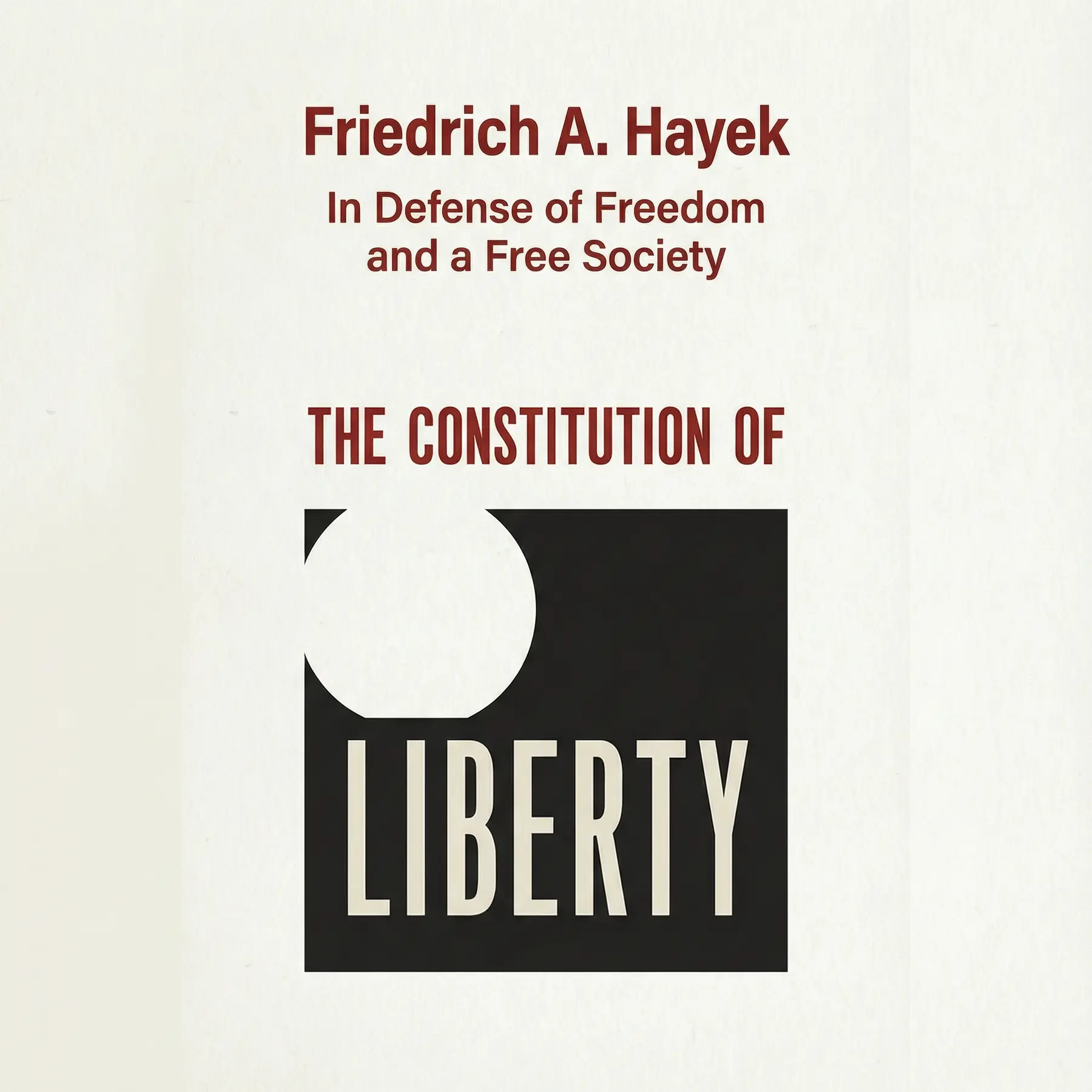
The Constitution of Liberty
A profound exploration of classical liberalism, this work details why individual freedom is essential for progress and how spontaneous social structures outperform centralized government planning in creating a prosperous society.
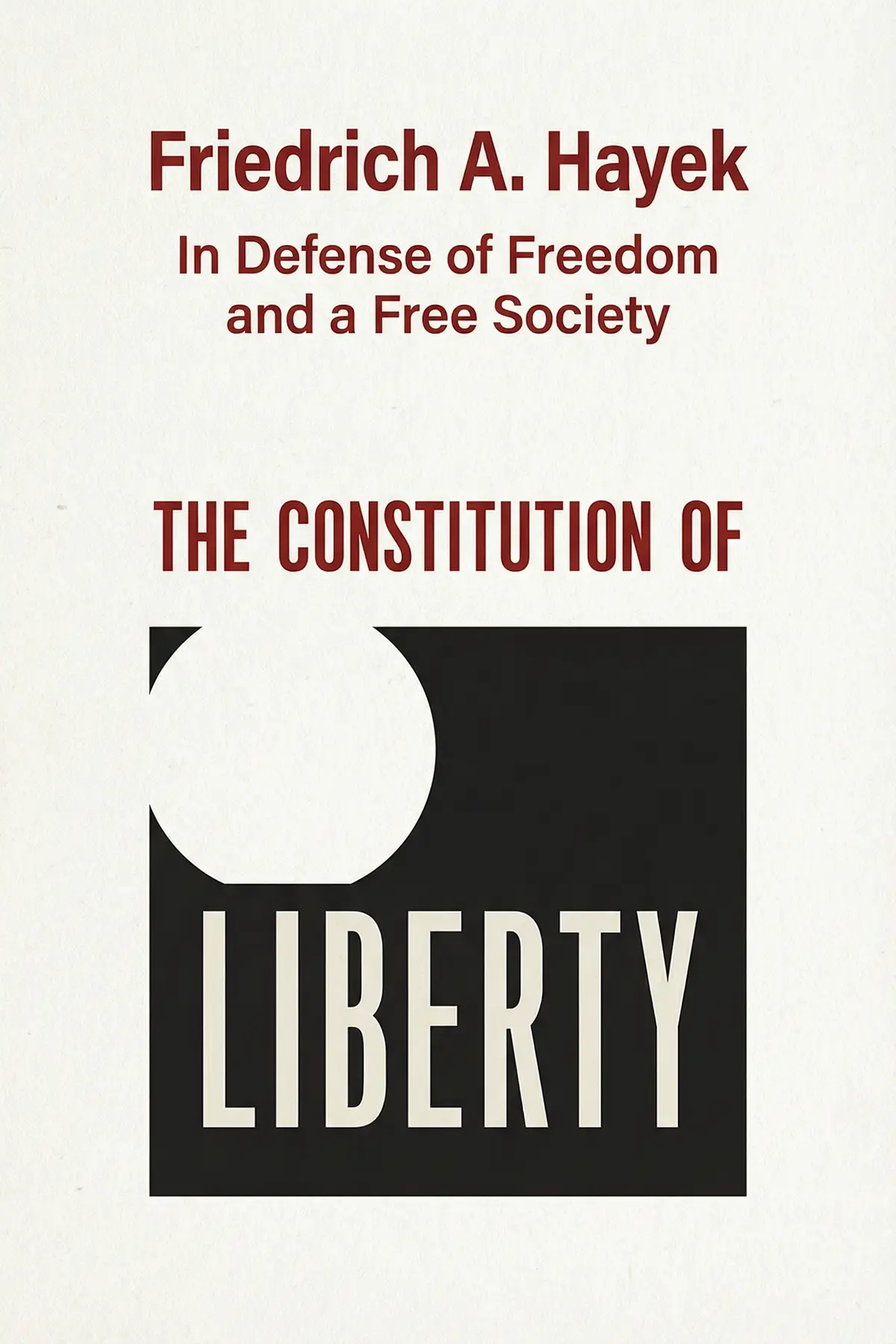
Table of Content
1. Introduction
2 min 01 sec
When we think about the word liberty, we often treat it as a broad, perhaps even abstract, political slogan. But what does it actually look like when integrated into the very fabric of a civilization? This is the central question we are exploring today. We are diving into a comprehensive vision of how a society can be structured to maximize human potential while protecting the individual from the overreach of collective power. The core throughline here is that freedom is not merely one value among many; it is the essential condition that allows all other human values to flourish and evolve.
In this exploration, we will look at why a free society is more effective at generating progress than one that is tightly managed. We will see how the dispersal of knowledge among millions of people creates a system far more intelligent than any central planning committee could ever hope to be. This is a journey through the mechanics of freedom—the legal, economic, and social structures that constitute what we might call a framework for liberty.
Throughout this summary, we will move from the philosophical definition of what it means to be free to the practical applications of these ideas in law and government. We will examine the inherent dangers of government intervention, even when such intervention is born from good intentions. The shift we are making is one from viewing the state as a designer of society to viewing it as a protector of a process. It is a subtle but profound difference that changes everything about how we understand progress, equality, and the role of the individual.
By the time we finish, the goal is to provide a clear perspective on why liberty requires a specific type of legal order—a constitution of principles—to survive the pressures of modern political life. We will see why the most successful societies are those that respect the unknown and allow the spontaneous order of human interaction to solve problems that no expert could solve alone. Let’s begin by looking at what liberty actually means in the context of human relationships and why its absence is so damaging to the human spirit.
2. Defining the Essence of Liberty
2 min 15 sec
What does it truly mean to be free? Explore the critical distinction between personal independence and the absence of coercion by others in a structured society.
3. The Power of Spontaneous Order and Dispersed Knowledge
2 min 23 sec
Discover why the collective intelligence of a free society always outpaces the specialized planning of experts and government agencies.
4. The Rule of Law as a Shield for Freedom
2 min 31 sec
Explore the vital difference between laws that act as general rules and government commands that target specific individuals or outcomes.
5. The Role of Inequality in a Progressing Society
2 min 28 sec
Understand why striving for equality of outcome can be detrimental to the very people it aims to help, and why variety is essential for growth.
6. The Threat of the Administrative State
2 min 35 sec
Examine how the well-intentioned expansion of government services can lead to a slow but certain erosion of personal freedoms and independence.
7. Individual Merit versus Market Value
2 min 36 sec
Uncover the common confusion between a person’s moral worth and the value of their services to others in a free economy.
8. Conclusion
2 min 00 sec
As we bring our exploration of the constitution of liberty to a close, it’s important to see these ideas not as a collection of separate theories, but as a single, cohesive worldview. The throughline we’ve followed is that human civilization is too complex to be designed or managed from the top down. Our progress, our prosperity, and our very dignity depend on a system that respects the limits of our knowledge and the power of individual freedom.
We have seen that liberty is the absence of coercion, and that this freedom is protected by the Rule of Law—a system of general, predictable rules that apply to everyone equally. We’ve explored how the spontaneous order of society uses the dispersed knowledge of millions to create solutions that no expert could ever plan. We’ve also confronted the uncomfortable truths that progress often requires inequality and that the well-intentioned growth of the administrative state can lead us toward a loss of the very independence we value.
The ‘constitution’ in the title refers to more than just a legal document. It refers to the fundamental principles and the state of mind that a society must adopt to remain free. It is a commitment to a framework that prioritizes the process over the outcome. It is an admission that we don’t know what the future holds, and therefore, we must leave the path open for discovery and innovation.
The actionable closing for all of us is to recognize the value of the ‘unplanned’ parts of our lives and our societies. It’s an invitation to be skeptical of those who claim they can design a perfect social order and to instead champion the rules that allow each of us to be the designers of our own lives. Liberty is a fragile thing; it requires a constant defense of the individual against the collective and a deep respect for the responsibility that comes with being free. By understanding these principles, we can better contribute to a society that doesn’t just seek to survive, but to truly progress and flourish. Thank you for joining us on this journey through the architecture of a free society.
About this book
What is this book about?
This summary explores the foundational principles of a free society, focusing on the essential relationship between individual liberty and the legal frameworks that protect it. It examines why centralized government control often fails and how the unplanned, spontaneous interactions of millions of individuals lead to greater innovation and well-being than any single authority could design. Through this narrative, you will discover the difference between arbitrary power and the rule of law, and why the preservation of freedom is not just a political preference but a necessity for human growth. The work promises to reshape your understanding of how civilization advances through trial, error, and the unique knowledge held by every individual, rather than through top-down mandates.
Book Information
About the Author
Friedrich A. Hayek
Friedrich A. Hayek was among the most influential economists of the twentieth century and a primary advocate for classical liberalism. His significant contributions to monetary theory and economics earned him the Nobel Prize in 1974. Throughout his career, he remained a steadfast defender of individual liberty, a commitment recognized in 1991 when he was awarded the Presidential Medal of Freedom.
Ratings & Reviews
Ratings at a glance
What people think
Listeners view this book as a crucial read, with one individual remarking that it stands as one of Hayek’s premier contributions. Additionally, they value the profound insights offered, with a specific review noting how it functions as a cornerstone for comprehending our nation. The work also successfully lobbies for constrained government while championing the necessity of liberty using persuasive arguments. However, listeners hold diverse perspectives regarding the prose, as one person finds the writing to be wordy in certain sections.
Top reviews
Sirirat
The metaphor of a 'morning constitutional' really reframed my thinking about how a healthy society functions. This isn't just a book about dusty legal documents, but a deep exploration of the habits and rules that allow a free people to flourish. I loved how Hayek took the time to define his terms with absolute precision, which is a rare treat these days. Frankly, it makes the arguments for limited government feel more like common sense than radical ideology. It is a long read, but the historical sections on the development of the rule of law are genuinely fascinating. You can clearly see the influence of Mises throughout the text, though Hayek brings his own unique flavor to the table. It is essential for anyone wanting to understand the foundation of our country.
Show morePacharapol
To be fair, Hayek isn't always the easiest writer to digest, but the way he defines his terms with surgical precision is refreshing in an age of sloppy rhetoric. This book serves as a robust defense of individual liberty against the encroaching power of the state. He draws a clear line between the 'rule of law' and the arbitrary commands of a bureaucratic committee. I found his analysis of the history of British and American constitutionalism to be incredibly enlightening and foundational for understanding modern governance. Even if you don't agree with every economic point, the intellectual rigour displayed here is staggering. It is a must-read for anyone who values personal freedom and wants to understand its philosophical roots. Truly one of his best works.
Show moreDiego
Hayek’s magnum opus offers a profound defense of the individual against the creeping expansion of the bureaucratic state. I was particularly struck by his discussion on how progress depends on the unpredictable actions of free individuals rather than the designs of technocrats. The way he traces the evolution of liberty through the lens of common law provides a necessary historical context that many modern political books lack. Got to say, his warning about the 'all-knowing' authority of the welfare state feels more relevant today than it probably did in 1960. It is a dense, scholarly achievement that serves as a vital blueprint for a limited government. If you want to understand the true meaning of the rule of law, you need this on your shelf.
Show moreBua
Pick this up if you want to understand the true philosophical foundation of a free society and why the 'rule of law' is our only shield against arbitrary power. Hayek is brilliant at explaining why we should be wary of 'social justice' when it's used as a blank check for government expansion. The book is incredibly thought-provoking and provides a compelling explanation for why decentralized knowledge leads to better outcomes for everyone. I loved the distinction he makes between a written constitution and the actual 'constitution' of a free people's character. It is an essential read for anyone worried about the direction of modern democracy. Even the more technical chapters on rent control and unions offer insights that are still startlingly applicable to our current economic climate.
Show moreSiraporn
Wow, the sheer scope of this book is staggering, moving from the evolution of common law to the specific failures of modern rent control and progressive taxation. Hayek manages to weave together economics, law, and philosophy into a single, cohesive argument for individual freedom. I particularly appreciated the way he handles the concept of coercion and explains how general, abstract rules are the only way to minimize it. Some might find his style a bit repetitive, but I think the reinforcement helps cement these very complex ideas in your mind. It is a masterclass in political theory and easily one of the most important books I have ever read. Anyone serious about politics needs to grapple with Hayek's arguments here. It is a truly essential, though demanding, piece of literature.
Show moreAudrey
Finally sat down with this behemoth after years of meaning to, and I must say the final essay 'Why I Am Not A Conservative' is worth the price of admission alone. Hayek presents a compelling case for a liberal order that isn't just about the status quo or tradition for tradition's sake. To be fair, the middle section on administrative law and the growth of bureaucracy is a bit of a slog and gets quite wordy. However, his insight into how knowledge is dispersed across society remains one of the most powerful arguments against central planning I've ever encountered. It’s a thought-provoking piece of political philosophy that requires a lot of patience but pays off in the end. This is a foundational text for anyone interested in the mechanics of a free society.
Show moreAdam
As someone who grew up hearing 'The Road to Serfdom' quoted constantly, this felt like the much-needed deeper dive into the actual mechanics of liberty. The book goes into incredible depth on issues like progressive taxation and the legal framework necessary for a market economy. I particularly enjoyed the footnotes, which are a literal gold mine of classical liberal thought and references to other great thinkers like Ludwig Mises. Personally, I think the writing can be a bit wordy in the middle chapters, which might turn some people off. But the overall argument for a decentralized system of knowledge is just too important to ignore. It really makes you question the efficacy of our current administrative state. It's a great, albeit challenging, addition to any political library.
Show morePenelope
Ever wonder why central planning always seems to fail despite the best intentions of the people in charge? Hayek explains it perfectly here by highlighting the sheer complexity of human knowledge that no single committee can ever grasp. While he is definitely influenced by Mises, Hayek is a bit more of a pragmatist, which makes his defense of limited government feel more grounded. Not gonna lie, the chapters on the history of law are quite heavy and require a lot of focus to get through. However, the intellectual reward for finishing the book is well worth the effort. It provides a solid foundation for anyone looking to argue for liberty in the 21st century. It's an important work that challenges you to think deeply about the role of the state.
Show moreTim
Look, I appreciate the intellectual heavy lifting here, especially regarding the dangers of administrative law, but the prose is undeniably dense and repetitive. Hayek makes some incredible points about how government interference can stifle progress, yet he spends an inordinate amount of time on technical details that might lose a casual reader. In my experience, 'The Road to Serfdom' is a much more accessible entry point if you just want the gist of his ideology. I also found his willingness to compromise on certain social services a bit confusing given his hardline stance on other issues. It’s a significant work, no doubt, but be prepared for a very dry and academic experience that requires several sittings to process. It is definitely not a light read for a weekend.
Show moreCharles
Not what I expected at all, as I found the middle section on the history of German and French bureaucracies to be an absolute slog to get through. Truth is, Hayek is an incredibly dry writer who seems to enjoy repeating the same point for fifty pages. I appreciate the defense of liberty in theory, but the technical economic analysis felt way too dated for a modern reader. Everything is just so wordy and academic that it sucks the life out of the subject matter. If you want a quick summary of his ideas, just stick to his shorter essays instead of wasting weeks on this behemoth. I struggled to stay engaged despite my interest in the topic. It felt more like a chore than an enlightening experience.
Show moreReaders also enjoyed
Abolish Rent: How Tenants Can End the Housing Crisis
Tracy Rosenthal
Abortion: Our Bodies, Their Lies, and the Truths We Use to
Jessica Valenti
21 Lessons for the 21st Century
Yuval Noah Harari
Age of Anger: A History of the Present
Pankaj Mishra
A Different Kind of Power: A Memoir
Jacinda Ardern
Age of Propaganda: The Everyday Use and Abuse of Persuasion
Anthony Pratkanis
1929: Inside the Greatest Crash in Wall Street History--and How It
Andrew Ross Sorkin
AUDIO SUMMARY AVAILABLE
Listen to The Constitution of Liberty in 15 minutes
Get the key ideas from The Constitution of Liberty by Friedrich A. Hayek, plus 5,000+ more titles in English and Thai.
- 5,000+ titles
- Listen as much as you want
- 7-day free trial
- Cancel anytime







