


59 Seconds: Change Your Life in Under a Minute
Richard Wiseman
Explore the liberating principles of Adlerian psychology to break free from the past, overcome the need for external approval, and discover the true path to personal happiness and social contribution.
1 min 24 sec
Have you ever felt like your past is a heavy anchor, dragging behind you and dictating exactly where you can and cannot go? Many of us walk through life believing that our childhoods, our previous failures, or the way we were treated by others have permanently set the course of our lives. We tell ourselves that we are the way we are because of what happened to us. But what if that belief is actually a choice—a way to avoid the terrifying responsibility of being free?
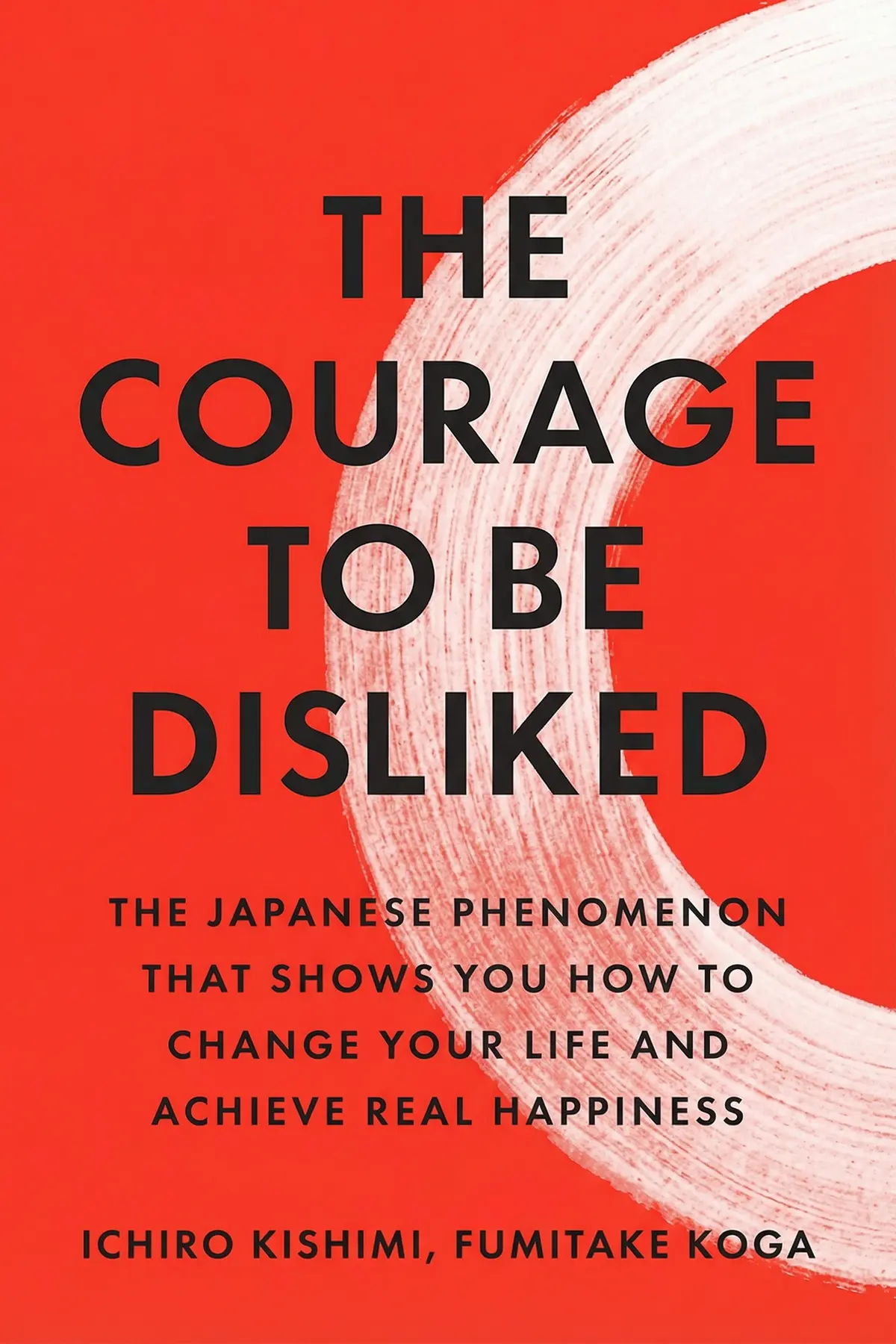
The Courage to Be Disliked introduces a profound shift in perspective based on the ideas of Alfred Adler, a contemporary of Freud and Jung who offered a much more optimistic view of human potential. This summary explores a conversation between a philosopher and a young man, a dialogue that unpacks why we stay stuck and how we can break free. The throughline of this journey is simple yet radical: happiness is not something that happens to you; it is something you choose by having the bravery to be yourself, regardless of what the world thinks.
As we move through these ideas, we will look at why change feels so difficult, why we often use our own flaws as shields against the world, and how the modern obsession with competition and approval is the very thing keeping us from feeling at peace. We are going to explore how to separate our responsibilities from the responsibilities of others and why finding your place in the global community is the ultimate key to fulfillment. This isn’t just a psychological theory; it’s a manual for a total life transformation that starts the moment you decide to see things differently.
2 min 06 sec
Discover why your history does not have to be your destiny and how your current interpretation of the past is more important than the events themselves.
1 min 54 sec
Learn why we often cling to our unhappiness because it feels safer than the uncertainty of change.
1 min 50 sec
Uncover how focusing on your flaws can actually be a clever strategy to avoid the risks of being judged by others.
1 min 52 sec
Examine how viewing life as a competition turns everyone around you into a rival and destroys your peace of mind.
1 min 52 sec
Understand why seeking the approval of others is a form of self-imposed slavery and how to reclaim your independence.
2 min 03 sec
Learn how shifting your focus from your own problems to the needs of the community is the ultimate cure for isolation.
1 min 21 sec
The journey through Adlerian psychology brings us to a stark but beautiful conclusion: the power to change your life is entirely in your hands, but it requires a level of courage that many are afraid to summon. We have seen that the past is not a prison, but a collection of events that we are free to reinterpret at any time. We have explored how the safety of our own unhappiness can be a trap, and how our insecurities are often just shields we use to avoid the risks of real connection.
The throughline here is the move from a life of competition and approval-seeking to a life of independence and contribution. To be truly happy, you must stop trying to win a race that doesn’t exist. You must stop trying to manage the opinions of people you cannot control. Instead, you must focus on your own ‘tasks’ and find ways to be of service to the world.
As you move forward, remember that having the courage to be disliked is not about being a loner; it’s about being free. It is the freedom to be authentic, to make mistakes, and to choose a path that reflects your true self rather than a shadow of someone else’s expectations. Your worth is not a score to be tallied against your neighbors; it is found in your willingness to participate in the global community as you are. Start today by looking at one area where you are seeking approval and ask yourself: what would I do if I wasn’t afraid of being disliked? That answer is where your new life begins.
The Courage to Be Disliked presents a transformative perspective on human psychology through a dialogue inspired by the work of Alfred Adler. It challenges the conventional belief that our past traumas and environments dictate our future, arguing instead that we possess the agency to change our lives at any moment. The book explores the concept of lifestyle as a choice and illustrates how our desire for recognition often traps us in a cycle of unhappiness. By examining the dynamics of interpersonal relationships and the destructive nature of competition, the authors provide a roadmap for reclaiming personal freedom. The promise of this work is a life of liberation where you no longer live to meet the expectations of others but instead find fulfillment through self-acceptance and contribution to the global community. It is a guide to finding the inner strength required to face the potential disapproval of others in exchange for authentic happiness.
Ichiro Kishimi is based in Kyoto, where he has studied and practiced Adlerian psychology since 1989. He serves as a psychiatric counselor for young adults and has translated numerous works by Alfred Adler into Japanese, in addition to writing his own introduction to the subject. Fumitake Koga is a successful author of business management books who became a proponent of Adlerian psychology in the early 2000s. After meeting Kishimi, Koga’s extensive notes on their discussions formed the basis for this collaborative work.
Listeners find this work to be captivating and deep, appreciating how it merges psychology and philosophy to help them gain a clearer sense of self. It is often described as life-changing, fostering a mindset shift while simplifying intricate theories and providing practical, actionable guidance. Nevertheless, the writing style and dialogue trigger mixed responses—while some find the prose well-crafted and the dialogue enlightening, others note that the conversation isn't believable and lacks realism.
Wow. This book hit me at exactly the right moment in my life. I went in skeptical of the Socratic dialogue format, but the back-and-forth between the philosopher and the youth actually helped clarify my own internal arguments. It pushes a radical idea that we choose our own unhappiness to serve some hidden goal, which sounds harsh until you realize it gives you the agency to change. The concept of "horizontal relationships" where no one is superior or inferior has completely shifted how I view my workplace dynamics. While the youth can be annoying and a bit overdramatic at times, his resistance felt very human to me. It’s not just self-help; it’s a total re-evaluation of how you relate to the world around you. Not every piece of Adlerian psychology feels scientifically grounded by modern standards, but the practical advice on the "separation of tasks" is pure gold for anyone prone to people-pleasing.
Show moreAfter hearing so much buzz about this being a "life-changing" read in Japan, I decided to dive in. What I found was a profound shift in perspective that I wasn't expecting. The concept of "separation of tasks"—understanding what is your responsibility and what is other people's—is a total game-changer for anyone who suffers from social anxiety. It's about realizing that whether someone likes you or not is their task, not yours. This book doesn't offer easy platitudes; it demands a high level of personal accountability that can be quite uncomfortable. The dialogue style, while a bit formal, reminded me of Plato and helped me process the ideas more deeply than a standard self-help book would have. Focusing on the "here and now" instead of ruminating on the past has already started to improve my daily mood. This isn't just a book you read; it's a philosophy you have to practice. Highly recommend for anyone feeling stuck in their life.
Show moreAs someone who has always been fascinated by the intersection of philosophy and psychology, this was a treat. Kishimi and Koga have managed to take Adler’s somewhat obscure theories and make them feel incredibly relevant to the 21st century. The central thesis—that we have the power to define our own meaning regardless of our circumstances—is empowering. I loved the distinction between being "normal" and being "special," and how the pursuit of the latter often leads to misery. The book is structured in a way that makes complex ideas easy to grasp, even if the dialogue isn't exactly "realistic." I've read plenty of self-help, but this one sticks because it doesn't just tell you to "think positive." It asks you to fundamentally change how you view your place in society. It’s a bold, challenging book that demands you stop being a passenger in your own life and start taking the wheel.
Show morePicked this up after seeing it all over social media and I’m glad I did. Look, the title is a little misleading because it's not just about being "hated," but rather about the freedom that comes from not seeking validation from everyone you meet. The authors explain Adler’s ideas in a way that feels accessible, even if you don't have a background in psychology or philosophy. I really appreciated the breakdown of interpersonal relationships as the root of all problems. It’s a tough pill to swallow at first, especially the part about how we use our emotions as tools to achieve goals. Is the dialogue a bit stiff? Sure. Does it feel like a real conversation? Not really. But the core message about taking responsibility for your own happiness is something I really needed to hear. It’s a quick read that packs a punch, provided you can get past the somewhat repetitive nature of the philosopher's explanations.
Show moreDoes the world really need another self-help book based on early 20th-century psychology? In this case, the answer is a surprising yes. By pitting Adlerian teleology against Freudian etiology, the authors create a compelling argument for the power of the present moment. Truth is, many of us are addicted to our past traumas as a way to avoid taking risks in the future. This book calls you out on that behavior in a way that is both jarring and liberating. The writing style is clear and the concepts are presented simply, though the repetitive nature of the dialogue can get a bit tedious towards the middle. I found the discussion on horizontal vs. vertical relationships particularly insightful for understanding why we feel the need to compete with others. While I don't agree with every single point—especially the extreme denial of trauma—the practical application of these ideas is undeniably effective for building self-confidence and inner peace.
Show moreThe chapter on the "courage to be happy" actually made me tear up. I’ve spent years blaming my childhood and my past for why I am the way I am today. Reading this felt like someone finally gave me permission to stop looking backward. The authors do a great job of explaining how we use our past as an excuse to not change. Even though the dialogue between the youth and the philosopher is a bit wooden, the message shines through clearly. I’ve started applying the "separation of tasks" at work, and it’s honestly like a weight has been lifted off my shoulders. I no longer feel responsible for my boss's bad moods or my coworkers' opinions of me. It’s not an easy philosophy to adopt—it takes a lot of mental effort—but it’s incredibly rewarding. This book provides a much-needed wake-up call for anyone trapped in a cycle of self-pity.
Show moreFinally got around to this after it sat on my nightstand for months. To be fair, I was worried it would be another generic "happiness" book, but it’s much more rigorous than that. The focus on Adler’s work is refreshing compared to the usual focus on Freud or Jung. I particularly liked the section on why we shouldn't praise or rebuke others, as it builds vertical relationships. Instead, focusing on gratitude and encouragement to build horizontal bonds makes so much more sense. My only real complaint is the character of the Youth. He is meant to represent the reader’s doubts, but he comes across as so aggressive and stubborn that it became distracting. However, the Philosopher’s patient explanations eventually won me over. It’s a solid 4-star read that offers practical life advice without being overly mushy or spiritual. If you want a logical approach to finding peace, this is it.
Show moreThe dialogue format is a bit of a double-edged sword here. On one hand, it breaks down complex philosophical concepts into digestible chunks, but on the other, the "Youth" character feels like a hollow straw man designed just to lose arguments. I found the central premise—that trauma doesn't exist and our past doesn't determine our future—to be incredibly provocative and, frankly, a bit dangerous if taken too literally. While the book claims to be based on Adlerian psychology, it often feels more like a Stoic manifesto wrapped in a Japanese aesthetic. There are some genuine gems regarding the "separation of tasks" and living in the "here and now" that I will definitely implement. However, the dismissal of etiology in favor of teleology feels like it ignores the reality of mental health for many people. It’s a fascinating read that will certainly make you think, even if you spend half the time wanting to argue with the philosopher yourself.
Show moreNot what I expected based on the title alone. I thought this would be a guide on how to be more assertive, but it’s actually a deep dive into Adlerian psychology. The "Socratic dialogue" format felt a bit forced and unrealistic to me; nobody actually talks like that. Still, I can't deny that the book has some very strong pieces of wisdom. The idea that we shouldn't live to satisfy the expectations of others is a simple but powerful message that we often forget in the age of social media. I struggled with the claim that all problems are interpersonal, as it feels a bit reductive. It’s a decent read if you can stomach the condescending tone of the philosopher, but it's definitely not the "Holy Grail" of self-improvement for me. Good for a one-time read, but I probably won't be returning to it.
Show moreFrankly, I found this to be one of the most frustrating books I've ever finished. The core argument essentially boils down to victim-blaming by suggesting that trauma is a choice and that we simply "fabricate" our reactions to the past. This disregard for modern psychological research on how the brain actually processes trauma is staggering. The "Youth" character is incredibly grating, oscillating between being a total idiot and a screaming child, while the "Philosopher" remains condescendingly calm. While I understand the appeal of radical self-reliance, the way it's presented here ignores systemic issues and biological realities. The idea that all problems are "interpersonal relationship problems" is a massive oversimplification that doesn't hold up under scrutiny. If you're looking for actual Japanese philosophy or evidence-based psychology, you should probably look elsewhere. It feels like a collection of circular arguments designed to make people feel guilty for struggling with their mental health.
Show moreRichard Wiseman


William B. Irvine

Andrew D. Thompson

Deepak Chopra
AUDIO SUMMARY AVAILABLE
Get the key ideas from The Courage to Be Disliked by Ichiro Kishimi, plus 5,000+ more titles in English and Thai.







