
14 min 27 sec
The Courageous Follower: Standing Up to & for Our Leaders
By Ira Chaleff
Explore how to transform from a passive employee into a proactive partner. This guide reveals five essential dimensions for supporting leaders with integrity, courage, and the power of constructive dissent.
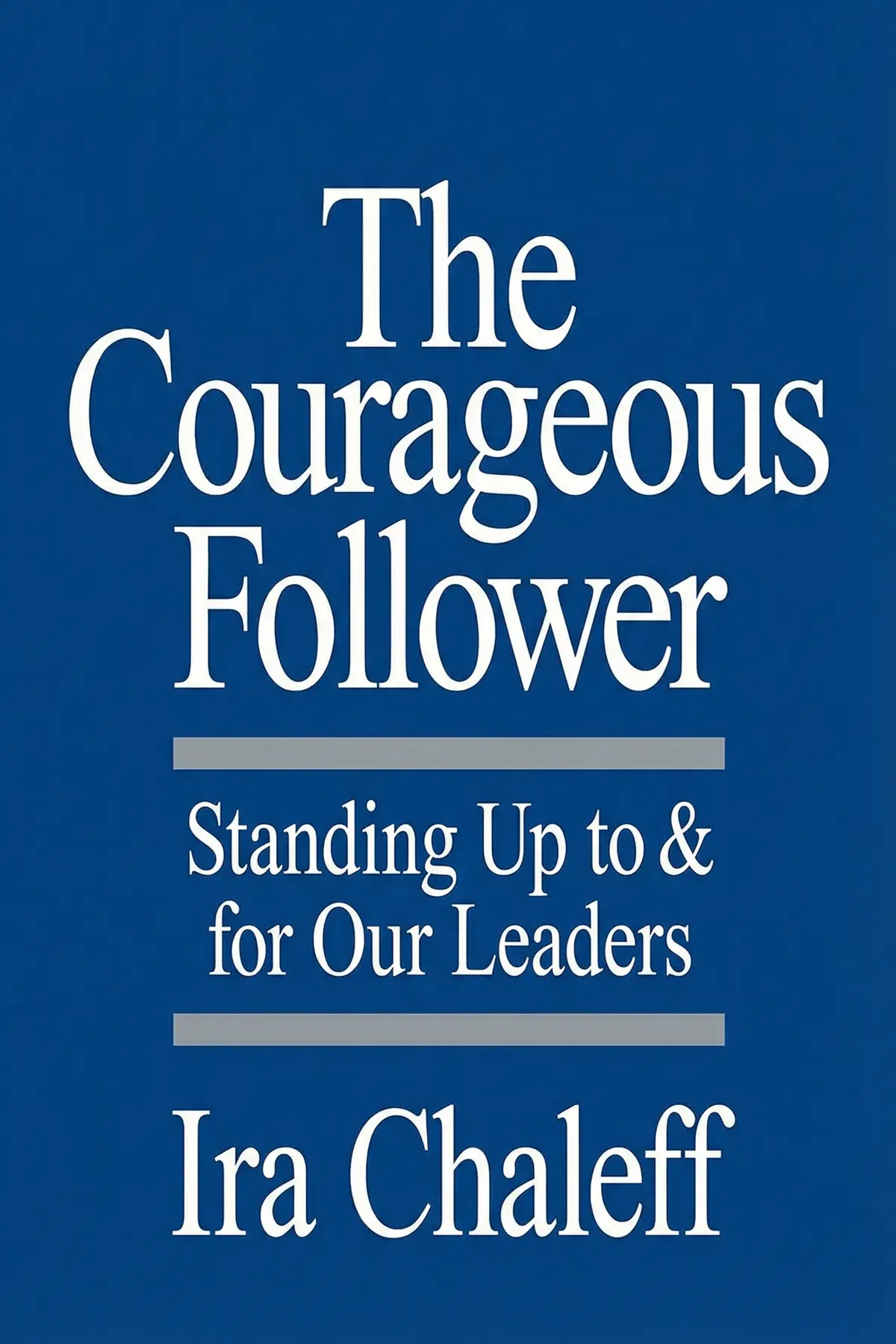
Table of Content
1. Introduction
1 min 46 sec
In many modern workplaces, there is a pervasive and often silent frustration. You might recognize the feeling: you are part of a team, you see the goals, and you might even see the mistakes being made at the top, yet you feel like your only job is to nod and execute. There is a traditional, somewhat outdated belief that leaders provide the vision and followers provide the labor. This dynamic often leaves people feeling like mere cogs in a massive machine, where their individual voices are muffled by the layers of corporate hierarchy. It creates a culture where brilliant ideas are held back and critical warnings are silenced by the fear of overstepping some invisible line.
But what if that entire framework is wrong? What if the success of a leader—and the organization as a whole—is actually dependent on the bravery of those who follow? Ira Chaleff introduces a revolutionary concept known as courageous followership. This is not about being a ‘yes-person’ or a mindless assistant. Instead, it is about a radical shift in how we perceive our influence and our duty. It is a nuanced dance that balances loyalty with dissent and service with accountability.
In this exploration, we will dive into the five essential dimensions that define this approach. We will look at how taking ownership of your own growth, serving the leader’s vision, having the guts to challenge bad decisions, facilitating organizational change, and standing up for moral principles can transform a stagnant workplace into a thriving one. By the end of this journey, you will see how you can move from being someone who is merely influenced to someone who is a pivotal influencer in their own right. This is about finding the courage to stand up both for and to the people in charge, creating a partnership that benefits everyone involved.
2. Taking Internal Ownership
2 min 21 sec
Discover why the first step to becoming a powerful partner is looking inward and managing your own professional growth with relentless initiative.
3. The Strategic Art of Service
2 min 08 sec
Explore how supporting a leader’s vision involves protecting their time and energy through mindful, selective assistance.
4. The Necessity of Constructive Dissent
2 min 16 sec
Understand why the most loyal thing you can do for a leader is to respectfully tell them when they are making a mistake.
5. Driving Transformation from Below
2 min 09 sec
Learn how to bridge the gap between an organization’s current reality and its ideal values by fostering growth and positive reinforcement.
6. The Courage to Take Moral Action
2 min 17 sec
Find out how to handle the ultimate test of followership: knowing when to withdraw support or expose wrongdoing for the greater good.
7. Conclusion
1 min 30 sec
The concept of courageous followership flips the traditional script of workplace dynamics on its head. It teaches us that being a follower is not a role defined by passivity or submission, but rather by active engagement and a commitment to excellence. We have explored the five dimensions that make this possible: the internal drive of assuming responsibility, the strategic support found in service, the bravery required to challenge authority, the vision needed to foster transformation, and the unyielding integrity of taking moral action.
When followers step into this power, they do more than just help their bosses; they save their organizations from the dangers of groupthink, stagnation, and ethical decay. They create a partnership where the leader and the follower are working toward the same goal with mutual respect. The throughline of this entire approach is that you are never powerless. Regardless of your position on the organizational chart, you have the ability to influence the culture and the direction of your work.
As you move forward in your career, remember that your voice is a tool for progress. By balancing your support with your willingness to speak up, you become an invaluable asset. You move from being a passenger to a co-pilot. This summary serves as a reminder that the health of our organizations—and our society—depends on people who have the courage to follow with their eyes wide open and their values intact. Take these principles into your daily interactions and watch how your professional world begins to change for the better.
About this book
What is this book about?
For decades, the spotlight of organizational success has been fixed firmly on the leader. We are told that great things happen because of great bosses. However, this perspective ignores half of the equation: the people being led. This summary explores the groundbreaking concept that followership is not a passive state but a courageous discipline. It shifts the narrative away from the idea of the follower as a subordinate and toward the idea of the follower as a vital, active partner in a shared mission. The promise here is a complete overhaul of how you view your role at work. By embracing five specific dimensions—responsibility, service, challenge, transformation, and moral action—you can improve your organization’s health and your own professional satisfaction. You will learn how to speak truth to power, how to protect your leader’s time and energy, and when it is necessary to take a stand for your own values. It is a roadmap for anyone who wants to contribute more deeply without losing their sense of self in the hierarchy.
Book Information
About the Author
Ira Chaleff
Ira Chaleff is a prominent author, speaker, and recognized thought leader in the specialized field of leadership dynamics. He focuses specifically on the intricate interactions between those in power and those who support them. Chaleff has written extensively on this topic, with his bibliography including notable works such as Intelligent Disobedience and The Art of Followership, establishing him as a leading voice in rethinking workplace hierarchies.
Ratings & Reviews
Ratings at a glance
What people think
Listeners find the text accessible and value the actionable guidance it provides. It is widely regarded as a foundational piece on the dynamics of followership, with one listener noting it helps improve perspective at work almost immediately. Nevertheless, the sections regarding leadership draw varied opinions from listeners.
Top reviews
Charles
Every professional should have a copy of this on their desk, period. I’ve always struggled with the idea that leadership is the only role that matters in a corporate environment. Chaleff completely flips that script by showing how essential a 'courageous follower' is to the health of any organization. The focus on a 'common purpose' rather than just obeying a boss is a refreshing take that shifted my perspective almost immediately. To be fair, some of the lists can get a bit long, but the core message is vital. It’s a seminal work for a reason, and it helped me find my voice in meetings where I previously stayed silent. You’ll stop seeing yourself as a cog and start seeing yourself as a partner.
Show morePim
Wow, I didn't expect a book about being a 'follower' to be this empowering. Every single person with a job should read this, as it should practically be compulsory for new hires during onboarding. Chaleff does a masterful job showing how followers are the ones who keep leaders on a moral path. It’s not just about doing your job; it’s about having the courage to challenge a leader when they deviate from the organization's core values. This isn't just theory—it’s a call to action. I feel much more equipped to handle difficult dynamics at my church and in my professional life now. It really helps you understand the 'why' behind effective teamwork.
Show morePong
The chapter on the courage to leave was exactly what I needed at this stage in my career. Chaleff explains that leaving isn't always a failure; sometimes it's the most courageous thing a follower can do when transformation is no longer possible. I found his references to leaders running 'egregiously amok' particularly poignant and relevant to today’s landscape. He really drives home the point that followers enable leaders, for better or worse. It’s a deep dive into the ethics of the workplace that most MBAs probably skip over. It might not be the most fluidly readable book due to the lists, but the 5 courages are concepts I won't soon forget. Highly recommended for any serious professional.
Show moreSiraporn
Finally got around to finishing Chaleff's guide, and I have some thoughts on the structure. The first half is absolutely stellar, particularly the sections on the courage to assume responsibility and the courage to serve. However, I found that my interest waned significantly in the latter chapters. It becomes quite wordy and repetitive, often offering endless lists of questions that feel a bit ponderous. It's almost as if you'd need to carry the book around as a flowchart just to have a normal conversation with your manager. That being said, the action steps are practical enough to provide some immediate value. It's a solid four-star read if you're willing to skim the repetitive parts toward the end.
Show moreRungrat
How often do we focus only on the 'leader' part of the equation while ignoring the people who actually get the work done? This book is a game-changer because it validates the follower as a crucial partner in the mission. I really liked the idea of leading from whatever position you happen to hold. Whether you are supporting a superior or trying to influence your peers from your current spot, you can take a leadership role through courageous action. The truth is, many of us are followers most of the time, and learning how to do that with integrity is a skill. It’s not about being a 'yes-man'; it’s about the common good. Practical and helpful.
Show moreBun
After hearing several mentors mention Chaleff, I decided to see if the hype was real. I've been looking for ways to understand my role as an assistant better, and this delivered some very tangible results. The sample questions and action steps made this more than just an intellectual exercise for me. I appreciated that it wasn't just about 'how to follow,' but how to improve the entire organization from the bottom up. While the writing style is a bit dry and academic, the practical utility of the advice is hard to ignore. It definitely improved my perspective at work almost immediately. It’s a reader-friendly guide that avoids the usual fluff found in management books.
Show moreTakeshi
I'll admit I was hooked by the first four chapters, especially the part about assuming responsibility for the common goal. The author respects the follower role in a way few other business writers do, which is incredibly refreshing. Unfortunately, the second half of the book is where things start to drag. It gets a bit list-heavy, and the suggested scripts for dialogue began to feel robotic after a while. I kept asking myself: would a real person actually say these words to their boss in a high-stakes meeting? Still, the foundational ideas are solid enough to make it a worthwhile read for those in mid-level management. Just be prepared for some dry sections as you get deeper.
Show moreMats
Look, some sections of this really felt like a manual on how to be a sycophant if you don't read between the lines. The real meat of the book—the parts that make the approach feel balanced—don't actually show up until much later in the text. I worried initially that it was just about 'sucking up' to a boss, but the section on the courage to challenge eventually changed my mind. My biggest gripe is the lack of historical examples to back up the more theoretical claims. It’s a bit too 'ivory tower' for my tastes, though I can see why it’s considered a classic in the field. It’s a decent resource but feels slightly incomplete.
Show morePruet
To be fair, the concept of 'followership' is fascinating, but this particular execution felt incredibly outdated to me. I was hoping for something with more depth, yet I found a series of generic statements that affirm positive behavior without offering a path for those who actually need to change. There is an extreme lack of realistic case studies, which makes the content feel depersonalized and stiff. I'm not convinced that these categories are what we need to improve corporate culture. It feels like a relic of a different era of management that doesn't quite translate to today's dynamic, flat organizations. You are better off seeking wisdom from more modern leadership resources that use real-world data.
Show moreHassan
Does anyone else feel like this is just a series of common-sense statements wrapped in academic-sounding labels? I struggled to find any strong theory or actual case studies throughout the text to ground the author's ideas. Frankly, the advice is so vague that it could apply to almost any situation, which essentially means it means very little in practice. Chaleff spends a lot of time defining categories like 'Implementer' or 'Partner,' but these labels felt more like badges than actual tools for personal growth. Without real-world examples to prove the suggestions work, it all feels a bit too theoretical and idealized for a modern workplace. Not really what I was looking for.
Show moreReaders also enjoyed

7 Powers: The Foundations of Business Strategy
Hamilton Helmer

A Bigger Prize: How We Can Do Better Than the Competition
Margaret Heffernan

A Year with Peter Drucker: 52 Weeks of Coaching for Leadership Effectiveness
Joseph A. Maciariello


AUDIO SUMMARY AVAILABLE
Listen to The Courageous Follower in 15 minutes
Get the key ideas from The Courageous Follower by Ira Chaleff, plus 5,000+ more titles in English and Thai.
- 5,000+ titles
- Listen as much as you want
- 7-day free trial
- Cancel anytime







