
16 min 15 sec
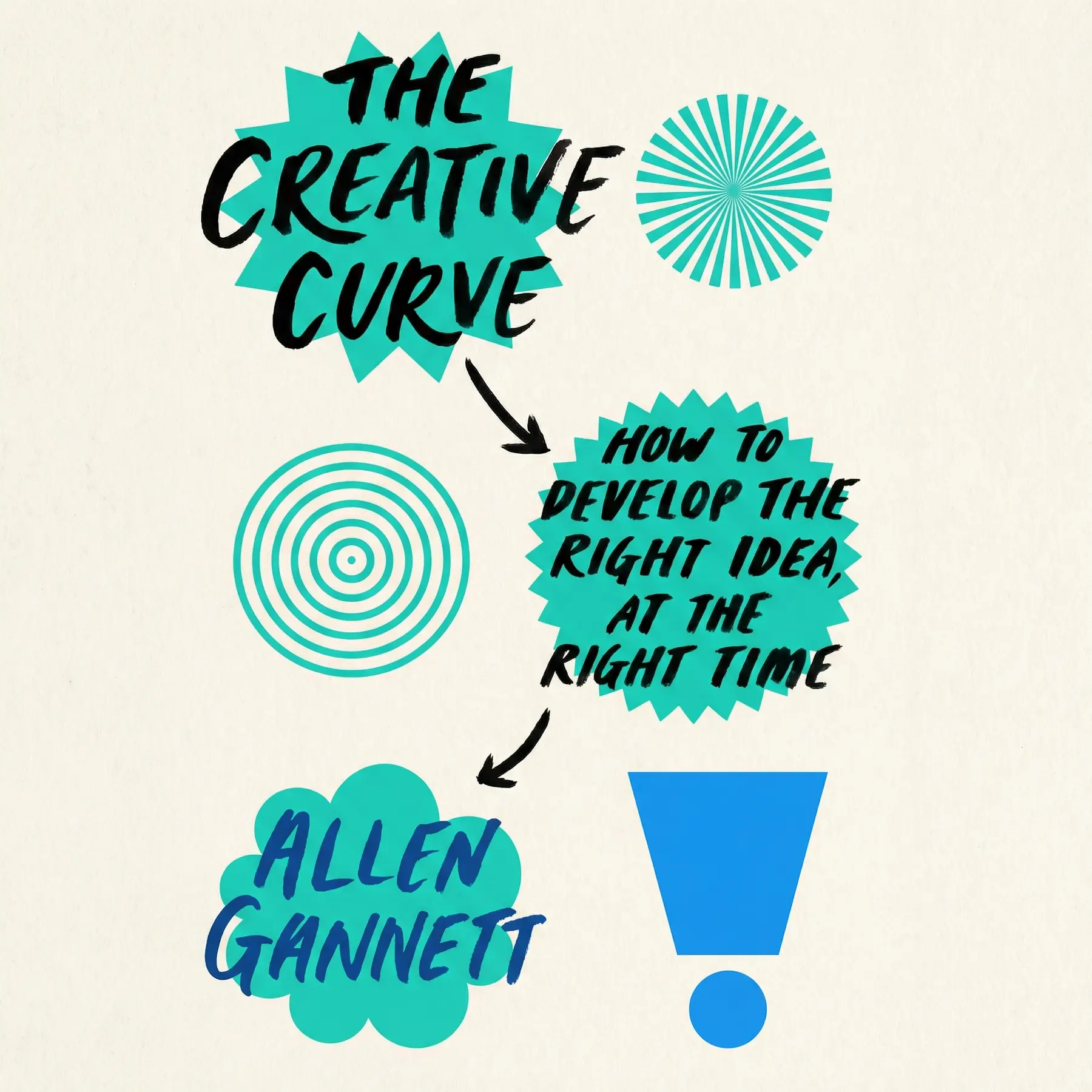
The Creative Curve: How to Develop the Right Idea at the Right Time
The Creative Curve explores the science behind commercial success and artistic innovation, proving that creativity isn't a mysterious gift but a repeatable process based on the balance of novelty and familiarity.
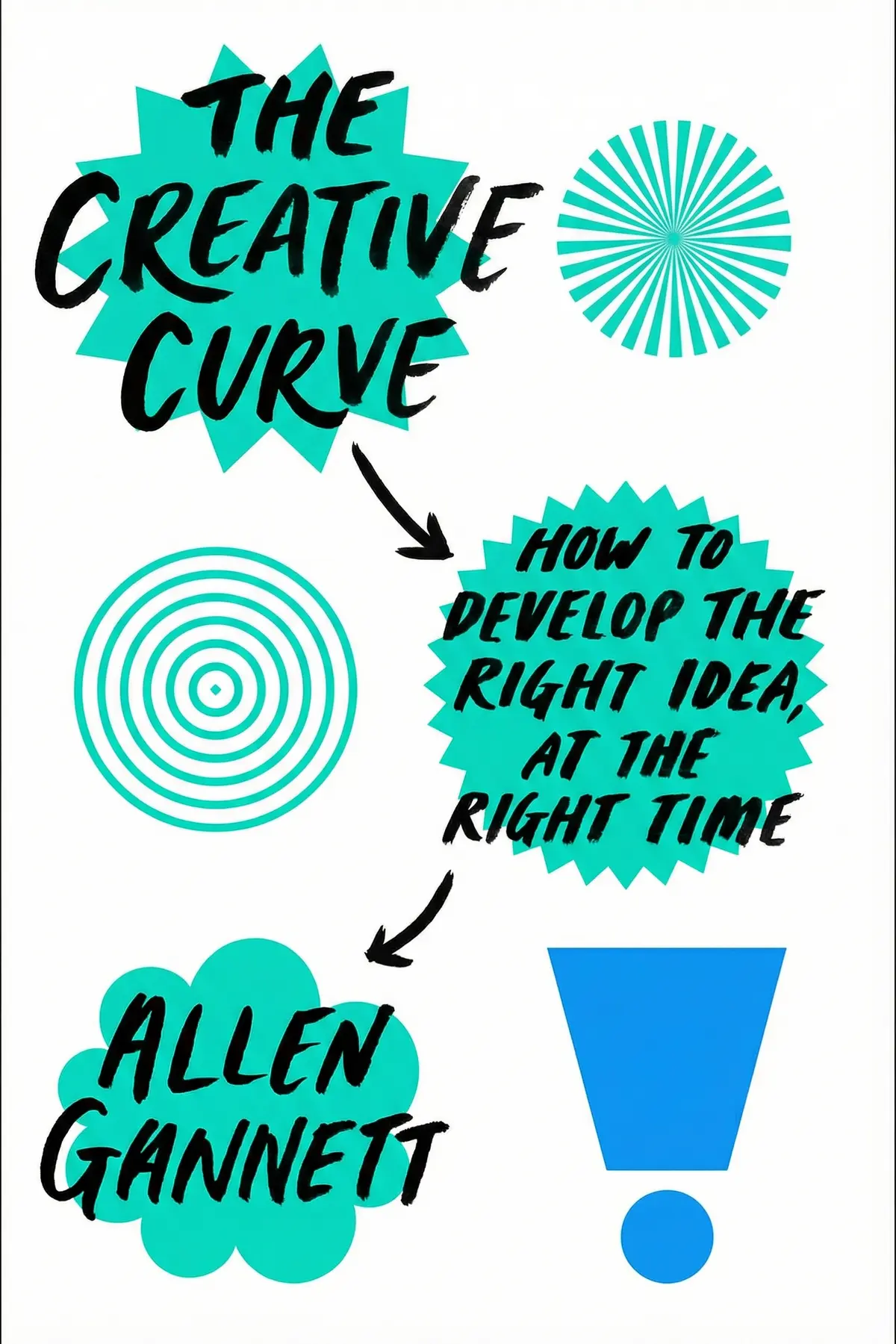
Table of Content
1. Introduction
1 min 32 sec
We often think of creativity as a mysterious, ethereal force. We picture the lone artist in a candlelit room, waiting for a bolt of lightning to strike, or the brilliant scientist having a sudden ‘eureka’ moment in the bath. This narrative suggests that creativity is an innate gift—something you’re either born with or you’re not. But what if that entire story is a myth? What if the most successful creative endeavors in history weren’t the result of magic, but of a very specific, repeatable process?
In the following pages, we are going to explore the mechanics of how great ideas are actually born. We’ll look at the work of Allen Gannett, who spent years researching the science behind why some things become hits and others fall flat. He discovered that there is a predictable pattern to what people find appealing. This pattern is defined by the tension between our love for what is familiar and our craving for what is new. This is what Gannett calls the Creative Curve.
Throughout this discussion, we’ll debunk the legends of ‘sudden genius’ that have held many of us back from pursuing our own creative dreams. We will move away from the idea that you need a special muse and instead look at the four practical laws that can help anyone—whether you’re a marketer, an artist, or an entrepreneur—harness the power of the curve. By the end, you’ll see that creativity isn’t a superpower reserved for the elite; it’s a skill that can be developed, managed, and mastered through intentional practice and a deep understanding of human psychology.
2. The Inspiration Myth
2 min 18 sec
Explore why the legendary stories of sudden creative genius are mostly fiction and how the ‘aha’ moment is actually the result of a long, invisible process of hard work.
3. The Mechanics of the Creative Curve
2 min 18 sec
Understand the delicate psychological balance between the comfort of the known and the excitement of the unknown that determines what becomes a cultural hit.
4. The Law of Consumption
2 min 02 sec
Discover the 20% rule and how immersing yourself in your field allows your subconscious to recognize the patterns necessary for innovation.
5. The Law of Imitation
2 min 05 sec
Learn why copying the masters is a vital step in developing your own voice and how structure serves as a foundation for true originality.
6. Building Your Creative Clique
2 min 04 sec
Uncover the four essential roles you need in your social circle to support, challenge, and promote your creative journey.
7. The Law of Iteration
2 min 18 sec
See how the most successful creators use data and feedback to refine their ideas, moving from raw concepts to polished masterpieces.
8. Conclusion
1 min 38 sec
As we’ve seen, the path to creativity isn’t a secret path accessible only to a chosen few. It is a systematic process governed by the Creative Curve. By understanding the evolutionary tension between our desire for the familiar and our craving for the new, we can begin to engineer ideas that truly resonate with people. We’ve debunked the myth of the lone genius and replaced it with a practical framework of consumption, imitation, community, and iteration.
The throughline of this journey is that creativity is a skill. It requires the discipline to consume widely, the humility to learn from the structures of others, the social intelligence to build a supportive clique, and the persistence to refine your work based on feedback. Whether you are looking to launch a new business, write a book, or simply bring more innovation to your daily job, the laws of the creative curve provide a roadmap.
Don’t wait for a flash of inspiration to strike. Instead, start building your foundation today. Spend twenty percent of your time immersing yourself in your field. Look for the successful patterns that already exist. Reach out to potential mentors and peers who can challenge you. And most importantly, don’t be afraid to put your ‘imperfect’ work out there and use the feedback to make it better. Creativity isn’t magic; it’s a choice. And by choosing to follow the curve, you are choosing to unlock a level of potential you might have once thought was impossible. The world is waiting for your next big idea—now you have the tools to make it a reality.
About this book
What is this book about?
The Creative Curve challenges the long-standing belief that creativity belongs only to a rare few. It suggests that the legendary 'aha' moments we associate with geniuses are actually the result of a predictable, systemic process rather than random lightning strikes of inspiration. Allen Gannett introduces the concept of the 'Creative Curve,' a bell-shaped relationship between the familiarity of an idea and the public's interest in it. By understanding the peak of this curve—the point where something is new enough to be exciting but familiar enough to be comfortable—anyone can learn to produce hits. The book provides a four-step framework involving consumption, imitation, community building, and data-driven iteration to help readers master their own creative potential and achieve mainstream success.
Book Information
About the Author
Allen Gannett
Allen Gannett is the CEO and founder of TrackMaven, a marketing analytics service that has worked with companies such as Home Depot, Microsoft and Honda. Garnett has been featured on Forbes magazine’s “30 Under 30” list of top young entrepreneurs and leaders, and has also contributed to FastCompany.com.
Ratings & Reviews
Ratings at a glance
What people think
Listeners find this title to be an immediate classic that offers a captivating examination of the creative journey through scientific data and discussions with leading innovators. This well-documented book is filled with information, serving as a helpful manual with actionable insights for the business world. Listeners value the immersive narrative approach, with one listener highlighting how the writer blends unforgettable anecdotes with proof regarding creativity, and its capacity to inspire people to achieve their goals.
Top reviews
Ella
Ever wonder why certain products just 'pop' while others fall flat? Gannett argues that success isn't about some 'aha!' moment from the gods but rather a calculated balance of the new and the known. It’s about timing. If you’re too early, people don't get it; if you’re too late, you’re just a cliché. The concept of the 'Creative Curve'—that sweet spot where novelty meets familiarity—is a total paradigm shift for anyone in a creative field. I especially loved the deep dive into the 20% principle. Spending a fifth of your time just consuming media in your niche sounds simple, yet it’s the one thing most of us skip. This isn't just another 'believe in yourself' book. It’s a densely researched, vivid narrative style guide that provides a blueprint for making things people actually want. Highly recommended for entrepreneurs who need to understand the science of taste.
Show moreNongnuch
Finally got around to finishing this, and the 'Law of Iteration' chapter was a total game-changer for my development process. Look, we all want to believe our first draft will be a masterpiece. Gannett proves that the most successful hits are usually the result of rigorous, data-backed tweaking. The breakdown of how big brands use 'conceptualization' and 'reduction' to filter ideas was eye-opening. It takes the ego out of the equation. The writing style is punchy and accessible, moving quickly between scientific research and pop culture history. I’ve already started applying the 20% consumption rule to my daily routine, and I can already feel my 'pattern recognition' improving. It's refreshing to read a book that treats creativity as a skill you can actually engineer. If you’re tired of vague 'follow your passion' advice, buy this immediately. It’s a practical roadmap for the modern creator.
Show moreElise
Wow, this really challenges every excuse I’ve ever made about not being 'born' with the creative gene. The book is packed with fascinating look at the creative process, using neuroscience to explain why we like what we like. I found the 'mere exposure effect' section particularly interesting. It explains so much about why certain trends take off and why others feel too 'weird' for the general public. It’s all about finding that bell curve. The stories are memorable and serve as great anchors for the more technical concepts. I’m especially fond of the advice on finding a 'conflicting collaborator'—someone to challenge your assumptions. It’s a motivating read that makes the daunting task of 'being creative' feel achievable through systems and persistence. This is an essential guide for anyone looking to turn their hobby into something with actual commercial appeal.
Show moreSiraporn
Identifying the four types of people you need in a creative network was the most practical part of the entire book for me. I’ve always tried to do everything myself, but the 'Creative Communities' chapter helped me see why I’ve been hitting a plateau. You need that 'prominent promoter' to open doors and a 'master teacher' to fix your technical flaws. The author weaves these lessons into stories about high-achievers that never feel dry or academic. Truth is, most 'creative' books are just fluff, but this one provides a legitimate framework. It’s well-researched and provides actual implications for business leaders. I’ve recommended it to my entire team because it changes how you look at brainstorming and product-market fit. It’s a rare book that manages to be both inspirational and grounded in hard data. Absolutely brilliant.
Show moreNarong
After hearing several podcast interviews with Allen Gannett, I was eager to see if the book lived up to the hype. It mostly does. The most valuable takeaway for me was Law III: Creative Communities. The idea that you need four specific types of people—a master teacher, a conflicting collaborator, a modern muse, and a prominent promoter—is such a practical way to audit your professional circle. It turns out that creativity is a team sport, not a solo mission in a vacuum. To be fair, some of the neuroscience explanations felt a bit simplified, but the case studies, particularly the Ben & Jerry’s ice cream story, kept the momentum going. It’s a well-structured argument against the 'inspiration theory' of genius. I finished it feeling motivated to stop waiting for a flash of lightning and start building a better system for my ideas.
Show moreTanawan
The core thesis here—that creativity is a science rather than a mystical gift—is quite compelling. Gannett does a fantastic job of dismantling the 'lone genius' myth that plagues our culture. Instead of focusing on raw talent, he emphasizes the 'Franklin Method' and the importance of imitation as a precursor to innovation. I appreciated the data-driven approach to timing. Success is often just being 'familiar enough' to be comfortable but 'novel enough' to be exciting. My only gripe is that the book can be a bit repetitive in its middle chapters. The author drives the same points home multiple times. However, the actionable advice on building 'perceptual fluency' makes it a worthwhile read for marketers. It’s an engrossing deep-dive that treats creativity with the analytical rigor it deserves. Definitely an enduring staple for my office bookshelf.
Show moreBun
Picked this up expecting another fluffy self-help book, but I was pleasantly surprised by the analytical approach to timing. The 'Law of Imitation' was a standout section for me. It’s a bold move to tell people they should start by copying successful structures, but the 'Franklin Method' makes total sense. It’s about learning the rules before you break them. The book is light on its feet, moving fast enough that I finished it in two sittings. While some of the 'Law of Consumption' advice felt a bit like common sense, the overarching framework of the curve is something I’ll definitely use when launching my next project. It’s a solid 4-star read that offers a few genuine 'aha' moments. Perfect for anyone who feels stuck in their process and needs a nudge to look at the data.
Show moreWit
To be fair, Gannett does a great job of explaining why 'flashes of genius' are actually just the result of a lot of hidden work. I loved the emphasis on 'perceptual fluency'—the idea that our brains crave what is familiar because it’s easier to process. It explains why so many 'original' ideas fail; they’re just too taxing for the audience. The book is well-researched and provides a much-needed reality check for anyone waiting for the muse to strike. I did find the sections on 'iteration' a bit dry compared to the earlier chapters on community and consumption, but the Ben & Jerry's example at the end brought it back home. It's an insightful guide with practical implications for anyone in marketing or content creation. It might not be 'earth-shattering' if you're a veteran, but for most people, it’s a very useful manual for the creative process.
Show moreJom
Frankly, I found this to be mostly common sense wrapped in fancy marketing speak. The book meanders through incredibly broad advice like 'practice intentionally' and 'find a mentor,' which felt redundant for anyone who has read more than one business book. Do we really need another retelling of how Paul McCartney wrote 'Yesterday' or how J.K. Rowling struggled before Harry Potter? It felt like a collection of anecdotes I’ve heard a dozen times on various podcasts. While the 'Creative Curve' graph is a neat visual, the rest of the 200+ pages felt like filler. I was hoping for tactical, granular steps, but instead, I got a surface-level overview of pattern recognition. If you’re brand new to the concept of deliberate practice, you might find a nugget here. Otherwise, you can probably get the same info from a ten-minute summary online. Not worth the time.
Show morePenelope
Not what I expected from the glowing reviews, and the audiobook narrator’s weirdly nasal tone made it a struggle to get through. Why the author decided to read it himself is beyond me; the emphasis was all over the place. Content-wise, it felt like an over-extended blog post. The 'Creative Curve' idea is decent, but it’s stretched thin across way too many pages. I felt like I was being lectured on things anyone with a basic understanding of social media already knows. For instance, explaining what a meme is felt incredibly condescending. The 'Yesterday' anecdote is a cliché in itself at this point. There are some okay case studies near the end, but the signal-to-noise ratio is just too low for my liking. If you want to learn about deliberate practice, just read Anders Ericsson’s 'Peak' instead. This felt like a 'lite' version of better books.
Show moreReaders also enjoyed

AUDIO SUMMARY AVAILABLE
Listen to The Creative Curve in 15 minutes
Get the key ideas from The Creative Curve by Allen Gannett, plus 5,000+ more titles in English and Thai.
- 5,000+ titles
- Listen as much as you want
- 7-day free trial
- Cancel anytime







