
17 min 53 sec
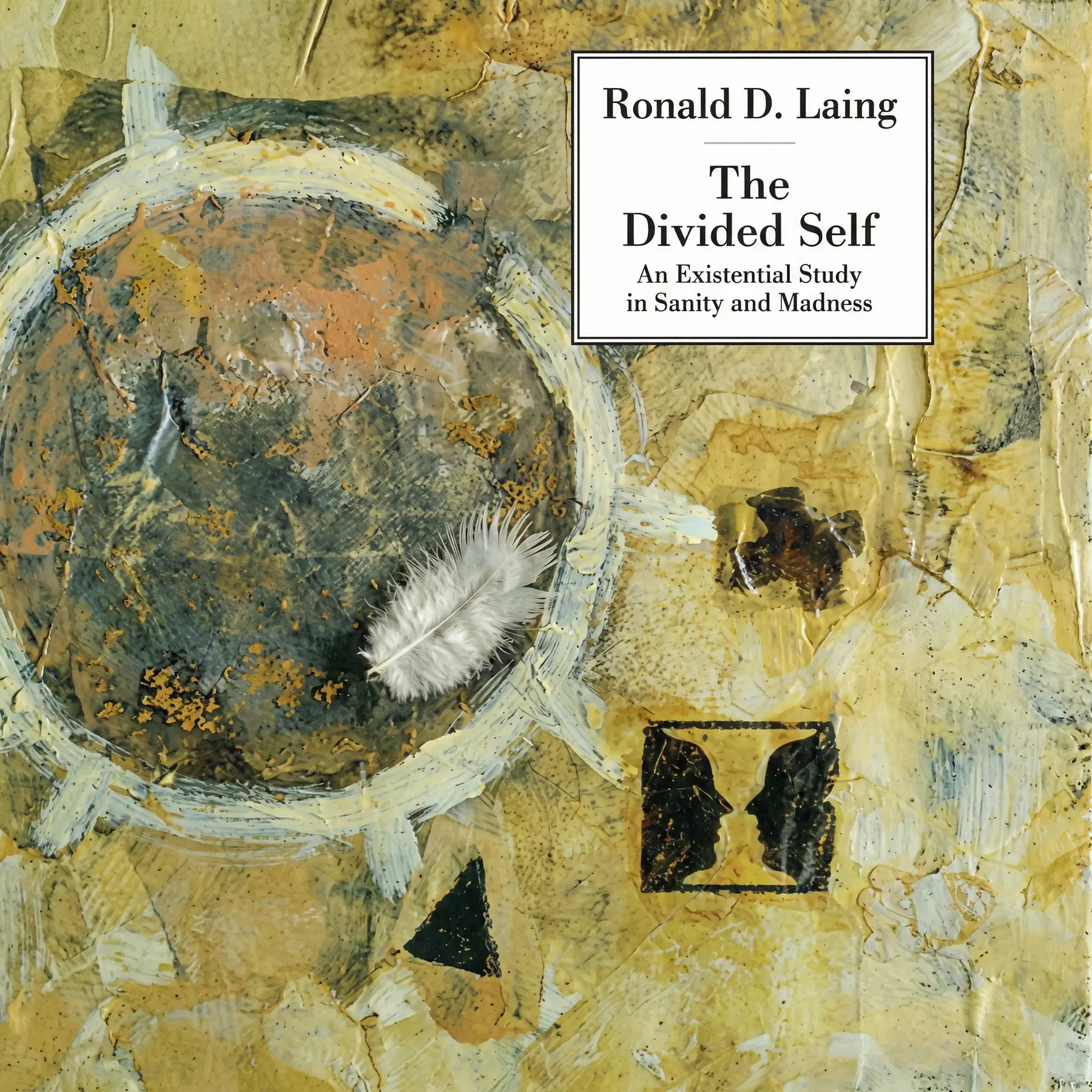
The Divided Self: An Existential Study in Sanity and Madness
A revolutionary exploration of the schizophrenic mind, Ronald D. Laing's classic challenges the boundary between sanity and madness, presenting mental illness as a logical defense against a world that threatens the self.
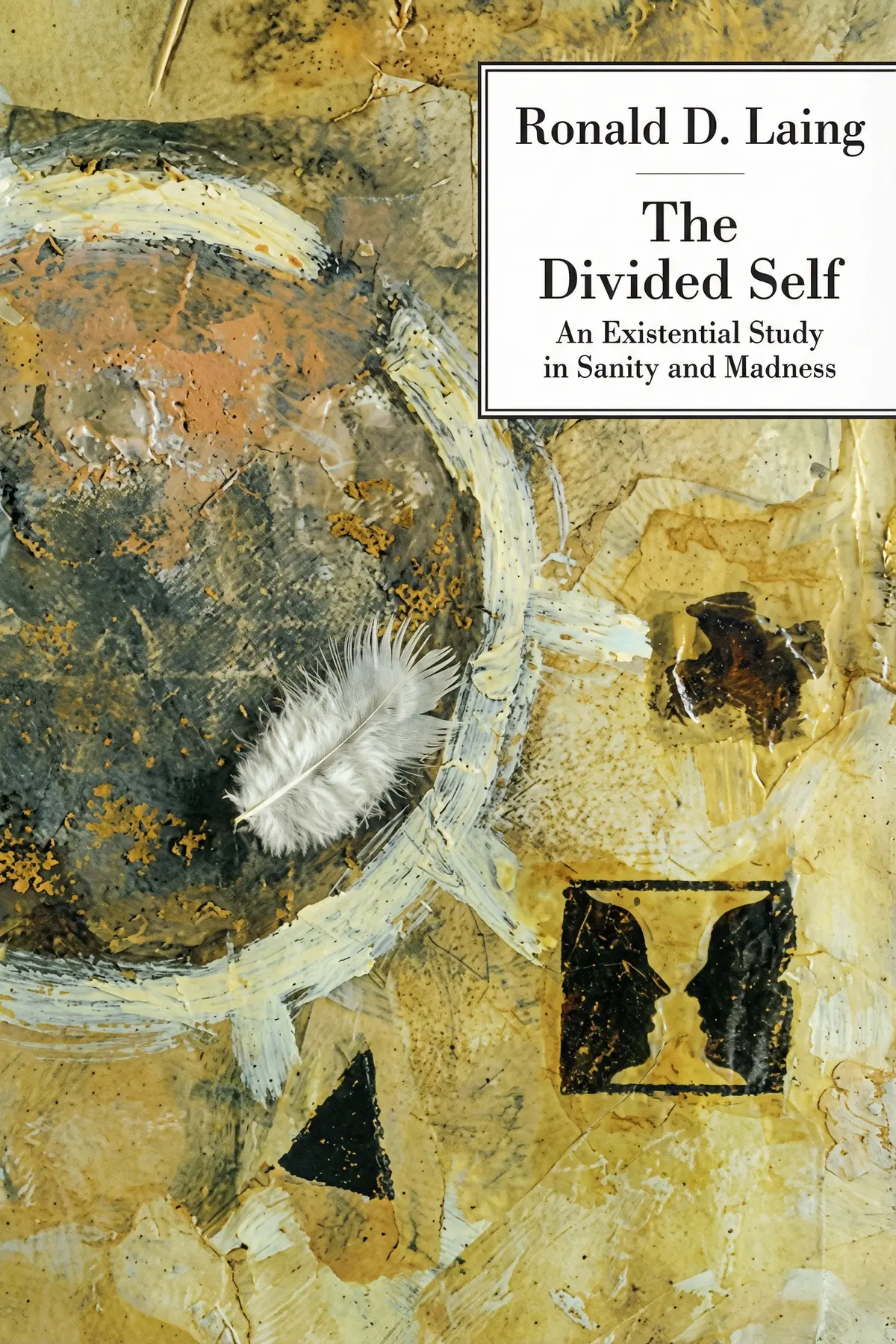
Table of Content
1. Introduction
2 min 03 sec
Imagine for a moment that you are a spectator in your own life. When you reach out to shake someone’s hand, you aren’t actually feeling the connection; instead, you are watching a biological machine—a mask you’ve created—perform the gesture. To everyone else, you look perfectly normal, perhaps even exceptionally polite. But inside, you are miles away, hidden behind a thick, invisible wall, terrified that if anyone truly ‘sees’ you, your entire existence might shatter like glass.
This haunting experience of internal fragmentation is the core of Ronald D. Laing’s seminal work, The Divided Self. First published in 1960, this book didn’t just study mental illness; it revolutionized our understanding of the human soul. At a time when psychiatry often treated patients as broken machines to be fixed with shocks or pills, Laing dared to suggest that madness has a meaning. He proposed that the ‘insane’ are often just people who have been pushed into an impossible corner by the world around them, and their symptoms are actually survival mechanisms.
In this exploration, we are going to dive deep into the existential structures of sanity. We will look at how a healthy sense of self is built in childhood and what happens when that foundation is never laid. We will explore the concept of ‘ontological insecurity’—the feeling that you aren’t quite real or solid—and how this leads to the creation of a ‘false self.’
By the end of this summary, the goal isn’t just to understand a clinical diagnosis. It is to see the human logic behind the most extreme states of mind. We will see how the struggle to remain a person in a world that feels hostile can lead a human being to retreat so far inward that they lose the ability to find their way back. This is a journey into the architecture of the mind, where the throughline is a simple, profound question: What does it mean to truly exist?
2. The Development of a Solid Identity
2 min 23 sec
Discover how the mirror of parental interaction shapes our earliest sense of being real and distinct in a complex world.
3. The Red Flag of the Perfect Child
2 min 19 sec
Explore why extreme obedience and the inability to lie in childhood might signal a hollowed-out sense of self.
4. The Paradox of Ontological Insecurity
2 min 29 sec
Examine the deep-seated fear of being ‘engulfed’ or ‘petrified’ by others and how it drives a person into isolation.
5. Building the Citadel of the False Self
2 min 12 sec
Understand the split between the compliant outer mask and the hidden inner reality that characterizes a divided identity.
6. Disembodiment and the Ghostly Experience
2 min 20 sec
Explore the strange sensation of being detached from one’s own body and why physical harm can sometimes feel irrelevant.
7. The Descent into Schizophrenic Reality
2 min 22 sec
Follow the final stage of fragmentation where the inner self loses its grip on external truth and delusions take hold.
8. Conclusion
1 min 45 sec
Ronald D. Laing’s The Divided Self remains a haunting and essential text because it asks us to look past the labels of clinical psychiatry and see the person beneath the diagnosis. The throughline of this work is clear: our sense of sanity is inextricably linked to our sense of being ‘real’ in the eyes of others. When that recognition is denied, or when the world becomes a place of constant existential threat, the mind does the only thing it can to survive—it retreats.
We’ve seen how the foundations of a healthy self are built on the simple, consistent reflections of our early caregivers. We’ve explored how the ‘perfect’ child can be a hollow mask, and how the fear of being swallowed by others leads to the construction of a hidden, inner citadel. We’ve looked at the tragedy of disembodiment, where a person becomes a ghost in their own body, and finally, we’ve seen how total isolation leads to the loss of reality we call madness.
The most important takeaway is that the ‘mad’ are not a different species. The mechanisms they use—the masks we wear, the parts of ourselves we hide, the ways we distance ourselves from pain—are things we all do to some degree. The schizophrenic has simply been forced to take these common human defenses to their absolute, breaking-point limit.
As you move forward, perhaps the most actionable insight from Laing is the value of genuine, ‘human-to-human’ recognition. To see someone, to truly acknowledge their distinct reality without trying to change or ‘petrify’ them, is the most profound gift we can offer. In a world that can often feel fragmented and insane, the bridge back to sanity is built through empathy and the courage to meet others exactly where they are.
About this book
What is this book about?
The Divided Self offers a profound and compassionate look at the internal world of individuals living with schizophrenia and other profound mental disturbances. Rather than viewing madness as a biological malfunction, Ronald D. Laing explores it through an existential lens. He argues that what we traditionally label as 'insanity' is often a desperate, rational strategy for survival in a world where the individual feels fundamentally threatened. At the heart of the book is the concept of a fractured identity. Laing details the process by which a person splits their personality into a 'false self' that performs for the outside world and a 'true self' that retreats into a secret, inner citadel. This summary explores the development of identity from infancy, the crippling fear of being 'engulfed' by others, and the terrifying sensation of being a ghost within one's own body. It promises to transform how you view the human psyche and the thin line that separates the sane from the mad.
Book Information
About the Author
Ronald D. Laing
Ronald D. Laing (1927-1989) was one of the world’s best-known modern psychiatrists, as well as a major proponent of the anti-psychiatry movement. He wrote numerous books during his lifetime, ranging from a collection of sonnets to sociological and psychological texts.
Ratings & Reviews
Ratings at a glance
What people think
Listeners consider the work entertaining and value its clinical depth, with one listener labeling it a seminal work in psychology. At the same time, the necessary expertise level gets varied reviews, as some listeners point out that the writing is rather technical.
Top reviews
William
Laing manages to do something rare here: he makes the 'madness' of schizophrenia feel humanly intelligible. Instead of looking at the patient as a broken machine, he treats the psychosis as a logical, albeit desperate, defense mechanism against a world that feels engulfing. This book is a humanist tract that bridges the gap between psychotherapy and existentialism beautifully. I found the sections on the 'false self' particularly eye-opening. Personally, I think every mental health professional needs to sit with this text. It challenges the standard, uncompassionate diagnoses that were so prevalent in the sixties and unfortunately still linger today. It’s an entertaining read in a dark way, mainly because Laing’s empathy for his patients is so palpable. He really listens to them. That shouldn't be revolutionary, but in the context of clinical history, it absolutely is. A masterpiece of psychological insight.
Show moreKet
Wow. This book completely reconfigured how I view the 'sane' world versus the 'insane' one. Laing argues that schizophrenia is often a response to an impossible environment, like a 'double bind' created by narcissistic parents. It makes so much sense! We all create a false self to navigate society safely, but for some, the split becomes a chasm. The case histories are fascinating and read almost like gothic novellas. This isn't just a dry textbook; it’s an exploration of what it means to be a person. I was struck by the idea that a person can feel 'killed' if someone truly sees their hidden self. It’s heavy, existential stuff. Not gonna lie, it made me want to check myself into a clinic just to process it all. For anyone feeling alienated or existentially dead, this book offers a strange kind of comfort. You aren't crazy; you're just protecting yourself.
Show moreYindee
The depth of clinical penetration in these case studies is simply unmatched in modern psychology textbooks. Laing treats the 'schizophrenic' as a human being with a story, not just a list of symptoms. This book is the ultimate narrative of 'it’s not me that’s crazy—it’s everyone else!' and it’s thoroughly convincing. I was especially gripped by the idea that environment can cause the mind to create a false self for its own survival. It’s a revolutionary way of thinking about mental health. Although it's technical, the prose has a poetic quality that makes the case histories feel alive. It’s a seminal work that bridges the gap between the medical and the spiritual. I can’t recommend this enough to anyone who has ever felt pathologically passive or existentially alienated. It’s a journey into the 'snake pit' that actually offers a way out.
Show moreAmelia
Finally got around to reading this classic and it’s haunting how relevant it still feels today. Laing’s exploration of 'ontological insecurity'—the feeling that one's very existence is under threat—is brilliant. He moves beyond the noisy crowd of clinical terminology to look at the 'person' behind the diagnosis. The way he describes the 'false-self system' as a fortress built on no foundation is a perfect metaphor for the modern ego. It’s a heavy subject, but Laing’s writing makes it feel urgent and vital. I loved how he integrated existentialist philosophy into the psychotherapy. It’s not just a book about madness; it’s a book about the human condition. Even if you aren't interested in abnormal psychology, the insights into how we all hide our 'true self' from the world are worth the price of admission. Truly eye-opening.
Show moreUbolrat
Picked this up after years of hearing it cited in philosophy circles, and it definitely lives up to its reputation as a seminal work in the field. Laing provides a level of clinical penetration into the schizoid mind that you just don't see in modern, insurance-mandated diagnostic manuals. The way he describes 'ontological insecurity' resonated with me on a personal level, even if I’m not the target demographic for his specific case studies. Truth is, it’s a demanding read. You can tell it was written for a mid-century audience that was comfortable with dense, existentialist prose. It lacks the streamlined, easy-to-digest clarity of someone like Oliver Sacks, but the effort is rewarded. If you can push through the more technical jargon, the humanist heart of the book is truly revolutionary. It’s less about 'fixing' a brain and more about understanding a soul in hiding.
Show moreNit
As someone who studied history rather than medicine, I found this to be a fascinating window into the 1960s anti-psychiatry movement. Laing’s focus on the 'inner life' is a breath of fresh air compared to the objective, rat-behavior studies I encountered in college. He captures that sense of being 'ontologically insecure'—that feeling of having no foundation—perfectly. The writing is occasionally spacey and wanders into some very 'sixties' territory, but the clinical penetration is undeniable. It’s a bit technical in the middle chapters, which might turn off casual readers looking for pop-psych. However, the way he frames the patient's struggle as a search for meaning is incredibly moving. It’s a seminal work for a reason. Even if some of his theories haven't stood the professional test of time regarding biological causes, his focus on the human environment is still vital.
Show moreAubrey
Ever wonder if the world is actually what's crazy, and the 'insane' people are just the ones who couldn't lie to themselves anymore? That’s basically Laing’s premise. He views schizophrenia not as a disease, but as a way of living in an unlivable situation. It's a trippy, intense read. The chapters on embodiment and the 'unembodied' self are particularly haunting. You start to see parts of your own personality in his descriptions of the schizoid mind. My only gripe is that it can be a bit 'bargain-basement life' in its gloominess. It’s not a light read. But for a book written in 1960, the empathy it shows for the 'miscreant' patient is ahead of its time. It’s a classic for a reason, even if the pharmacology is non-existent. Definitely worth picking up if you're interested in the darker corners of the mind.
Show moreMoo
Frankly, the chapter on the 'false-self system' should be required reading for anyone in the mental health field. Laing takes a very technical subject and gives it a lot of soul, even if the prose is a little rough around the edges. I'll admit, some of his theories on the causes of schizophrenia feel dated now that we know more about brain chemistry. However, his focus on the patient's subjective reality is something we've lost in modern psychiatry. The book is entertaining, dense, and challenging all at once. It’s a bit of a set-up for his later, even more radical work, but as a starting point, it’s incredible. Just be prepared for some heavy lifting. It’s not a beach read, but if you want to understand the 'Knight of the Rueful Figure' archetypes in your own life, this is the book for you.
Show moreCaleb
To be fair, while the insights into human subjectivity are profound, the prose is incredibly thick and occasionally contradictory. I’ve read my fair share of Jung and Freud, and honestly, they managed to articulate complex theories with much more precision than Laing does here. He criticizes psychiatrists for using depersonalizing language, yet he often falls into that same trap himself, using abstract terms that feel distant from the very people he wants to protect. It’s a bit of a rough read. The book feels very much like a product of its era—trippy, raw, and unrefined. While I appreciate his attempt to normalize the schizoid experience, the lack of modern pharmacological context makes it feel more like a cultural artifact than a working manual for today's psychologists. It’s interesting as a piece of history, but maybe not the life-changing guide I was expecting.
Show moreTantipat
Look, I understand the cultural importance of Laing's work, but the execution here is just messy. He lacks the clarity and focus of a modern writer who understands how to tailor a book for a mass audience. It feels like he’s trying to show off how much he knows rather than trying to help the reader understand the subject. I found it very hard reading in spots, almost to the point of being tedious. The subject of the 'divided self' is fascinating, but the writing is just too unrefined to be truly absorbing. I expected something match the hype, but it just felt dated and a bit pretentious. There are better, clearer books on the schizoid personality out there that don't require you to wade through pages of dense, jargon-filled existentialism. It was interesting in a few places, but mostly just a slog.
Show moreReaders also enjoyed

Acting with Power: Why We Are More Powerful Than We Believe
Deborah Gruenfeld
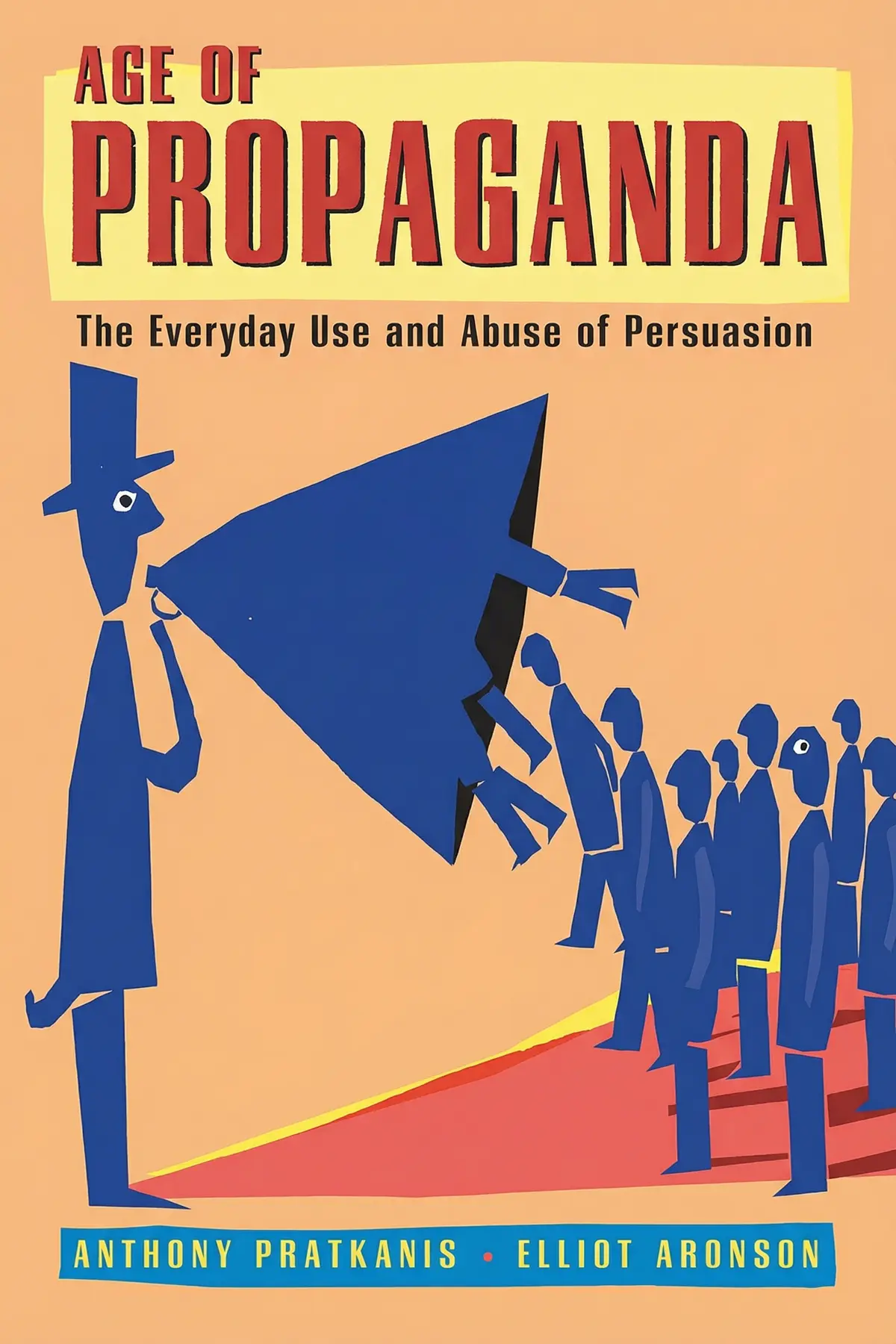
Age of Propaganda: The Everyday Use and Abuse of Persuasion
Anthony Pratkanis
Alcoholics Anonymous
Alcoholics Anonymous World Services
AUDIO SUMMARY AVAILABLE
Listen to The Divided Self in 15 minutes
Get the key ideas from The Divided Self by Ronald D. Laing, plus 5,000+ more titles in English and Thai.
- 5,000+ titles
- Listen as much as you want
- 7-day free trial
- Cancel anytime







