

21 min 01 sec
The Education of a Value Investor: My Transformative Quest for Wealth, Wisdom and Enlightenment
By Guy Spier
Follow Guy Spier’s personal transformation from a high-octane Wall Street shark to a principled value investor. This narrative explores how aligning your financial career with deep-seated personal ethics leads to both wealth and wisdom.
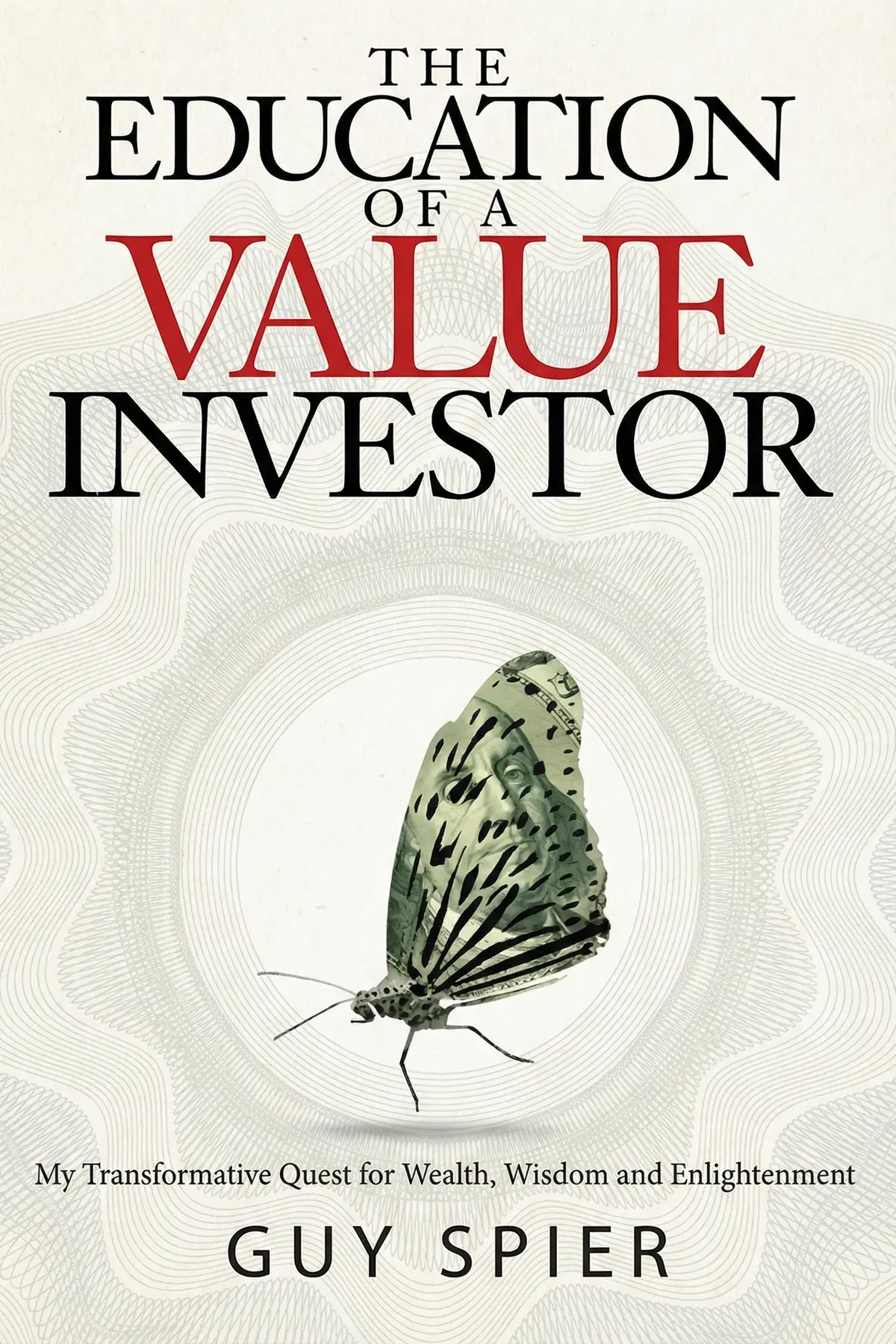
Table of Content
1. Introduction
1 min 42 sec
Imagine paying over six hundred and fifty thousand dollars for a single meal. For most people, that sounds like an absurdity, a symbol of extreme excess. But for Guy Spier, that lunch with Warren Buffett was the smartest investment he ever made. It wasn’t about the food; it was about the transformation of his soul. At the time, Spier was a man who had everything the world told him he should want—an Oxford education and a high-paying job in finance—yet he was profoundly unhappy. He felt like he was losing his moral compass in a world that prioritized short-term gains over human values.
In this exploration of his journey, we are going to look at the process of unlearning. We often think of success as an accumulation of skills, but for Spier, it was about stripping away the ego and the false lessons of elite institutions. He had to move from a place of ruthless competition to a place of quiet, principled value. He had to learn that the most successful investors aren’t necessarily the ones with the fastest computers or the most complex theories, but the ones with the most stable internal environments.
Through this story, we will see how Spier navigated the ethical minefields of Wall Street, how he redesigned his life to protect his decision-making process, and why he eventually chose to leave the noise of New York for the relative silence of Switzerland. This isn’t just a story about money; it’s a story about the search for authenticity. We will discover that the principles of value investing—focusing on long-term worth rather than short-term price—apply just as much to our relationships and our character as they do to our portfolios. By the end, you’ll see how it’s possible to thrive in a competitive field without losing your integrity, and how being a ‘giver’ is actually the most rational path to long-term success.
2. The Pitfalls of Elite Schooling
2 min 06 sec
Traditional high-level education often creates a false sense of security through complex theories. Discover why intellectual arrogance can actually hinder your ability to navigate the unpredictable real world.
3. The Ethical Gravity of Your Environment
2 min 01 sec
Workplace culture can slowly erode your personal morals without you even noticing. Learn how to recognize when a professional environment is turning you into someone you don’t like.
4. Adopting the Value Investing Mindset
1 min 57 sec
Shifting from a short-term gambler to a long-term owner is a radical change. Discover how the philosophy of Warren Buffett provides a framework for both profit and integrity.
5. Mastering Your Internal Compass
1 min 56 sec
External validation is a trap that leads to envy and poor decisions. Learn how to switch from an ‘outer scorecard’ to an ‘inner scorecard’ for lasting satisfaction.
6. The Compound Interest of Gratitude
1 min 57 sec
Networking is often seen as a cold, transactional process. Discover how a simple habit of writing thank-you notes can build a powerful web of authentic connections.
7. Finding Opportunity in the Midst of Panic
1 min 59 sec
Market crashes are tests of character as much as financial strength. Learn why a calm, value-oriented approach allows you to thrive when everyone else is in retreat.
8. Designing Your Environment for Clarity
1 min 58 sec
Our brains are biologically wired for distraction and impulsive decisions. Discover why moving to a quieter city and changing your daily routine is essential for deep thinking.
9. The Power of the Checklist
1 min 51 sec
Financial decisions can trigger a ‘cocaine brain’ response that leads to silly mistakes. Learn how a rigorous checklist can save you from your own impulses.
10. Investing as a Path to Inner Growth
1 min 52 sec
True wealth is measured by the person you become in the process of acquiring it. Explore how value investing can transform your character and your happiness.
11. Conclusion
1 min 42 sec
As we reach the end of Guy Spier’s transformative journey, the central throughline is clear: your internal world dictates your external success. We began with a man who felt like a fraud in the high-stakes world of New York finance, and we ended with a man who found peace and profitability in the quiet of Switzerland. The bridge between those two versions of himself was built on the foundations of value investing, but not just the financial kind. It was built on the value of ethics, the value of gratitude, and the value of self-knowledge.
The most important takeaway is that you do not have to compromise who you are to succeed in a competitive field. In fact, the most sustainable and fulfilling success comes from doing the exact opposite. By creating an environment that protects your thinking, by living by an inner scorecard rather than an outer one, and by choosing to give more than you take, you build a professional life that is resilient to any crisis. You move from the ‘cocaine brain’ of immediate gratification to the calm clarity of long-term wisdom.
Now, take a moment to look at your own professional life. Are there places where you are compromising your morals just to keep up with the crowd? Are you living by someone else’s scorecard? Start small. Perhaps it’s writing that first thank-you note to a colleague you’ve overlooked. Or maybe it’s creating a simple checklist for your next big decision to save yourself from impulsive mistakes. Whatever it is, remember that your career is not just about the numbers in your bank account; it is the primary vehicle for your personal growth. Stay true to yourself, stay curious, and remember that the best investments are always the ones that align your wealth with your wisdom.
About this book
What is this book about?
The Education of a Value Investor is more than a book about picking stocks; it is a profound memoir about the internal evolution required to succeed in a world often devoid of integrity. Guy Spier shares his raw, honest journey from the toxic culture of unscrupulous brokerage firms to a life of authenticity and purpose. Driven by the philosophy of Warren Buffett and the mentorship of Mohnish Pabrai, Spier reveals how he had to unlearn the lessons of elite schooling to find true success. The book promises a roadmap for anyone feeling disillusioned by the status quo of their profession. It details the specific shifts in environment, mindset, and habits—such as moving to a quieter city and developing a rigorous investment checklist—that allow for clearer thinking. Readers will learn how to transition from being a 'taker' to a 'giver,' discovering that the most profitable investments are often those made in relationships and personal growth. It’s a guide to finding your own path in a crowded, noisy world.
Book Information
About the Author
Guy Spier
Guy Spier is an investor based in Zürich who ran the Aquamarine Fund for 17 years and became a leading figure in the value investors network. His work was inspired by Warren Buffet and Mohnish Pabrai, and he’s now a regular commentator for the financial media.
Ratings & Reviews
Ratings at a glance
What people think
Listeners consider this work an essential read for those in finance, offering actionable advice on value investing alongside its psychological aspects. They also value the writer’s candid style, which includes vulnerable anecdotes regarding his own errors, and describe the text as an accessible, clear manual. Furthermore, listeners find the material motivating; one listener specifically points out that it offers helpful techniques for regulating one's mindset and feelings during investment activities.
Top reviews
Alice
Guy Spier’s journey from a high-octane, ego-driven Wall Street banker to a serene, Buffett-style value investor is nothing short of transformative. This isn't your typical finance book filled with complex formulas or technical charts. Instead, it’s a deeply personal memoir about the psychological hurdles of the industry. The truth is, most investors fail because of their own temperament, not their lack of math skills. Spier admits his mistakes with startling clarity, especially his time at D.H. Blair, which he describes as a moral snake pit. I found his focus on the "internal scorecard" to be life-changing advice. He emphasizes that you shouldn't measure your success against your neighbor's lifestyle but against your own principles. Moving to Zurich to escape the New York noise was a bold move that many will find fascinating. It’s a roadmap for anyone looking to align their financial goals with their personal values.
Show moreJob
Wow, this was incredibly refreshing compared to the usual bravado found in most finance memoirs. Spier is remarkably vulnerable about his early career failures and his desperation to fit into a Wall Street culture that didn't suit his ethics. His transformation began when he started "cloning" Warren Buffett, not just in stock picks, but in character. The account of the $650,000 lunch with Buffett and Mohnish Pabrai is worth the price of the book alone. It highlights the importance of hanging out with people better than yourself so you can drift in their direction. To be fair, some might find the inner scorecard concept a bit abstract, but for me, it was the exact perspective shift I needed. This is a manual for the soul of an investor. It’s about building a life, not just a portfolio.
Show moreNew
Most finance books are dry and technical, but this one has a soul. It’s an authentic look at the inner game of investing that rarely gets talked about in business school. Spier doesn't hide his scars; he shares his experience at a disreputable firm to warn others about how easily a career can go off track. The focus on "compounding goodwill" was a standout theme for me. He suggests that being a good person and helping others actually makes you a better investor in the long run. The truth is, your character is your most important asset. Some might call it fluffy, but I found the emphasis on ethics and long-term thinking to be a breath of fresh air. It’s a book for those who want to be wealthy and happy, not just the former.
Show moreGabriel
The chapter on the charity lunch with Buffett changed my perspective on what success actually looks like. Spier describes the experience not as a fanboy, but as a student of human nature. He realized that Buffett’s greatest strength isn't just his brain, but his environment and his refusal to play by anyone else’s rules. This book taught me that investing is 90% temperament. I’ve started implementing his rule of not talking to management to avoid being swayed by a CEO’s charisma. It's a brilliant way to stay objective. Spier’s prose is conversational and humble, which makes the lessons feel accessible rather than lectured. This is now on my list of books I’ll re-read every single year to keep my head on straight. It's an absolute must-read for the serious value investor.
Show moreHugo
Finally, a book that addresses the ego in investing with total transparency. Guy Spier admits he was once an arrogant Harvard grad looking for a quick buck, and his journey to becoming a true value investor required a complete ego-strip. He emphasizes that you can't just copy Buffett's portfolio; you have to copy his temperament and his commitment to the internal scorecard. The advice on gathering information in the right order—starting with the least biased sources—is a masterclass in critical thinking. The writing is punchy, and the anecdotes about his interactions with other famous investors add a lot of flavor. It’s more of a philosophy book than a math book, and that’s exactly why it’s so valuable. Every serious investor needs this on their shelf to manage their own psyche.
Show moreSamroeng
If you’re looking for a step-by-step formula for picking the next ten-bagger stock, you might be disappointed here. This book is less about the "what" and much more about the "how" and "why" of being an investor. Spier spends a lot of time discussing the environment we build around ourselves. He argues that we are puppets to our surroundings, so we must choose those surroundings wisely. I loved the practical tips on building a checklist and the rule about not talking to management, which keeps the analysis objective. However, I’ll admit the Oxford references felt a bit repetitive after a while. Still, the core message about compounding goodwill and relationships alongside money is powerful. It’s a quick read but one that stays with you long after you close the cover. Not perfect, but highly useful for the mental game.
Show moreSienna
Picked this up after hearing Mohnish Pabrai mention it in an interview and I'm glad I did. Spier’s writing is fluid and engaging, making complex psychological concepts easy to digest. He makes a compelling case for why your physical environment and your circle of friends are the biggest predictors of your success. I particularly enjoyed the section on the checklist. It's a simple idea, but seeing how a professional hedge fund manager applies it to avoid mental traps was eye-opening. The book does lean heavily into the Buffett-worship, which can feel a bit cultish at times, but the underlying principles are sound. Frankly, the advice on avoiding noise and focusing on primary sources is something every retail investor needs to hear. It’s about building a fortress for your mind so you can think clearly.
Show moreLayla
As a retail investor who often feels overwhelmed by the 24-hour news cycle, I found this book to be a great calming influence. Spier’s advice to stop checking the stock price is something I desperately needed to hear. He explains the biological reasons why our brains aren't wired for the modern market and how to build tripwires to prevent impulsive decisions. The book is essentially an account of how he designed his life to avoid his own weaknesses. To be fair, his journey is unique—not everyone can just move to Switzerland to clear their head. However, the principles of the inner scorecard are universal and applicable to anyone. It’s a solid 4-star read that focuses on the person behind the terminal rather than the numbers on the screen.
Show moreTan
While I appreciate the honesty, this felt more like a self-help book than a serious investment guide. Spier mentions his Oxford education about twenty times, which starts to feel like a humble-brag after the first few chapters. The investment tools he provides toward the end—like not checking stock prices or only reading primary sources—are mostly common sense for anyone who has been in the game for a year. He spends a massive amount of time talking about his personal lifestyle changes, like moving to Zurich because New York made him envious. Look, it’s an interesting autobiography of a wealthy man, but the moralizing tone can be a bit much. If you want to learn how to value a company, stick to Benjamin Graham. If you want to hear about someone's spiritual journey through finance, this is for you.
Show moreKet
Not what I expected at all and quite a letdown if you’re trying to improve your actual stock-picking skills. I was hoping for deep dives into financial statements or specific industry analyses. Instead, I got a long-winded story about a guy who went to Oxford and Harvard and then felt bad about working at a shady investment bank. The rules he finally shares at the end are extremely basic. Don't buy what people are selling you? Don't check the price every minute? That’s not a strategy; that's just basic discipline. Also, the obsession with cloning Warren Buffett is borderline weird. It feels like he’s trying to buy his way into a certain lifestyle rather than developing his own unique edge. It’s a decent memoir, but as an investment book, it’s lacking any real substance.
Show moreFeatured in
Readers also enjoyed

Agent Sonya: The Spy Next Door
Ben Macintyre


A Different Kind of Power: A Memoir
Jacinda Ardern

Alexander Hamilton
Ron Chernow
A Higher Loyalty: Truth, Lies and Leadership
James Comey

Alexander the Great
Philip Freeman

Ali: A Life
Jonathan Eig
A Life Decoded: My Genome: My Life
J. Craig Venter
AUDIO SUMMARY AVAILABLE
Listen to The Education of a Value Investor in 15 minutes
Get the key ideas from The Education of a Value Investor by Guy Spier, plus 5,000+ more titles in English and Thai.
- 5,000+ titles
- Listen as much as you want
- 7-day free trial
- Cancel anytime







