
20 min 19 sec
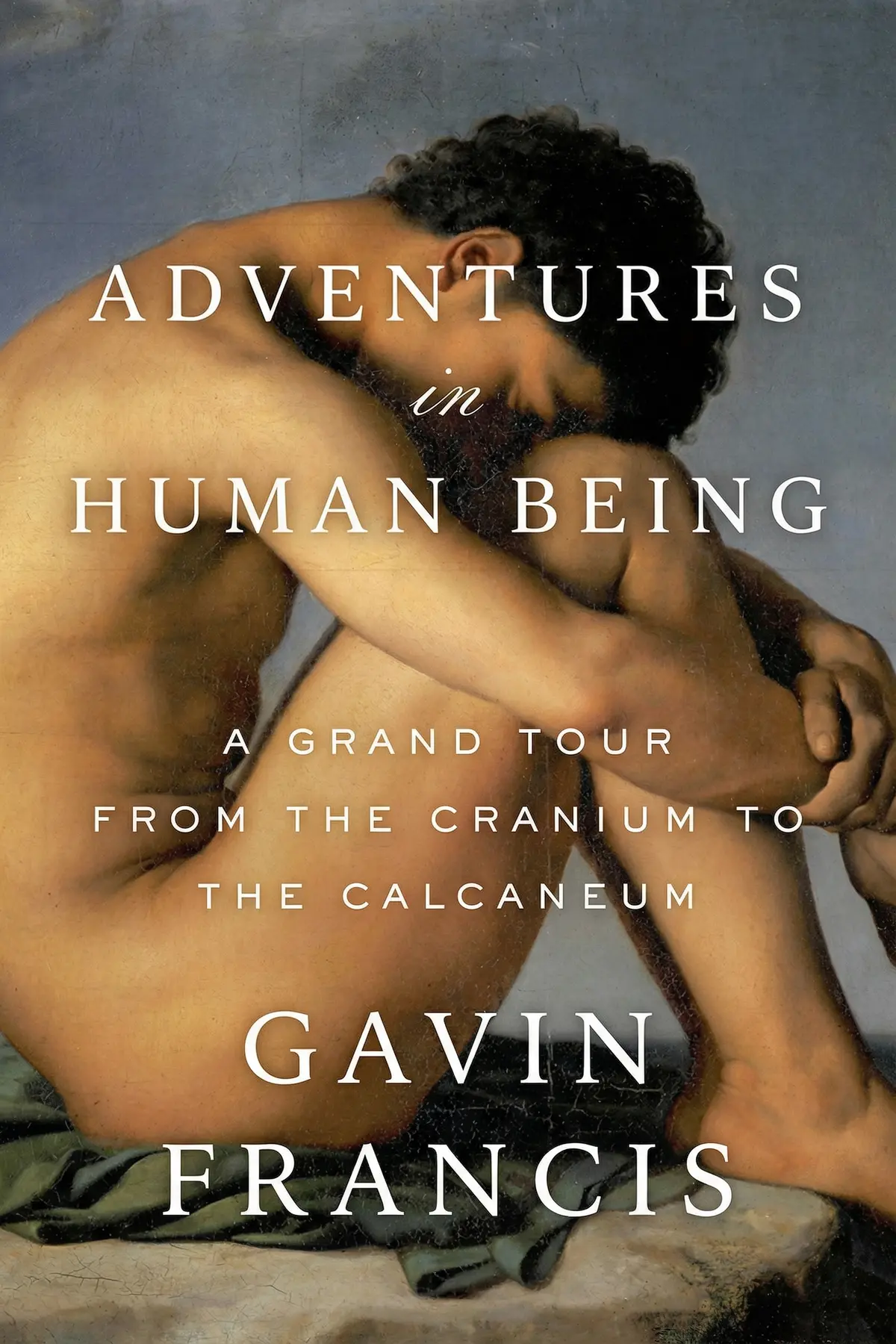
The Emperor’s New Mind: Concerning Computers, Minds, and the Laws of Physics
Roger Penrose explores the profound gap between artificial intelligence and human consciousness, arguing that our minds are not mere computer programs but are instead rooted in the deep mysteries of quantum physics.
Table of Content
1. Introduction
1 min 48 sec
Imagine a world where the most sophisticated machines we have ever built are hailed as the next step in evolution—digital minds that we are told will soon rival, and then surpass, our own. This is the central promise of modern artificial intelligence. We are often led to believe that if we just add enough processing power, enough data, and enough clever lines of code, the spark of consciousness will inevitably ignite. But what if this entire premise is based on a fundamental misunderstanding of what a mind actually is?
In this deep dive into the nature of thought, we are invited to look past the impressive facade of modern computing to ask a much more difficult question. Is a human being really just a very complicated computer made of meat? Or is there something happening within the folds of the human brain that no machine, no matter how fast or powerful, could ever replicate? This journey takes us to the very edge of what we know about the physical universe, challenging the idea that our awareness can be reduced to a simple set of mathematical instructions.
As we explore these ideas, we will see how the world of physics—specifically the strange and counterintuitive realm of quantum mechanics—might hold the key to understanding why we feel, why we understand, and why we are more than the sum of our programmed parts. This isn’t just a technical debate; it is a search for the throughline of human existence. It is about understanding the mystery of the mind and why the ’emperor’ of artificial intelligence might not be wearing the clothes we think he is. We are going to look at why rational thinking isn’t just about following rules, and why the future of science may need to embrace the unexplained to finally account for the experience of being alive.
2. The Illusion of the Digital Soul
2 min 39 sec
Could a machine ever truly be conscious, or are we simply mistaking a very complex simulation for the real thing? Explore the fundamental divide between programs and minds.
3. The Limits of Logical Instruction
2 min 07 sec
Algorithms are the backbone of modern life, but they have inherent boundaries that the human mind seems uniquely capable of crossing.
4. Searching for the Physical Mind
2 min 06 sec
Is our consciousness a product of software, or is it inextricably linked to the physical matter of our brains and the laws of the universe?
5. The Quantum Realm and Cognition
1 min 58 sec
Standard physics explains the world of chairs and tables, but to understand the mind, we may need to dive into the strange world of the very small.
6. The Bridge Between Two Worlds
1 min 55 sec
Physics is currently split into two halves that don’t quite fit together. The secret to consciousness might lie in the missing piece that joins them.
7. Why Rationality Isn't Just Logic
2 min 05 sec
True understanding requires more than just processing power. Explore why the human ability to grasp ‘meaning’ sets us apart from the most advanced AI.
8. The Arrow of Time and the Mind
2 min 04 sec
The universe seems to move in one direction—toward disorder. Discover how the mystery of time and entropy relates to our conscious experience.
9. The Necessity of a New Science
1 min 50 sec
To truly understand the mind, we may need to move beyond our current theories and develop a ‘Correct Quantum Gravity.’
10. Conclusion
1 min 47 sec
As we close this exploration into the depths of the human mind and the limits of technology, we are left with a powerful new perspective. We have challenged the idea that we are merely biological machines running sophisticated software. Instead, we’ve seen how the unique qualities of human thought—our intuition, our ability to grasp meaning, and our rational insight—point toward a reality that is far more complex than any digital algorithm.
The throughline of this journey is that consciousness is not an accidental byproduct of complexity, but a fundamental feature of the universe, likely rooted in the strange and beautiful world of quantum physics. While the world of artificial intelligence continues to dazzle us with its simulations, we must remember the distinction between a simulation and the thing itself. A machine can mimic the outward appearance of thought, but the internal flame of awareness requires a physical foundation that we are only just beginning to understand.
What does this mean for you? It means that your mind is not a replaceable set of data. Your ability to understand, to feel, and to perceive the world is a unique manifestation of the laws of physics reaching a point of self-awareness. It encourages us to look at the ‘mysteries’ of our own minds not as problems to be solved by better coding, but as invitations to explore the very frontier of science. In a world increasingly dominated by the digital, the most important thing to remember is the irreplaceable value of the human spirit and the profound, non-algorithmic nature of being alive. We are the architects of meaning in a mechanical universe, and that is a gift no machine can ever take away.
About this book
What is this book about?
This exploration tackles one of the most significant questions in modern science: can a machine truly think? By examining the foundations of artificial intelligence and rational thought, the work challenges the prevailing view that the human brain is simply a biological computer. Instead, it suggests that consciousness requires something more than just logical processing and algorithms. Moving through the realms of physics and mathematics, the discussion highlights the limitations of current technology and the unique nature of human cognition. It proposes that the secret to our awareness lies in the complex intersection of quantum mechanics and the physical world, offering a visionary perspective on what it means to be a sentient being in a universe governed by physical laws.
Book Information
About the Author
Roger Penrose
Sir Roger Penrose is an acclaimed British mathematical physicist and philosopher of science. In 2020, Penrose shared one half of the Nobel Prize in Physics for his work on black holes and general relativity theory. He has written several popular physics books, most recently Fashion, Faith, and Fantasy in the New Physics of the Universe (2016).
Ratings & Reviews
Ratings at a glance
What people think
Listeners find this work to be a superb study and read, with one individual highlighting its coverage of significant modern physics sectors and its transparent treatment of quantum theory. The book also garners favorable reviews for its exploration of human consciousness, which one listener depicts as a deeply evocative intellectual journey. Additionally, listeners value the fascinating concepts and find the text absorbing, with one person calling it an exhilarating look at modern physics. However, the prose style elicits a variety of opinions from listeners.
Top reviews
Mia
Picked this up after a recommendation from a physics professor, and I must say it is a breathtaking journey through the foundations of modern science. Penrose provides what is perhaps the most clear explanation of quantum theory I have ever encountered in a popular science book. He manages to connect disparate fields like tiling patterns and entropy to the very act of human thought. Frankly, the depth of research here is staggering and makes most other books on consciousness look superficial. There are moments where the technicality peaks, but the narrative momentum usually carries you through. This is an essential study for anyone interested in why we are more than just biological hardware. An absolute masterpiece of scientific literature.
Show moreSuwit
Wow, what a monumental achievement in scientific writing that truly challenges your perception of reality. This book is a deeply thought-provoking journey that forces you to reconsider everything you thought you knew about the brain. Penrose is a master at identifying the gaps in our current understanding of the physical world. His exploration of how quantum mechanics might play a role in biological processes is both daring and meticulously researched. Even when the math becomes intimidating, the prose remains elegant and driven by a genuine sense of wonder. I came away from this feeling like I had just finished a marathon for the mind. It is a rare work that manages to be both scientifically rigorous and philosophically profound at the same time.
Show moreSiriphen
Roger Penrose takes us on a dizzying ride through the cosmos and the tiny crevices of the human brain. This is a monumental study into human consciousness that refuses to take the easy way out with simple metaphors or hand-waving. While the writing style is occasionally dense, the way he weaves together thermodynamics and general relativity feels like an exciting glimpse into the mechanics of reality. To be fair, you might need a physics degree to grasp every single equation in the middle chapters. However, the overarching argument against the "strong AI" hypothesis is both compelling and deeply thought-provoking. It is a rewarding challenge for anyone willing to put in the mental sweat and follow a genius through his logic.
Show moreSaowalak
After hearing about the controversy surrounding his theories on quantum microtubules, I finally decided to tackle this massive volume. It offers an exciting glimpse into modern physics and poses questions that most AI researchers seem to ignore. The way Penrose explains Gödel’s theorem in relation to human intuition is nothing short of brilliant. Look, the book isn't perfect—the pacing slows to a crawl when he enters the realm of phase space and classical mechanics. But the payoff in the final chapters is immense and leaves you questioning the very nature of your own awareness. It is a deeply thought-provoking journey that bridges the gap between the physical and the metaphysical. Definitely recommended for the patient and curious reader.
Show moreLincoln
In my experience, books on consciousness usually skip the hard science to focus on vague metaphors, but Penrose leans right into the physics. This is a rigorous study into human consciousness that demands your full attention for every single page. The way he breaks down the limitations of computers is particularly relevant in today’s world of generative AI. Gotta say, some of the sections on the arrow of time felt a little disconnected from the main argument about the human mind. However, the book as a whole provides an excellent read for anyone who wants a deep dive into the architecture of the universe. It is a dense, challenging, yet ultimately rewarding exploration of the unknown that stays with you long after finishing.
Show moreSukit
Ever wonder if there's a physical basis for the "soul" that current science just hasn't mapped out yet? Penrose attempts to find that missing piece by looking at the intersection of modern physics and the biology of the human brain. While the writing style receives mixed reactions for being overly technical, I found the challenge to be part of the appeal. He provides a remarkably clear explanation of quantum theory, even if the math gets a bit too "hairy" at times for my taste. My only real gripe is that he spends a bit too long on the history of logic before getting to the meat of his theory. Regardless, it is an essential addition to the library of any serious science enthusiast.
Show moreAnchalee
Is the human mind just a very complex computer? Penrose argues a resounding "no" in this lengthy tome, but the journey to that conclusion is fraught with some seriously heavy mathematics. Personally, I found the early sections on Turing machines and algorithms quite accessible compared to the later deep dives into quantum theory. The book is definitely an excellent read if you enjoy high-level theoretical physics, yet it suffers from being a bit disjointed in its delivery. Some parts read like a textbook while others feel like a philosophical manifesto. It is certainly a mixed bag that requires significant patience from the reader. Still, the core ideas about the non-algorithmic nature of thought are worth the struggle.
Show morePridi
The chapter on tiling and Turing machines was fascinating, but the rest of the book felt like a bit of a slog to get through. Roger Penrose is clearly a brilliant physicist, but his ability to translate complex concepts for a general audience is hit or miss throughout the text. One moment you are enthralled by a clear explanation of quantum theory, and the next you are drowning in complex symbols. I did enjoy the philosophical sections toward the end where he discusses the potential "soul" of the machine. However, the sheer density of the technical material makes it hard to recommend to anyone without a strong science background. It is a respectable study, but certainly not a light weekend read for the casual enthusiast.
Show moreDao
Truth is, I found the prose incredibly dry and difficult to follow. I was expecting a more approachable discussion on the nature of the mind, but instead, I got bogged down in hundreds of pages of complex equations. The writing style is definitely a hurdle; it lacks the lucidity found in works by authors like Hawking or Sagan. While I appreciate the interesting ideas regarding the limits of computation, the delivery felt more like a lecture series than a cohesive book. It is a dense slog that honestly didn’t feel worth the time investment for a layperson like myself. If you aren't already well-versed in advanced mathematics, you might find yourself skimming large portions just to find the actual point.
Show moreSudarat
Not what I expected at all given the title and the general buzz surrounding Penrose. I thought this would be a focused look at cognitive science, but it spends far too much time on the minutiae of classical physics. The "mixed writing style" mentioned by other reviewers is a polite way of saying it’s inconsistent and often rambling. For every fascinating insight into human consciousness, there are forty pages of dense math that feel tangential to the main thesis. Not gonna lie, I ended up putting it down about halfway through because it felt like a chore rather than an engaging read. It’s clearly the product of a genius mind, but it fails as an accessible piece of science communication for the general public.
Show moreReaders also enjoyed



AUDIO SUMMARY AVAILABLE
Listen to The Emperor’s New Mind in 15 minutes
Get the key ideas from The Emperor’s New Mind by Roger Penrose, plus 5,000+ more titles in English and Thai.
- 5,000+ titles
- Listen as much as you want
- 7-day free trial
- Cancel anytime







