
15 min 45 sec
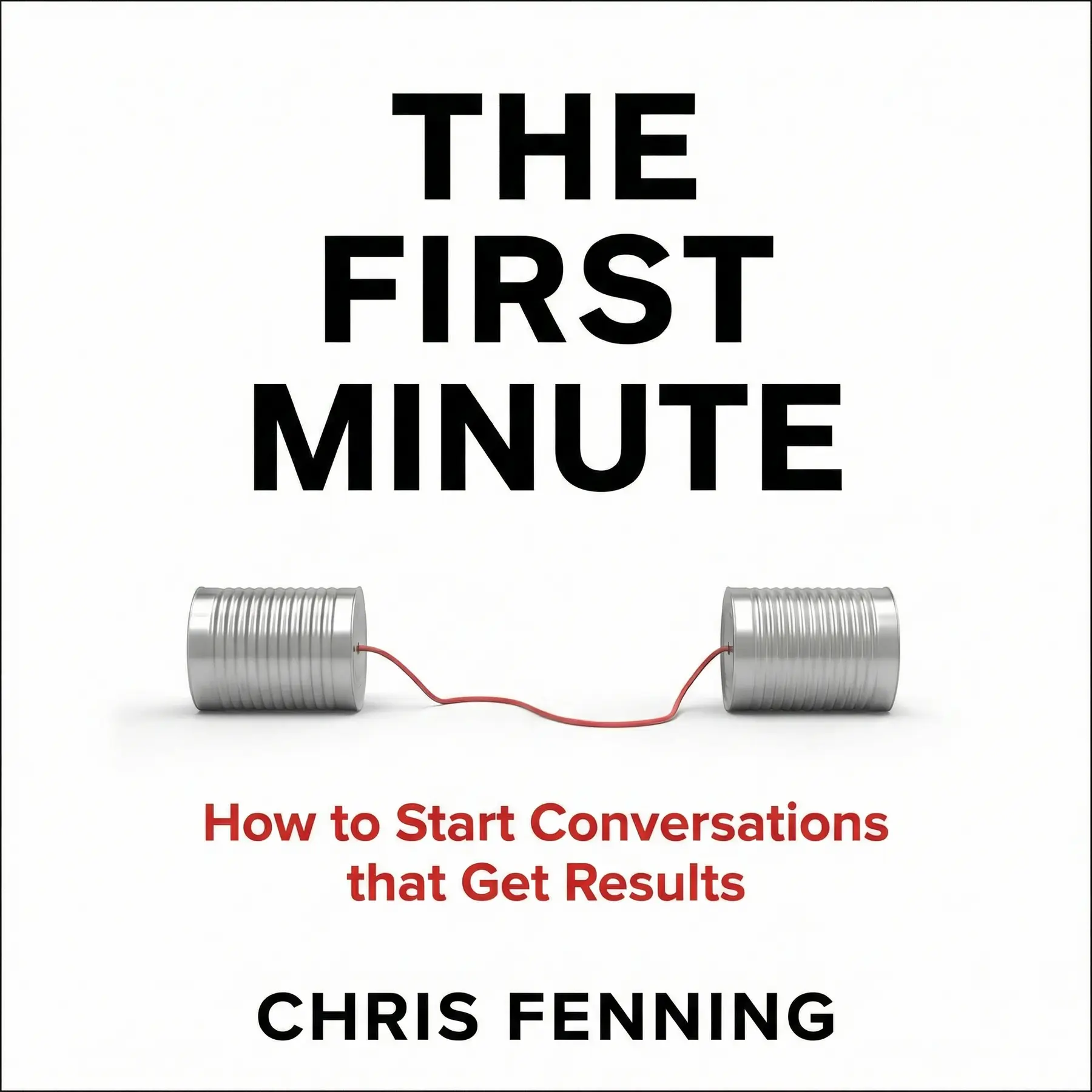
The First Minute: How to Start Conversations that Get Results
The First Minute provides a practical framework for mastering the critical opening moments of any professional interaction, ensuring your message is heard, understood, and acted upon with maximum efficiency.
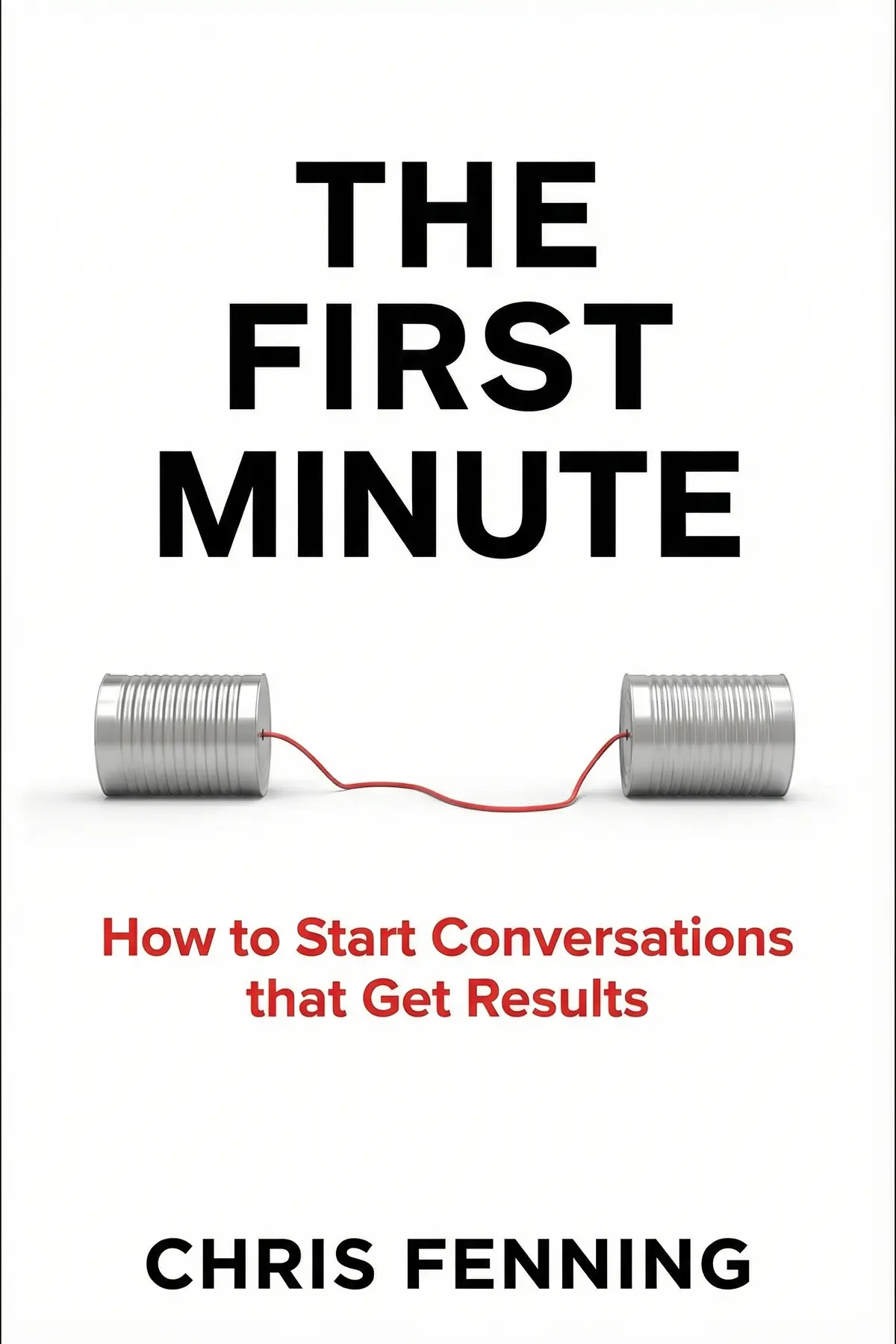
Table of Content
1. Introduction
1 min 47 sec
Imagine you have just stepped into the office of a senior executive. You have spent weeks analyzing a critical project delay, and you finally have the chance to explain what’s going wrong. You start talking, providing background details and explaining the timeline of events. But thirty seconds in, the executive checks their watch. A minute later, they interrupt you with a question about a detail you haven’t even reached yet. The connection is lost, and the opportunity to influence a decision is slipping away.
This scenario is all too common in the modern workplace. We often assume that because our information is important, people will naturally find the patience to listen to us find our way to the point. However, the reality of professional life is that attention is the most scarce resource available. If you cannot capture and direct that attention within the first minute of your interaction, you risk being misunderstood, ignored, or perceived as disorganized.
In this exploration of the techniques found in the work of Chris Fenning, we are going to look at how to master that pivotal opening window. This isn’t just about talking faster; it’s about structured thinking. We will explore the art of framing your message so your audience immediately knows why they should care. We will look at a specific method for summarizing complex problems into actionable solutions, and we will discuss the essential social etiquette of time-checking that ensures your message is welcomed rather than resented.
By the end of this summary, you will have a toolkit for ensuring that every word you speak or write in a professional setting has a clear purpose. You will learn how to guide your listeners through your thoughts with such clarity that they won’t just understand what you’re saying—they will know exactly what to do with that information. Let’s dive into how you can start winning your professional conversations from the very first second.
2. The Power of Framing
3 min 13 sec
Discover how to set the stage for success by aligning your listener’s focus with your own through three essential elements of every opening statement.
3. Using the GPS Method for Summaries
3 min 11 sec
Learn a structured approach to distilling complex information into a brief, three-part summary that highlights the path from current obstacles to desired results.
4. Respecting Time and Validating Engagement
2 min 39 sec
Master the social mechanics of a conversation by using time checks and validation points to ensure your audience is truly ready to listen.
5. Scaling Communication Across Different Platforms
3 min 18 sec
Explore how to adapt these principles of clarity and brevity to emails, instant messages, and meetings to boost your professional reputation.
6. Conclusion
1 min 37 sec
In this summary, we have explored the transformative power of mastering the first minute of your professional interactions. We started by looking at the essential pillars of framing—context, intent, and the key message—and how they provide a mental map for your listeners. We then delved into the GPS method, a structured way to summarize goals, problems, and solutions to avoid the trap of the ‘data dump.’ We also discussed the vital importance of checking in on your audience’s time and validating their engagement to ensure your message is received in the best possible conditions. Finally, we looked at how these principles can be adapted across emails, meetings, and digital platforms to create a consistent and effective communication style.
The throughline of all these techniques is the recognition that professional success is built on the quality of your connections with others. When you communicate with clarity and brevity, you aren’t just being efficient; you are showing respect for the people you work with. You are making it easier for them to help you, to decide for you, and to support your ideas.
As you move forward, try to view every interaction as an opportunity to practice these skills. Before you send your next email or walk into your next meeting, take ten seconds to define your frame. Ask yourself: What is the context? What is my intent? What is the one key message I need them to remember? By taking control of that first minute, you will find that the minutes that follow become more productive, less stressful, and far more successful. You have the tools to be the most clear and impactful communicator in the room—now it’s time to use them.
About this book
What is this book about?
Have you ever started a conversation at work only to see your colleague's eyes glaze over? This book addresses the common struggle of professional rambling and provides a structured solution. It introduces the concept that the most important part of any communication happens in the first sixty seconds. By mastering this brief window, you can transform how you lead meetings, write emails, and present ideas. The promise of this guide is a total overhaul of your professional reputation. You will learn to move away from information dumping and toward strategic clarity using tools like the Framing technique and the GPS method. These strategies are designed to save time for both you and your audience, ensuring that every interaction is purposeful and yields the results you need. Whether you are an executive or an entry-level employee, these techniques provide a roadmap for becoming a concise and high-impact communicator.
Book Information
About the Author
Chris Fenning
Chris Fenning is an expert in business communication and the author of several best-selling books aimed at improving professional interactions. He has also written Effective Emails: The Secret to Straightforward Communication at Work, which provides actionable insights into effective email communication in corporate environments. Fenning's work is celebrated for its practicality and relevance.
Ratings & Reviews
Ratings at a glance
What people think
Listeners find the guidance in this book to be actionable and well-organized, featuring authentic scenarios that are simple to use in everyday life. Additionally, they appreciate the instruction on vital communication techniques that help workplace conversations go more smoothly. This work is brief and accessible, with one listener pointing out that the first minute can make a big difference.
Top reviews
Grace
This book should be required reading for every new hire in the corporate world. Fenning manages to strip away all the usual business fluff, leaving only the most actionable advice for effective communication. I particularly loved the CIK framework—Context, Intent, Key Message—as it provides a concrete blueprint for those high-stakes first seconds of a conversation. Honestly, I wish I had discovered these techniques earlier in my career instead of learning the hard way through trial and error. To be fair, while some might find the second half slightly less punchy than the first, the overall impact is undeniable. It is a slim volume of about 100 pages that respects your time while teaching you how to respect others'. If you want to be the person who gets a 'yes' before the meeting even really starts, buy this immediately.
Show moreIsaiah
Wow, I did not expect a book on business communication to be such an absolute page-turner. I grabbed my highlighter early on and basically didn't put it down until the end. The advice here is instantaneous in its impact; you can read a chapter and immediately apply the framing techniques to your next Zoom call. I especially appreciated the distinction between asking for extra work versus asking for insight or advice. It’s a subtle shift in language that completely changes how the listener processes your information. In my experience, most business books are 300 pages of fluff around 10 pages of ideas, but this one is pure substance from start to finish. It’s the perfect length for a busy professional who needs results now.
Show moreSomchai
After hearing about this guide for months, I'm glad I finally took the plunge and added it to my shelf. There is zero fluff here, just 100 pages of actionable advice that you can start using the very same day. I particularly resonated with the idea of 'framing' meetings by stating the goal and the required decision within the first fifteen seconds. It prevents that awkward phase where everyone is trying to figure out why they are even in the room. This should be a recommended read in workplace settings for all aspiring managers and team leads. Personally, I found the GPS method for reporting outcomes to be the most useful part of the entire book. It turns a boring status update into a narrative of success and forward-looking solutions. Highly recommended.
Show moreLeah
As someone who manages a large, fast-paced team, I am constantly looking for ways to streamline our internal communications. Fenning’s focus on the first fifteen seconds of an interaction is brilliant because that is where clarity is truly won or lost. Using framing to steer a conversation toward a specific decision or piece of input is a simple tool, yet it is incredibly powerful when applied correctly. My only minor gripe is that the CIK mnemonic isn't quite as 'sticky' as the GPS one. Still, the real-world examples provided make the concepts easy to visualize in a corporate structure. Truth is, if everyone on my team read this, we would probably save five hours of meeting time every single week. It is a very concise and practical guide that delivers exactly what the title suggests.
Show moreLogan
Finally got around to reading this after seeing it recommended on LinkedIn multiple times by folks I respect. The book is incredibly concise, which I appreciate, though the second half is a bit harder to follow than the punchy opening chapters. The CIK (Context, Intent, Key message) method is a great way to ensure your boss knows exactly why you're standing in their doorway. I've already noticed that by stating my intent upfront—whether I'm looking for a decision or just venting—the responses I get are much more helpful. To be fair, this style of communication might not work for every single persuasive situation, but for day-to-day operations, it’s a game-changer. It’s a short, helpful guide that focuses on making workplace interactions smoother and more productive.
Show moreSomporn
The chapter on 'Framing' alone is worth the price of admission for this book. Fenning explains how our brains take a few moments to process incoming information, and how we can help others by providing clear signposts. I used to just dive into the details of a problem, but now I start by stating the project name and exactly what I need from the listener. It sounds simple, but the shift in how people react to me has been significant. I’ll definitely listen to the audiobook version of this again just to let the GPS and CIK methods really sink in. Not gonna lie, I wish a simple chart of when to use each tool had been included at the end. Despite that, it's a very practical resource for anyone looking to improve their professional presence.
Show moreNina
Look, we all know that the first sixty seconds of a conversation can make or break a project proposal, and this book gives you the tools to win that window. The writing is direct and clear, mirroring the exact communication style Fenning advocates for. I found the section on the three types of problem situations—needing a solution, recommending one, or reporting an outcome—to be particularly enlightening. It helps you categorize your thoughts before you even open your mouth. While I agree with other reviewers that it could have been even shorter, the repetition does help the mnemonics stick in your mind. This is a very practical look at how to communicate with impact. It’s a great resource for anyone who feels like their messages are getting lost in the noise of a busy office.
Show moreChee
Ever wonder why some meetings feel like a massive waste of time because the speaker simply cannot get to the point? This book promises to fix that, and for the most part, it offers a solid foundation for more direct workplace interactions. The 'GPS' (Goal, Problem, Solution) method is a fantastic, easy-to-remember initialism that I’ve already started using in my weekly status updates. However, I found the text to be a bit dragged out and repetitive in certain sections, which is ironic for a book preaching brevity. Frankly, the entire message could have been summarized in a long-form blog post. I used a Hoopla credit on this, and while I don’t regret the time spent, it didn't quite live up to the massive hype for me. It is a helpful guide, but keep your expectations grounded.
Show moreBenjamin
To be fair, the core message here is incredibly valuable, even if the delivery feels a bit thin at times. It is a short and helpful guide to talking more directly, which is something almost everyone in corporate America needs to work on. I liked the focus on the initial moments of interaction and how that sets the tone for everything that follows. However, I think the book struggles to stay engaging once it moves past the primary frameworks. Some of the real-world examples felt a bit forced or overly simplified for complex office politics. It’s a good read if you want a quick hit of inspiration, but don't expect a deep dive into the psychology of persuasion. It’s a solid 3-star read that does its job without much fanfare.
Show moreTak
Not what I expected given the rave reviews I had seen online. For a book that emphasizes how important clear and quick messages are, the writing itself felt surprisingly repetitive and circular. I found myself skimming through several chapters because the author kept hammering the same two or three points over and over again. Look, the core concepts like the GPS framework are definitely useful, but they don't justify a full book. I felt like I was wasting my time reading through examples that were all variations of the same scenario. If you’re already a decent communicator, you probably won’t find much new here. It might be okay for someone just starting their first office job, but for seasoned pros, it feels a bit elementary and stretched thin.
Show moreReaders also enjoyed
AUDIO SUMMARY AVAILABLE
Listen to The First Minute in 15 minutes
Get the key ideas from The First Minute by Chris Fenning, plus 5,000+ more titles in English and Thai.
- 5,000+ titles
- Listen as much as you want
- 7-day free trial
- Cancel anytime







