
21 Lessons for the 21st Century
Yuval Noah Harari
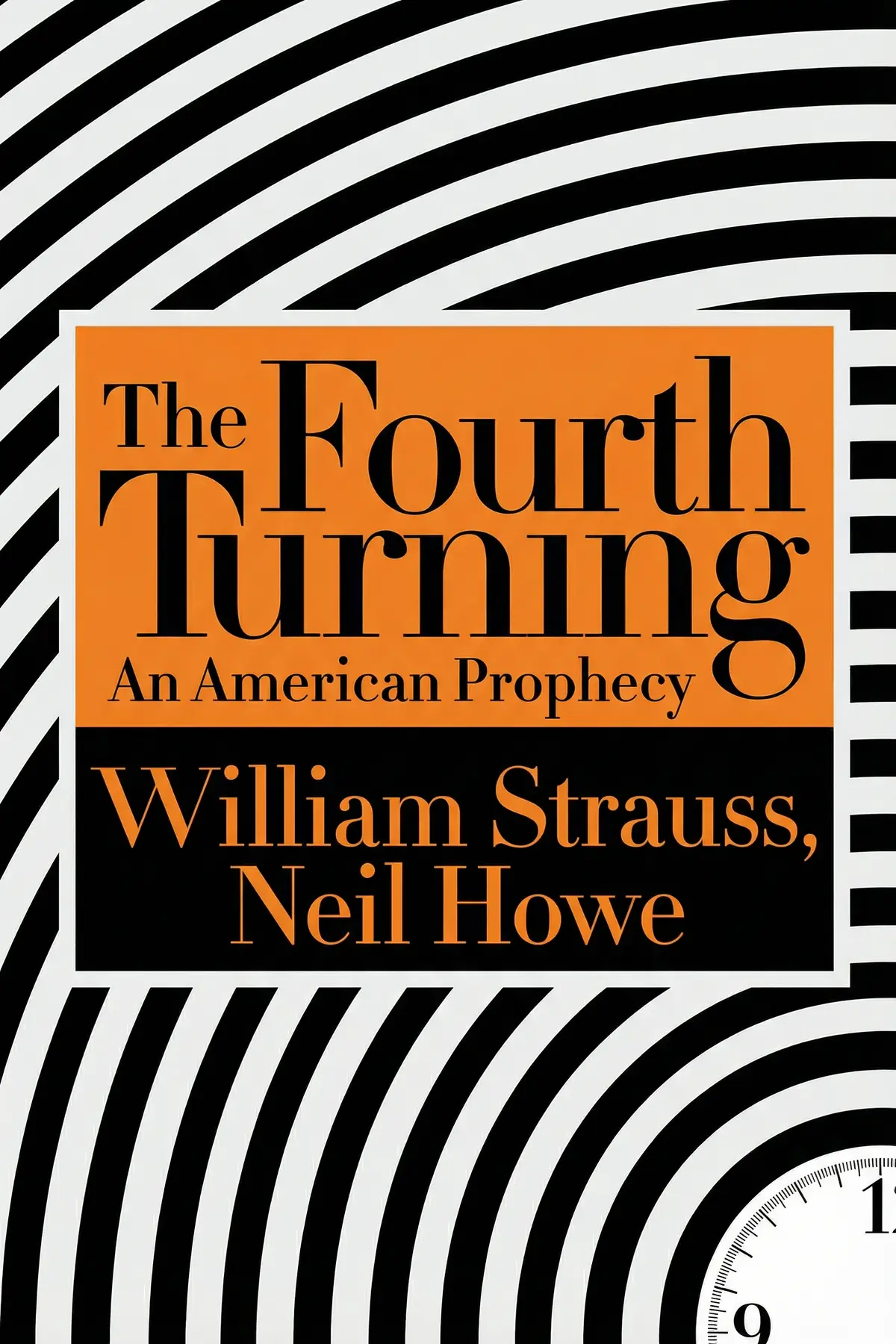
Explore a provocative theory that frames American history as a series of repeating eighty-year cycles. Understand how generational archetypes and four distinct societal seasons predictably shape our past, present, and future.
1 min 22 sec
Have you ever looked at the world around you and felt as though history was simply repeating itself? We often like to think of human progress as a straight line, a constant march toward a more advanced future where we solve the problems of the past. But what if that perspective is fundamentally flawed? What if history isn’t a line at all, but a cycle—a series of seasons that repeat with the same regularity as the rotation of the earth around the sun? In the mid-1990s, William Strauss and Neil Howe proposed a startling and influential theory known as the Fourth Turning. They argued that history moves in predictable rhythms called saecula, each lasting roughly the length of a human life. Within these cycles, society passes through four distinct phases, or Turnings, that define the national mood, the strength of our institutions, and the character of the generations being born. This summary will take you through the architecture of this cyclical prophecy, explaining how the interaction between different generations creates the predictable rise and fall of social orders. We will explore the mechanics of these historical seasons, from the optimistic High to the cataclysmic Crisis, and learn how we can prepare ourselves for the shifts that are yet to come. By the end of this journey, you may see your place in time not as a random point on a line, but as a vital part of a grand, recurring story.
2 min 11 sec
Humans have viewed the passage of history through three lenses: chaotic, cyclical, and linear. Understanding these perspectives reveals why we struggle to predict major societal shifts today.
1 min 59 sec
History moves in eighty-year cycles called saecula, divided into four distinct twenty-year ‘seasons’ that dictate the rise and fall of social order.
2 min 00 sec
Following a major crisis, the High is a period of immense institutional strength and collective optimism, though often at the cost of individual expression.
1 min 53 sec
The Awakening is a cultural and spiritual revolution where the young challenge the established order in search of higher meaning and personal authenticity.
1 min 57 sec
As institutional trust hits new lows, the Unraveling marks an era of extreme individualism, cultural fragmentation, and cynical leadership.
2 min 06 sec
The cycle culminates in the Crisis, a period of total upheaval where the old social order is dismantled and a new one is forged through collective struggle.
2 min 22 sec
Each generation’s collective personality is shaped by the Turning they experience as children, leading to four recurring archetypes: Prophet, Nomad, Hero, and Artist.
2 min 07 sec
From the American Revolution to the Great Depression, the authors map the saecular cycle across centuries, showing how the Turnings have consistently repeated.
1 min 58 sec
Survival in a shifting world requires aligning your actions with the current historical season, prioritizing community and resilience over short-term gain.
1 min 40 sec
Recognizing the cyclical nature of time gives us the agency to steer history, potentially mitigating the severity of future crises through collective awareness.
1 min 16 sec
The Fourth Turning offers a profound and sometimes unsettling way to view our place in history. By moving away from the comforting illusion of constant, linear progress and embracing the reality of cycles, we gain a far deeper understanding of the forces that shape our lives. We have seen how the four Turnings—the High, the Awakening, the Unraveling, and the Crisis—function as the seasons of a nation, driven by the predictable aging of generational archetypes. We have learned that our current feelings of fragmentation and institutional decay are not unique to our era, but are the hallmark of an Unraveling, signaling that a period of great transformation is on the horizon. The actionable takeaway from this journey is clear: resilience is found in community. As we move deeper into the inevitable shifts of the saeculum, the most important thing you can do is strengthen your local bonds, diversify your personal skills, and invest in the people around you. Don’t wait for a central authority to provide security; instead, build it from the ground up within your family and your neighborhood. By recognizing the patterns of the past, you can face the future not with dread, but with the steady confidence of someone who knows that even the harshest winter is merely the prelude to a new and brighter spring. History is a cycle, and you are a vital part of its next turn.
The Fourth Turning presents a sweeping look at history, arguing that it does not move in a straight line but rather in a cyclical spiral. Authors William Strauss and Neil Howe suggest that every eighty to one hundred years, society moves through four distinct phases, or Turnings: the High, the Awakening, the Unraveling, and finally, the Crisis. These stages are driven by the shifting archetypes of the generations occupying them, from the moralistic Prophets to the pragmatic Nomads. This summary provides a roadmap for understanding these patterns and the predictable shifts in the national mood. It explores how the seasons of history influence everything from institutional trust to individual values. By recognizing these recurring cycles, listeners can better prepare for the inevitable periods of upheaval and the subsequent rebirths that define the human story. The promise of this work is not just a better understanding of the past, but a predictive lens through which to view the challenges of the future.
William Strauss was a social theorist, consultant, author, playwright, and director. He coauthored Generations, 13th Gen, Millennials Rising, and The Fourth Turning with Neil Howe. Their books have influenced such diverse figures as Al Gore and Steve Bannon. He founded the Cappies, a theater awards program for high school students, and he wrote a number of plays and musicals, including MaKiddo and Gray Champions. Neil Howe is a social theorist, consultant, and author. He has written or cowritten a number of books on generational trends, application-oriented books, and academic studies on aging. He’s the cofounder, with William Strauss, of two consulting companies: Saeculum Research and LifeCourse Associates, both of which work to apply their generational theory.
Listeners find this title to be a required volume for students of history, providing gripping historical analysis and a distinctive lens for viewing Anglo-American history. The work is extensively researched and intellectually stimulating, with one listener highlighting how international events have recurred across the ages. They prize its prophetic accuracy, with one review pointing to its predictive value for the 2000s to today. While many enjoy the absorbing momentum, some label it a "turgid mess."
Picked this up because the concept of cyclical history has always fascinated me, even if it feels a bit like reading a secular prophecy. Strauss and Howe offer a compelling look at how Anglo-American society moves through predictable seasons, which they call turnings. It’s hard to ignore how the 'Crisis' period they predicted back in 1997 seems to align with the current state of the world. While the prose can be a bit dense in the middle, the overall framework provides a unique lens for understanding our cultural upheaval. I found the descriptions of generational archetypes—Prophets, Nomads, Heroes, and Artists—to be surprisingly resonant. Whether you buy into the deterministic nature of their theory or not, the historical research is incredibly well-documented. It’s a thought-provoking read that forces you to think about where we are headed next.
Show moreThis book is absolutely chilling in its accuracy, especially considering it was published over two decades ago. The authors managed to forecast the general mood of the 2020s with a level of specificity that feels almost eerie. I loved the breakdown of the four seasons of society and how each generation reacts to the previous one's values. It’s a fascinating framework for understanding why Millennials and Gen Z are so different from the Boomers. Gotta say, the ending feels a bit like a warning, but it’s one that we probably need to hear right now. Some of the charts and tables are a bit much, yet they add a layer of depth to the historical studies. This isn't just a book; it’s a roadmap for the future that everyone should at least consider. Highly recommended for those who want to understand the deeper currents of American life.
Show moreAs a long-time student of history, I found this book to be an essential addition to my shelf. Strauss and Howe offer a unique framework for understanding how Anglo-American history isn't just a series of random events. Instead, they demonstrate how society moves through distinct cycles of spiritual upheaval and secular renewal. The historical studies included here are deep and well-documented, providing a solid foundation for their more radical predictions. I was particularly impressed by how they identified the 'Awakening' period of the 60s and 70s and its long-term impact. Not gonna lie, some of the prose is quite dense, but the insights are well worth the effort. It’s a must-read for anyone who wants to understand the deep-seated patterns that shape our world. Even if you don't agree with every conclusion, the perspective it provides is invaluable for navigating the current Crisis.
Show moreAfter hearing so much about this book's influence on modern political figures like Steve Bannon, I felt compelled to see what the fuss was about. To be fair, you have to separate the authors' ideas from the way they’ve been weaponized by various pundits over the years. The core thesis suggests that history isn't just a straight line but a repeating cycle of highs, awakenings, unravelings, and crises. I was struck by how world events have indeed repeated throughout history in patterns that feel uncannily familiar today. Some sections are definitely a turgid mess, filled with repetitive jargon and overly selective historical data. However, the predictive value regarding the 2000s and beyond makes it a must-read for any student of history. It’s not a perfect science, but the logic holds up better than I expected.
Show moreEver wonder why the world feels so chaotic right now? This book suggests it’s not just bad luck, but a predictable stage in a century-long cycle called the saeculum. The authors argue that we are currently in the Fourth Turning, a period of secular upheaval where the old civic order is replaced by something new. Truth is, seeing the 2008 crash and subsequent social unrest through this lens makes a strange kind of sense. The writing is academic and sometimes dry, but the insights into generational behavior are quite engaging. I did find the focus on only Anglo-American history a bit narrow for a theory claiming to be universal. Still, it’s a well-documented study that challenges the way you view the passage of time. If you can get past the occasional pseudo-scientific tone, there is real wisdom to be found here.
Show moreStrauss and Howe have created a fascinating, if somewhat controversial, look at the rhythms of our society. The idea that we are currently in a 'Crisis' phase that will resolve around 2025 is both terrifying and oddly comforting. It suggests that there is a purpose to the current turmoil and a light at the end of the tunnel. Look, the book isn't exactly light reading; it requires a lot of focus to get through the dense socio-political analysis. But the way they link the Great Depression and WWII to the current era is incredibly thought-provoking. I appreciated how they documented the shift from individualism back toward a new civic order. Whether or not their specific predictions come true, the logic behind their cycles is hard to dismiss. This is a significant piece of work for anyone interested in futurism and sociology.
Show moreFinally got around to this after seeing it referenced in so many news articles lately. The 'Fourth Turning' concept is a powerful tool for analyzing the current political polarization in the United States. In my experience, most history books are just a collection of dates, but this actually tries to explain the 'why' behind the shifts. The sections on the Hero and Artist generations provided some great context for the cultural clashes we see today. My only real gripe is that it can feel a bit repetitive, as the authors drive home the same points across multiple chapters. Still, the predictive value for world events is high enough that I’d recommend it to anyone. It’s a well-documented and unique framework that makes you see the news in a totally different way. Definitely one of the more influential books I’ve read this year.
Show moreThe timing of this book's recent surge in popularity is no accident. With the world feeling like it's on the brink, people are desperate for a map, and Strauss and Howe provide one. Their theory of the four turnings offers a compelling, if slightly rigid, view of how generations interact to shape history. I found the analysis of the 'Unraveling' era particularly poignant, as it captured the cynicism of the late 20th century perfectly. Personally, I think some of their archetype descriptions—like the 'Nomad' or 'Prophet'—are a bit too broad to be truly useful. However, the overarching theme of repeating world events is handled with a lot of skill and research. It's an engaging read that manages to be both academic and accessible at the same time. If you're looking for a new way to understand our past and future, start here.
Show moreFrankly, it’s hard to know whether to call this genius or just very clever storytelling. The authors present a cyclical system that is undeniably captivating, but I found myself questioning the 'evidence' they provided at several points. It feels like they are frequently cherry-picking historical events to fit a pre-packaged narrative of turnings. While the pacing is mostly engaging, some chapters definitely qualify as a turgid mess of repetitive theories. I struggle with the idea that human affairs are governed by a clock-like mechanism that never fails. On the other hand, the descriptions of the 'Unraveling' era in the 80s and 90s were quite spot-on. It’s a compelling historical study, even if you remain skeptical of the prophetic claims. It’s worth a read for the unique framework alone, but take it with a grain of salt.
Show moreA complete waste of time that reads more like a work of numerology than actual history. The authors take a handful of events from a very narrow slice of time and pretend they’ve discovered a universal law of nature. It’s a charlatan’s game where they toss out terms like 'saeculum' and 'generational archetype' to sound more scientific than they actually are. I found the writing style to be rambling and repetitive, making it a real struggle to finish. They completely ignore most of world history, focusing only on a simplified version of England and America to make their theory work. To be honest, the predictions they made for the early 2000s only look 'accurate' if you squint and ignore all the misses. It’s a dangerous kind of pseudo-history that feeds into a desire for easy answers. Avoid this if you value rigorous scholarship.
Show moreYuval Noah Harari
Jacinda Ardern
Pankaj Mishra
Michael Axworthy
James Comey
Anthony Pratkanis
Tom Standage
AUDIO SUMMARY AVAILABLE
Get the key ideas from The Fourth Turning by William Strauss, plus 5,000+ more titles in English and Thai.







