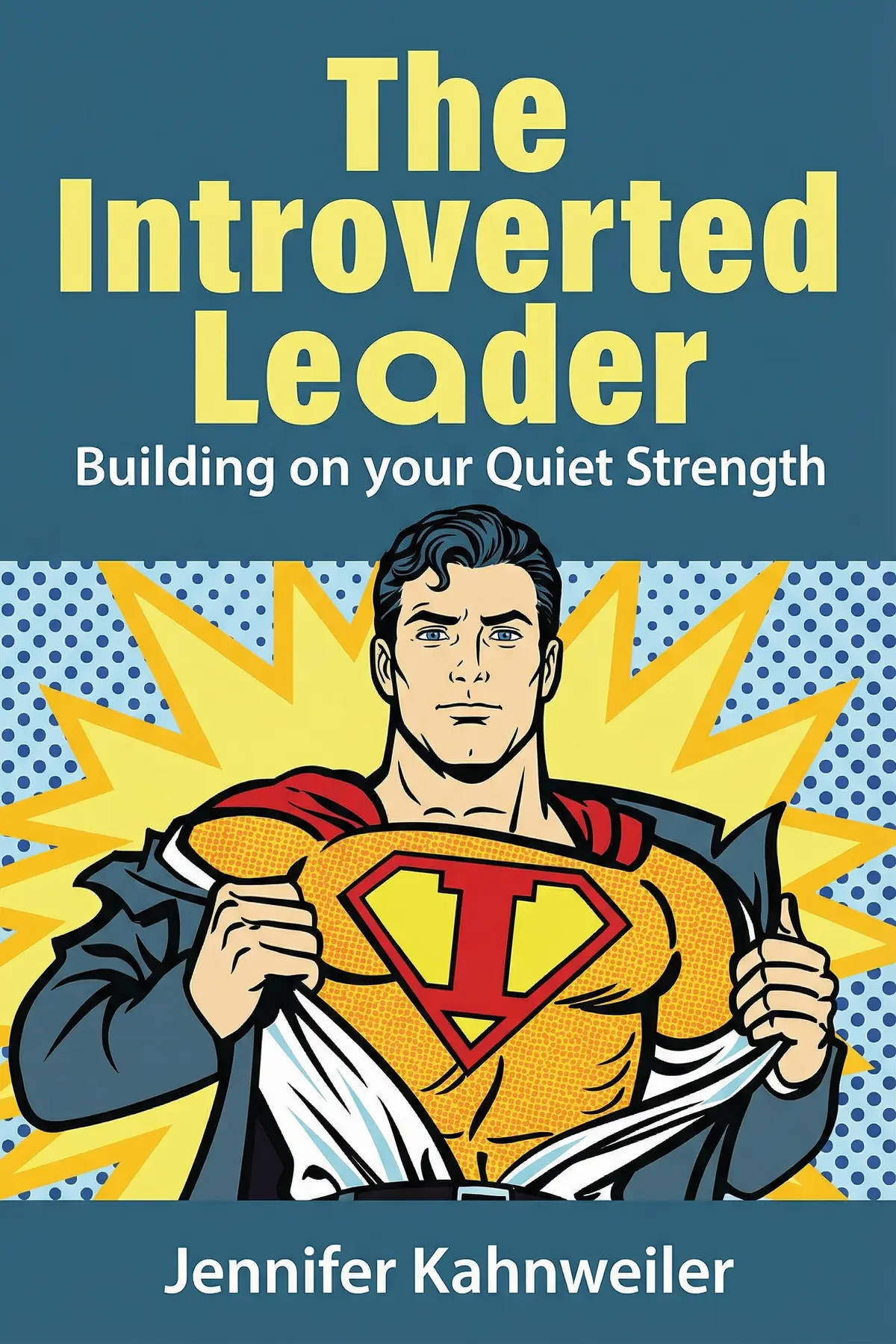
The Introverted Leader: Building on your Quiet Strength
Jennifer Kahnweiler
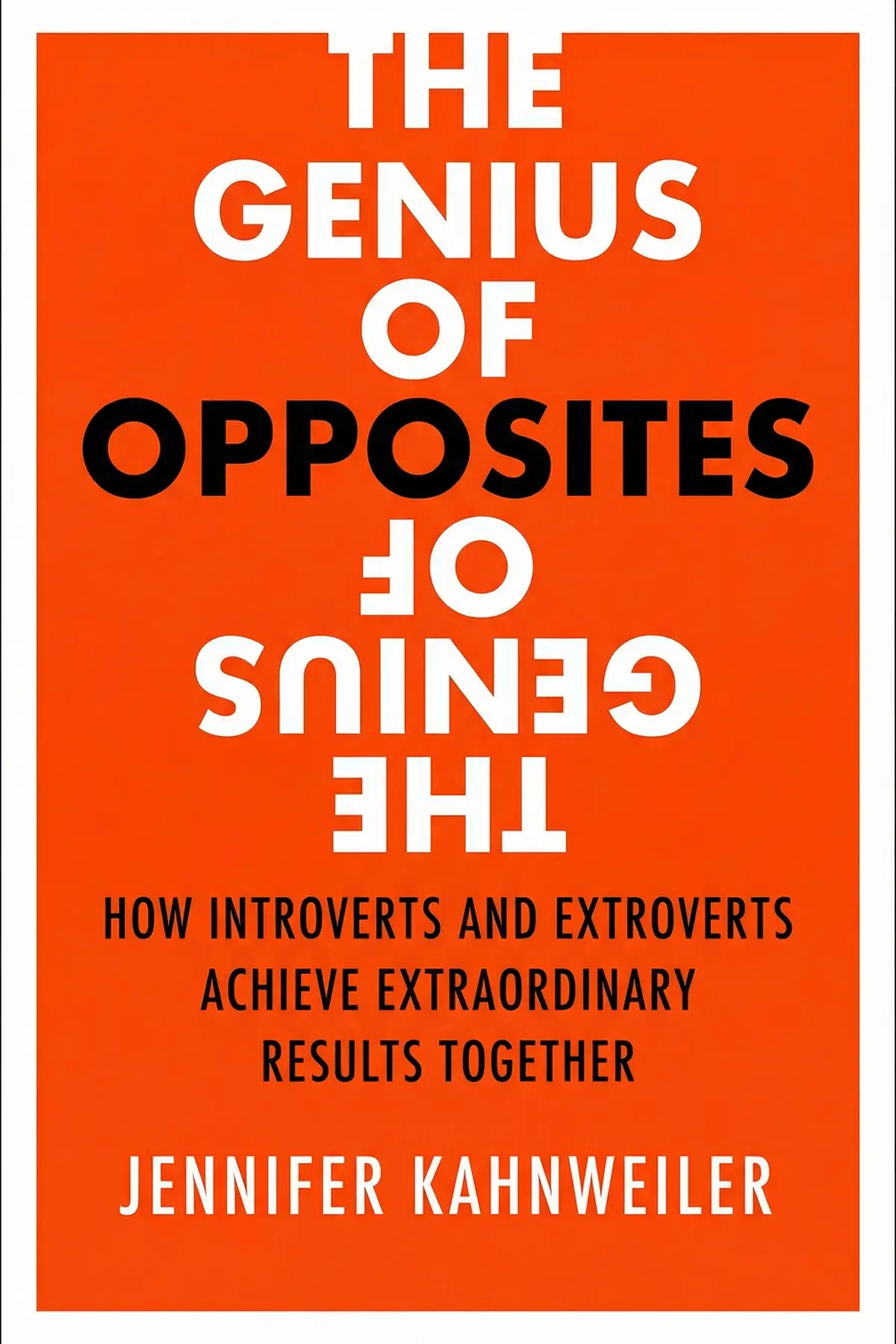
The Genius of Opposites explores how introverts and extroverts can transform their natural friction into a powerful collaborative force to achieve extraordinary results in both business and life.
1 min 23 sec
Have you ever wondered why some of the most iconic duos in history seem like total opposites? Think about the music of the Beatles or the sleek design of your favorite smartphone. These weren’t the products of like-minded people sitting in a room agreeing with each other. They were the results of friction—the creative spark that flies when an introvert and an extrovert collide. In The Genius of Opposites, we dive into the fascinating world of personality dynamics to understand why these mismatched pairings are actually the secret to extraordinary success.
It is a natural human instinct to seek out people who mirror our own behaviors and thoughts. It feels safer, easier, and more comfortable. But comfort rarely leads to the kind of innovation that changes industries. The real magic happens when we step out of our comfort zones and partner with someone whose brain is wired completely differently than ours. This summary will guide you through the throughline of the book: the idea that by intentionally bridging the gap between introversion and extroversion, we can achieve far more together than we ever could alone. We will explore the fundamental differences in how we recharge, why a shared mission is the only thing that can keep a duo together during tough times, and a specific five-step process to turn potential personality clashes into a competitive advantage. Prepare to look at your colleagues and friends in a whole new light as we uncover the hidden power of the opposite.
1 min 57 sec
Discover the fundamental biological difference between introverts and extroverts and why understanding how you recharge is the first step toward a successful partnership.
1 min 59 sec
Learn why even the most talented pairs will fail without a common goal to act as the glue for their clashing personalities.
2 min 08 sec
Unpack the first two steps of the ABCDE framework: learning to embrace the ‘alien’ and welcoming the creative fire of a good battle.
2 min 03 sec
See how clear roles and mutual respect can turn a chaotic partnership into a well-oiled machine using the Alibaba model.
1 min 52 sec
Explore the final piece of the puzzle: recognizing that neither partner can offer everything and why that vulnerability is a strength.
1 min 14 sec
As we wrap up our journey through The Genius of Opposites, the throughline remains clear: your most frustrating collaborator might actually be your most valuable asset. The journey from personality clash to creative synergy isn’t an accident; it’s a deliberate process. By applying the ABCDE framework—Accepting the alien, Bringing on the battle, Casting the character, Destroying the dislike, and acknowledging that Each can’t offer everything—you transform your differences from a liability into a superpower.
Remember that the goal isn’t to become more like your partner, but to become more aware of how your different energies can serve a common mission. Whether you are an introvert who needs to find an extroverted advocate for your ideas, or an extrovert who needs an introverted partner to provide depth and strategy, the lesson is the same: look for the person who challenges you, who sees what you miss, and who recharges where you drain. When you stop fighting the friction and start using it to spark innovation, there is no limit to what you can achieve together. Take a moment today to identify the ‘alien’ in your life and consider how their perspective might be the very thing your next big project is missing.
The Genius of Opposites offers a roadmap for navigating the often-turbulent waters of partnerships between contrasting personality types. At its core, the book addresses the inherent tension that exists when introverts—who gain energy from quiet reflection—work alongside extroverts—who are fueled by social interaction. While these differences can lead to misunderstanding and conflict, Jennifer Kahnweiler argues that they are also the primary ingredients for breakthrough innovation. Through practical strategies and real-world examples, the book promises to help readers identify their own personality traits and those of their partners. It introduces a five-step framework designed to bridge the temperament gap, moving pairs from simple cooperation to a state of high-level synergy. By the end, listeners will understand how to leverage their partner's strengths to compensate for their own weaknesses, ultimately proving that the most unlikely pairings are often the most successful.
Jennifer B. Kahnweiler, a learning and development professional, is an expert on introverts. She has advised organizations such as General Electric and NASA. Kahnweiler has a Ph.D. in counseling and organizational development and is a Certified Speaking Professional (CSP). The Genius of Opposites is her third bestselling book.
Jennifer Kahnweiler
Listeners find the work highly effective, specifically valuing its actionable guidance on collaboration and how teams and sales or listeners can achieve better mutual understanding. Furthermore, the book earns positive feedback for its accessibility, with listeners characterizing it as an enjoyable and engaging read.
The chapter on collaboration alone is worth the price of admission for anyone struggling to mesh with a seemingly difficult or different coworker. Understanding human relationships can often feel like an arduous treasure hunt, but this book provides a very clear map to finding the prize. Kahnweiler uses fantastic real-life examples, like Siskel and Ebert or Paul McCartney, to show how friction can actually lead to incredible creativity. I love how practical the advice is, making it easy to apply the concepts to my own business partnerships immediately. The truth is that many of us ignore the power of the opposite personality because we are too focused on our own way of doing things. This book is an essential reminder that 'different' is actually a massive advantage when handled with respect and shared goals. It is highly readable and full of energy, making it one of my favorite recent finds in the leadership genre.
Show moreFinally got around to finishing this, and I’m struck by how Jennifer Kahnweiler validates the power of the introvert-extrovert duo in leadership. There has been a surge of interest in personality differences lately, but this voice is one of the most powerful for practical application. She does her homework, referencing everyone from Teddy Roosevelt to Sheryl Sandberg and even 'I Love Lucy' to illustrate her points effectively. The gist is that both styles contribute immense value, and embracing these differences allows everyone to win in a professional setting. I found the index particularly impressive, reflecting the eclectic and well-researched nature of her approach to human behavior. While some might find the tone light, I think the readability makes the message much more likely to stick with a busy manager. It’s a fantastic resource for anyone who wants to turn personality clashes into a competitive advantage for their business. I highly recommend picking this up!
Show moreAs someone who manages a diverse sales team, I found the strategies for bridge-building across personality gaps surprisingly helpful for our daily operations. The author gives some solid tips to enhance your professional relationships by recognizing the unique strengths inherent in different personality types. While some of the advice is common knowledge, the way Kahnweiler focuses on diversity as a strength is truly refreshing for a leadership guide. I especially appreciated the section on finding common ground while still respecting the core differences that make a partnership effective. The book is written in a very accessible way, making it a quick and enjoyable read for a busy executive. My only minor gripe is that it can feel a bit repetitive in the middle sections, but the practical takeaways are worth it. It’s a great tool for anyone looking to maximize the potential of their team members and understand their customers better.
Show moreLook, not every business book needs to be a five-hundred-page academic slog to be valuable to a modern reader. This is a straightforward guide with decent suggestions on how to manage relationships with people who operate differently than you do. I found the end-of-chapter questions to be the most useful part, as they actually spark some thoughtful personal reflection. It is an effective look at how introverts and extroverts can stop clashing and start producing better results together. Even though the research feels a bit thin at times, the practical application of the 'opposites' concept is easy to implement. The tone is casual and upbeat, which makes it a fun read compared to other dry management texts I have endured lately. If you want a quick guide to help your team play nice, this is a solid choice despite its simplicity. It’s all about focusing on the important aspects of collaboration.
Show moreAfter hearing about this from a colleague, I picked it up hoping for a deep dive into workplace synergy and team dynamics. What I found was a relatively short, simplified guide that is easy to read but doesn't offer much in terms of groundbreaking insights. The core idea is basically common sense: listen to each other, talk through problems, and share the credit for your wins. Personally, I think the anecdotes are the strongest part of the book, providing a little bit of color to the otherwise dry advice. It is a decent resource if you are brand new to managing a team with varying personalities, but seasoned leaders might find it a bit elementary. I would suggest borrowing this from the library rather than buying a permanent copy for your shelf. It serves its purpose as a quick refresher on communication, though it lacks the 'genius' promised by the title.
Show moreWait, why wasn't it clearer in the marketing that this book is specifically aimed at business partnerships and professional teams? I picked this up thinking it would apply to all areas of life, specifically to help with my marriage since my husband and I are total opposites. As it turns out, we have already worked through most of these communication hurdles over the years just to stay sane. In my experience, the book is reaffirming but doesn't offer much that an emotionally intelligent couple wouldn't have figured out on their own. However, I can see this being quite useful for supervising a student leadership team or navigating a new office environment. It provides a helpful framework for avoiding misunderstandings between coworkers who are forced to collaborate. It’s a fun, light read, but I wish it had shared more scientific depth like other recent books on the subject.
Show moreIf you have ever spent five minutes on a personality blog, you likely already know everything this book tries to teach about human interaction. It is not that the writing is poor, but the concepts are just so basic that they feel geared toward someone who has never heard of an introvert. To be fair, the volume of examples might help a complete novice understand the differences, but I found the majority of the content to be filler. Most of this could have been condensed into two chapters without losing the core message about communication. I was expecting something with the depth of Susan Cain’s research, but what I got was a very light overview. Borrow it from a library if you must, but don't expect it to change your life or your business strategy. It’s an easy read, but ultimately, it’s just common sense packaged as a new discovery.
Show moreFrankly, the author makes some pretty massive leaps regarding how introverts handle stress that just didn't ring true for my own experiences. The book aims to show how opposites can thrive together, yet it keeps falling back on stereotypical tropes that feel outdated in today's workforce. I found it particularly irritating that the advice for business partners was so simplified it bordered on being patronizing. While the intent to improve collaboration is noble, the execution lacks the grit needed for complex professional relationships. You can skim the entire thing in twenty minutes and walk away with the same information you'd get from a short infographic. There are a few decent anecdotes tucked away in the chapters, but they aren't enough to save the book from its own redundancy. It’s a disappointing follow-up for those who were looking for a deeper dive into the science of personality.
Show moreRarely do I find a business book so devoid of actual data and so reliant on fluffy, feel-good sentiment. I found it incredibly ironic that Kahnweiler tries to teach us how to bridge gaps while constantly reinforcing the 'us and them' mentality between personality types. Instead of fostering unity, the text feels like it is constantly putting people into rigid boxes that don't allow for much nuance. The truth is that the constant self-promotion for her other books within these pages became a major distraction for me. If the author cannot commit to a single, research-backed course of action, why should the reader invest their time? This felt more like a collection of anecdotal stories than a serious manual for professional growth or workplace psychology. I was genuinely disappointed by the lack of substance and the repetitive nature of the arguments presented throughout the chapters.
Show moreThis book is extremely repetitive and relies far too much on emotional language to hammer home the same basic points over and over again. It could have been one-tenth its current length and still managed to convey every single relevant idea without losing anything of value. Not gonna lie, I was frustrated by the unproven conclusions about extroverts thinking faster or having more ideas than their introverted counterparts. Other research suggests extroversion isn't significantly related to those specific cognitive traits at all, making these claims feel lazy. The book relies on a few cherry-picked interviews rather than rigorous studies, leading to instructions that often conflict with the very stories provided. For example, an introvert doesn't necessarily retreat under stress; sometimes they show more outward emotion, like anger. It feels like a missed opportunity to provide something actually insightful for the modern professional landscape.
Show moreAUDIO SUMMARY AVAILABLE
Get the key ideas from The Genius of Opposites by Jennifer Kahnweiler, plus 5,000+ more titles in English and Thai.