

15 min 24 sec
The Gift of Not Belonging: How Outsiders Thrive in a World of Joiners
The Gift of Not Belonging explores the unique psychological profile of the 'otrovert'—individuals who thrive outside group dynamics. Learn how to transform the feeling of being an outsider into a powerful source of resilience.
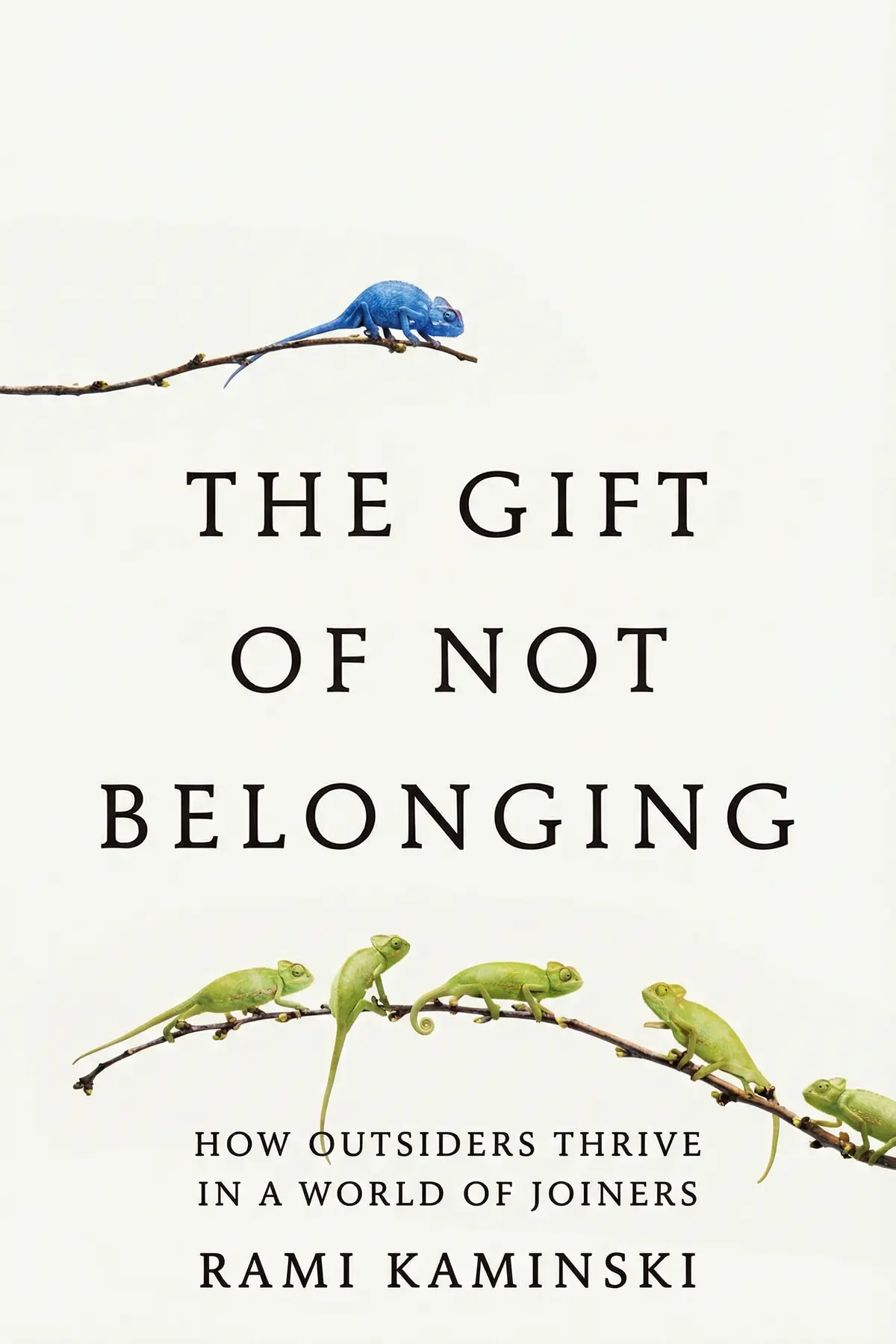
Table of Content
1. Introduction
1 min 28 sec
Have you ever found yourself in the middle of a crowded room, surrounded by laughter and conversation, and felt a strange sense of detachment? You might be performing all the social rituals correctly—nodding at the right times, sharing stories, and offering smiles—yet there is a persistent whisper in your mind that you are merely a guest in someone else’s reality. This sensation of standing on the outside looking in is often treated as a problem to be solved, a social deficit that requires fixing. But what if this distance isn’t a flaw? What if it is actually a rare and vital perspective that the rest of the world desperately needs?
In this exploration of The Gift of Not Belonging, we delve into the work of psychiatrist Rami Kaminski, who identifies a specific type of person he calls the ‘otrovert.’ Unlike the traditional categories of introversion and extroversion, which deal with where we get our energy, the concept of the otrovert focuses on our fundamental relationship with the group. Many people spend their lives trying to force themselves into boxes that don’t fit, chasing a sense of ‘belonging’ that feels performative rather than natural. This journey is about stopping that exhausting pursuit and recognizing the immense power inherent in your autonomy. We will look at how this unique psychological makeup develops, why the modern world struggles to understand it, and how you can leverage your outsider status to build a life of deep meaning, independent of the crowd’s approval.
2. Defining the Otrovert
2 min 05 sec
Discover a new personality type that challenges the traditional introvert-extrovert binary and explains why some people feel like outsiders even when they are socially successful.
3. The Mask and the Misdiagnosis
2 min 11 sec
Explore why the world often mislabels those who don’t belong and how many outsiders learn to perform social roles to hide their inner detachment.
4. The Social Engineering of Belonging
2 min 03 sec
Understand how society trains us from infancy to prioritize the group and why the outsider’s resistance to this conditioning is a sign of internal strength.
5. Navigating the Stages of an Outlier Life
2 min 18 sec
From the pressures of adolescence to the peace of later years, see how the journey of not belonging changes as we grow and find our place.
6. The Power of Independent Thought
1 min 54 sec
Learn why the world depends on outsiders to break through groupthink and lead the way toward true innovation and systemic change.
7. The Art of Authentic Connection
2 min 01 sec
Discover why being an outsider doesn’t mean being lonely, but instead allows for deeper, more meaningful relationships built on truth rather than social scripts.
8. Conclusion
1 min 24 sec
The Gift of Not Belonging is a powerful reminder that the path to a fulfilled life does not always lead through the center of the crowd. We live in a society that is increasingly obsessed with tribes, followers, and the constant hum of collective identity. In such a world, the person who can stand alone—who can think, feel, and act independently of the group—is not a problem to be fixed, but a beacon of sanity. The journey of the ‘otrovert’ is one of shifting from the pain of exclusion to the peace of autonomy. It is the realization that your internal compass is more reliable than any external map provided by the majority.
As you move forward, remember that you do not need permission to be an observer. You do not need to apologize for your preference for solitude or your lack of interest in the latest social trends. These are not signs of a deficit; they are the hallmarks of a rich and independent inner life. By leaning into your natural orientation, you gain the freedom to innovate, the clarity to see the truth, and the capacity for connections that are deep and real. Your non-belonging is not a burden you have to carry; it is the very thing that sets you free. Embrace the distance, trust your own eyes, and recognize that the most significant journey you will ever take is the one that leads you back to your own, unique, and unrepeatable self.
About this book
What is this book about?
The Gift of Not Belonging challenges the conventional wisdom that humans are purely social creatures driven by a need to join groups. It introduces the concept of the 'otrovert,' a person who possesses strong social skills but lacks the internal drive to conform or belong to collective identities. While society often pathologizes those who stand apart, psychiatrist Rami Kaminski argues that this trait is actually a profound advantage. The book promises to help readers who have always felt like outsiders understand their internal wiring. It provides a roadmap for navigating a world designed for joiners—from the classroom and the workplace to family gatherings. By reframing non-belonging as a gift, Kaminski illustrates how these individuals can leverage their independence to become innovators, trusted confidants, and self-directed leaders who aren't swayed by the whims of groupthink.
Book Information
About the Author
Rami Kaminski
Rami Kaminski is a distinguished New York-based psychiatrist with a career spanning more than forty years. He has held prestigious positions at Mount Sinai and Columbia University Irving Medical Center. Kaminski is the founder of the Institute for Integrative Psychiatry, an organization dedicated to a holistic 'whole person' approach to healthcare. His contributions to the field have been recognized with the Exemplary Psychiatrist Award from NAMI and the Physician of the Year honor at Mount Sinai.
Ratings & Reviews
Ratings at a glance
What people think
Listeners find the book highly stimulating, and one listener describes how it steered them through a process of recovery and self-discovery. They also value the perceptive material, with one listener remarking on its scientific approach. The central concepts attract favorable reviews, and listeners admire the work's realism, with one listener noting how effortlessly they connected with the author's own journey.
Top reviews
Titiluck
Wow, I felt like someone finally reached into my brain and explained why I hate parties but love deep conversations. For years, I thought I was just a broken introvert, but Kaminski’s description of the 'otrovert' as someone who lacks the communal impulse but remains socially skilled fits me perfectly. This book is a powerful reminder that not belonging isn’t a weakness; it is a gift that allows for true authenticity. I binged the whole thing in one sitting because it felt like someone was finally documenting my inner world with total accuracy. The author explains that we don’t follow social norms because we see them as silly, not because we’re trying to be rebellious. It’s an eye-opening read that has helped me stop feeling like a 'weirdo' for choosing solitude over the hivemind. If you’ve ever felt like an outsider even when surrounded by friends, you need to read this.
Show moreJai
The final chapters of this book are where Kaminski truly shines, pivoting from personality theory to a deeply moving philosophical meditation on mortality. He argues that being an 'otrovert' better prepares a person to face the dread of death because they have already mastered the art of being alone. This section was profoundly moving and elevated the book from a simple personality guide to something much more significant. Look, I know some people are annoyed by the lack of scientific citations, but for me, the clinical experience Kaminski brings to the table is evidence enough. He captures the essence of the outsider with such precision that it’s hard not to feel seen. The book is thought-provoking and encourages a level of self-discovery that few 'pop-psych' books actually achieve. It’s a beautiful defense of the individual against the pressure of the group, and I’ll be recommending it to all my 'outsider' friends.
Show moreSurasit
If you’ve ever been called 'difficult' simply because you don't care about social status or groupthink, buy this book immediately. Kaminski’s exploration of the 'otrovert' is one of the most insightful things I’ve read in years. He manages to articulate that specific feeling of being an observer rather than a participant, and he does so with a sense of realism that is rare in self-help. I appreciated how he distinguished this trait from autism, explaining that it’s about a lack of communal impulse rather than a lack of social ability. The writing is engaging and fast-paced, filled with independent, original thinking that challenges the way we view social hierarchies. While the tone is definitely confident—bordering on arrogant at times—it’s refreshing to see an author stand so firmly behind a new idea. This book didn’t just give me a new label; it gave me permission to be exactly who I am without apology.
Show moreVipawan
Finally, a book that describes the weird middle ground between being a shut-in and a social butterfly! I’ve always struggled with the introvert label because I’m not shy and I actually enjoy one-on-one socializing, yet I loathe the 'hivemind' energy of large parties. Kaminski’s definition of the 'otrovert' hit the nail on the head for me, providing a much-needed vocabulary for my experience. The book offers a realistic look at the struggles of being an eternal observer in a world that demands participation. Not gonna lie, some of his claims about neurodivergence felt a bit dismissive, and I wish there was more data to support his theories. Despite these flaws, the core idea is powerful and helped me stop feeling guilty for avoiding social situations that don't serve me. It’s a quick, punchy read that encouraged me to trust my own instincts rather than trying to fit into a mold that was never made for me.
Show moreWipawan
The Gift of Not Belonging found me at the exact moment I needed it during my recovery from a major life burnout. For years, I felt like a failure because I couldn't find a sense of belonging in traditional groups, but Kaminski argues that this distance is actually a hidden strength. His writing on 'original thinking' and the freedom that comes from being an outsider was incredibly validating for me. To be fair, the author’s style is quite swaggering and he clearly thinks very highly of his own perspective, which might rub some readers the wrong way. I also noticed the lack of citations, which is a bit concerning for a book written by a psychiatrist. However, the emotional resonance of the text outweighed the lack of scientific rigor for me personally. It’s a deeply relatable journey that encourages you to build deep, meaningful connections on your own terms rather than following the crowd.
Show moreThawee
Rami Kaminski offers a fascinating, if somewhat subjective, look into the psyche of those who stand on the periphery of social groups. I picked this up after seeing a mention of his 'Otherness Institute' and was intrigued by the idea that not belonging is a distinct personality trait. The book is at its best when it explores how otroverts navigate childhood and adolescence without the need for communal approval. I found his insights into how these individuals approach work and romance to be particularly illuminating and applicable to my own life. While the book leans heavily on anecdotal evidence, the realism of the patient stories makes the 'otrovert' concept feel authentic. I do agree with other reviewers that he is a bit hard on extroverts, portraying them as almost mindless joiners. Still, for anyone who has ever felt like a 'special snowflake' in a world of conformists, this provides a comforting and insightful framework.
Show moreBenjamin
Is it just me, or does everyone feel like they don't quite fit in sometimes? Kaminski taps into that universal feeling of being an outsider, which makes the first few chapters quite engaging. Personally, I appreciated the realism in his descriptions of feeling alone in a crowd, and I found the sections on independent thinking to be quite thought-provoking. However, as the book progressed, the claims became increasingly grand and lacked the scientific grounding I expected from a psychiatrist. The author relies heavily on his own subjective perceptions, presenting anecdotal experiences as if they are universal facts. It’s a catchy idea, but the 'otrovert' label feels a bit like the Forer effect—traits so vague and flattering that anyone would want to claim them. I liked the focus on finding strength in solitude, but the lack of a bibliography or references to recent scholarship makes it hard to take the core theory seriously as a new psychological framework.
Show moreMingkwan
Frankly, this is a bit of a mixed bag that offers some interesting insights while suffering from a significant lack of professional vetting. As someone who has always felt a bit disconnected from social norms, I related to Kaminski’s journey and his desire to reframe 'not belonging' as a gift. The book is an easy read and the case studies from his decades of clinical work are definitely the highlight. That said, the tone often veers into the condescending when discussing 'communal' people, reducing complex humans to mere caricatures. He describes a flag as just a 'piece of cloth' to an otrovert, which feels like a shallow way to dismiss the depth of human connection to symbols and community. While the book guided me through some self-discovery, I couldn't ignore the author's apparent hubris regarding his own character. It’s an interesting perspective if you take it with a grain of salt, but don't expect a scientific breakthrough here.
Show morePla
After catching an interview with Dr. Kaminski, I was genuinely excited to dive into his theory, but the execution left me frustrated. The central premise is that there exists a third category beyond the traditional introvert/extrovert spectrum, yet the definitions provided are incredibly muddy. To be fair, the book occasionally lands on some decent advice about living authentically, but you have to wade through pages of self-promotion to find it. The word 'hivemind' is used so frequently that it becomes obnoxious, creating a binary where you are either a brilliant outsider or a communal drone. I found the dismissive tone toward those who enjoy group festivities to be quite narrow-minded and arrogant. While I see myself in some of the descriptions, I can’t help but feel that a combo of introversion and neurodivergence explains these traits much better than a brand-new, unscientific label. It lacks the rigorous research found in books like Susan Cain’s Quiet, making it feel more like a flattering horoscope than a clinical text.
Show moreScarlett
This book is a massive disappointment that feels more like a manifesto for the author’s ego than a psychological study. Kaminski introduces the 'otrovert' as a revolutionary concept, but he fails to provide any empirical data or peer-reviewed citations to back his claims. Instead, we are treated to a series of anecdotal stories and a confusing dismissal of introversion that feels wildly outdated. Truth is, the author spends more time praising his own 'original thinking' than actually exploring the complexities of human personality. He defines the majority of society as a mindless 'hivemind' while elevating otroverts to a status of near-mystical superiority. It is particularly frustrating to see him brush off neurodivergence as if ADHD or autism are merely narrow clinical checklists that his 'otroverts' have somehow evolved past. The writing lacks nuance and relies on bizarre, random examples, like the idea that not liking soccer is a defining trait of this new category. It feels less like science and more like a self-congratulatory rebranding of social isolation for a post-pandemic audience.
Show moreReaders also enjoyed
59 Seconds: Change Your Life in Under a Minute
Richard Wiseman
A Liberated Mind: How to Pivot Toward What Matters
Steven C. Hayes

Acting with Power: Why We Are More Powerful Than We Believe
Deborah Gruenfeld

Age of Propaganda: The Everyday Use and Abuse of Persuasion
Anthony Pratkanis
AUDIO SUMMARY AVAILABLE
Listen to The Gift of Not Belonging in 15 minutes
Get the key ideas from The Gift of Not Belonging by Rami Kaminski, plus 5,000+ more titles in English and Thai.
- 5,000+ titles
- Listen as much as you want
- 7-day free trial
- Cancel anytime







