
A Biography of Loneliness: The History of an Emotion
Fay Bound Alberti
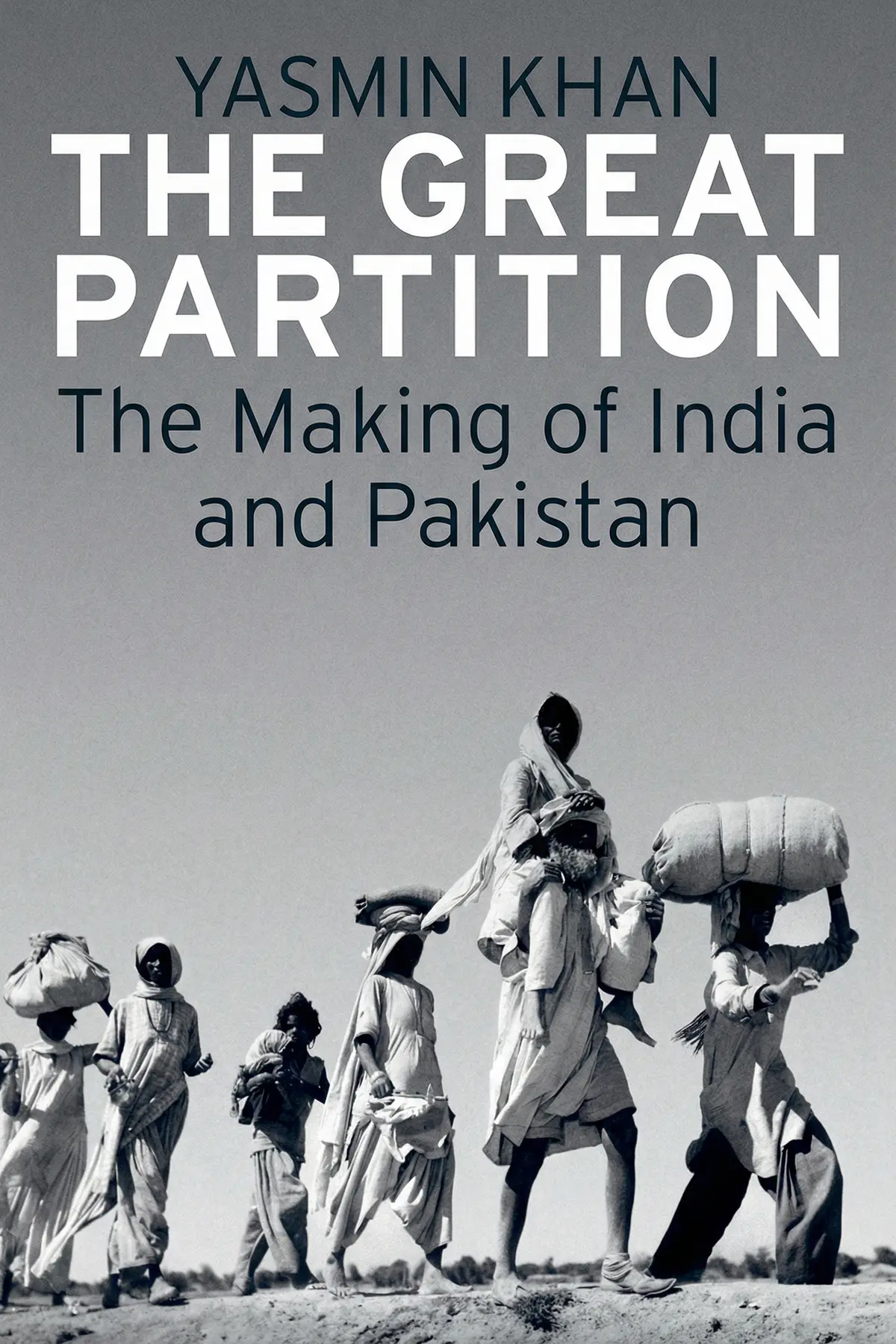
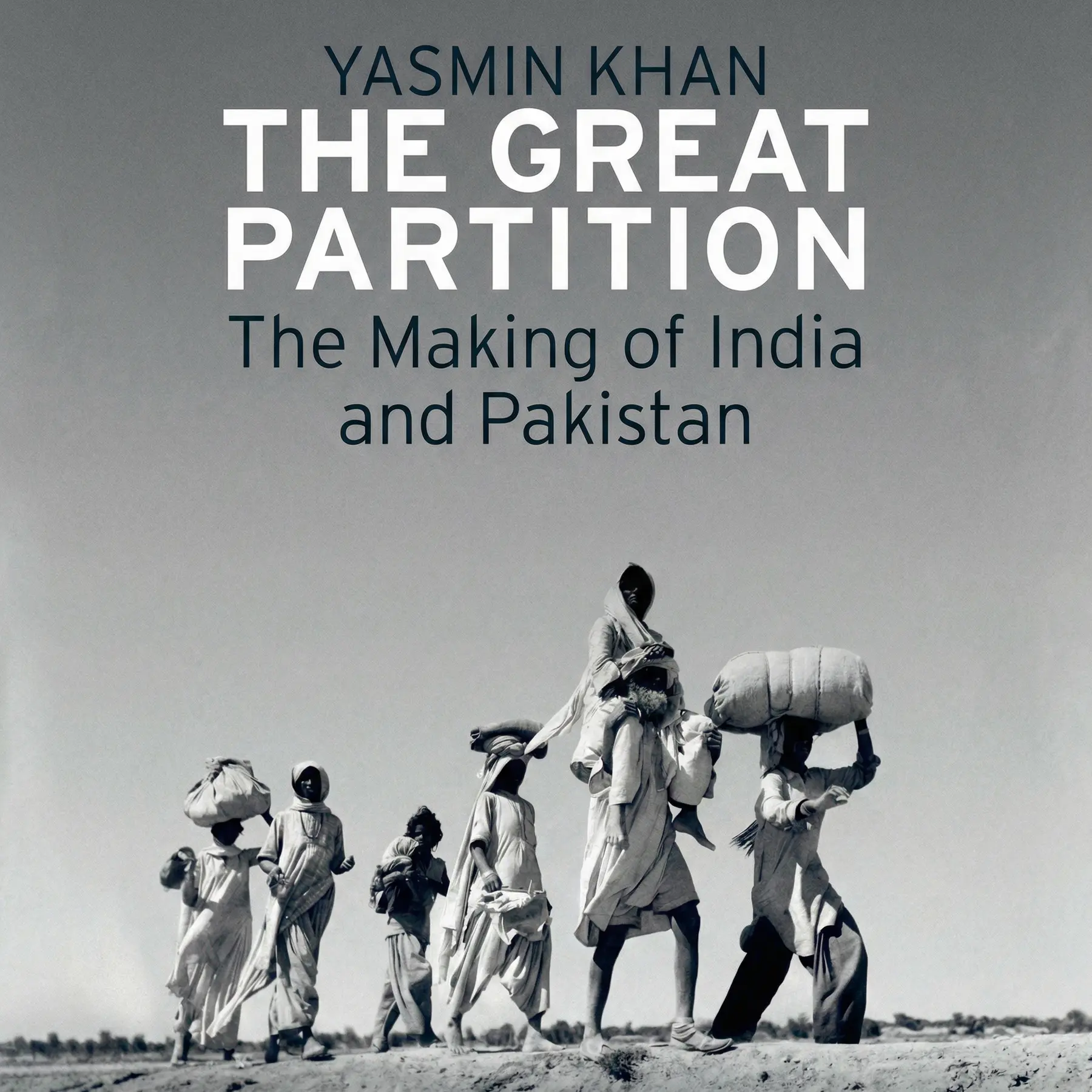
An insightful historical analysis of the 1947 division of India and Pakistan, exploring how rapid political decisions and communal tensions led to one of the most significant and tragic migrations in history.
1 min 51 sec
On the third of June, 1947, the people of the Indian subcontinent experienced a moment that would change the course of history forever. Imagine being a family in a bustling city or a quiet village, waiting for the news that had been whispered about for years. When the announcement finally came through the crackling speakers of radios and the bold ink of daily newspapers, it brought a mixture of relief and absolute terror. The British Empire, which had ruled for generations, was finally packing its bags. However, the departure wasn’t going to be a simple handover of keys. Instead, the land was being sliced in two, creating the new nations of India and Pakistan.
This wasn’t just a change in leadership; it was a fundamental shattering of a shared world. For centuries, neighbors had lived side by side, participating in one another’s weddings, sharing water from the same wells, and navigating the complexities of a multi-faith society. Suddenly, those invisible lines on a map became the most important thing in their lives. The shopkeeper you had known for twenty years might now be a foreigner, and the courtyard where children played together was now a potential border zone.
In this exploration of Yasmin Khan’s historical account, we are going to look past the dates and the famous names to see the raw human reality of this division. We will discover how political decisions made in a remarkably short window of time—just about two years—destroyed long-standing social bonds and ignited a crisis that still echoes today. This isn’t just a story about the end of an empire; it’s a study of how fragile diverse communities can become when trust is replaced by suspicion. As we walk through these events, we will see the throughline of a society in transition, struggling to find its footing as the ground literally shifted beneath its feet. By understanding the mechanics of this partition, we gain a clearer view of why these two nations remain so deeply linked and yet so tragically divided.
2 min 17 sec
Explore how the end of the Second World War left a bankrupted British Empire scrambling for an exit, setting the stage for a chaotic transition of power.
2 min 25 sec
Learn how the democratic process in the winter of 1945–46 accidentally hardened religious divisions and gave birth to the two-nation theory.
2 min 09 sec
Discover how the failure of the administrative state and the spread of reprisal violence made partition a desperate survival tactic for millions.
2 min 14 sec
Explore the human stories of how religious identity replaced complex social networks, turning neighbors into strangers and activists into propagandists.
2 min 09 sec
Examine the staggering human and economic costs of the 1947 migration and how the ‘neat’ partition left a permanent scar on the region.
1 min 37 sec
In the end, the story of the Great Partition is a cautionary tale about the speed with which a society can descend into chaos when political leadership fails and fear takes hold. We have seen how the exhausted British Empire’s rush to leave created a power vacuum that was filled by competing nationalisms. We’ve looked at how elections meant to bring clarity only served to harden religious divisions, and how the collapse of the local state left ordinary people with no choice but to flee for their lives. This wasn’t just a map being redrawn; it was a world being unmade.
The throughline of this history is the loss of coexistence. The communities that were torn apart in 1947 had a long, rich history of shared life that was sacrificed for a political ‘solution’ that, in many ways, created more problems than it solved. The lesson for us today is clear: diversity is a strength, but it is also fragile. It requires constant maintenance, functional institutions, and a commitment to seeing neighbors as humans first and members of a group second.
As we reflect on these events, we are reminded that the borders between India and Pakistan are not just lines on a map, but scars on a shared body. The partition transformed millions of lives and continues to influence global politics. By understanding this tragedy, we can better appreciate the value of social stability and the importance of protecting the bonds that hold our own communities together. Thank you for joining us for this look into a pivotal moment in history. If you found this summary helpful, please consider leaving us a rating—we value your feedback and look forward to sharing more insights with you in the next session.
The Great Partition examines the chaotic two-year period between 1945 and 1947 that resulted in the birth of India and Pakistan. It moves beyond the high-level negotiations of political elites to reveal how ordinary lives were upended by the sudden withdrawal of British imperial rule. The book details the transition from a centuries-old pluralistic society to a region divided by religious nationalism, shedding light on the administrative collapse and the subsequent humanitarian catastrophe. Readers are guided through the nuances of the post-war political climate, the failure of constitutional compromises, and the terrifying rise of communal violence. By focusing on the lived experiences of those caught in the middle, the book offers a promise of understanding the deep-seated origins of contemporary South Asian tensions. It serves as a stark reminder of how quickly social cohesion can dissolve when political structures fail and the throughline of shared history is severed.
Yasmin Khan is Professor of Modern History at the University of Oxford and a Fellow of Kellogg College. She is a distinguished expert in the history of the British Empire, South Asian decolonization, and the far-reaching consequences of imperial rule. Her extensive body of work includes The Raj at War: A People's History of India's Second World War. Recognized for her academic and literary contributions, she has received the Gladstone Prize from the Royal Historical Society and has been longlisted for several prestigious honors, including the Orwell Prize and the PEN Hessell-Tiltman Prize.
Listeners find the work thoroughly researched and capably written, featuring an effective timeline of major occurrences and impressive accessibility. They value the high caliber of the information, with one listener noting that it functions well as an introductory guide to the subject. The book draws varied opinions regarding its narrative style and potential bias, though one review emphasizes its detailed coverage of the material.
This book provides a hauntingly clear window into the sheer madness of 1947. Khan excels at illustrating how the British essentially "stole away like a thief in the night," leaving behind a landscape fractured by "Hindu water" and "Muslim water" labels. The timeline she presents is terrifying; the idea that a whole army and government apparatus had to be split in 70 days is almost incomprehensible. I appreciated the focus on ordinary voices, like Shanti Seghal’s story about soda bottles on the roof. It’s a well-researched account that prioritizes the human cost over dry political dates. To be fair, her writing can be a bit stilted in sections, but the weight of the stories carries you through the dense material. This is an essential read for anyone who wants to see beyond the nationalistic myths of the era.
Show morePicking this up felt like a heavy responsibility, but Yasmin Khan makes the dense history remarkably readable for a general audience. The tragedy of Partition is often hurried past in textbooks, but here it is confronted head-on with surgical precision and empathy. I was struck by the "distorted fairground mirror" analogy she uses to describe the evolving relationship between the two new nations. The book does a fantastic job of explaining how a "metaphysical nation in the sky" turned into a bloody territorial struggle. Some might find her tone a bit clinical, but the gravity of the subject matter requires that kind of historical distance. It’s a thorough and painful account of how the dream of "swaraj" became a waking nightmare for millions of displaced families.
Show moreWow. The imagery of the 45-mile long human caravans will stay with me forever. Yasmin Khan has written a book that is both an academic triumph and a deeply moving social document. She shows how the "utopian future" promised by the idea of Pakistan collided with the horrific reality of the actual border. The total lack of international aid for the victims in 1947 is a stark reminder of how isolated the subcontinent was during its greatest crisis. This is a five-star read because it forces you to confront the "massive folly" of Partition without blinking. It’s a well-researched, thorough, and ultimately heartbreaking account of the birth of two nations that remain trapped in a cycle of perpetual enmity. Every student of history should read this.
Show moreEver wonder how a whole subcontinent can be divided in just ten weeks? Yasmin Khan’s account of the "huggermugger" plan foisted upon an uninformed population is both disquieting and essential. She highlights the utter failure of a "duty of care" by the British as they rushed for the exit, leaving millions to fend for themselves in what became a stampede. The book is particularly good at showing how the concept of Pakistan was initially a "cloudy, sometime-maybe thing" that suddenly became a terrifying reality. While the prose style is occasionally awkward, the inclusion of letters from disappointed, exiled citizens adds a layer of raw emotion. It's a short but incredibly dense read that demands your full attention, providing a much-needed social perspective on a political catastrophe.
Show moreAs someone who only knew the broad strokes of Indian independence, I found this to be an eye-opening introduction to the 1947 cataclysm. The book doesn't just focus on "great men" like Nehru and Jinnah; it looks at the ground-level reality of ethnic cleansing and the petrified population. Khan makes the point that the violence was often led by radicalized middle-classes, not just disorganized mobs, which is a chilling detail to contemplate. The description of the 45-mile-long human caravans really brings the scale of the displacement home. My only gripe is that it skips over some of the deeper historical background prior to 1945. Still, for a 200-page book, it packs a massive punch and successfully challenges the sanitized versions of history taught in many schools today.
Show moreAfter hearing so much about the "jewel in the crown," reading about the sordid, chaotic end of the Raj was a necessary wake-up call. Khan’s focus on the social history of Partition is where this book truly shines. She captures the insanity of dividing a library or a police force along sectarian lines in just a few weeks. The anecdotes about the Punjab Boundary Forces being undermanned and petrified are particularly harrowing to read. It’s a well-written timeline that avoids the usual glorification of independence. Instead, we see a desperate stampede for the exit by the British that left millions in the lurch. It’s an essential, though disquieting, look at the consequences of simplifying complex human beings into rigid religious categories for the sake of bureaucratic convenience.
Show moreWhat exactly was "Pakistan" before 1947? Khan explores this question brilliantly, showing it was more of a "fierce political fantasy" than a mapped-out reality. The book is excellent at dismantling the idea that everyone knew what was coming; most people were daydreamingly imagining a future that didn't involve leaving their ancestral homes. The "hugger-mugger" nature of the British withdrawal is the villain of the piece here, and rightly so. While she could have been more of a prose stylist in her delivery, the facts themselves are so explosive that they don't need much embellishment. It’s a great introduction for anyone wanting to understand why the relationship between India and Pakistan remains so warped and frightening today. A commendable effort to document a cataclysm that many would prefer to forget.
Show moreWhile Khan's research is undoubtedly thorough, the narrative structure felt a bit disjointed for a casual reader. She moves somewhat randomly between different regions like Punjab and Bengal, which made it difficult to maintain a coherent sense of the timeline. The book is studded with what some might call "tired phrases" and occasionally feels like an extended essay rather than a flowing history. However, the information quality is top-notch, especially regarding the roles of the Nationalist Muslims who opposed Partition. It serves as a decent introduction to the topic, but it lacks the narrative grip found in other popular histories. Personally, I found the analysis of the Indian Army's division to be the most compelling part of the entire work, as it highlights how sectarian lines were permanently drawn.
Show moreTruth is, the book covers the violence with grit, but it moves so randomly between locations that I often felt lost in the shuffle. One moment you're in Calcutta, the next you're in the United Provinces, and it’s hard to keep the regional nuances straight. Khan’s writing is occasionally stilted, which made it hard to stay engaged during the more analytical sections. However, the details she includes—like the "Muslim refreshment rooms" at train stations—are fascinating cultural markers of a segregated society. It’s a solid introduction for those who know nothing about the topic, but it might frustrate those looking for a more linear storytelling approach. To be fair, the sheer scale of the event probably makes any organized history feel a bit chaotic by nature.
Show moreNot what I expected from an Oxford academic, as the author's perceived bias toward certain political figures seems to cloud the actual history in parts. Khan treats Nehru and Gandhi quite flatteringly while offering a somewhat one-sided view of the Muslim League's motivations. I felt the book ignored many of the economic factors that drove the demand for Pakistan, focusing instead on religious bigotry as the primary engine of division. The prose is often awkward and relies on clichés that distract from the serious nature of the events. Frankly, it feels more like a collection of vignettes than a definitive political history. While the research into the Aligarh Muslim University’s role was interesting, the overall narrative felt incomplete and occasionally meandered without reaching a satisfying conclusion for a serious student of history.
Show moreFay Bound Alberti

Ben Macintyre
Ron Chernow
Philip Freeman
Michael Axworthy
Tom Standage
Ishmael Beah
AUDIO SUMMARY AVAILABLE
Get the key ideas from The Great Partition by Yasmin Khan, plus 5,000+ more titles in English and Thai.







