

Agent Sonya: The Spy Next Door
Ben Macintyre
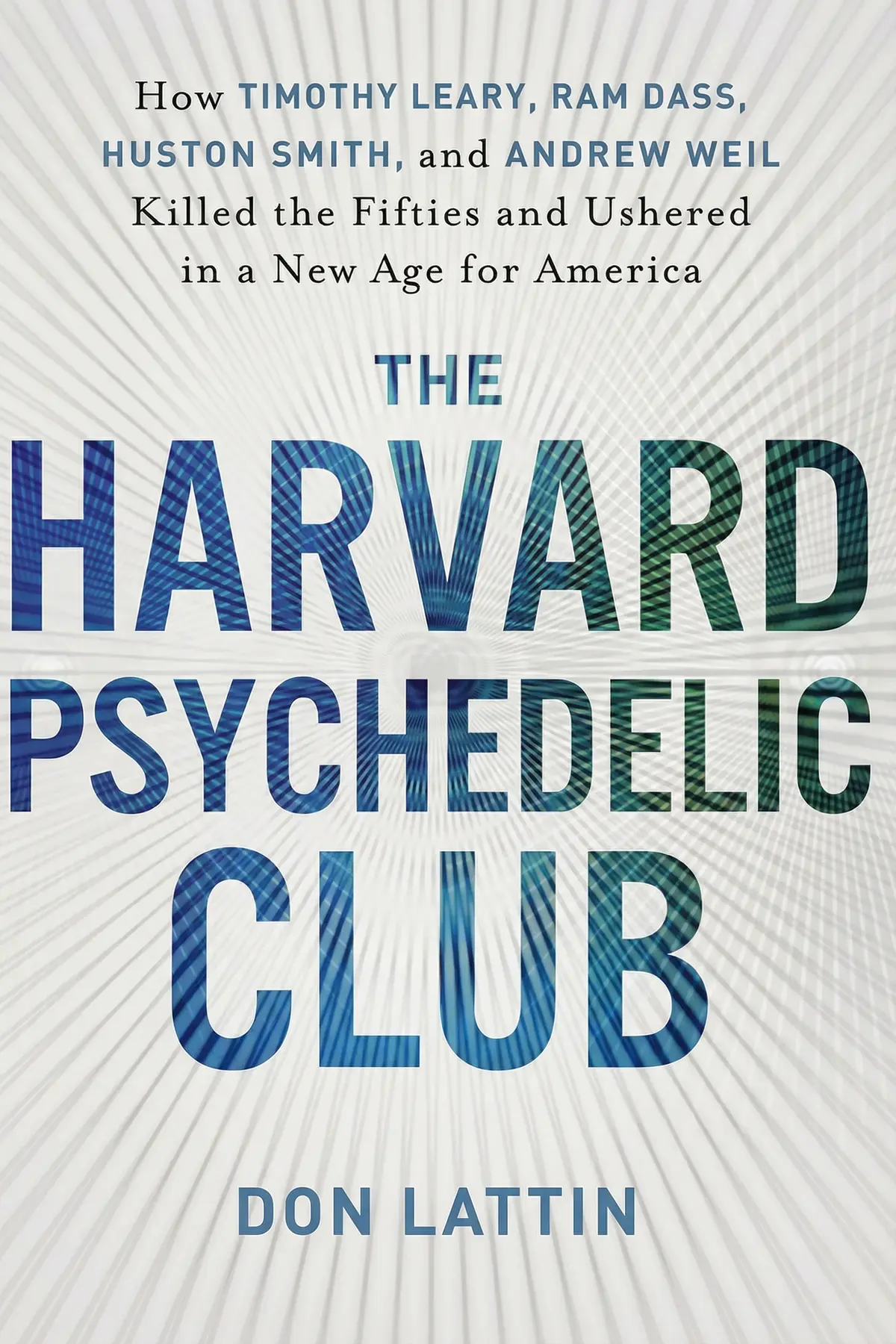
Explore the true story of four Harvard figures who launched the psychedelic movement. This narrative follows Timothy Leary, Ram Dass, Huston Smith, and Andrew Weil as they transformed American culture through consciousness expansion.
1 min 47 sec
As the calendar turned from the 1950s to the 1960s, a quiet revolution was simmering beneath the surface of American life. The post-war era had been defined by a sense of order, a commitment to conformity, and a palpable tension brought on by the Cold War. But for a new generation, these rigid structures were beginning to feel like a cage. There was a growing hunger for something deeper, something more authentic, and something that moved beyond the material boundaries of everyday existence. This hunger found an unlikely home in the hallowed, ivy-covered halls of Harvard University.
In this story, we follow four men who would become the architects of a massive cultural shift. They weren’t just looking to change the law or the government; they were looking to change the human mind itself. At the center were two psychology professors, Timothy Leary and Richard Alpert, who saw in psychedelic substances a tool for liberation. They were joined by Huston Smith, a brilliant scholar of world religions searching for the direct experience of the divine. And then there was Andrew Weil, a young, ambitious undergraduate whose interactions with these giants would lead to both a massive scandal and a new way of looking at health.
What makes this narrative so compelling isn’t just the chemistry of the drugs they studied, but the chemistry between the men themselves. Their collaboration was a mix of brilliant insight, ego, spiritual longing, and eventual betrayal. As we walk through their journey, we’ll see how their experiments with psilocybin and LSD moved from the laboratory to the streets, eventually dismantling the social norms of the fifties and ushering in a brand-new age of consciousness. This is the story of a club that never officially existed, yet changed the world forever.
2 min 42 sec
Two very different psychologists find common ground in the pursuit of the mind’s hidden potential, leading to a fateful trip to Mexico that changes everything.
1 min 58 sec
A renowned scholar of world religions joins the group, hoping to bridge the gap between academic study and the direct experience of mystical awe.
2 min 20 sec
An ambitious student’s exclusion from the inner circle leads to a bitter rivalry and an exposé that brings the Harvard project to a crashing halt.
2 min 47 sec
After the Harvard years, the leaders of the movement split into radical advocacy, spiritual guruism, and scholarly skepticism.
2 min 39 sec
The four protagonists leave a complex legacy, ranging from a multi-million dollar health empire to a cautionary tale of exile and addiction.
1 min 34 sec
The story of the Harvard Psychedelic Club is more than just a footnote in the history of the 1960s; it is the origin story of the modern American search for meaning. Timothy Leary, Ram Dass, Huston Smith, and Andrew Weil were four vastly different men who were brought together by a shared belief that the human experience was far broader than the culture of the 1950s allowed. Their work at Harvard acted as a stone thrown into a still pond, creating ripples that would eventually grow into the waves of the counterculture, the New Age movement, and the rise of holistic wellness.
Their journey teaches us that the quest for higher consciousness is rarely a straight line. It is a path filled with personal rivalry, ego, and the potential for both profound enlightenment and total self-destruction. While the era of legal, wide-open psychedelic research ended in scandal and prohibition, the ideas these men championed did not disappear. They redirected the American focus inward, toward the exploration of the soul and the mind.
Today, we see their influence everywhere—from the meditation apps on our phones to the growing mainstream interest in the therapeutic potential of the very substances they once studied. The throughline of their story is that the desire for a deeper connection to ourselves and the world is a fundamental human drive. Whether through the discipline of spirituality or the rigors of science, the quest to expand our horizons continues. The Harvard Psychedelic Club may have ended in 1963, but the conversation it started about the nature of our reality is still very much alive.
The Harvard Psychedelic Club chronicles a pivotal moment in American history when the rigid conformity of the 1950s collided with the radical experimentation of the 1960s. The book focuses on four primary figures associated with Harvard University: Timothy Leary, Richard Alpert (later known as Ram Dass), Huston Smith, and Andrew Weil. It follows their initial meetings, their controversial research into psilocybin and LSD, and the eventual fallout that saw them banned from academia but catapulted into the center of a cultural revolution. Readers are taken on a journey from the sterile laboratories of Cambridge to the spiritual ashrams of India and the chaotic compounds of Millbrook. The narrative promises to explain how these four men, driven by different motivations—from academic curiosity to personal spiritual seeking—effectively ended one era and birthed another. It explores the darker side of their experiments, the personal betrayals, and the enduring legacy of their quest to map the human mind, ultimately showing how their diverse paths helped shape modern spirituality, holistic health, and the counterculture movement.
Don Lattin is an author who often writes about topics involving religion and spirituality. His previous books include Jesus Freaks and Shopping For Faith. He’s also contributed to such television programs as Nightline, Good Morning America, and Dateline.
Listeners find this narrative to be an engaging and captivating experience that offers a thoroughly researched and intellectually stimulating history of the psychedelic movement in America during a pivotal era of the nation's past. The prose is remarkably high quality, and listeners value the candid depiction of the primary individuals featured.
Wow, what a wild ride through a decade that changed everything we think we know about spirituality and medicine. Lattin does a fantastic job of showing how these four men essentially killed the 1950s and paved the way for the modern world. I was hooked from the start by the descriptions of the early psilocybin tests at Harvard and the eventual spiral into Millbrook. It’s rare to find a non-fiction book that reads this much like a fast-paced novel while maintaining its journalistic integrity. The author treats Timothy Leary with a fair amount of skepticism, which I appreciated given his polarizing legacy. Seeing the evolution of Richard Alpert into Ram Dass was the highlight for me personally. This is absolutely essential reading for anyone interested in how the West discovered the East.
Show moreFinally got around to reading this and I’m struck by how relevant these stories still are to our current cultural climate. Lattin explores the bridge between the CIA’s early interest in LSD and the eventual explosion of the drug into the mainstream. The book paints a vivid picture of the ego-driven 'Harvard Men' who thought they were the first to discover ancient truths. It’s a fascinating study of how a small group of academics can inadvertently trigger a massive societal upheaval. I loved the details about their time in India and how those experiences transformed their initial academic curiosity into something much more profound. The prose is clear, the research is top-notch, and the narrative never feels like it's dragging. Highly recommended for history buffs.
Show moreThis book is a stunning piece of investigative non-fiction that manages to be both informative and incredibly fun to read. Don Lattin has a gift for taking complex religious and psychological concepts and making them digestible for the average reader. The stories of the 'Harvard Psychedelic Club' are told with such passion that you almost feel like you're in the room during their sessions. I was particularly fascinated by the involvement of Huston Smith and how he tried to reconcile these drug-induced visions with traditional faith. It’s a brilliant exploration of how the quest for transcendence can lead to both enlightenment and absolute disaster. The book doesn't preach, it just presents the facts of these four fascinating lives and lets you decide. It is easily one of the best books I’ve read on the subject.
Show moreDon Lattin provides a compelling look into a pivotal moment in American history that many of us only know through hazy stereotypes. By focusing on the intersection of Leary, Alpert, Smith, and Weil, the book manages to humanize figures who have since become myths. I particularly appreciated the framing of these four as the Trickster, Seeker, Teacher, and Healer, even if that RPG-style labeling felt a bit cheesy at times. The writing captures that shift from the buttoned-up fifties to the chaotic sixties with real grace and journalistic precision. While the narrative occasionally jumps around in time, the core story about their Harvard experiments remains fascinating. It’s a well-researched account that doesn't shy away from the egos and betrayals that defined the group.
Show moreEver wonder how we got from the 'Just Say No' era back to the current psychedelic renaissance in science? This book is the missing link that explains the origins of that cultural shift through four very different personalities. Picked this up on a whim and was surprised by how much I enjoyed the interplay between the 'Trickster' Leary and the 'Seeker' Alpert. The author's tone is perfectly expository—it’s informative without being dry, though it does get a bit gossipy regarding the Harvard fallout. To be fair, some of the connections Lattin tries to make to modern wellness feel a little forced. However, the sheer amount of research into their personal interviews makes the story feel incredibly authentic. It’s a grounded look at a very ungrounded time.
Show moreAs someone who grew up in the eighties, my only exposure to this stuff was the D.A.R.E. program, so this was an eye-opener. The book manages to strip away the hippie-dippie clichés to show the actual intellectual and spiritual motivations behind the early psychedelic movement. Lattin’s decision to follow four distinct paths—the seeker, the healer, the teacher, and the trickster—gives the book a great sense of balance. You get the religious perspective from Smith, the medical side from Weil, and the pure chaos from Leary. My only real gripe is that the ending feels a bit rushed compared to the deep dive into the Harvard years. Still, it’s a thought-provoking account that makes you question how much of our modern world was built on these trips. It definitely gave me a lot to think about.
Show morePersonally, I found the transformation of Richard Alpert into Ram Dass to be the most moving part of the entire narrative. Lattin captures the tension between the clinical setting of the Harvard labs and the wild, uncontained energy of the actual experiences. The way the author portrays Leary as the 'Trickster' is spot on; you can see his charm and his destructiveness in equal measure. It’s a well-written documentary in book form that doesn't try to idolize its subjects or turn them into villains. I appreciated the bibliography at the end because I now have a dozen other books on my 'to-read' list. The transition from the 50s into the 60s is handled with a great sense of atmosphere and timing. It’s an accessible gateway into a very complex subject.
Show moreAfter hearing so much about the counterculture movement, I expected a more linear and perhaps more 'literary' approach to this history. Lattin certainly did his homework, but the book feels a bit repetitive, as if chapters were written as standalone articles before being stitched together. You’ll find the same anecdotes appearing more than once, which can be a bit grating if you’re reading it in one sitting. Truth is, the sections on Andrew Weil felt slightly biased, painting him as a bit of a conniving character compared to the others. Still, as someone who knew very little about Huston Smith’s involvement, I found those parts deeply enlightening. It is a decent introduction for the uninitiated, even if the structure is a bit of a mess.
Show moreLook, this is a solid enough book if you want a crash course in 60s counterculture, but it has some notable flaws. The author often repeats himself from one chapter to the next, which suggests the editing could have been much tighter. I also wasn't entirely convinced by the thesis that these four men alone were responsible for such a massive shift in American values. While their impact was certainly there, the book ignores larger factors like the Vietnam War or the Civil Rights Movement. That said, the personal anecdotes about the betrayals at Harvard are genuinely entertaining and provide a lot of color. It reads more like a series of long-form magazine profiles than a cohesive historical narrative. It’s worth a read, just don't expect a masterpiece.
Show moreThe chapter on Andrew Weil really rubbed me the wrong way, as the author seems to have a personal axe to grind with him. Honestly, the book is quite disjointed and struggles to find a consistent chronological flow throughout the middle sections. I found myself flipping back several times because the name-dropping became so dense it was hard to keep track of the secondary players. It feels like Lattin had a mountain of research and felt obligated to include every single scrap of it regardless of the pacing. The repetitive nature of the storytelling makes it feel like you’re reading the same three months of 1960 over and over again. It’s not a terrible resource, but it certainly isn't the 'definitive' history I was hoping for when I bought it.
Show moreBen Macintyre

Michael Axworthy
Tom Standage

Jacinda Ardern
Ron Chernow
James Comey
Philip Freeman

AUDIO SUMMARY AVAILABLE
Get the key ideas from The Harvard Psychedelic Club by Don Lattin, plus 5,000+ more titles in English and Thai.







