
22 min 41 sec
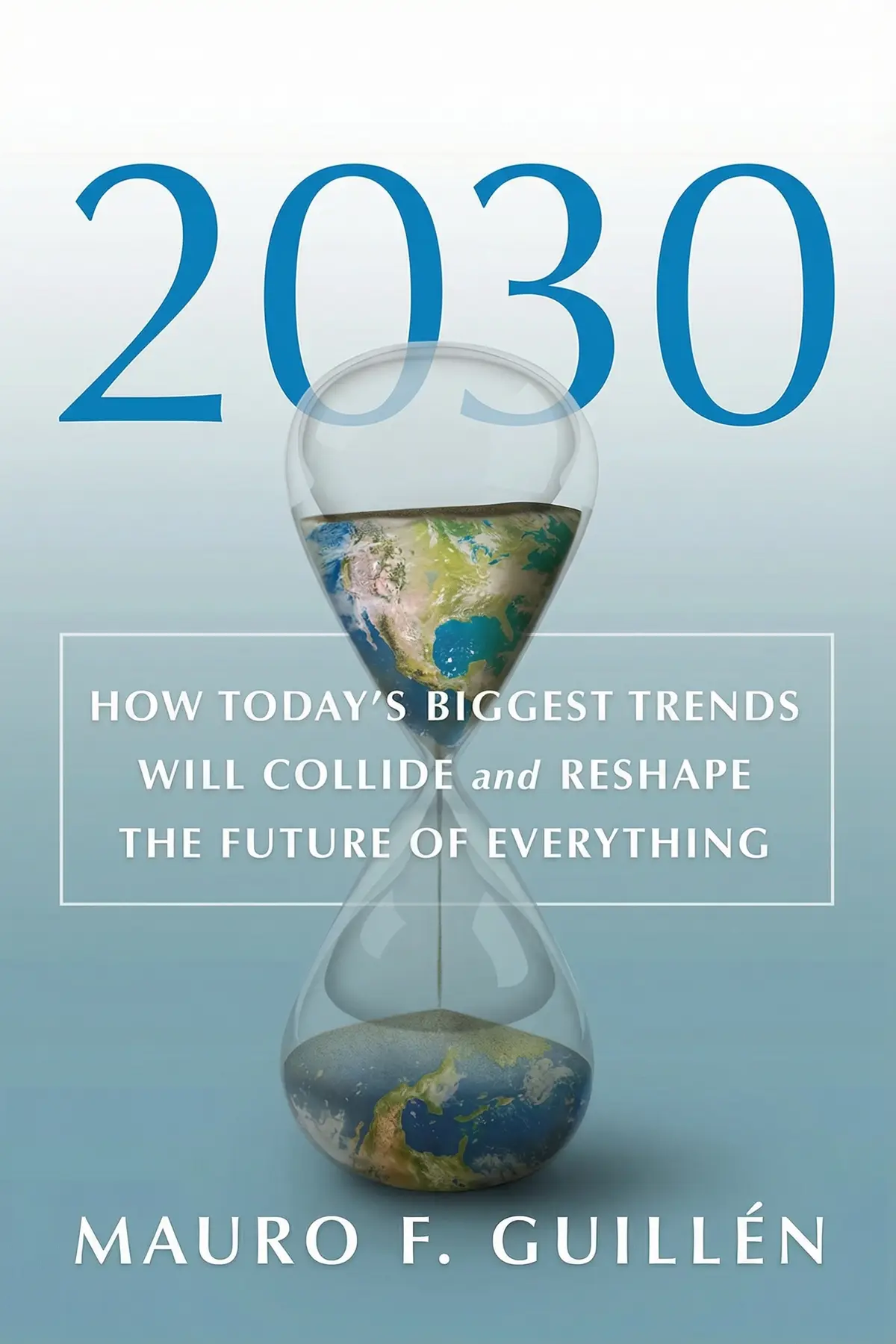
The Haves and the Have-Nots: A Brief and Idiosyncratic History of Global Inequality
An insightful exploration of global wealth disparities, examining the history, measurement, and societal consequences of inequality between individuals and nations, while revealing how our place of birth dictates our economic destiny.
Table of Content
1. Introduction
1 min 43 sec
In our modern era, the topic of inequality is nearly impossible to ignore. We see it in the headlines, we feel it in our communities, and we witness it in the stark contrasts between the infrastructure of a global superpower and the struggling roads of a developing nation. It is a phenomenon that touches every corner of the globe, yet it often feels like an abstract concept—something defined by cold numbers and complex charts. But what if we looked closer? What if we understood that inequality isn’t just a static condition, but a living, breathing force that shapes everything from our personal career paths to the stability of entire governments?
This exploration into the world of wealth and poverty takes us through the ‘idiosyncratic’ history of how the world became so divided. We are going to look at why a tiny percentage of the population seems to hold the keys to the kingdom, while the vast majority works to keep the engine running. We will define inequality not just as a lack of money, but as a profound imbalance—a measurement of the ‘haves’ versus the ‘have-nots.’
Throughout this journey, we will uncover the surprising reasons why some forms of inequality might actually be necessary for a functioning society, while others act as a poison that kills growth. We will look at the tools of the trade—the methods scholars use to put a number on fairness—and we will investigate why the gap between people and nations is once again on the rise. Most importantly, we will establish a throughline that connects our birthright to our bank accounts, revealing that the story of inequality is, in many ways, the story of humanity itself.
2. The Evolution of Inequality through Social Structures
2 min 28 sec
Explore the contrasting theories of Pareto and Kuznets to understand whether the gap between the rich and poor is an unchangeable law of nature or a product of policy.
3. The Difference Between Productive and Destructive Inequality
2 min 30 sec
Not all gaps in wealth are created equal; discover the ‘cholesterol’ analogy that helps economists determine when inequality drives progress and when it stunts it.
4. Tools for Quantifying the Wealth Gap
2 min 20 sec
Measuring the disparity between the rich and the poor is surprisingly difficult, but the Gini coefficient offers a window into the fairness of different nations.
5. Comparing Wealth Across Centuries and Borders
2 min 42 sec
How do we compare a modern billionaire to a historical tycoon? Learn how economists use purchasing power to bridge the gap between different eras and currencies.
6. The Trade-off Between Equality and Efficiency in Socialism
2 min 20 sec
Socialism promised a more equal society, but it came with a hidden cost. Examine why the quest for total equality often ended in stagnation and corruption.
7. The Rise of Inter-country Inequality Since the Industrial Revolution
2 min 20 sec
While nations were once relatively equal in their poverty, the Industrial Revolution created a permanent divide that globalization has struggled to close.
8. The Birth Lottery and the End of Class Solidarity
2 min 11 sec
Your destiny may be written before you are born; discover why your citizenship is now a more powerful predictor of wealth than your social class.
9. The Global Middle Class and Regional Divergence
2 min 22 sec
Compare the different shapes of inequality in the US and the EU and see why the ‘global middle class’ looks very different than you might expect.
10. Conclusion
1 min 45 sec
As we wrap up our look into the world of the ‘haves’ and the ‘have-nots,’ the throughline becomes clear: inequality is not a single, simple problem, but a multi-layered reality. We’ve seen that it exists on three distinct levels—among individuals within a nation, between the nations themselves, and on a grand global scale. While we often focus on the internal gaps in our own countries, the data tells us that the massive chasm between nations is actually the most significant driver of wealth disparity today.
The most striking takeaway is the sheer power of the ‘birth lottery.’ Knowing that 80 percent of our potential income is determined simply by where we were born and who our parents are is a humbling realization. It challenges the traditional narrative that success is purely a result of individual effort and points toward a world where geography is destiny. We’ve also seen that while inequality can act as a motivator for growth, it can just as easily become a structural trap that stifles innovation and wastes human potential.
Moving forward, the challenge for the world is to find a balance—to encourage the ‘good cholesterol’ of incentive-driven growth while dismantling the ‘bad cholesterol’ of systemic exclusion. Whether through smarter social policies, better tools for measurement like the Gini coefficient, or a more nuanced understanding of global investment, the goal remains the same: to create an economic environment where the gap between the ‘haves’ and ‘have-nots’ is no longer an impassable gulf. Understanding these forces is the first step toward building a more equitable global society.
About this book
What is this book about?
The Haves and the Have-Nots provides a comprehensive and accessible examination of economic inequality, moving beyond simple statistics to uncover the underlying forces that shape our world. Branko Milanović investigates the various dimensions of disparity, from the gap between neighbors to the vast chasm between wealthy and developing nations. The book traces the history of inequality from the Industrial Revolution to the modern era of globalization, offering a unique perspective on how social arrangements and geographic luck influence who thrives and who struggles. By listening to this summary, you will understand the critical difference between 'good' and 'bad' inequality and how they affect economic growth. You will also learn about the tools economists use to track wealth distribution, such as the Gini coefficient and Purchasing Power Parity. Ultimately, this summary promises to clarify the complex relationship between income, class, and nationality, providing a deeper understanding of why the economic playing field remains so uneven in the twenty-first century.
Book Information
About the Author
Branko Milanović
Branko Milanović is a specialist on inequality and poverty. He is the visiting presidential professor at the Graduate Center of the City University of New York and an affiliated senior scholar at the LIS Cross-National Data Center. He was formerly a lead economist with the World Bank's research department and visiting professor at University of Maryland and at Johns Hopkins University. Milanović is the author of Global Inequality: A New Approach for the Age of Globalization.
Ratings & Reviews
Ratings at a glance
What people think
Listeners describe the work as insightful and compelling, featuring clear writing that makes the material simple to digest. They value the comprehensive analysis of worldwide disparity and its evidence-based method, with one listener highlighting the blend of historical and financial viewpoints. Listeners prize how approachable the text is; one listener points out that it avoids overly dense jargon, making it a great fit for those who aren't economists.
Top reviews
Cameron
Milanović manages to turn what could have been a mind-numbing pile of data into a truly delightful exploration of human history and economics. The book is cleverly structured into three main essays that distinguish between national, international, and truly global inequality. His inclusion of literary and historical anecdotes—like comparing the wealth of Roman billionaires to modern tycoons—adds a layer of color that most economics books lack. It’s fascinating to see how citizenship has replaced class as the primary driver of income in the modern world. If you want to understand why the world looks the way it does today, this is a perfect starting point. The insights here are essential for anyone interested in global development.
Show morePaiboon
Ever wonder why your passport matters more for your bank account than your actual hard work or your college degree? This book provides a rigorous, factual answer to that question by looking at the citizenship premium that many of us take for granted. Milanović is a master at explaining how the gap between nations has grown so massive that the poorest person in a rich country is often still wealthier than the richest person in a poor one. The data on the top 10 percent receiving over half of global income is presented without hyperbole, making the reality even more shocking. It’s a brilliant, idiosyncratic history that feels more relevant now than when it was first published.
Show moreGift
The sheer scale of global disparity is laid bare in this book, and the numbers are honestly quite terrifying when you see them all lined up. Seeing that the top five percent of the world’s population controls nearly half of the total income really puts our current political climate into perspective. Milanović doesn't just give you the how of these numbers; he helps you understand the what by simplifying the ways we compare different currencies and economies. It's a factual, eye-opening journey that feels like a masterclass in global sociology as much as it does in economics. I walked away with a much deeper understanding of why migration is such a powerful force in the 21st century.
Show moreNina
Picked this up because I wanted a grounded look at how the world’s wealth is actually split, and Milanović delivers a surprisingly readable guide. Instead of just dry graphs, he uses these creative vignettes involving characters like Elizabeth Bennett from Pride and Prejudice to illustrate economic concepts. It makes the distinction between inequality within a country and inequality between nations feel much more tangible for a layperson. While some sections get a bit technical, the narrative drive usually carries you through the denser data points. I appreciated how he breaks down the global distribution without making it feel like a lecture. It’s an eye-opening look at how your birthplace might be the biggest predictor of your success.
Show moreAmelia
The chapter on the global financial crisis was worth the price of admission alone because it offers a perspective I hadn't encountered in other mainstream media. Milanović argues that massive inequality created a surplus of investable funds that couldn't find profitable homes, leading to the credit explosion that eventually collapsed. It’s a sobering look at how political stability in a democracy is threatened when the middle class is left behind by an unequal model of development. The book does an excellent job of bridging the gap between historical data and the current political rage we see in the West today. It’s slightly uneven in parts, but the core arguments are incredibly strong.
Show moreMingkwan
Before inequality became a trendy topic in the wake of Piketty’s massive tome, Milanović was already doing the heavy lifting in this concise and thoughtful volume. He breaks down the complex layers of how we measure wealth across borders, making it clear that globalization is not a simple win-lose scenario for everyone. I particularly enjoyed the way he explains how inequality within a country like the US compares to the disparities found across the entire European Union. The writing is clear, the tone is professional yet accessible, and the historical context provided for each vignette is genuinely fascinating. It’s a great piece of popular economics that doesn't sacrifice intellectual rigor for the sake of being easy.
Show moreGioia
Look, if you’re looking for a step-by-step policy guide on how to redistribute wealth, you are probably going to be disappointed by this particular book. However, if you want to understand the underlying mechanics of why some people are born into wealth while others face impossible odds, this is excellent. The vignettes are a clever way to break up the data, though I’ll admit some of the Mark Twain paraphrasing felt a bit unnecessary and forced. It’s a short read that packs in a lot of information about the three different ways we can perceive and measure inequality. It serves as a great introduction for non-specialists who want to understand the actual facts behind the headlines.
Show moreWyatt
As someone who usually feels a bit overwhelmed the moment a statistic appears on the page, I found this surprisingly engaging despite my natural aversion to numbers. Milanović has a gift for translating wonkish concepts into stories that actually resonate with the real world and current events. He shows that your citizenship and your parents’ income determine eighty percent of your life’s path, which is a pretty devastating realization to swallow. While I sometimes got lost in the more technical comparisons of purchasing power, the short chapters kept me moving forward. It’s not exactly light reading, but it’s definitely accessible if you’re willing to put in a little bit of mental effort.
Show moreThanit
To be fair, I learned a decent amount about the Gini coefficient and historical income gaps, but the book often felt like a series of ramblings without a clear destination. Two hundred pages later, the main takeaway seems to be that global inequality is complicated and there are no easy answers, which feels like a bit of a letdown. He spends a lot of time detailing the what of income distribution but almost no time on the significance of these findings. I found the lack of analysis regarding the quality of life or the actual lived experience of the middle class frustrating. It is statistically heavy but lacks the prescriptive punch I was hoping for when I started the first chapter.
Show moreBo
Not what I expected at all, and frankly, I found the idiosyncratic style to be more of a distraction than an asset to the serious reader. The author jumps between serious economic analysis and weirdly placed jokes or literary references that do not always land for me. While some people might find the anecdotes about soccer or Jane Austen charming, I felt they diluted the actual research and data. There’s a lot of talk about income distributions, but very little attention paid to the actual cost of living or rising luxury standards. It felt less like a cohesive book and more like a collection of blog posts that were stitched together without a final edit.
Show moreReaders also enjoyed

A Room of One’s Own
Virginia Woolf
23 Things They Don’t Tell You About Capitalism
Ha-Joon Chang
Abolish Rent: How Tenants Can End the Housing Crisis
Tracy Rosenthal
A Little History of Economics
Niall Kishtainy
Abortion: Our Bodies, Their Lies, and the Truths We Use to
Jessica Valenti
A Splendid Exchange: How Trade Shaped the World
William J. Bernstein
Afropean: Notes From Black Europe
Johny Pitts
AUDIO SUMMARY AVAILABLE
Listen to The Haves and the Have-Nots in 15 minutes
Get the key ideas from The Haves and the Have-Nots by Branko Milanović, plus 5,000+ more titles in English and Thai.
- 5,000+ titles
- Listen as much as you want
- 7-day free trial
- Cancel anytime







