
A Guide to the Good Life: The Ancient Art of Stoic Joy
William B. Irvine
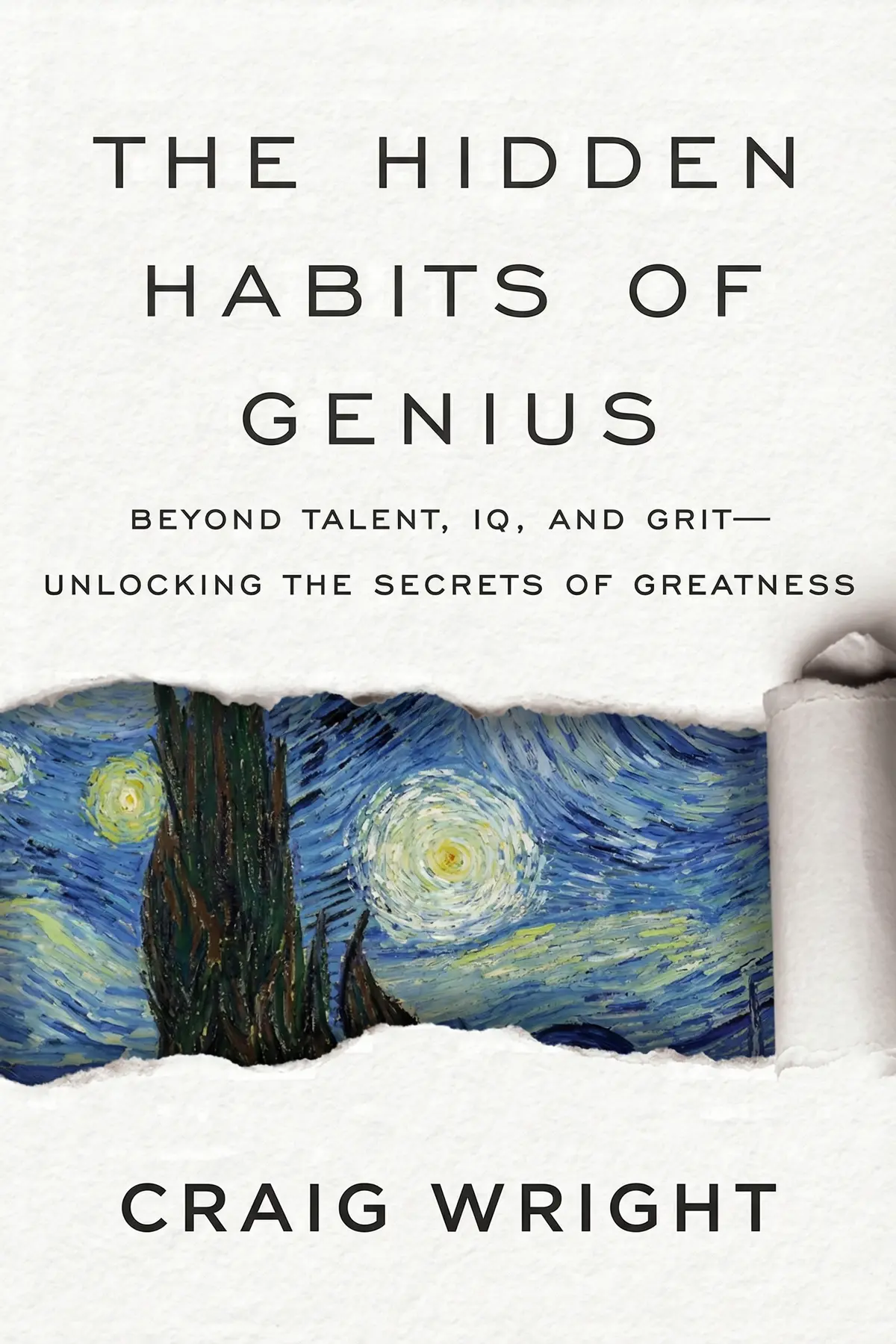
Explore the unconventional behaviors and mindsets that define history’s greatest minds. This summary reveals how childlike curiosity, intense focus, and even personal struggles fuel the creative fire of true genius.
1 min 15 sec
When we hear names like Michelangelo, Shakespeare, or Toni Morrison, we often imagine people born with a spark that the rest of us simply lack. We use the word “genius” as if it were a rare blood type or a gift from the gods. But what if the qualities that define these legends aren’t just innate talents? What if greatness is actually built on a foundation of specific, often surprising, habits?
In this exploration of the lives of history’s most influential figures, we move past the traditional metrics of IQ scores and standardized testing. We begin to see that genius is a way of interacting with the world. It is found in the way Leonardo da Vinci wrote his to-do lists and in the reason Vladimir Nabokov sought refuge in a parked car to write his prose.
Through the following sections, we will identify the common threads that link the scientist to the artist and the revolutionary to the novelist. We’ll see that while we might not all become household names, the habits of these geniuses offer a blueprint for expanding our own creative horizons. The throughline here is simple: genius is as much about how you live and think as it is about what you know. Let’s dive into the behaviors that unlock the secrets of greatness.
2 min 09 sec
Discover how the legendary Mary Shelley and Pablo Picasso utilized the power of a fresh, youthful gaze to shatter artistic boundaries and create lasting masterpieces.
2 min 09 sec
Learn why narrow specialization is the enemy of greatness and how Leonardo da Vinci’s diverse interests fueled his most famous innovations.
2 min 15 sec
See how figures like Einstein and Nabokov achieved deep focus in wildly different environments to bring their complex theories and stories to life.
2 min 02 sec
Explore why genius requires a healthy dose of defiance, using the examples of Andy Warhol’s pop art and Martin Luther’s religious revolution.
2 min 06 sec
Understand the profound link between mental struggle and innovation, and how artists like Yayoi Kusama use their difficulties as a source of power.
2 min 22 sec
Discover why the best ideas often come when you stop working, from Charles Dickens’ long walks to the creative secrets hidden in REM sleep.
1 min 33 sec
As we look back at the habits of these remarkable individuals, a clear picture emerges. Genius is not a single lightning bolt of inspiration, nor is it a high score on a test. It is a dynamic way of living that combines the curiosity of a child with the discipline of a master. It is the courage to be different, the resilience to use one’s struggles as fuel, and the wisdom to know when to rest.
By examining the lives of Da Vinci, Einstein, Shelley, and others, we see that these ‘hidden’ habits are things we can all incorporate into our own lives. We can choose to be more curious, to protect our focus, and to embrace our unique perspectives. We can learn to value our ‘downtime’ as much as our ‘uptime,’ recognizing that a quiet walk might be the most productive thing we do all day.
If you want to put this into practice immediately, start small. Take a walk today at a leisurely pace. Don’t listen to a podcast or check your phone. Just let your mind wander. Scientists have found that as long as you don’t over-exert yourself, the act of walking allows your thoughts to roam freely, mimicking the ‘incubation’ state that geniuses have used for centuries. By stepping away from the grind and letting your mind breathe, you might just find that your next great idea has been waiting for you all along. Greatness isn’t a destination; it’s a way of traveling. Keep your eyes open, stay curious, and never be afraid to break a few rules along the way.
What truly separates a genius from a high achiever? In The Hidden Habits of Genius, the behaviors of legendary figures—from Leonardo da Vinci to Albert Einstein—are analyzed to uncover the secrets of greatness. The book suggests that genius isn’t just about a high IQ or natural talent; it is a collection of specific habits and psychological traits that can be cultivated. You will learn how to look at the world with fresh eyes, why curiosity must be broad rather than narrow, and the surprising way that mental relaxation leads to major breakthroughs. By examining the lives of artists, scientists, and revolutionaries, this guide offers a roadmap for anyone looking to unlock their creative potential and think more expansively. It promises to shift your perspective on what it means to be brilliant and how you can apply these 'hidden' habits to your own life and work.
Craig Wright is a professor of music at Yale University. He is well-known for his popular and engaging course, Exploring the Nature of Genius. Wright is an accomplished author whose other notable works include Listening to Music and The Maze and the Warrior. He originally hails from Oklahoma and has dedicated much of his career to studying the intersections of history, art, and human brilliance.
Listeners find the content captivating and packed with detailed information. They value the book's perceptiveness, with one listener mentioning how it integrates several different disciplines. The storytelling is praised, as one listener points out how the anecdotes are shared in a concise manner.
Wright manages to pull back the curtain on what it truly means to be a game-changer in any field. I found the cross-disciplinary approach refreshing because it connects the dots between 18th-century composers and modern tech moguls. The anecdotes are succinct, ensuring the narrative never feels bogged down by dry academic data. Frankly, it’s a dense read that manages to stay engaging throughout every chapter. My only minor gripe is the occasionally repetitive nature of the habits themselves. It is a fantastic exploration of the human mind.
Show moreIt’s rare to find a book that blends rigorous research with such readable prose and practical takeaways for daily life. I was struck by how many geniuses relied on simple habits like long walks, daydreaming, and even consistent exercise to fuel their work. The author does a great job of showing that original thinking is often a marathon, not a sprint. Every page seems to contain a new interesting fact about people we think we already know, like Ben Franklin or Picasso. Look, if you want to understand the mechanics of creativity, this belongs on your shelf.
Show moreTruth is, I used to think genius was just about being born with a giant brain and a high IQ. This book completely dismantled that myth by focusing on original thinking and the persistence to see a vision through. The stories about Jack Ma and Albert Einstein failing in school were particularly inspiring for anyone who struggled with traditional education. Wright’s anecdotal style makes the information stick in a way that a textbook never could. It is an insightful, broadly researched masterpiece that challenges our modern obsession with standardized testing and grades.
Show moreEver wonder what actually separates a high-IQ person from a world-changing genius who leaves a lasting legacy? Wright’s formula G = S x N x D provides a fascinating framework for answering that specific question. I loved the chapters exploring how hidden habits like curiosity and rule-breaking are more vital than raw test scores. The book is packed with insights, especially regarding how many geniuses were actually late bloomers or academic failures. Not gonna lie, it changed how I view the importance of standardized testing for my own children.
Show morePicked this up on a whim after seeing it on a best-seller list and it did not disappoint. The narrative moves at a brisk pace, delivering punchy stories about Charles Darwin, Steve Jobs, and even Lady Gaga. It’s dense with information but never feels overwhelming because the author’s tone remains conversational and accessible. To be honest, I appreciated the distinction he made between being a child prodigy and a true creative genius. It is an empowering read for anyone who felt like they didn't fit the standard academic mold in school.
Show moreAs a music enthusiast, I appreciated Dr. Wright’s unique perspective, though I wish he leaned more into his Yale musicology background. The chapter on musical genius was a highlight, but the book spends quite a bit of time on business figures. I found the fox versus hedgehog concept to be a particularly useful way to categorize different styles of thinking. Some of the billionaire quotes felt a bit like filler to me, but the overall historical research is top-notch. It’s a solid, multi-disciplinary look at the depths of human potential.
Show moreWhile the narrative flows beautifully, the actual habits discussed occasionally felt like common-sense advice wrapped in very fancy packaging. I was slightly disappointed that the research didn't dive deeper into modern psychological theories like Dweck’s growth mindset or Ericsson’s deliberate practice. The distinction between a prodigy who mimics and a genius who creates was well-handled and clear, though. It’s an engaging collection of biographies, but it lacks the scientific depth of other academic books on talent. Still, it’s worth a read for the historical anecdotes alone.
Show moreFinally, a book that acknowledges the structural barriers preventing half the population from ever being recognized as a genius. The chapter dedicated to women was deeply necessary and highlighted figures like Mary Shelley and Marie Curie with great care. Wright shows that genius isn't just about talent, but also about the opportunity to be heard in a crowded room. I found the writing style to be succinct yet incredibly dense with historical context. This is the kind of book you want to devour slowly to absorb all the cross-disciplinary connections.
Show moreThe intersection of morality and achievement is where this book gets genuinely uncomfortable and complicated. Wright doesn’t shy away from the fact that many of our greatest minds were absolute monsters to their families and peers. Reading about how these geniuses exploited those around them for the sake of their art was eye-opening. While the writing is insightful, I struggled with the conclusion that we should just be grateful for their contributions. It’s a dense, challenging book that leaves you questioning if the team really should take one for the collective good.
Show moreMaybe I expected too much from a Yale professor, but this felt like a glorified self-help manual. The constant hero-worship of figures like Jeff Bezos and Elon Musk was incredibly distracting for me. Just when I got interested in the accomplishments of Leonardo da Vinci, the author would pivot to a quote from a billionaire. It feels superficial to equate world-altering art with massive wealth accumulation. To be fair, there are some decent stories about Marie Curie, but they are buried under platitudes and corporate quotes.
Show moreWilliam B. Irvine
Andrew D. Thompson
Deepak Chopra
Virginia Woolf
AUDIO SUMMARY AVAILABLE
Get the key ideas from The Hidden Habits of Genius by Craig Wright, plus 5,000+ more titles in English and Thai.







