
Competing Against Luck: The Story of Innovation and Customer Choice
Clayton M. Christensen
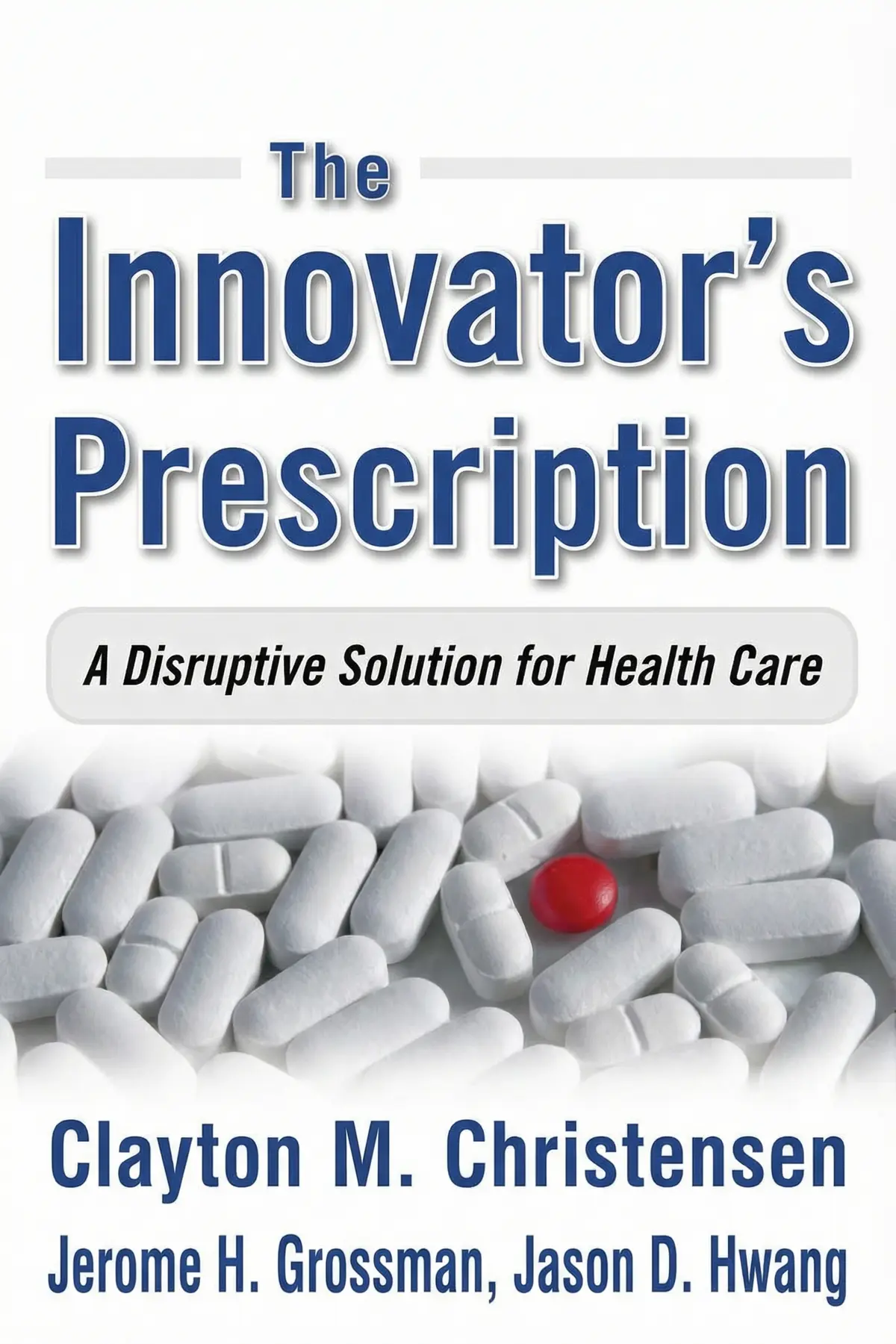
Discover how the principles of disruptive innovation can modernize a struggling healthcare system by making clinical care more affordable, accessible, and precise through business model shifts and technological enablers.
1 min 23 sec
When we talk about healthcare today, the conversation usually feels like a tug-of-war. On one side, you have advocates for private insurance and market-driven models; on the other, there are those pushing for a government-controlled, public system. It’s a debate that has dominated headlines for decades, growing even more intense with major policy shifts like the Affordable Care Act. But what if this entire debate is missing the point? What if the real problem isn’t who pays the bill, but rather the way healthcare is structured and delivered in the first place?
This is where we find the central thesis of our discussion today. The current medical landscape is inefficient, expensive, and often difficult to navigate, but the solution might not come from a new law or a political compromise. Instead, the answer could lie in the world of business innovation. By applying the same principles that turned computers from massive, room-sized machines into tools we carry in our pockets, we can rethink the entire medical experience.
In this exploration, we’re going to look at how ‘disruptive innovation’ can be the key to making healthcare both better and cheaper. We will see why looking at the history of IBM can teach us about the future of clinics, why the traditional hospital model is actually working against its own goals, and how we can empower nurses and technology to take the burden off doctors. This isn’t just about making small tweaks to a broken system; it’s about a total reimagining of what medicine can be.
2 min 17 sec
Explore how the combination of new technology and creative business strategies can lower costs while increasing accessibility, following a pattern seen in every major modern industry.
2 min 07 sec
Learn why understanding the specific needs and motivations of patients is more effective than simply categorizing them by their medical conditions or demographics.
2 min 27 sec
Discover how splitting the traditional hospital system into solution shops, value-added processes, and facilitated networks can bring order to a chaotic industry.
2 min 04 sec
Explore how moving away from expert-intensive craft toward rules-based technology can lower the cost of medical care and increase accuracy.
1 min 56 sec
Understand the revolutionary transition from symptom-based medicine to precision medicine, where treatments are tailored to the actual molecular cause of a disease.
2 min 00 sec
Learn why the ‘do-everything’ hospital model is outdated and how separating diagnostic tasks from treatment processes can improve efficiency.
1 min 58 sec
Discover how delegating routine tasks to nurses and technology can save the medical profession from burnout while making care more accessible for patients.
2 min 03 sec
Understand how moving away from ‘fee-for-service’ toward integrated capitation and personal health accounts can create the right incentives for a healthy society.
1 min 22 sec
The path forward for healthcare isn’t found in a simple policy change or a political victory; it requires a fundamental shift in how we think about the delivery of medical services. As we have seen, the current system is struggling because it tries to force high-complexity ‘solution shop’ logic into every single interaction. By embracing the principles of disruptive innovation, we can begin to untangle this mess. We can separate the mystery-solving of diagnosis from the efficient processes of treatment, and use technology to make high-quality care something that is routine and affordable rather than rare and expensive.
This transformation means empowering different levels of the medical workforce—giving nurses more agency and using algorithms to handle the ‘rules-based’ parts of medicine. It also means changing the financial incentives so that we reward health and efficiency rather than just volume and activity. It’s about moving toward a world where ‘precision medicine’ isn’t a luxury, but the standard for everyone.
Ultimately, the throughline of this journey is empowerment. Empowering patients with their own health data and financial incentives, empowering clinicians with better tools, and empowering entrepreneurs to build new models that work for the modern world. The challenge is significant, but the blueprint is clear. By looking at medicine through the lens of innovation, we can finally prescribe a solution that works for everyone.
The Innovator's Prescription offers a visionary framework for fixing the systemic issues plaguing modern healthcare. Rather than getting bogged down in the political debate between public and private funding, the authors argue that the real solution lies in the same forces of disruptive innovation that have revolutionized industries like computing and retail. By applying business principles to medicine, we can break away from the expensive 'do everything' hospital model and move toward specialized, efficient services. The book promises a roadmap for entrepreneurs, policymakers, and medical professionals to transform the industry. It explores how technological enablers can simplify complex medical tasks, how distinct business models like solution shops and value-added processes can reduce waste, and how shifting financial incentives can finally make healthcare affordable. Ultimately, the goal is to shift from a system of intuitive guesswork to one of precision medicine, where high-quality care is accessible to everyone regardless of their economic standing.
Clayton M. Christensen was a distinguished professor at Harvard Business School and the celebrated author of several New York Times bestsellers, including the seminal work The Innovator's Dilemma. In 2011, he was recognized as the world's most influential business thinker by Thinkers50. He was joined by the late Jerome H. Grossman, M.D., a pioneer in the world of health informatics and an expert in healthcare policy who served as the director of the Health Care Delivery Policy Program at the Harvard Kennedy School. Completing the trio is Jason Hwang, M.D., an internal medicine physician and entrepreneur who previously served as the executive director of the Innosight Institute, where he focused on innovation strategy.
Clayton M. Christensen
Clayton M. Christensen
Clayton M. Christensen
Listeners find the material deeply insightful, with one listener praising its lucid evaluation of problems and remedies within the healthcare sector. Furthermore, they deem it a must-read for professionals in life and health sciences, valuing the emphasis on delivering superior care while reducing expenses. The book also earns praise for its engaging pacing, clarity, and intellectually stimulating themes; specifically, one listener points out the useful conceptual frameworks provided, while another mentions the compelling, well-documented case made for industry disruption and transformation.
After hearing so much about Christensen’s work in tech, I wasn't sure how it would translate to the messy world of medicine, but this is a masterclass in strategy. The authors break down the industry into three distinct business models—solution shops, value-added processes, and user networks—and it just clicks. It makes you realize why our current 'one-size-fits-all' hospital system is so prohibitively expensive and inefficient. The distinction between 'Intuitive Medicine' and 'Empirical Medicine' is a game-changer for anyone trying to understand why some treatments are standard while others remain guesswork. Frankly, the argument for moving toward a wellness-based profit model, like Kaiser Permanente, is the most logical path forward I’ve encountered. It’s dense, sure, but the way they link molecular diagnostics to the disruption of traditional hospitals is brilliant. If you want to understand the future of healthcare, this is the blueprint.
Show moreFinally got around to this behemoth, and the framework for moving from symptom-based diagnosis to cause-based precision medicine is absolute genius. The authors argue that we are currently stuck in a 'solution shop' mentality where we bill for inputs rather than outputs, which is why costs are spiraling out of control. When they mention that healthcare spending grew at 9.8% while the rest of the economy was at 7.2%, it highlights the urgency of this disruption. I was particularly impressed by the discussion on 'hot swapping' and how integrated entities can orchestrate change faster than independent practices. Not gonna lie, the book is long and sometimes reads like a textbook, but the insights into how web communities like dLife are already disrupting traditional medical education are spot on. This is essential reading for anyone in the life sciences who actually wants to fix the system.
Show moreThe chapter on 'interdependent reconfiguration' using the color TV analogy was a lightbulb moment for me. It explains perfectly why individual doctors' offices can't fix the system on their own—they are all stuck in a web of dependencies. The authors provide a clear-eyed analysis of how molecular diagnostics and telecommunications act as the 'enablers' for disruption. By moving care away from high-cost 'solution shops' and into more efficient business models, we can finally make quality care affordable for everyone, not just the wealthy. I loved the focus on how we need to train the next generation of medical students in 'self-improving processes.' It’s a vision of healthcare that is proactive rather than reactive. This book is packed with big ideas and detailed frameworks that offer a genuine sense of hope for a broken industry. A must-read for innovators.
Show moreThis book doesn't just complain about the problem; it provides a blueprint for an equitable system where profit is tied to wellness instead of sickness. I was fascinated by the history of how health insurance transitioned from a disaster-protection product into a tax-free compensation tool for employers. Christensen and his team make a strong case that the only way to reduce prices is through disruptive competition that moves care to lower-cost venues. The idea of 'expert networks' allowing patients to teach each other through sites like dLife is such a modern, necessary addition to the medical landscape. It’s an upbeat and encouraging look at a daunting subject. It’s definitely thick and requires a lot of focus, but the framework for 'Solution Shops' vs. 'VAPs' is something I will be using in my own business thinking for years.
Show moreAs someone working in healthcare administration, this felt like the first time a book actually explained the structural incentives that keep us stuck in a fee-for-service loop. The truth is, people do what is profitable, and our current reimbursement scheme is a regulatory nightmare that rewards sickness over health. Christensen’s take on 'interdependent reconfiguration' is probably the most sophisticated part of the text. He explains that we can't just fix one piece; we need an integrated system that wraps its arms around the whole process. I did find the sections on the history of health insurance a bit dry, and the writing style can be quite academic and repetitive. Still, the call for more 'rules-based' therapies to lower costs through nurse practitioners and technology is a powerful solution to our chronic shortages. It’s a very well-supported argument for a systemic overhaul.
Show moreEver wonder why we have a nursing shortage despite spending billions? This book dives deep into the regulatory and educational failures that create these bottlenecks. The authors aren't afraid to be technical, which I appreciated. They break down the 'Value-Added Process' (VAP) businesses and explain why they should charge for outputs rather than billing for every single input like a solution shop does. Personally, I found the discussion on the 'war for talent' and how employers use health benefits as a weapon to be a very realistic take on the corporate side of medicine. My only gripe is that it can be a bit 'consultant-heavy' in its tone, with lots of imposing charts that say the same thing. But the core message—that we need to move toward fixed-fee systems to incentivize wellness—is hard to argue with. It’s a solid 4-star read.
Show moreNot gonna lie, it's a dense read that requires some serious coffee, but the insights into molecular diagnostics as a 'disruptive enabler' are incredibly well-supported. The authors argue that our bodies have a 'limited vocabulary' of symptoms, which is why we need better tech to see the underlying causes. This shift allows for 'Empirical Medicine' where results are predictable and costs are lower. I found the section on how Kaiser Permanente is structured to profit from keeping people healthy to be the most compelling part of the book. It’s a refreshing change from the usual complaints about healthcare. While the book repeats its main points a bit too often, the clarity of the analysis regarding the 'chicken-and-egg' problem of new tech is worth the price of admission. It’s definitely a master strategy document for the industry.
Show morePersonally, I found the discussion on 'rules-based therapy' versus symptom-based diagnosis to be the most compelling part of the trio’s argument. If we can standardize how we treat common ailments, we can empower nurse practitioners and lower-cost providers to do the work that currently clogs up expensive hospitals. The book is sharply written, though it does get bogged down in its own theory at times. I wish they had addressed the 'market power' of big providers more, but as a bottom-up approach for entrepreneurs, it’s brilliant. The stats on the rising cost of care since the 70s are staggering and provide a necessary wake-up call. It’s a bit of a 'journalistic tour' meets a 'business strategy' book, and while the repetition is a bit much, the core message of disruption is impossible to ignore.
Show moreLook, I have a hard time accepting the core premise that we should treat a hospital like a Toyota factory or a consulting firm. While the analysis of rising GDP costs is undeniably sharp, the book feels a bit cold when it ignores the human element of care. To be fair, the authors do a great job explaining the 'chicken-and-egg' problem of technological integration—comparing it to RCA and color TV was a clever touch. However, the repetition becomes exhausting by the middle of the book. I felt like I was reading the same three arguments about disruptive innovation rebranded for every chapter. It’s definitely thought-provoking, and the data on how symptoms 'share' a limited vocabulary is fascinating, but I remain skeptical that business-school frameworks can solve the nuanced, emotional realities of patient suffering. It’s an important perspective, but it shouldn't be the only one.
Show moreTo be fair, the first hundred pages are brilliant, but the rest of this book feels like a repetitive collection of HBS lectures stitched together without a good editor. I found myself vehemently disagreeing with the idea that 'simplifying technologies' will naturally lead to better outcomes for complex chronic conditions. The authors seem to suffer from a bit of consistency bias, trying to shoehorn every aspect of human biology into their 'disruptive innovation' theory that worked for disk drives. While the stats on overhead costs are eye-opening, the book ignores the rampant over-pricing that comes from market power rather than a lack of innovation. It's too long, too digressive, and frankly, a bit detached from the reality of clinical practice. I had to stop midway because the 'analogical reasoning' just felt like it was ignoring the unique complexities of the human body.
Show more

Hamilton Helmer

Duncan Clark
John Carreyrou
AUDIO SUMMARY AVAILABLE
Get the key ideas from The Innovator’s Prescription by Clayton M. Christensen, plus 5,000+ more titles in English and Thai.







