
15 min 12 sec
The Introvert’s Way: Living a Quiet Life in a Noisy World
A transformative guide for quiet individuals to reclaim their power in a noisy world. It explains the biological roots of introversion and provides practical strategies for setting boundaries and thriving socially.
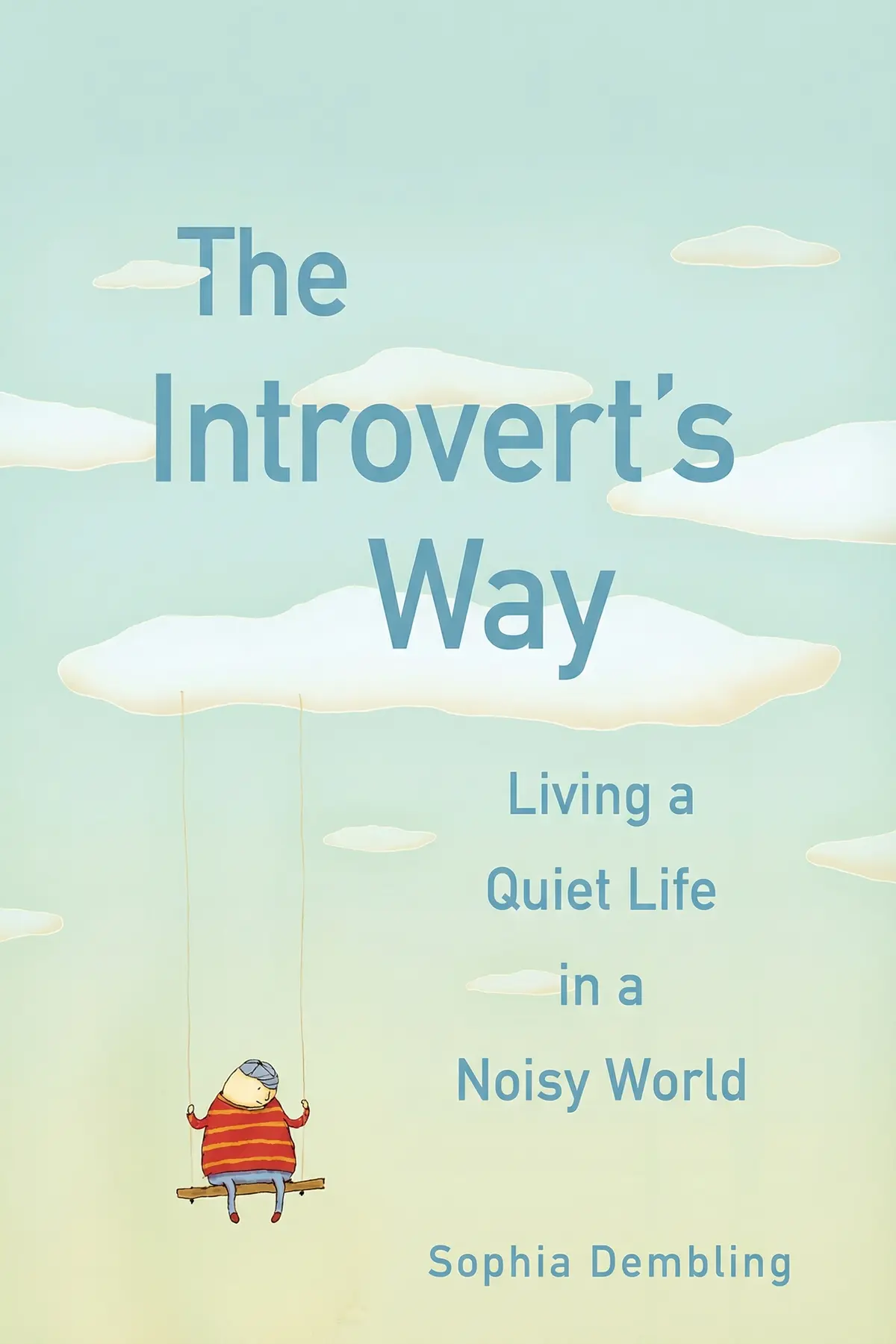
Table of Content
1. Introduction
1 min 26 sec
Imagine walking into a room filled with chatter, bright lights, and high-energy music. For many, this is the definition of a great time, an environment where they feel most alive. But for a significant portion of the population, this same scenario feels like an exhausting marathon. If you belong to the latter group, you’ve likely spent a good portion of your life wondering why you don’t quite fit into the high-octane mold that society seems to admire. You might have been told you’re too quiet, too serious, or that you need to get out of your shell.
The reality is that we live in a culture that treats extroversion as the gold standard for success and social health. From the way our schools are structured to the layout of modern offices, the world is often built for those who think out loud and thrive in groups. But what if the pressure to conform is actually misplaced? What if the quiet reflection, deep thinking, and measured approach of the introvert are not just valid, but essential?
In this exploration of The Introvert’s Way, we are diving into the heart of what it means to be a quiet person in a noisy world. This isn’t about learning how to mimic extroverts or forcing yourself to become someone you’re not. Instead, it’s a journey toward radical self-acceptance. We will look at why your brain works the way it does, how to protect your precious energy, and how to assert your needs without feeling guilty. By the end, you’ll see that being an introvert isn’t a limitation to be managed—it’s a distinct way of being that carries its own unique brilliance and power. It’s time to stop apologizing for your nature and start living in a way that honors your inner life.
2. Redefining the Quiet Presence
1 min 58 sec
Society often views introversion as a social handicap, but there is immense strength in silence. Discover why a soft-spoken approach can be more influential than the loudest voice.
3. The Biological Root of Personality
2 min 24 sec
Introversion isn’t just a mood; it’s hardwired into your brain. Learn the fascinating science behind dopamine and acetylcholine that dictates how you respond to the world.
4. Mastering the Economy of Energy
2 min 08 sec
Energy is the most precious resource an introvert has. Explore the concept of ‘psychic energy’ and learn why choosing where to spend it is the key to avoiding burnout.
5. The Art of Training Your Social Circle
2 min 09 sec
Boundaries are not walls; they are bridges to better relationships. Learn how to communicate your need for solitude in a way that strengthens your connections.
6. Social Survival Strategies
1 min 56 sec
Parties don’t have to be painful. Discover practical ‘hacks’ for navigating social gatherings, from the sanctuary of the bookshelf to the power of the curious question.
7. Cultivating Harmony and Balance
1 min 54 sec
Finding the middle ground is the final step in the introvert’s journey. Learn how to live authentically while building a world based on mutual respect between all personality types.
8. Conclusion
1 min 17 sec
As we conclude this journey through the landscape of the introverted mind, the most important takeaway is that your quiet nature is a gift, not a burden. We have explored how the modern world often overlooks the power of silence, but we’ve also seen that silence has a gravity all its own. By understanding the biological reality of your brain—how you process dopamine and rely on acetylcholine—you can finally stop wondering why you aren’t like everyone else and start celebrating the unique way you are wired.
Success for an introvert doesn’t look like becoming the loudest person in the room; it looks like mastering the economy of your own energy. It means setting boundaries with confidence, training the people in your life to respect your need for solitude, and navigating social spaces with clever strategies that protect your inner peace. Whether it’s taking a breather in a quiet corner or using your skills as a deep listener to connect with others, you have the tools to thrive exactly as you are.
Remember, the goal is balance. In a world that can’t stop talking, your ability to think, listen, and reflect is more necessary than ever. Don’t be afraid to claim your space in the world, even if you do it softly. By honoring your introverted way, you aren’t just improving your own life; you are bringing a much-needed sense of calm and depth to a noisy world. Go forth and be your quiet, powerful self.
About this book
What is this book about?
The Introvert's Way offers a refreshing and empowering look at a personality trait that is often misunderstood by society. For too long, introversion has been viewed as a hurdle to overcome or a personality flaw to be fixed. This summary challenges that notion, presenting introversion not as a deficit, but as a unique way of processing the world. It explores the fascinating differences in brain chemistry that explain why some people crave the spotlight while others find peace in solitude. Listeners will discover a roadmap for navigating an extrovert-centric culture without losing their authentic selves. The promise of the book is simple but profound: you do not need to change who you are to be successful, happy, or influential. By learning to manage personal energy levels, establishing clear social boundaries, and utilizing quiet strengths, introverts can lead a fulfilling life. Whether it is handling a crowded party or communicating needs to loved ones, this guide provides the tools to speak up for yourself with quiet confidence.
Book Information
About the Author
Sophia Dembling
Sophia Dembling is an accomplished writer and a self-identified introvert who has dedicated much of her work to exploring the inner lives of quiet people. She is a frequent contributor to Psychology Today, where she shares insights on personality and behavior. In addition to her work on introversion, she has authored several books, including Introverts in Love, which further examines how introverted traits influence personal relationships and social dynamics.
Ratings & Reviews
Ratings at a glance
What people think
Listeners find this book to be an accessible and highly enlightening resource for introverts, highlighted by chapter titles that are genuinely hilarious. Additionally, the quality of the writing is excellent, and listeners appreciate how the material makes them feel validated and at peace. The book is also commended for its perspective on introversion, with one listener pointing out how it helps extroverts comprehend the nature of quieter, introverted individuals.
Top reviews
Andrei
Finally got around to reading this, and I feel like I finally have permission to just exist. The chapter titles alone had me laughing out loud because they perfectly capture the absurdity of being an introvert in a world that never stops talking. For years, I thought my 'slow train of thought' was a cognitive defect, but Dembling explains it as a natural part of our wiring. The book is incredibly easy to read and feels like a warm conversation with a friend who actually gets it. I especially appreciated the section on how the phone is basically the 'tool of the devil'—it's so true! While some might prefer the academic depth of Susan Cain’s work, this felt more like a survival guide for my daily life. It made me feel normal for the first time in a long time. Truth is, every introvert needs this on their shelf for those days when the world feels too loud.
Show moreBee
This book doesn't just explain introversion; it validates it with a sharp, witty edge that I haven't found elsewhere. I’ve been told my whole life that I’m 'too quiet' or that I need to 'come out of my shell,' and Dembling basically tells those people to take a hike. It is a highly informative read that clarifies the difference between being shy and being introverted—a distinction many people still don't get. The chapter on 'Magic Words to Plug Energy Drains' has already changed how I handle my office environment. Frankly, it’s a relief to read someone who doesn't treat our personality like a problem to be solved. The brevity of the chapters makes it a breeze to get through, yet the impact of the message lingers long after you close the cover. It’s an essential manual for anyone who values their solitude.
Show moreSayan
After hearing my wife talk about this for weeks, I picked it up to understand her better, and it's been eye-opening. As an extrovert, I never realized that my 'checking in' phone calls were actually draining her energy instead of showing love. This book helps extroverts understand introverted quiet personalities without making us feel like villains. The writing is well-crafted and the humor bridges the gap between our two different ways of seeing the world. Dembling explains that introverts aren't antisocial, they're just pro-solitude, and that distinction is huge. It has helped our communication immensely. Now, when she says she needs to go into the 'fertile void,' I know exactly what she means and I don't take it personally. This should be required reading for couples with mixed personality types!
Show moreNarut
The chapter titles are worth the price of admission alone, especially 'Fact 1: Some People Are Boring.' Dembling writes with a breezy, witty style that makes the information go down easy. It’s less of a scientific textbook and more of a collection of insightful blog posts, which makes it perfect for dipping in and out of. To be fair, some of the advice felt a bit repetitive if you’ve already read a lot of literature on the subject, but her specific tips on managing energy at parties were actually practical. I loved the focus on the idea that introverts aren't 'failed extroverts.' It's a refreshing perspective. My only minor gripe is that she occasionally makes broad generalizations about extroverts that felt a little unfair. Still, if you want to understand your own quiet nature without getting bogged down in too much jargon, this is a fantastic choice.
Show moreEvelyn
Wow, it’s like Dembling was peeking into my brain during every awkward social gathering I've ever attended. This book is exceptionally informative for those of us who struggle with that 'introvert stupor' after too much socializing. The writing style is well-crafted, balancing snark with genuine empathy for the quiet soul. I found the 'Affirmations for Introverts' near the end to be genuinely moving, especially the reminder that staying home is actually 'doing something.' Look, it might not have the same gravitas as a psychological survey, but its strength lies in how it makes you feel comfortable in your own skin. I did think the section on parenting was a bit thin, as it seems geared more toward individuals without children. Nevertheless, the advice on setting boundaries with talkative friends is pure gold and worth the read.
Show moreRose
Frankly, I wish I’d had this book twenty years ago when I was beating myself up for needing to retreat to the bathroom at parties just to breathe. Dembling’s voice is refreshing and she manages to make the reader feel completely normal despite our 'quirks.' The way she describes the telephone as a tool of terror is something I will be quoting to my extroverted mother for the rest of my life. The book is short and sweet, which fits the introverted preference for getting to the point without too much small talk. My only critique is that I wanted more of the science she occasionally touched on. While the personal anecdotes are funny, the few pages on the Big Five and HSPs were the most valuable parts for me. It’s a solid four-star read that I’ll likely recommend to my fellow quiet friends.
Show moreRay
As someone who has already devoured Susan Cain’s Quiet, I found this one to be a bit of a mixed bag. On one hand, Dembling is a very engaging writer and her humor is definitely 'on point' throughout the chapters. On the other hand, the book leans very heavily on her personal experience and blog comments rather than hard data. At times, the 'royal we' she uses felt a bit alienating because her specific type of introversion—like her love for being a flâneur—doesn't apply to me at all. I’m an introvert who actually enjoys loud concerts, so some of her 'rules' felt a bit restrictive. However, her analysis of the Big Five personality test was surprisingly sharp and well-reasoned. It's a decent addition to the library for 20-somethings looking for affirmation, but maybe not the definitive text on the subject.
Show morePun
Not what I expected, but it was still a decent enough weekend read for a quiet afternoon. The author has a very specific 'introvert brand' that she pushes, which involves hating roller coasters and karaoke—things I actually happen to love! It’s important to remember that this is *an* introvert's way, not *the* only way. I did appreciate the scientific sprinkling of the Cheek and Buss shyness scale, though. That part was actually quite enlightening. The truth is, while the book is peppy and designed to make you feel better, it lacks a certain depth regarding the complexities of long-term relationships. It’s a nice, light survey of introversion that would be a good gift for a friend, but it didn't quite reach the five-star mark for me because of the repetitive blog-style formatting.
Show moreUbolwan
To be fair, I think this book is better suited for a younger crowd just starting to navigate their social identities away from their families. For a seasoned introvert, much of this felt like common sense wrapped in a slightly smug tone. I was quite annoyed by how the author constantly used sweeping statements about extroverts to define herself. It felt like she was trying to start a war between the types rather than foster the 'can't we all just get along' message she claims to support. The book reads very much like an advice column, which is fine, but I was expecting something with a bit more intellectual meat on the bones. If you've never thought about your personality before, you might like it. If you've already established your boundaries and know why you hate the telephone, you can probably skip this one.
Show moreCholada
Does anyone else feel like the 'royal we' approach in this book is a bit much? I found it distracting that the author presumed to speak for every introvert on the planet when her experience is clearly very specific. For instance, she harps on her slow decision-making as an introverted trait, but research shows that’s more about intelligence or cognitive style than personality. I felt excluded by her narrow definition of what it means to be quiet. To be honest, I preferred Susan Cain’s book because it felt more inclusive and grounded in reality. This felt more like a collection of complaints about extroverts. There were a few gems, like the part about different types of 'quiet,' but they were buried under too much snark. It just wasn't for me.
Show moreFeatured in
Readers also enjoyed
A Guide to the Good Life: The Ancient Art of Stoic Joy
William B. Irvine
A High-Performing Mind: Strengthen Your Mind and Live Your Best Life
Andrew D. Thompson
Abundance: The Inner Path to Wealth
Deepak Chopra
AUDIO SUMMARY AVAILABLE
Listen to The Introvert’s Way in 15 minutes
Get the key ideas from The Introvert’s Way by Sophia Dembling, plus 5,000+ more titles in English and Thai.
- 5,000+ titles
- Listen as much as you want
- 7-day free trial
- Cancel anytime







