
24 min 20 sec
The Joy of Work: 30 Ways to Fix Your Work Culture and Fall in Love With Your Job Again
The Joy of Work provides evidence-based strategies to transform toxic office cultures. Bruce Daisley shares practical techniques to reclaim focus, boost creativity, and rediscover professional fulfillment through better social and personal habits.
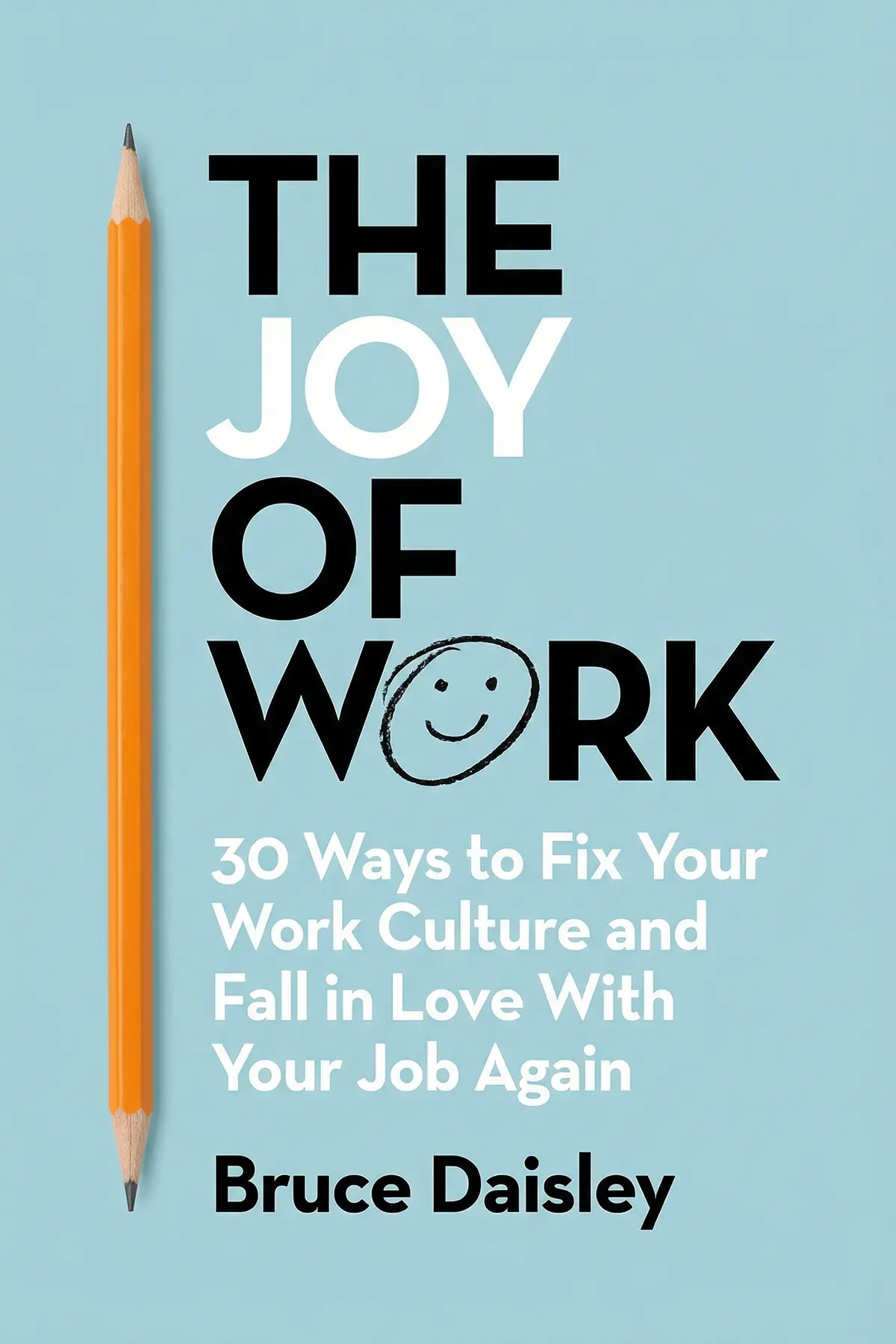
Table of Content
1. Introduction
1 min 40 sec
In the modern era, work often feels less like a career and more like a relentless battle for our attention. We arrive at our desks only to be greeted by an avalanche of unread messages, a calendar packed with back-to-back meetings, and the constant hum of an open-plan office that makes deep concentration feel like a distant dream. Many of us have come to accept this state of perpetual overwhelm as the price of admission for professional life. But what if the way we are working is fundamentally at odds with the way our brains actually function?
In the following insights, we will explore the core philosophy behind Bruce Daisley’s approach to reclaiming professional satisfaction. This isn’t just about time management hacks or superficial office perks; it is about a deep, evidence-based restructuring of how we interact with our tasks and our colleagues. We will look at why silence in the morning can be a superpower, how physical movement unlocks the gates of creativity, and why the most productive thing you can do for your company might actually be taking a longer, more social lunch break.
Throughout this journey, a central throughline will emerge: productivity is not the result of squeezing every possible second of labor out of ourselves. Instead, true efficiency and joy at work come from understanding our biological limits and leveraging our social nature. By the time we finish, you’ll have a toolkit of actionable strategies designed to lower your stress, sharpen your focus, and help you fall back in love with what you do for a living. Let’s dive into how we can turn the daily grind into a source of genuine fulfillment.
2. Protecting the Morning for Deep Focus
2 min 46 sec
Discover why the first few hours of the day are your most precious asset and how the concept of ‘Monk Mode’ can shield your concentration from the chaos of the modern office.
3. The Relationship Between Movement and Creativity
2 min 37 sec
Learn how stepping away from your desk and engaging in a simple walk can dramatically expand your creative capacity and provide a fresh perspective on difficult problems.
4. Escaping the Trap of Constant Connectivity
2 min 38 sec
Understand the roots of ‘hurry anxiety’ and why doing absolutely nothing might be the most productive habit you can develop in an age of information overload.
5. Respecting the Limits of Human Decision-Making
2 min 33 sec
Explore why working longer hours often leads to diminishing returns and how decision fatigue can drain your mental battery before the day is even over.
6. The Hidden Value of Informal Social Interaction
2 min 41 sec
Uncover the science behind workplace dynamics and how spontaneous conversations in hallways can be more valuable than formal meetings.
7. Boosting Morale Through Social Breaks
2 min 23 sec
See how synchronizing breaks with colleagues can drastically reduce stress and improve performance, even in high-pressure environments like call centers.
8. The Importance of Physical Presence and Trust
2 min 30 sec
Examine the unique challenges of remote work and why building trust often requires intentional, face-to-face social gatherings.
9. Laughter as a Tool for Resilience and Creativity
2 min 29 sec
Discover the surprising power of humor in the workplace and how a culture of laughter can enhance both emotional well-being and problem-solving abilities.
10. Conclusion
2 min 03 sec
As we wrap up our exploration of the strategies presented in this summary, it becomes clear that the path to a more fulfilling professional life is not through more effort, but through smarter habits and more human connections. We’ve seen that by protecting our mornings for deep focus, we can achieve more in a few hours than most do in an entire day of distracted busyness. We’ve learned that our bodies and minds are deeply interconnected, and that simple acts like walking and laughing are not just diversions—they are essential components of a creative and resilient brain.
We also touched on the critical importance of the social side of work. The casual chats at the coffee machine and the shared breaks with colleagues are not ‘lost time’; they are the very things that build the trust and communication necessary for any team to thrive. Perhaps most importantly, we’ve recognized that we have a finite capacity for decision-making and that respecting our boundaries—especially the forty-hour work week—is the only way to maintain high performance in the long term.
As a final piece of actionable advice, consider the simplest performance enhancer of all: sleep. Scientists consistently point to an eight-hour night as the foundation for cognitive function and emotional stability. By prioritizing your rest and ensuring you disconnect from the digital world well before bed, you give your brain the chance to recover from the day’s stresses.
The ‘Joy of Work’ is not a destination you reach once you have the perfect job; it is a state of being that you cultivate through the choices you make every day. By implementing even a few of these evidence-based techniques—like the Monk Mode Morning or the walking meeting—you can begin to reclaim your energy and enthusiasm. Start small, protect your focus, and never underestimate the power of a shared laugh with a colleague. Your work, and your life, will be better for it.
About this book
What is this book about?
The modern workplace is often a source of stress, characterized by endless emails, constant interruptions, and a sense of persistent burnout. The Joy of Work addresses these challenges head-on, offering thirty distinct ways to reshape the professional environment. It shifts the focus from mindless busyness to meaningful productivity by examining how human psychology and social dynamics influence our performance. Bruce Daisley draws on his experience at major tech firms and scientific research to explain why our current methods are failing us. The book promises a roadmap for both employees and leaders to build a culture of psychological safety, creativity, and genuine engagement. By implementing small but significant changes—such as protecting morning focus time and encouraging informal social interactions—anyone can learn to navigate their career with renewed energy and purpose.
Book Information
About the Author
Bruce Daisley
Bruce Daisley is a prominent voice on workplace culture, born in Birmingham and starting his career in the world of magazines and radio. He eventually rose to high-level leadership roles at global technology giants, including Google and Twitter, where he served as the head of the European branch. Beyond his corporate achievements, Daisley is a dedicated advocate for workplace enjoyment, a topic he explores extensively on his popular podcast, eatsleepworkrepeat.fm.
Ratings & Reviews
Ratings at a glance
What people think
Listeners note that although perspectives on the advice's complexity differ—as some feel certain pointers are superficial or need senior management's involvement—most value the book's practical system for improving workplace dynamics. They highlight the emphasis on "Monk mode" for focused tasks and the useful ideas for fostering team bonds through shared breaks. Furthermore, audiences like the entertaining mix of research-driven stories and case studies that simplify the theories. They also point out the effective organization, with one listener commenting that the "cheerful, readable prose" transforms it into a beneficial tool for those aiming to restore their efficiency.
Top reviews
Yanin
Finally got around to reading this and I’ve gotta say, it should be required reading for every manager on the planet. Daisley manages to blend serious academic research with self-deprecating humor in a way that makes the concepts stick. I loved the focus on sociometric badges and the data behind how teams actually interact; it moves the conversation away from 'vibes' and toward science. The book is structured brilliantly into three sections—recharge, sync, and buzz—which makes it easy to digest and revisit when you need a refresher. Whether you are leading a massive MNC or just trying to survive your own inbox, there is something here for you. It’s rare to find a business book that feels this human and urgent. I’ll be buying copies for my entire department this Christmas to spark some change.
Show moreTen
Wow. This book really hit home for me. After years of feeling like a cog in a machine, "The Joy of Work" gave me the language to talk about why I was so unhappy. The focus on social capital—smiling, remembering names, and being present—is so often overlooked in favor of "efficiency," but Daisley proves that these human connections drive real results. It’s a refreshing take that prioritizes the worker’s well-being as the primary engine of a company’s success. I’ve started using the SCUM methodology for our weekly syncs and the atmosphere has shifted almost immediately. The prose is lively, the research is solid, and the advice is actually actionable if you have the courage to try it. If you’re stuck in a rut, read this immediately.
Show moreJoy
Direct and insightful. This book is an essential ingredient for any team leader looking to boost performance without burning people out. I loved the way the author structured the book into specific, manageable chunks. It makes a complex topic like "workplace culture" feel approachable and solvable. The discussion on how unsatisfied workers eventually lead to unsatisfied customers is a lesson many CEOs need to learn. Everything starts with the worker enjoying their craft. Daisley’s mix of anecdotes and genuine research makes for a compelling case that joy isn't a "nice-to-have," it's a "must-have" for survival. Even if you only implement two or three of these tips, you’ll see a difference in your team's energy. A total joy to read and highly recommended for any business owner.
Show moreUraiwan
As someone who spends ten hours a day in an open-plan office, I found Daisley’s insights into ‘Monk Mode’ to be a total revelation. We often think that being busy is the same as being productive, but this book forces you to confront the reality of how much time we waste on trivialities. The section on social breaks was particularly eye-opening because it reframes office gossip as a necessary component of team cohesion and psychological safety. Personally, I’ve already started implementing the ‘no morning meetings’ rule and the results are tangible. The writing is accessible and avoids the typical corporate jargon that makes most business books a chore to get through. It’s not a perfect silver bullet, but it offers a practical framework for anyone tired of the daily grind. Definitely worth a look if you’re feeling burnt out and need a nudge.
Show moreSatit
The chapter on sleep alone was worth the price of admission. We live in a culture that prizes "the hustle," yet Daisley reminds us that without 8 hours of rest, our brains are basically non-functional. I appreciated how he wove in Victor Frankl’s concepts about finding a ‘why’ to help endure the ‘how’ of a difficult workday. It helped me reframe some of my more mundane tasks as part of a larger purpose. Look, some critics say the tips are simple, but sometimes simple is exactly what we need when we’re overwhelmed by modern work. I particularly liked the idea of the ‘pre-mortem’—imagining a project has failed before it even starts to catch potential pitfalls. It’s a well-written, engaging book that provides a much-needed antidote to the toxicity of current work culture.
Show moreKanokporn
Picked this up on a recommendation from a colleague after we both complained about meeting fatigue. Bruce Daisley is an engaging writer, and his background at Twitter gives him a lot of credibility in the tech space. However, I couldn’t help but feel that many of these chapters were just slightly tweaked transcripts from his podcast episodes. To be fair, having them all in one place is convenient, but the narrative flow felt a bit disjointed at times. The case studies are inspiring, yet they often focus on high-performing companies that already have the resources to change things. For those of us in more rigid industries, the path to implementation is less clear. It’s a good reminder to be more conscious of our workflow, but it’s more of a 4-star ‘taster’ than a deep-dive manual.
Show moreNing
Not what I expected given the hype surrounding Bruce Daisley’s podcast. While the tone is certainly cheerful, the actual advice felt frustratingly surface-level at times and lacked the depth I need for a serious career shift. It frankly read more like a series of expanded blog posts rather than a cohesive, transformative manual for modern office life. To be fair, some of the research into sleep and productivity is interesting, but none of it felt particularly groundbreaking or new to me. If you’ve already read Cal Newport or similar productivity gurus, you likely won’t find anything here that hasn’t been said better elsewhere. I struggled to see how a mid-level employee could implement half of these 'solutions' without a total overhaul from senior management. It’s a breezy read, sure, but I was looking for more substance than style.
Show moreThanit
Ever wonder why the office feels so draining even when you aren't doing much? Bruce Daisley attempts to answer this by looking at how our environments shape our output. The truth is, while I enjoyed the anecdotes and the cheery prose, I felt like many of the suggestions were a bit idealistic for a traditional corporate setting. How am I supposed to reclaim my lunch hour when my boss expects me at my desk at all times? A lot of the ‘buzz’ section requires buy-in from the very top of the organization, which makes it hard for an individual contributor to feel truly empowered. Still, the breakdown of how ideas are formed—gathering materials and then letting the unconscious mind take over—was a definite highlight for me. It’s a decent choice for a plane ride, but don't expect it to change your life overnight.
Show moreManee
Bruce Daisley makes many valid points about the state of our distracted, "always-on" culture. He correctly identifies that modern workplaces are designed for interruptions rather than output. My main gripe is that while he acknowledges the challenges of implementing these shifts, I still didn’t leave the book feeling fully empowered to change my boss’s mind. Frankly, some of it feels like it belongs in an era where everyone has total control over their schedule, which isn't the reality for most of us. That said, I did find the sections on 'Monk Mode' very helpful for carving out small windows of focus. It's a decent read with some inspiring moments, but it might leave you feeling a bit frustrated if your company culture is particularly stubborn or old-fashioned.
Show moreNutnicha
After hearing Bruce on a few podcasts, I had high hopes for a revolutionary take on office dynamics. Unfortunately, "The Joy of Work" didn't quite land for me. Much of the advice felt like common sense repackaged as "new" insights. Does anyone really need a book to tell them that sleep is important or that meetings can be a waste of time? Not gonna lie, I was expecting more radical solutions rather than a collection of surface-level tips that feel like they were pulled from a generic LinkedIn thought-leader's feed. While the writing style is friendly, the lack of original, deep-dive content made it a chore to finish. It’s probably great for someone new to the workforce, but for seasoned professionals, there’s just not enough new material here.
Show moreReaders also enjoyed


AUDIO SUMMARY AVAILABLE
Listen to The Joy of Work in 15 minutes
Get the key ideas from The Joy of Work by Bruce Daisley, plus 5,000+ more titles in English and Thai.
- 5,000+ titles
- Listen as much as you want
- 7-day free trial
- Cancel anytime







