
25 min 57 sec
Eat Sleep Work Repeat: 30 Hacks for Bringing Joy to Your Job
Eat Sleep Work Repeat provides a science-backed blueprint for reclaiming joy in the workplace. Bruce Daisley shares practical strategies to combat burnout, enhance creativity, and build more resilient, connected professional teams.
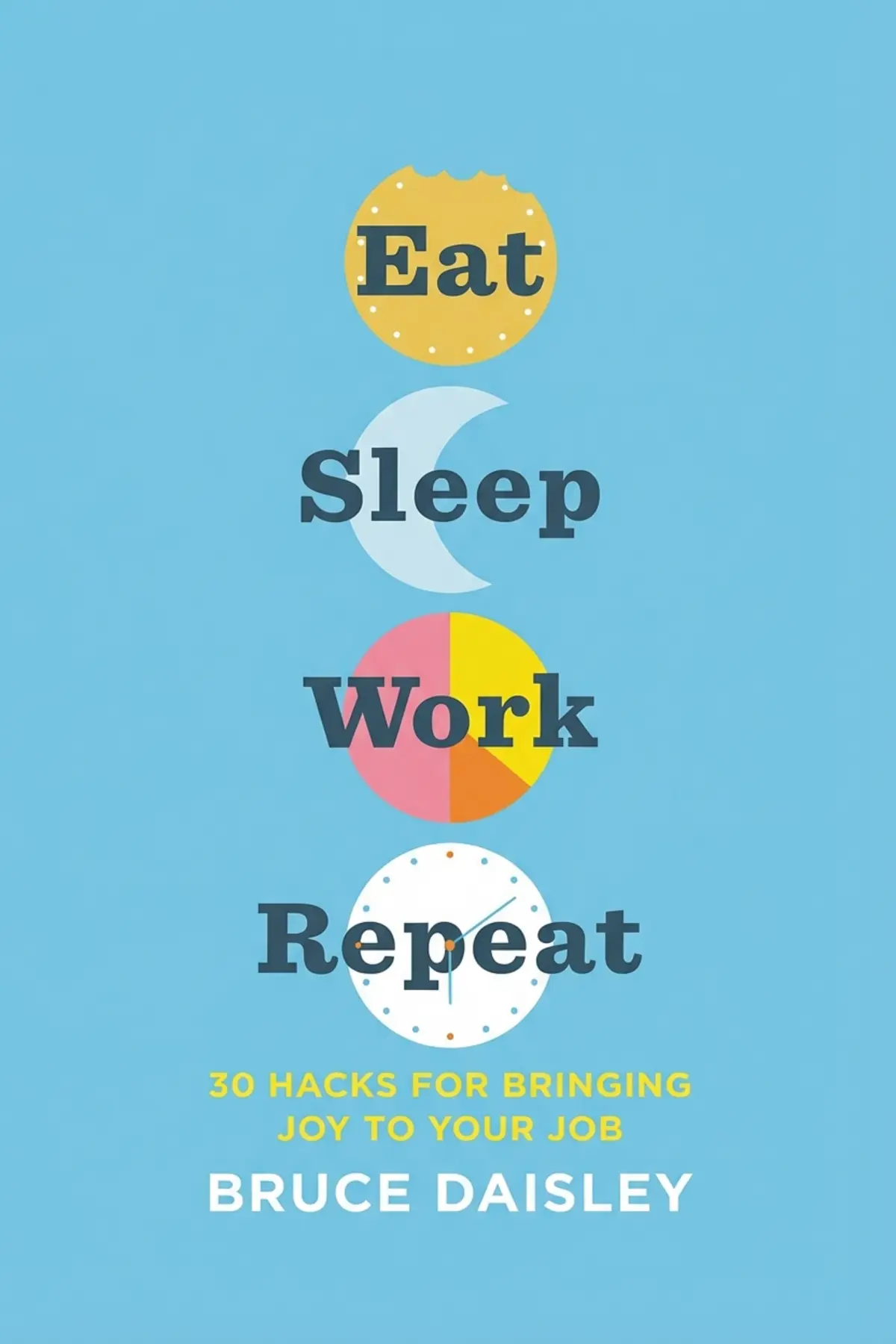
Table of Content
1. Introduction
2 min 03 sec
In the modern era, many of us find ourselves caught in a relentless cycle that can feel more like a survival ritual than a career. We wake up, we head to work, we struggle through a mountain of tasks, we return home exhausted, and then we do it all over again the next day. This rhythm—eat, sleep, work, repeat—has become the standard baseline for millions. But as we settle into this routine, something vital often goes missing: a sense of genuine joy and fulfillment in what we do for a living. Instead of finding meaning in our contributions, we find ourselves skipping lunch, staring at screens late into the night, and feeling the weight of professional expectations even during our supposed downtime.
This isn’t just a personal frustration; it’s a systemic crisis that is draining the life out of the global workforce. We have reached a point where ‘work’ and ‘stress’ are treated as synonymous, yet the research suggests that this trade-off is not only unnecessary but actively counterproductive. When we are miserable, our output suffers, our creativity withers, and our health begins to fail. So, how did we get here? More importantly, how can we fix it?
In the following discussion, we are going to explore a roadmap for reclaiming your professional life. We will delve into the science of why our current office cultures are failing us and look at practical, research-based interventions that can restore a sense of balance. We’ll look at why ‘hurry sickness’ is a modern epidemic and how simple shifts in our social interactions can completely change the atmosphere of a team. Whether you are a leader looking to revitalize your organization or an individual contributor trying to survive the week, these insights offer a way to bring the ‘buzz’ back to your job. We are setting out to prove that being productive doesn’t have to mean being exhausted, and that the best work happens when we are actually enjoying the process.
2. The Epidemic of Workplace Unhappiness
2 min 46 sec
Explore the staggering statistics behind global job dissatisfaction and the severe physical and mental toll that chronic workplace stress takes on the modern professional.
3. The Creativity Killer: Why Pressure Backfires
3 min 01 sec
Understand the neurological reasons why ‘working better under pressure’ is a myth and how stress deactivates the parts of the brain needed for innovation.
4. The Power of Discretionary Effort
2 min 41 sec
Learn why employee engagement is the secret weapon of successful companies and how it drives the ‘above and beyond’ behavior known as discretionary effort.
5. Breaking the Cycle of Hurry Sickness
2 min 39 sec
Examine how constant digital connectivity and office distractions have created a state of perpetual exhaustion and ‘hurry sickness’ in the modern professional.
6. The Simple Science of Recharging
2 min 41 sec
Discover practical, easy-to-implement habits like notification hygiene and social lunches that can significantly boost your daily energy and well-being.
7. Implementing Radical Rest and Focus
2 min 57 sec
Learn about more advanced strategies for deep work, such as ‘monk mode’ and shorter work hours, and how they can lead to better results for everyone.
8. The Architecture of Connection
2 min 41 sec
Understand how loneliness is sabotaging our productivity and how minor changes to the office layout can foster the informal interactions that drive innovation.
9. Creating Buzz through Psychological Safety
2 min 41 sec
Learn how to foster ‘positive affect’ and psychological safety to create a vibrant, energetic ‘buzz’ that makes a workplace truly great.
10. Conclusion
1 min 47 sec
In the end, the message of Eat Sleep Work Repeat is a hopeful one. The exhaustion and unhappiness that define so much of our modern professional lives are not inevitable. They are the result of specific choices we’ve made about how we structure our time, our offices, and our digital lives—and that means we have the power to make different choices. We have seen that the path to a better workplace isn’t paved with more hours and more stress, but with more rest, more connection, and more focus.
By taking small steps to protect our energy—like turning off notifications or reclaiming our lunch breaks—we can begin to move the needle on our own well-being. By advocating for larger changes, like ‘monk mode’ or structured social time, we can start to shift the culture of our teams. One of the most actionable pieces of advice is to focus on the power of the small team. Large organizations can feel cold and anonymous, but a small group of eight or nine people can form a tight-knit community where psychological safety and innovation truly flourish. If you focus on cultivating the culture within your immediate circle, you can create a ripple effect that transforms the larger organization.
The goal is to move from a life of ‘work, repeat’ to one where work is a source of joy and accomplishment. When we prioritize the human element of the workplace, everyone wins. Productivity goes up, creativity soars, and we reclaim the vital parts of ourselves that the grind so often tries to steal. It is time to stop accepting burnout as the price of success and start building a world of work that actually works for us.
About this book
What is this book about?
Have you ever felt like your professional life is a never-ending cycle of stress and exhaustion? Eat Sleep Work Repeat addresses the modern crisis of workplace dissatisfaction, where burnout is common and engagement is at an all-time low. The book serves as a guide for both employees and leaders who want to break free from the soul-crushing grind of the status quo. It shifts the focus away from superficial perks and instead looks at the fundamental psychological and neurological drivers of productivity and happiness. The promise of this work is simple yet profound: by understanding how our brains and bodies actually function, we can redesign our workdays to be more fulfilling. It explores the hidden costs of constant connectivity and the myth of working better under pressure. By implementing a series of practical 'hacks'—ranging from changing how we eat lunch to reconfiguring our digital boundaries—Daisley shows that it is entirely possible to restore a sense of purpose and 'buzz' to the office. Ultimately, the book is a manifesto for a more human-centric way of working that benefits both the individual's well-being and the company's bottom line.
Book Information
About the Author
Bruce Daisley
Bruce Daisley is a recognized expert on workplace culture and the former vice president for Twitter across Europe, the Middle East, and Africa, a role he held from 2012 to 2020. His professional insights have been featured in prominent outlets such as the Harvard Business Review, the Wall Street Journal, and the Washington Post. In addition to his writing for Wired and the Guardian, he hosts the popular podcast Eat Sleep Work Repeat, which focuses on the science of happiness and work.
Ratings & Reviews
Ratings at a glance
What people think
Listeners find the work insightful, with one highlighting that it offers great hands-on advice. They enjoy the academic depth, while one listener notes its research-supported approach and valuable time management information.
Top reviews
Daranee
Bruce Daisley has managed to distill complex behavioral science into something incredibly digestible and, more importantly, actionable. Ever wonder why your best ideas come in the shower and never at your desk? This book explains exactly why our current office culture is a creativity killer. Not gonna lie, the section on 'monk mode' and disconnecting from the constant buzz of Slack changed my entire morning routine. The research-supported approach makes the advice feel much more credible than your average self-help fluff. It’s rare to find a business book that balances academic rigor with such a positive, motivational tone. Truly a must-read for anyone feeling the weight of the modern workday.
Show moreKob
The chapter on the 'sophomore slump' and how stress kills exploration was a total revelation for our creative department. We’ve been operating under the 'pressure creates diamonds' myth for years, but Daisley proves with neuroscience that it actually just makes us play it safe. Truth is, we’ve already started experimenting with his 'no-meeting Thursdays' and the vibe in the office has shifted noticeably. It’s scholastic yet accessible, which is a tough balance to strike. I found the section on 'syncing' with your team through shared meals and social 'buzz' to be particularly moving. If you’re a leader who actually cares about your team’s well-being, you need to read this. It’s an essential manual for the modern manager.
Show moreLek
Picked this up after a particularly grueling week of back-to-back meetings, and it was exactly the reset I needed. The concept of 'Hurry Sickness' hit me like a ton of bricks. We spend so much time performing 'busyness' that we forget how to actually produce quality work. I loved the practical suggestion of implementing hack weeks to foster connection in larger companies. It’s refreshing to hear a VP-level executive admit that open-plan offices are often a total disaster for productivity. While I can't control my office layout, I can definitely use the headphone trick to signal my need for focus. Highly recommended for anyone feeling burnt out.
Show moreKofi
As someone stuck in a soul-crushing open-plan office, the chapter on distractions was incredibly validating. Daisley uses his experience at Twitter to provide a lens that is both professional and deeply human. In my experience, most business books are dry, but this one has a genuine 'buzz' to it. The advice on taking a proper lunch break and the impact of fresh air on decision-making is something I started implementing immediately. It’s not just about working harder; it’s about working in a way that doesn't ruin your mental health. My only gripe is that some of the '30 hacks' felt a bit like filler toward the end. Still, it’s a very solid 4-star read.
Show moreFrida
Ever wonder why you feel like you're vibrating with anxiety by 2 PM every Tuesday? This book tackles that 'hurry sickness' head-on with some of the best time management insights I've come across recently. I especially liked the focus on the culture of small teams rather than worrying about the massive, untouchable company culture. It makes the prospect of change feel much more attainable for the average employee. The tone is encouraging without being overly 'kumbaya,' which I appreciated. I do think the author assumes a level of autonomy that not every worker has, which is a bit of a blind spot. Regardless, the actionable tips on reducing meeting fatigue are worth the cover price alone.
Show moreJan
Finally got around to reading this, and the timing couldn't have been better. Workplace unhappiness is such a widespread problem, and Daisley offers a realistic path out of the misery. The focus on 'recharging' is something we all pay lip service to but rarely actually do. I loved the specific detail about how the placement of chairs can change the entire energy of a room. It’s a very hands-on guide that doesn’t require a total career overhaul to be useful. I deducted one star because it is very much aimed at the 'knowledge worker' demographic. If you work in retail or a factory, these hacks won't do much for you. For office folk? It’s a winner.
Show moreBella
Is it worth the hype? Well, if you are relatively new to your career, you’ll likely find a goldmine of insights regarding time management and workplace boundaries. However, for those of us who have been in the trenches for a decade, many of these tips feel like the 'usual suspects' we’ve heard before. Look, I appreciate the scholarly depth and the extensive bibliography, but I struggled with the pacing. Some chapters felt like they could have been summarized in a single paragraph. It's a decent read with some solid takeaways about small team dynamics, but it didn't exactly reinvent the wheel for me. A bit of a mixed bag.
Show moreGun
Frankly, this felt like a high-end blog post stretched out into a full-length book. I listened to the podcast first and I’m not sure the book added a significant amount of new material beyond the deeper dive into the studies. The statistics are interesting, especially the stuff about how stress literally makes us less creative, but the writing gets a little circular. To be fair, Daisley is a great narrator of the modern work experience, and his passion for making work 'better' is obvious. It’s a good introductory text for a team lead, but seasoned pros might find it a little light on revolutionary ideas. It’s fine, just not life-changing.
Show moreThitima
To be fair, the research is solid and the bibliography is a great reading list in its own right. I just found the book to be quite boring and repetitive in the middle sections. It felt like I was reading the same argument about why meetings are bad in three different chapters. I did enjoy the bit about what a rock band can teach us about stress, which was a fun departure from the standard corporate examples. However, for a book with 'repeat' in the title, it took that concept a bit too literally with the phrasing. It’s an okay resource to keep on the shelf for reference, but not a page-turner by any means.
Show moreDuangjai
I really wanted to find specific solutions here, but I walked away feeling like this was strictly for the corporate drone. If you aren't working in a high-rise office with a big tech budget, many of these 'hacks' simply won't apply to your daily reality. To be fair, Daisley’s writing is engaging, yet the content felt heavily geared toward managers who already have the power to change things. I found the sections on statistics quite dense and, at times, a bit repetitive. It felt like the book was trying too hard to prove its point with data rather than offering universal advice. For a book promising to help everyone, it felt surprisingly narrow in scope.
Show moreFeatured in
Readers also enjoyed
A Bigger Prize: How We Can Do Better Than the Competition
Margaret Heffernan
Can’t Even: How Millennials Became the Burnout Generation
Anne Helen Petersen
AUDIO SUMMARY AVAILABLE
Listen to Eat Sleep Work Repeat in 15 minutes
Get the key ideas from Eat Sleep Work Repeat by Bruce Daisley, plus 5,000+ more titles in English and Thai.
- 5,000+ titles
- Listen as much as you want
- 7-day free trial
- Cancel anytime







