
22 min 48 sec
The Laws of Wealth: Psychology and the secret to investing success
Explore the intersection of psychology and finance to understand how behavioral biases and emotions dictate investment success. Learn practical strategies to overcome irrationality and build a disciplined, goal-oriented portfolio.
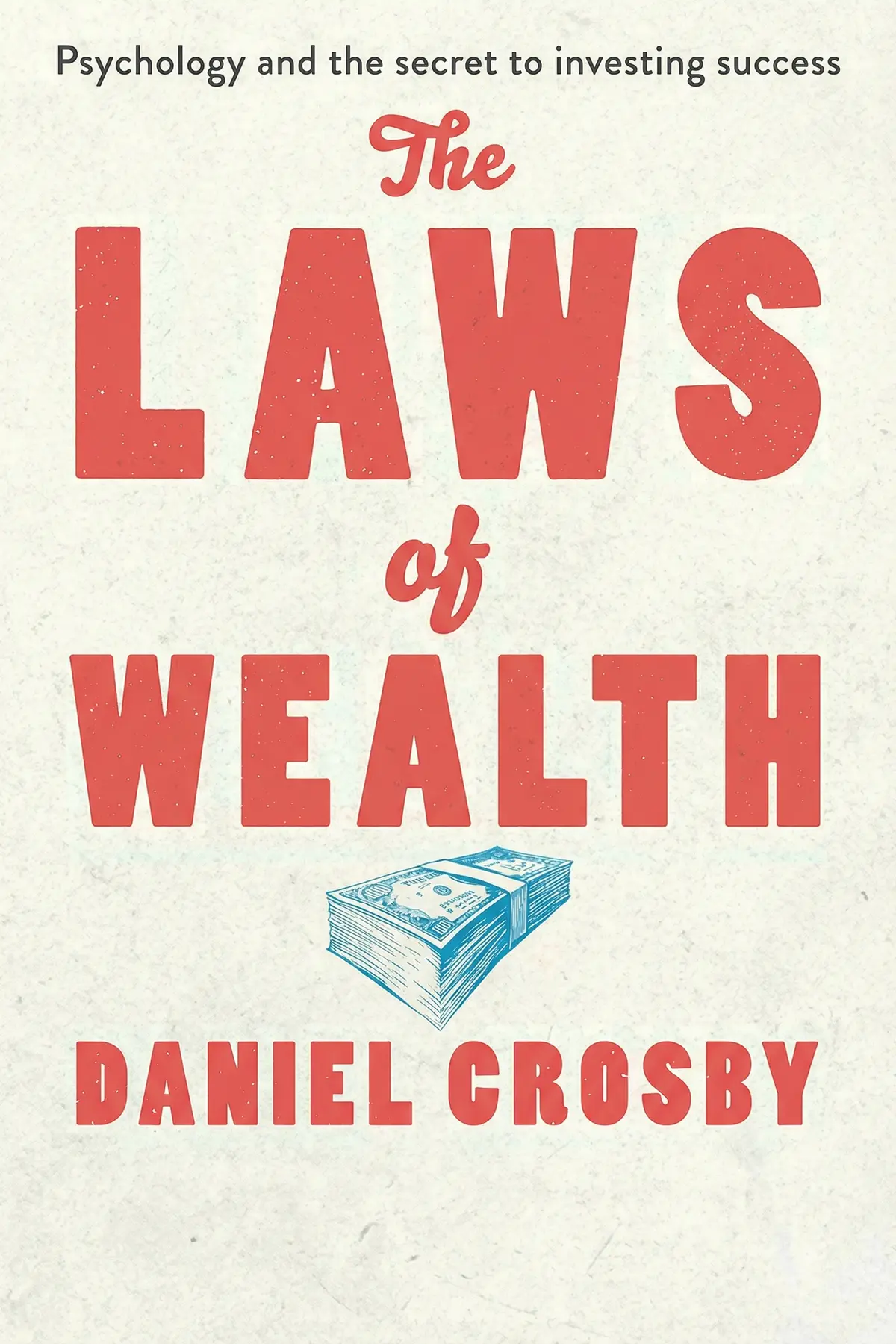
Table of Content
1. Introduction
2 min 03 sec
When you open a brokerage account or look at your retirement fund, you likely see a list of numbers, tickers, and percentages. It looks like a world of pure logic—a mathematical landscape where the smartest person with the fastest computer wins. But there is a hidden dimension to this world that most people ignore until it’s too late. That dimension is the human mind. We like to think of ourselves as rational actors making calculated decisions, but the reality is that our brains are still wired for a world that no longer exists. We are the descendants of people who survived by running away from rustling grass and sticking with the tribe. While those instincts saved our ancestors from predators, they are often the very things that cause us to buy high, sell low, and sabotage our financial futures.
In this exploration of The Laws of Wealth, we are going to look at the intersection of psychology and finance. We will uncover why the greatest risk you face as an investor doesn’t come from a stock market crash or a corporate scandal, but from the person you see in the mirror every morning. This is the concept of behavioral risk. It is the sum total of our biases, our panics, and our misplaced confidence. By the time we’re finished, you’ll understand that successful investing is less about being a genius and more about being disciplined. It’s about building a system that protects you from your own worst impulses.
We will navigate through the pitfalls of overconfidence, the danger of chasing ‘glamour’ stocks, and the surprising way that your own emotions can lead you to accept bad deals. We’ll also look at why having an advisor is more about coaching than it is about picking stocks, and how you can redefine ‘success’ by looking at your own life goals instead of comparing yourself to the person next door. The goal here is to move from being a reactive, emotional participant in the market to being a steady, rule-based investor who understands the ‘why’ behind every move. Let’s begin by looking at the first and perhaps most pervasive psychological trap: the belief that we are simply better than everyone else.
2. The Trap of Overconfidence
2 min 19 sec
Discover why our natural tendency to overestimate our own skills can lead to disastrous financial choices and prevent us from learning from our mistakes.
3. How Emotions Cloud Financial Judgment
2 min 26 sec
Uncover the hidden ways that both sadness and excitement can drastically alter your ability to value assets and make rational choices.
4. The Critical Role of the Investment Advisor
2 min 02 sec
Learn why the most valuable service an advisor provides isn’t picking stocks, but acting as a behavioral coach to save you from yourself.
5. Navigating Market Panic and Corrections
2 min 25 sec
Explore why the media’s tendency to catastrophize market dips is your greatest enemy and why ‘safe’ markets are often the most dangerous.
6. Watching Actions Over Words in Corporate Management
2 min 06 sec
Learn why you should ignore what CEOs say in press releases and instead follow where they put their own personal wealth.
7. The Allure of Price versus the Reality of Value
2 min 31 sec
Understand how our brains equate high prices with high quality and why this ‘glamour’ trap leads many investors to overpay for subpar returns.
8. The Danger of New and Exotic Investments
2 min 41 sec
Learn from historical bubbles like the Dutch tulip mania and the dot-com crash why ‘revolutionary’ new industries are often the worst places to put your money.
9. Defining Wealth Through Personal Benchmarks
2 min 31 sec
Shift your focus from market indices and neighborly competition to your own unique goals, using psychology to stay motivated and disciplined.
10. Conclusion
1 min 44 sec
As we wrap up our look at The Laws of Wealth, the most important takeaway is that your biggest investment risk is not external—it is internal. The stock market will always be volatile. There will always be scandals, bubbles, and crashes. Those are the ‘laws’ of the market. But the ‘laws’ of wealth are the rules you set for yourself to navigate that chaos. We’ve seen how our brains are naturally wired for overconfidence, how our emotions can sabotage our sense of value, and how the allure of the ‘new’ can lead us into dangerous bubbles.
But we’ve also seen the path forward. By acknowledging our fallibility, we can build systems—like hiring a behavioral coach or following a strict value-investing rulebook—that protect us from ourselves. We can stop trying to be ‘geniuses’ who time the market and start being ‘disciplined’ investors who stick to a plan. Remember, the goal of investing isn’t to win a game of social status or to prove you’re smarter than the average person. The goal is to fund your life and achieve your personal benchmarks.
To put this into action, start by simplifying. Ignore the 24-hour news cycle and the ‘hot tips’ from friends. Pick a few simple, evidence-based rules—like focusing on value stocks and maintaining a long-term perspective—and ignore the rest of the noise. Much like an amateur poker player who wins simply by folding bad hands and betting on good ones, you can win at investing simply by avoiding the ‘unforced errors’ that sink most people. Be humble, be patient, and stay focused on your own unique goals. If you can master your behavior, the wealth will follow.
About this book
What is this book about?
The Laws of Wealth dives deep into the psychological underpinnings of the financial markets, arguing that the greatest risk to any portfolio isn't market volatility, but the investor's own behavior. Daniel Crosby uses behavioral finance research to show how our evolutionary instincts—designed for survival on the savannah—often lead us astray in the modern world of complex trading and long-term asset management. The book promises a roadmap for moving past these natural limitations. It covers why we are prone to overconfidence, how specific emotions like sadness and excitement skew our perception of value, and why the most popular investments are often the most dangerous. By shifting focus from market-timing to rule-based investing and personal benchmarks, Crosby provides a framework for making smarter, more rational financial decisions that align with one's true life goals.
Book Information
About the Author
Daniel Crosby
Daniel Crosby is a psychologist and behavioral finance expert who earned his PhD from Brigham Young University. He has dedicated his career to understanding the emotional and behavioral drivers of investment decisions. He is the founder of the investment management firm Nocturne Capital and previously co-authored the New York Times bestseller Personal Benchmark: Integrating Behavioral Finance and Investment Management.
Ratings & Reviews
Ratings at a glance
What people think
Listeners consider this behavioral finance guide to be highly applicable and grounded in thorough study, featuring strong, evidence-based examples that make it essential for investors of any experience level. It outlines a systematic, rules-oriented strategy for investing designed to improve both financial gains and personal fulfillment, all delivered in a straightforward and accessible style. Listeners also value the humor and engaging nature of the work alongside its psychological depth, with one person highlighting the seamless way the author integrates behavioral psychology throughout the story.
Top reviews
Thanit
Finally got around to reading Crosby’s take on behavioral finance, and it is a breath of fresh air compared to the dry textbooks I usually slog through. The core idea is that we are our own worst enemies when it comes to the stock market, primarily because our brains are wired for survival rather than compounding interest. Crosby doesn't just list our biases; he gives us a "mast to tie ourselves to" through his Rules Based Investing framework. In my experience, his wit and humor make the complex psychological concepts much easier to digest. I found the section on the 4 Cs particularly helpful for my own portfolio management. It’s rare to find an investing book that is both data-driven and genuinely entertaining. If you want to stop overestimating your abilities and start making real money, read this.
Show moreWorawit
As someone who works in the industry, I find it incredibly refreshing to see behavioral finance treated as an applied science rather than just a list of quirks. Crosby is a witty guide who manages to weave complex research into a narrative that is both accessible and practical. He understands that simply knowing about your biases doesn't stop you from falling for them. Instead, he advocates for a systematic approach that removes the "you" from the equation. The 4 Cs (Consistency, Clarity, Courageousness, and Conviction) provide a great roadmap for anyone looking to build long-term wealth without losing their mind. Not gonna lie, I wish I had read this ten years ago before making some of my own emotional mistakes.
Show morePooja
Wow. This is easily one of the most useful books on my shelf. Daniel Crosby has a knack for taking the heavy lifting out of behavioral economics and making it feel like common sense. I was particularly struck by the analogy of Odysseus; it’s such a perfect way to describe why we need automated systems to protect us from our own impulsive nature. The truth is, most of us overestimate our abilities as investors, and this book serves as a much-needed ego check. It’s funny, smart, and filled with "Aha!" moments that will change how you view your brokerage account. It’s a must-read for anyone who has ever panicked during a market dip and needs a rule-book to stay the course.
Show moreWipawan
After hearing Daniel Crosby on a few podcasts, I had high expectations for this book, and he delivered. It’s an unusual combination of a psychology text and a practical investment guide that actually works in the real world. He treats the reader with respect, using data and research to back up his claims without getting bogged down in academic jargon. I especially liked the focus on evaluating management by what they do rather than what they say. It’s an empowering read because it shifts the focus from the unpredictable market to the predictable (though flawed) human mind. If you want to be a better investor, you have to start by understanding yourself, and this book is the perfect guide.
Show moreAey
The chapter on forecasting being for weathermen really hit home for me. We spend so much time trying to predict the next market crash when we should be focusing on the one thing we can actually control: our own behavior. Crosby argues that rules eat knowledge for breakfast, and he’s absolutely right. While I think some of the "5 Ps" of equity investing felt a bit forced to fit the acronym, the underlying logic is sound. It’s a great introduction to why we make irrational decisions, like buying high out of excitement or selling low out of panic. To be fair, some sections felt a bit repetitive if you’ve already read a lot of Kahneman or Thaler, but the application to active investing is unique and practical.
Show moreChee
Ever wonder why you’re tempted to buy that "exotic" new tech stock your neighbor mentioned while your boring index funds are actually doing the heavy lifting? Crosby explores this through the lens of psychology, proving that being "special" is usually a recipe for losing money. I loved the emphasis on value over glamour, even if the world currently seems obsessed with the latest shiny object. The writing is punchy, and the short chapters make it easy to pick up and put down. My only gripe is that it can feel a bit contradictory at times—swinging between passive-sounding advice and active rule-following. Still, it’s a solid 4-star read for anyone needing a major mindset shift before they blow their savings.
Show moreOtt
Picked this up after seeing it recommended on several finance blogs, and I wasn't disappointed. The book does a stellar job of explaining the "Laws" of wealth, focusing heavily on the fact that your behavior is a better predictor of success than your fund selection or market timing. I appreciated the specific mention of avoiding "glamour" stocks in favor of value. In my experience, the most successful investors are the ones who can stay humble and disciplined, which is exactly what Crosby preaches. While some of the chapters felt a bit brief and high-level, the overall message is powerful. It’s a great foundation for anyone looking to transition from emotional trading to a more rigorous, rules-based investing style.
Show morePraepimon
This book occupies a strange middle ground between personal finance and professional asset management. On one hand, the psychological insights are fantastic and well-researched, providing a clear explanation of why our emotions sabotage our returns. On the other hand, the actual investment advice is a bit muddy. Are we supposed to be passive indexers or active value hunters? Crosby tries to have it both ways, which might confuse someone just starting out. The "Ps" of equity investing—while interesting—don't provide enough detail for a real-world implementation. It’s a decent read for the mindset, but you’ll definitely need other resources for the actual mechanics of trading and identifying dodgy companies.
Show moreMadison
Truth is, I found this to be a bit of a mixed bag. There are some genuine gems of wisdom here, especially regarding the importance of ignoring the noise and focusing on personal goals. However, the book felt painfully repetitive at points, hammering the same "don't panic" message over and over again in different ways. I also felt like the distinction between different types of investing was lost in the shuffle, making it unclear who the target audience really is. It provides a reasonable introduction for a beginner, but there isn't much here that hasn't been said more clearly by Bogle or Graham. It’s a quick, entertaining read, but I was hoping for something with a bit more meat on its bones.
Show moreSuthinee
Not what I expected given the rave reviews from my colleagues. The book starts strong but quickly devolves into a collection of general wisdom that doesn't feel particularly actionable for a seasoned investor. I struggled to understand if this was written for a total novice or someone looking for deep technical insights. If you are looking for the latter, you will be disappointed because the "laws" are quite high-level and arguably not the most important ones. Also, the writing style felt a bit "cut-and-paste" with an overwhelming number of quotes from other people. Look, it’s not a bad book, but it felt like a repetitive blog series stretched into a full-length manuscript. I’ll stick to more technical manuals for my actual strategy.
Show moreReaders also enjoyed
AUDIO SUMMARY AVAILABLE
Listen to The Laws of Wealth in 15 minutes
Get the key ideas from The Laws of Wealth by Daniel Crosby, plus 5,000+ more titles in English and Thai.
- 5,000+ titles
- Listen as much as you want
- 7-day free trial
- Cancel anytime







