
15 min 16 sec
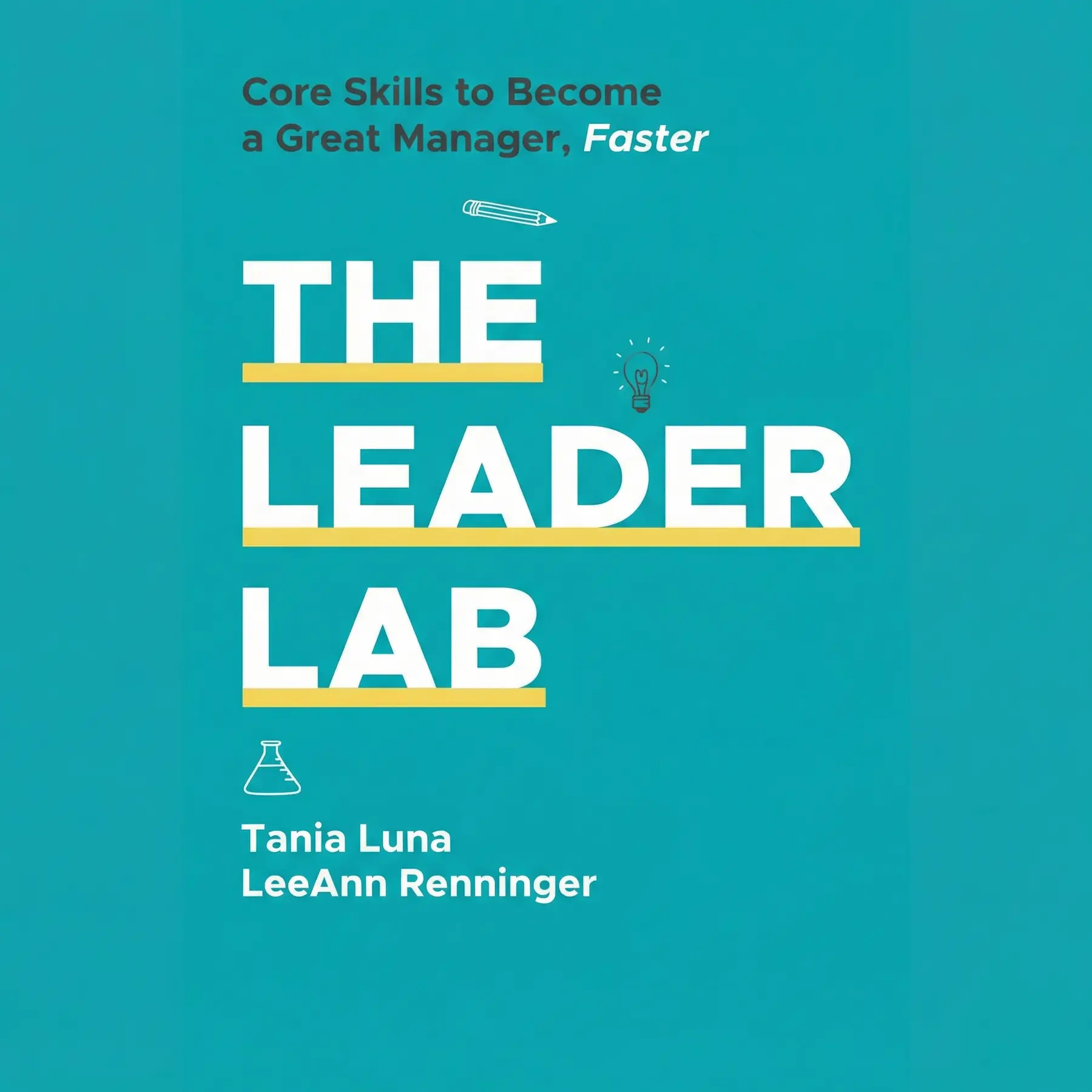
The Leader Lab: Core Skills to Become a Great Manager, Faster
The Leader Lab explores how to master essential leadership micro-skills through a scientific approach. Researchers Tania Luna and LeeAnn Renninger reveal how experimentation, curiosity, and humility transform management into a learnable craft.
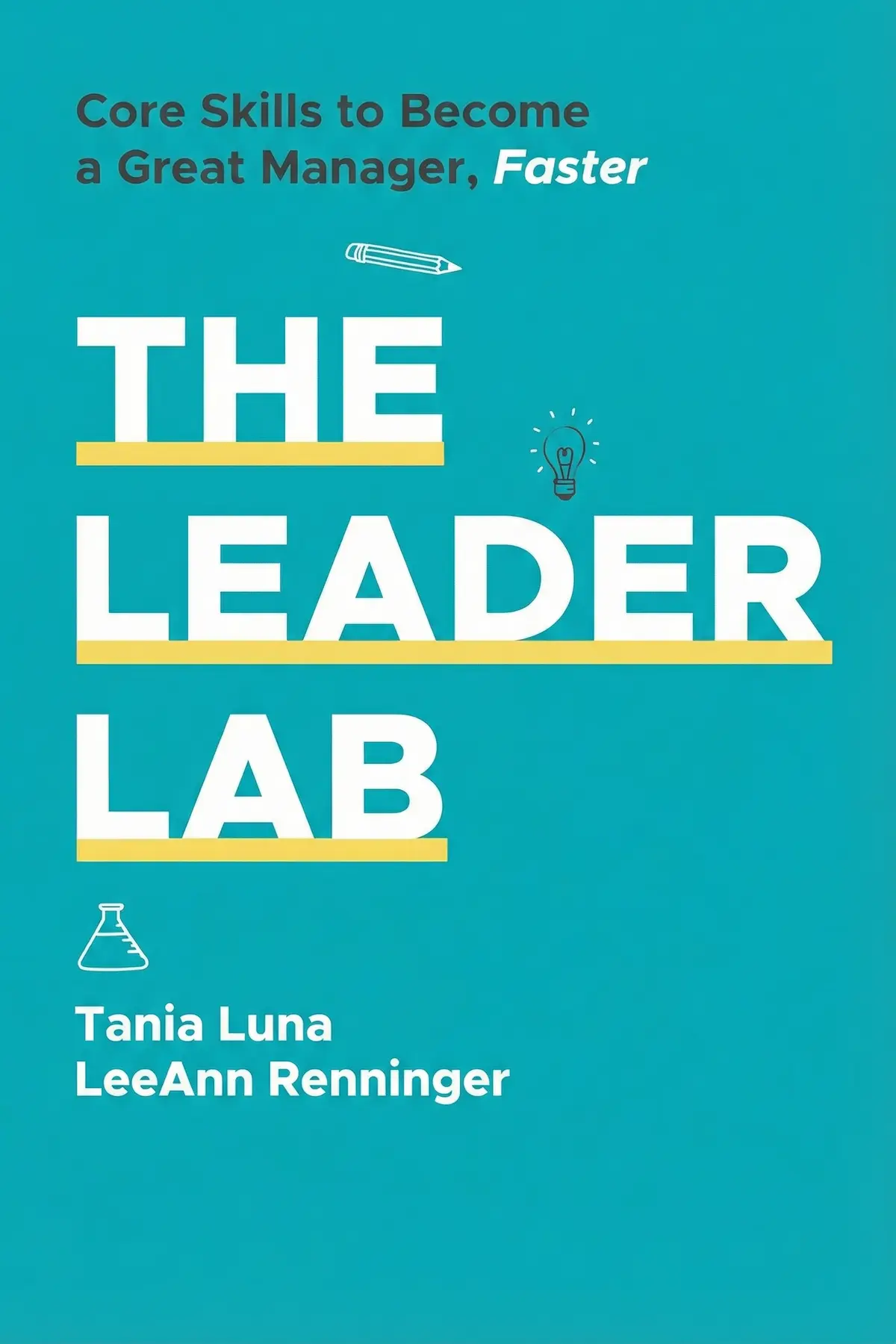
Table of Content
1. Introduction
1 min 39 sec
Have you ever wondered why some people seem to step into leadership roles with ease, while others struggle to get their teams to follow even the simplest instructions? For a long time, we’ve been told that leadership is a mysterious quality—a blend of charisma, authority, and perhaps a touch of luck. But what if that’s entirely wrong? What if leadership isn’t a personality trait at all, but a collection of very specific, very small behaviors that anyone can learn? This is the central premise behind The Leader Lab, a deep dive into the behavioral science of management by Tania Luna and LeeAnn Renninger.
In this summary, we are going to explore a new way of thinking about how we lead others. The authors, who have spent years researching what high-performing managers actually do differently, suggest that the most effective way to improve is to treat your workplace like a laboratory. Instead of trying to be a perfect, all-knowing boss, you are encouraged to become a researcher of human interaction. By adopting a mindset of experimentation, curiosity, and humility, you can begin to deconstruct the complex art of leadership into manageable micro-skills.
We’ll look at how shifting your focus from ‘being right’ to ‘being curious’ can unlock your team’s potential. We’ll discuss why the best leaders are those who are willing to say ‘I don’t know,’ and how the simple act of testing new behaviors—even if they feel awkward at first—can lead to a breakthrough in team performance. This isn’t just about theory; it’s about the practical, repeatable actions that define the most successful leaders in the modern world. So, let’s step into the lab and see what happens when we stop trying to lead by instinct and start leading by design.
2. The Laboratory Mindset
2 min 24 sec
Discover why treating your leadership as a series of scientific experiments can remove the pressure of being a perfect boss and lead to faster professional growth.
3. The Power of Radical Curiosity
2 min 19 sec
Explore how shifting from giving answers to asking deep questions can empower your team and solve complex problems more effectively.
4. Humility as a Strategic Advantage
2 min 17 sec
Learn why admitting what you don’t know is actually a sign of strength that builds deeper trust and fosters a culture of innovation.
5. Developing Essential Micro-Skills
2 min 28 sec
Break down the complex world of management into small, actionable behaviors that yield high results with minimal effort.
6. Leading Through Intentional Action
2 min 21 sec
Discover how to move from reactive management to proactive leadership by intentionally designing your team’s culture and processes.
7. Conclusion
1 min 48 sec
As we wrap up our journey through the insights of The Leader Lab, it’s clear that the path to great leadership is much more accessible than we might have once thought. We’ve seen that being an effective manager isn’t about having a specific personality or a certain amount of ‘natural’ talent. Instead, it’s about having the courage to treat your role as an ongoing experiment. By breaking down the complex work of leading people into small, repeatable micro-skills, Tania Luna and LeeAnn Renninger have provided us with a practical toolkit for growth.
The throughline of this work is simple yet profound: stay curious, stay humble, and never stop experimenting. When you stop trying to be the person who has all the answers and start being the person who asks the best questions, you unlock a level of team performance that was previously out of reach. When you admit your own fallibility, you build the trust and safety necessary for true innovation to flourish. And when you focus on the tiny, behavioral shifts—the ‘tipping point’ skills—you create a ripple effect that can transform an entire organization.
Your challenge now is to take this ‘laboratory mindset’ back to your own team. Don’t try to change everything at once. Pick one micro-skill we’ve discussed—perhaps it’s asking a curious question when you feel defensive, or being more behavioral with your feedback—and test it out this week. Observe the results with the objectivity of a scientist. If it works, keep doing it. If it doesn’t, try something else. Remember, you are in the lab now. There are no failures, only data points on the road to becoming the leader your team deserves. By committing to this process of small, intentional actions, you’ll find that extraordinary leadership is well within your reach.
About this book
What is this book about?
The Leader Lab is a practical and research-backed guide designed to strip away the mystery of effective leadership. Instead of treating management as an innate talent that some people are born with and others aren't, the authors present it as a set of core behaviors that can be practiced and perfected. By focusing on the 'micro-skills' that have the greatest impact on team performance, the book provides a roadmap for anyone looking to improve their influence and efficacy. The promise of this work is a shift in perspective: moving from being a 'manager' to becoming a 'scientist' of your own leadership style. The authors advocate for an environment where curiosity replaces certainty and experimentation replaces rigid hierarchy. Through this approach, readers learn to navigate the complexities of human dynamics with humility and precision, ultimately creating teams that are more resilient, productive, and engaged. It is a masterclass in the small shifts that lead to massive results.
Book Information
About the Author
Tania Luna
Tania Luna and LeeAnn Renninger are researchers and the founders of LifeLabs Learning, an organization that specializes in training leaders and teams in essential skills. Luna is a frequent contributor to prominent publications, including Psychology Today and Harvard Business Review. In addition to their work at LifeLabs Learning, the authors also cowrote the book Surprise.
Ratings & Reviews
Ratings at a glance
What people think
Listeners find the leadership methods in this book to be highly practical and ready for immediate implementation. Furthermore, they consider the guidance very approachable for leaders at all levels, observing that the straightforward strategies create progress without feeling overwhelming. Listeners also appreciate the detailed frameworks and "lab reports" for practical brainstorming sessions, with one listener mentioning that the advice is simple to use in professional and personal settings. They further highlight how behavioral concepts such as "extraction" and "pausing" work well to settle disputes and boost team output.
Top reviews
Naomi
Wow. This book completely changed my approach to those frantic morning stand-ups. Instead of rushing to fix every problem myself, I’ve started using the SOON framework to let my team find their own solutions. It’s a relief to realize that my job isn't to have all the answers but to catalyze insight in others. The 'pausing' technique was a bit awkward to practice at first, yet it has already saved me from two unnecessary arguments this week. I love how the authors break down complex psychological concepts into what they call Behavioral Units. It makes leadership feel like a skill I can actually build rather than some innate personality trait. While some sections felt slightly repetitive, the actionable advice at the end of each chapter kept me engaged throughout. This is easily a top-tier resource for anyone feeling overwhelmed by their management responsibilities.
Show moreDaranee
The audible version of this book is an absolute riot and the narrator makes the learning process genuinely fun. I actually found myself laughing out loud while learning about 'Q-stepping' and the importance of active listening. Usually, business books are a slog, but Luna and Renninger have managed to create something that feels more like a workshop than a lecture. The concept of the 'Behavioral Unit' is genius because it turns abstract leadership ideas into concrete habits you can track. I’ve already noticed a shift in my team’s productivity just by implementing the 'pausing' technique during our heated brainstorming sessions. It’s amazing how much more creative people become when they are given a moment of silence to think. I’ve recommended this to three of my colleagues already because the tools are just that accessible.
Show moreSeksan
Ever wonder why your feedback conversations always end in a stalemate or leave everyone feeling frustrated? This book identifies the exact friction points and offers simple linguistic fixes that actually work in high-stress environments. I was skeptical about the 'SOON' framework at first, but using it to guide my last 1-on-1 made the meeting much more productive. We moved from vague complaints to a concrete list of next steps in under twenty minutes. To be fair, I had to keep the book open next to me to remember the sequence, but it felt much more natural than I expected. The focus on 'pausing' to de-escalate conflict is something I've even started using at home with my partner. It turns out that good management is really just good human interaction. This is a must-read for anyone who wants to lead with more clarity.
Show moreNew
To be fair, I expected another dry business tome, but this was surprisingly engaging and structured like an actual lab. It’s refreshing to see leadership experts who actually value the reader’s time by keeping things concise. The 'Q-stepping' technique has fundamentally changed how I approach problem-solving with my direct reports. Instead of jumping in to save the day, I ask a series of questions that lead them to their own 'aha' moments. It feels like I’m finally coaching rather than just directing traffic all day long. The authors' research into how successful marriages use pausing to de-escalate was a fascinating parallel to workplace conflict. This book proves that you don't need decades of experience to be an effective leader. You just need the right tools and a willingness to practice until they become habits.
Show moreKamol
The chapter on extraction alone is worth the price of admission for any manager struggling with team engagement. I’ve realized that I was leaving so much untapped potential on the table by not properly extracting my team's insights during meetings. The way Luna and Renninger break down 'playback' and 'pausing' makes these techniques feel like superpowers once you master them. I’ve been a manager for fifteen years, yet I still found plenty of new habits to form in these pages. The authors’ tone is encouraging and never condescending, which makes you want to go out and experiment immediately. I also appreciated the specific research cited, like the study on time awareness from the journal Group Dynamics. This isn't just fluffy advice; it’s backed by science and proven results. Every leader should have a copy of this in their lab.
Show moreNiramai
After hearing so much about the LifeLabs approach, I finally dove into this and the focus on 'Extraction' was a total game-changer for me. Truth is, I’ve been an 'over-helper' for years, which I now realize was actually stunting my team's growth. The authors provide these incredibly helpful 'lab reports' that allow you to brainstorm real-world applications for every lesson. I found the contrast between 'good' and 'bad' conversation scripts particularly illuminating because it highlights how small linguistic shifts change the vibe of a room. My only minor gripe is that some of the acronyms feel a bit forced at times. However, the core message about being specific with time—using 5:00 p.m. instead of ASAP—is so practical that I started doing it immediately. It’s rare to find a management book that balances theory with such high-speed actionability.
Show morePita
As someone who just stepped into a lead role, I was feeling incredibly intimidated by the prospect of managing my former peers. This book acted like a roadmap through that anxiety. The authors treat leadership like a science experiment where you can test out different variables and see what works for your specific team. I particularly appreciated the section on feedback and how to avoid the 'feedback sandwich' which never actually works. The 'Extraction' technique helped me realize how often I was cutting people off before they could share their best ideas. I did feel that the chapter on strategic thinking was a little bit rushed compared to the coaching sections. However, the 'lab reports' are fantastic for keeping yourself accountable as you try out these new behaviors in the wild.
Show moreManop
Finally got around to reading this and the focus on 'small steps' is what stuck with me the most. Most leadership gurus try to sell you on a total personality overhaul, but this book focuses on micro-behaviors. Phrases like 'ASAP' are banished in favor of specific timeframes, and the results on my team's output have been immediate. I enjoyed the 'lab reports' because they forced me to think about my own biases before I went into a meeting. My only minor complaint is that the 'fiction' elements mentioned in some reviews felt a little cheesy to me. I preferred the hard data and the 'Behavioral Units' over the dramatized scenarios. Still, the advice is so practical that it’s hard to find much else to complain about. It’s a solid addition to any manager's toolkit.
Show moreRosa
Look, some of these tips felt a bit common sense for anyone who has been in the game for a decade or more. Do we really need a book to tell us to listen better or to be specific about deadlines? While the 'SOON' framework is a nice way to organize a coaching session, it didn't feel revolutionary to me. That said, I can see this being an absolute goldmine for a first-time supervisor who is still figuring out how to balance authority with empathy. The writing style is breezy and conversational, which makes it a very quick read, but I was hoping for more deep-dive psychological data. If you are looking for a dense academic study on leadership, keep searching elsewhere. But if you want a fast refresher on basic management hygiene, this is a decent enough choice to keep on your shelf.
Show moreSienna
Not what I expected in terms of depth, though the techniques themselves are certainly easy to implement. I felt like the book breezed through some very complex topics like change management a bit too quickly for my liking. The 'SOON' framework is helpful, but it feels like it’s designed for very specific, simple scenarios rather than the messy reality of corporate politics. Frankly, I think some of the 'Behavioral Units' are a bit over-simplified to the point where they lose nuance. However, I can't deny that the tip about being specific with language—like saying 'by 5:00 p.m.'—has reduced confusion on my team. It’s a decent introductory guide, but if you’re looking for a deep psychological study, you might find this a bit too surface-level. It’s good for a quick win.
Show moreReaders also enjoyed
7 Powers: The Foundations of Business Strategy
Hamilton Helmer

A Bigger Prize: How We Can Do Better Than the Competition
Margaret Heffernan
A Year with Peter Drucker: 52 Weeks of Coaching for Leadership Effectiveness
Joseph A. Maciariello
AUDIO SUMMARY AVAILABLE
Listen to The Leader Lab in 15 minutes
Get the key ideas from The Leader Lab by Tania Luna, plus 5,000+ more titles in English and Thai.
- 5,000+ titles
- Listen as much as you want
- 7-day free trial
- Cancel anytime







