

7 Powers: The Foundations of Business Strategy
Hamilton Helmer
Discover how to move beyond rigid hierarchies and embrace radical management. This guide explores seven core principles designed to prioritize customer delight, foster innovation, and create a more fulfilling workplace for everyone.
1 min 37 sec
In the modern business landscape, the old rules of management are rapidly losing their effectiveness. For a long time, the standard operating procedure for any large organization was built on a rigid, top-down hierarchy. The primary, often singular, goal was to maximize shareholder value and increase profits at any cost. However, in today’s volatile and highly connected economy, this ossified approach often leads to stagnation, employee burnout, and a disconnect from the very people who keep the business alive: the customers.
This is where radical management comes into play. It isn’t just a slight adjustment to the status quo; it is a fundamental reinvention of what it means to lead. The core philosophy here is that the purpose of a business is not just to make money, but to create value that truly delights the client. When delight becomes the compass, everything else—from how teams are structured to how communication flows—must change to support that goal.
Throughout this summary, we will explore seven foundational principles that define this radical approach. We will look at why self-organizing teams outperform traditional hierarchies, how iterative processes prevent wasted resources, and why transparency is the ultimate tool for problem-solving. We will also examine the psychological shift required of managers, moving away from being a controlling boss to becoming a facilitator of excellence. By the end of this journey, you will have a clear understanding of how to transform a workplace into an engine of innovation that satisfies both the people doing the work and the people receiving the results. Let’s dive into the first step of this transformation: redefining the ultimate goal of your business.
1 min 54 sec
What if the secret to long-term profit wasn’t focusing on profit at all, but on creating an emotional connection with your clients?
1 min 57 sec
Complex problems require more than just experts; they require a specific kind of team structure that thrives on autonomy and variety.
1 min 56 sec
Stop guessing what your customers want and start letting them guide your production process through continuous feedback loops.
1 min 50 sec
Productivity isn’t just about working harder; it’s about managing the flow of tasks to ensure value is created at every stage.
1 min 53 sec
In an environment of secrecy, problems fester and grow. Real progress only happens when everyone is empowered to speak the truth.
1 min 56 sec
Success is not a destination but a continuous journey of identifying flaws and refining processes every single day.
2 min 01 sec
Effective leadership requires a shift from dictating orders to engaging in genuine, two-way dialogue with your team.
1 min 39 sec
As we have seen throughout this exploration of radical management, the traditional ways of running a business are increasingly ill-suited for the challenges of the twenty-first century. The old model of a rigid, top-down hierarchy focused solely on profits often leads to a disconnect from customers and a lack of motivation among staff. By adopting the seven principles outlined by Stephen Denning—focusing on client delight, utilizing self-organizing teams, embracing iterative development, managing value flow, practicing transparency, committing to self-improvement, and using interactive communication—leaders can build something much more powerful.
The core shift is a move from control to facilitation. When you stop trying to manage every tiny detail and instead focus on creating an environment where talented, diverse people can work toward a shared purpose, remarkable things happen. Innovation becomes a natural byproduct of the work rather than a forced initiative. Customers aren’t just satisfied; they are delighted and become the engine of your growth.
If you want to start applying these ideas today, the most important step is to give your teams a clear sense of purpose. Move beyond bureaucratic goals like ‘hitting the quarterly numbers’ and give them a mission they can actually care about. Tell them how their work is going to change a customer’s life or solve a real-world problem. When people feel that their labor has meaning and that they are trusted to find the best way to achieve it, they will not only meet your expectations—they will far exceed them. Radical management is more than just a set of techniques; it is a philosophy that puts the human element back at the center of the workplace, creating a more successful and fulfilling future for everyone involved.
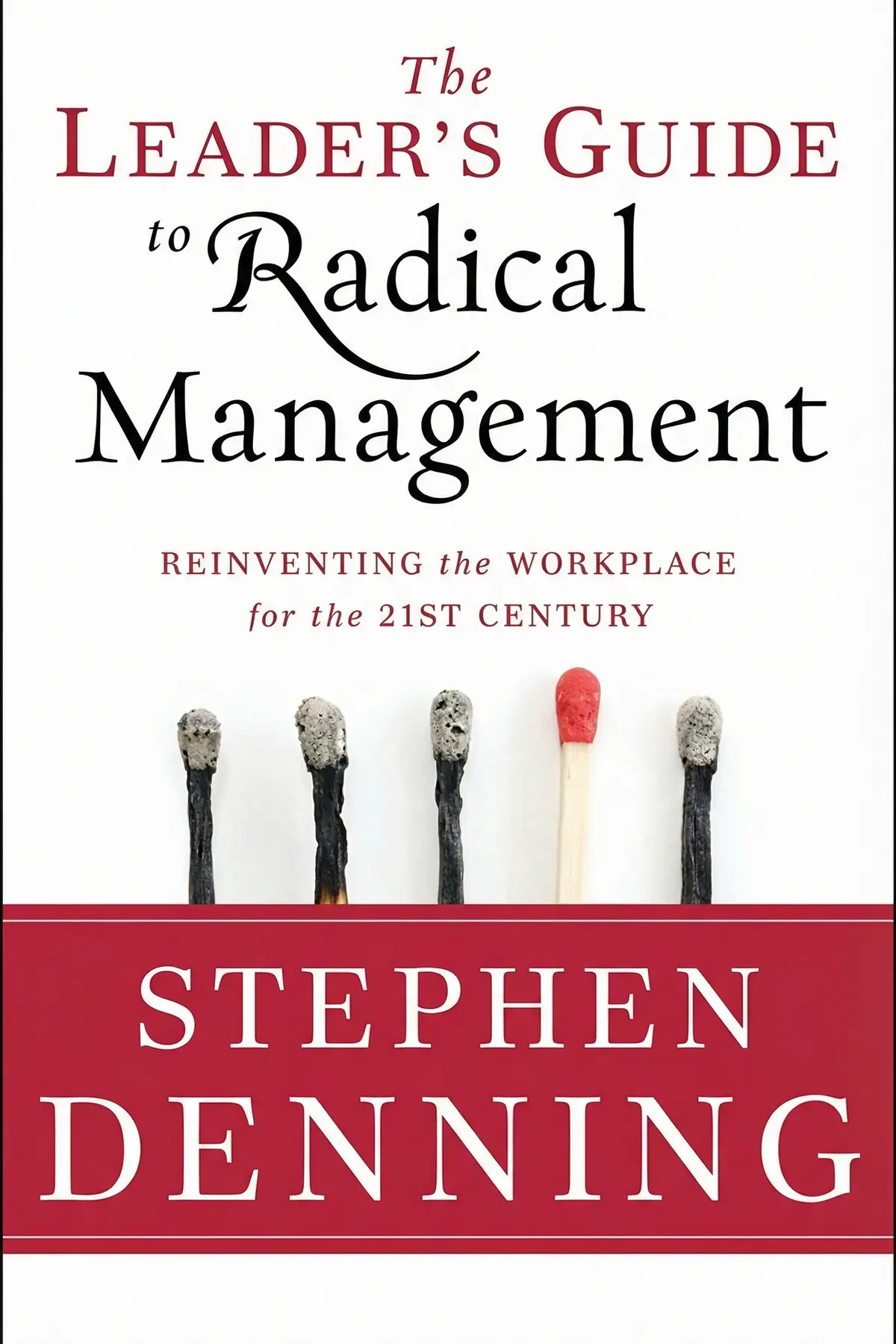
The Leader’s Guide to Radical Management challenges the traditional top-down approach that has dominated the corporate world for decades. Instead of focusing solely on profit maximization, this framework suggests that the ultimate goal of any organization should be to delight its customers. By shifting the objective, businesses can naturally unlock higher levels of innovation and employee engagement. The book provides a roadmap for this transformation, detailing seven fundamental principles. These include the use of self-organizing teams, the implementation of client-driven iterations, and the necessity of radical transparency. Through real-world examples—ranging from home construction to healthcare and automotive manufacturing—the promise of this approach is clear: by reinventing how work is managed and performed, leaders can build organizations that are not only more profitable but also more human and resilient in a complex, fast-changing economy.
Stephen Denning is a prominent Australian business guru who has provided consulting services to organizations across the globe. He is recognized as a specialist in management innovation, dedicated to helping businesses discover their unique paths to success. In addition to his work on management frameworks, Denning is an expert in the power of narrative, having authored The Secret Language of Leadership: How Leaders Inspire Action Through Narratives and The Leader’s Guide to Storytelling: Mastering the Art and Discipline of Business Narrative.
Listeners find this management guide articulate and straightforward, with one listener observing that it provides inventive alternative techniques. They value how the text bridges the gap between theory and real-world application; one listener emphasizes its systems thinking principles and another points to its effectiveness for overseeing dynamic projects. The work does an excellent job of illustrating Agile and Scrum concepts, and listeners respect its forward-thinking mindset, with one review specifically commending its adaptation of agile practices for business.
Stephen Denning manages to bridge the gap between abstract theory and gritty workplace reality with remarkable clarity. By applying systems thinking to the typical corporate hierarchy, he offers creative alternative methods that feel actually achievable for the modern leader. Frankly, the focus on delighting clients rather than just maximizing shareholder value is a perspective that more CEOs need to adopt immediately. While some of the specific Agile ceremonies mentioned feel slightly anchored in the past, the core philosophy of radical transparency remains incredibly relevant. It is a refreshing take on how to foster high engagement without the typical corporate fluff. This book is a must-read for those who want to build a truly humane workplace.
Show moreThis book provides a much-needed blueprint for leaders who are tired of the same old hierarchical bottlenecks and sluggish production cycles. I especially loved the final chapter which outlined his specific rollout strategy; it felt more like a revolution than a standard, boring corporate adoption plan. By focusing on how people are treated, Denning shows how to yield high engagement in sectors that usually resist these 'techie' ideas. Look, the content is absolutely fabulous even if the style is a bit prescriptive at times. Any business owner should read this to understand the cause-effect relationships that govern modern productivity. It’s easily one of the better books on organizational change I have encountered.
Show moreGotta say, the way Denning dissects the cause-and-effect relationships within organizational dynamics is simply brilliant and highly illuminating for any student of management. He doesn't just tell you what to do; he explains the underlying mechanics of why these radical changes actually work in practice. The book is well-written and manages to make complex systems thinking feel like common sense for the average reader. I found the chapters on radical transparency and honesty to be the most impactful for my own leadership style. Even if you can’t reinvent your entire organization, these concepts will help you improve your immediate team. It’s an innovative look at management that feels more relevant today than ever.
Show moreEver wonder why traditional management feels like such a relic of the industrial age? Denning answers this by taking Agile principles out of the software basement and moving them directly into the executive suite. The chapter on open narratives was particularly enlightening, even if it occasionally felt like a promotion for the author's earlier publications. I appreciated the way he separates core principles from daily practices, giving concrete examples of why certain organizational shifts succeed while others fail miserably. It is an innovative approach that treats employees as humans rather than mere resources. This is a solid resource for anyone handling dynamic projects in a shifting, unpredictable economy where old rules no longer apply.
Show moreFinally got around to finishing this guide, and the emphasis on radical transparency really struck a chord with me and my team. Denning does an excellent job of putting complex theory into practice by using real-world scenarios that resonate with actual managers. Personally, I think the way he adapts software techniques for general business management is the book’s greatest strength. It’s well-written and easy to understand, even when diving into the more technical aspects of team self-management. My only gripe is that some of the specific suggestions, like planning poker, have been superseded by better models recently. Still, the underlying message about humane work environments is vital for any leader today.
Show moreAs someone working in a non-tech industry, I found the adaptation of Agile principles surprisingly easy to digest and implement. Denning avoids the usual jargon-heavy pitfalls, making the concept of radical management feel accessible to everyone from retail managers to hospital administrators. Not gonna lie, I was skeptical about whether 'delighting clients' could be a practical business framework, but the evidence presented here is quite compelling. The book successfully brings abstract concepts to life through clear writing and logical arguments. While it’s a bit repetitive in the middle sections, the overall vision for a more humane workplace is inspiring. It’s a solid, practical guide for transforming team dynamics for the better.
Show morePicked this up because I was looking for a way to make our internal processes more fluid and less bureaucratic. What I found was a comprehensive argument for shifting the very foundation of how we lead people. To be fair, the book borrows heavily from Scrum, but elevating those practices into the domain of general management is a stroke of genius. It’s refreshing to see a book that prioritizes human respect and engagement over cold, heartless metrics. Some parts are definitely dated, especially the prescriptive bits about specific agile ceremonies. However, the core message is a powerful call for a management revolution that every modern leader should at least consider.
Show moreAfter hearing several colleagues rave about this, I found the actual experience a bit of a mixed bag. To be fair, Denning is a thought leader who clearly understands the future of work, but the layout is frustratingly heavy on long bulleted lists and repetitive structures. I found the content fabulous in spirit, yet the narrative often felt like it was being chewed and re-chewed across different chapters without adding much new value. If you are an employer, you should embrace these changes or prepare for a very rough future in the modern talent market. It’s a decent introduction for the uninitiated, though I wish it stayed focused on management philosophy rather than getting bogged down in specific practices that now feel a bit dated.
Show moreNot what I expected, as the book leans heavily on software development roots, but it still offers some solid gems for the general manager. In my experience, the most valuable part was the discussion on systems thinking and how to manage dynamic, unpredictable projects. However, the formatting—specifically those endless lists—makes it feel a bit like a dry textbook at times. Some readers might love that structured style, but I found it a little exhausting to get through. Also, some mentioned practices like velocity are now being questioned by the very community Denning draws from. It is a good introduction, though it clearly shows its age in the technical details.
Show moreThe truth is, if you have spent more than six months in a Scrum environment, you can probably skip this one entirely. It feels like a stereotypical American-style self-help book where the author takes a single successful experience and tries to preach it as the 'New Big Thing' to everyone else. While the ideas regarding radical transparency and honesty are righteous, the book provides relatively little novelty for those already familiar with Lean or Agile. I felt like I was reading a repackaged version of software development blogs from a decade ago. It might be interesting for outsiders, but for tech veterans, there is just not enough new material to justify the time.
Show moreHamilton Helmer

Margaret Heffernan
Joseph A. Maciariello
AUDIO SUMMARY AVAILABLE
Get the key ideas from The Leader’s Guide to Radical Management by Stephen Denning, plus 5,000+ more titles in English and Thai.







