
23 min 34 sec
The Leadership Challenge: How to Make Extraordinary Things Happen in Organizations
The Leadership Challenge examines five essential practices that turn ordinary managers into extraordinary leaders. By focusing on behavior rather than personality, it provides a practical roadmap for inspiring teams and achieving remarkable results.
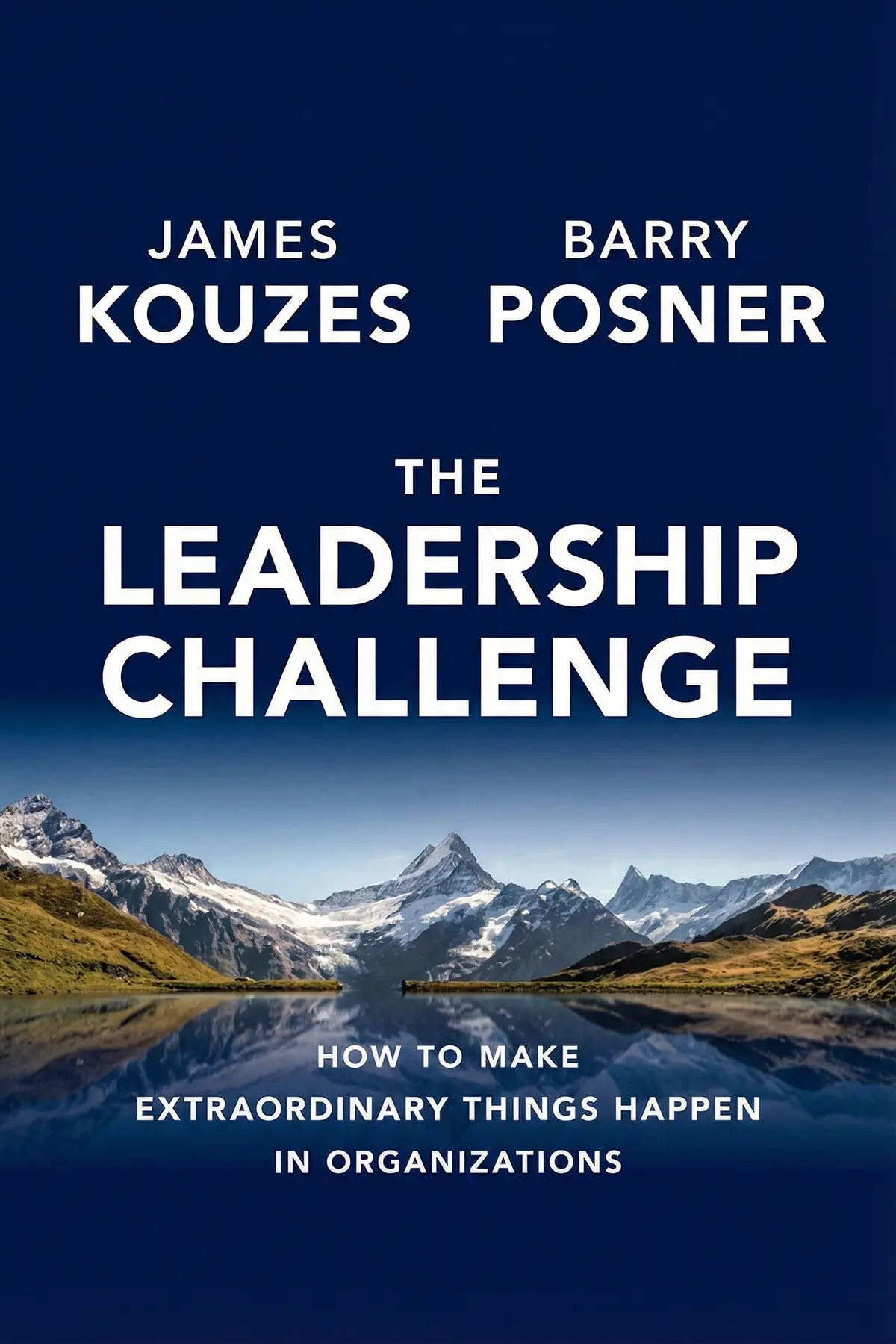
Table of Content
1. Introduction
1 min 37 sec
Have you ever found yourself working under someone who seemed to have all the authority but none of the actual skill required to lead? Perhaps it was a coach who focused only on the score rather than the players, or a manager who was quick to take the credit for your hard work but nowhere to be found when things went wrong. These experiences are common, and they often lead us to believe that leadership is some mysterious, innate quality—something you’re either born with or you aren’t. But what if that perspective is entirely wrong? What if the difference between a boss you resent and a leader you admire isn’t about their DNA, but about the specific, repeatable actions they take every day?
That is the central premise we are exploring today. In this summary of The Leadership Challenge, we delve into decades of research to uncover the behaviors that define truly great leaders. We aren’t just talking about people at the top of Fortune 500 companies; we are talking about anyone who takes the initiative to guide others toward a better future. The core message here is that leadership is a practice—a set of skills that can be learned, refined, and perfected over time through dedication and self-awareness.
Throughout this journey, we will look at five fundamental practices that allow people to achieve extraordinary outcomes within organizations. We’ll see how small actions, like picking up a piece of trash, can shift an entire company’s culture, and why the most powerful tool in a leader’s kit might actually be an unexpected thank-you note. We will explore how to build a collective vision that people actually want to follow and how to create a team environment where trust is the default rather than the exception. By the end of this script, you’ll have a clear framework for becoming the kind of leader that others are proud to follow.
2. The True Nature of Leadership Influence
2 min 02 sec
Think about the people who shaped your values and guided your growth. You might be surprised to learn that the most impactful leaders aren’t celebrities, but those closest to us.
3. Establishing a Foundation of Values
1 min 55 sec
Trust is the currency of leadership, but it cannot be bought. Discover why being clear about your personal and shared principles is the only way to build a committed team.
4. The Power of Leading by Example
1 min 54 sec
Orders are easily ignored, but actions are impossible to overlook. Explore how a simple garbage pail became a symbol of cultural transformation in a manufacturing plant.
5. Creating a Vivid and Collective Vision
1 min 51 sec
Intelligence is valuable, but imagination is the key to leadership. Learn how to think like a grandmaster to guide your team through the fog of uncertainty.
6. Recruiting Others Through Emotional Connection
1 min 46 sec
A vision remains a dry statement until it is infused with meaning. See how symbols, slogans, and personal letters can turn a job into a mission.
7. Seizing the Initiative to Challenge the Status Quo
1 min 49 sec
Great things never come from staying inside the comfort zone. Find out how a single store manager’s rogue blender changed the course of a global coffee giant.
8. Building Momentum Through Small Wins
1 min 50 sec
Big goals can be paralyzing, but small victories are energizing. Discover how breaking down a massive challenge into tiny steps can lead to impossible heights.
9. The Foundation of Trust and Collaboration
1 min 44 sec
Leadership is a relationship, and every relationship is built on trust. Learn how simple shifts in communication can bridge the distance in a global team.
10. Empowering Others to Achieve Greatness
1 min 53 sec
Control is an illusion that limits potential. See why giving away power is the most effective way to increase your organization’s overall strength.
11. The Impact of Recognition and Feedback
1 min 43 sec
A paycheck is a contract, but praise is a motivator. Discover why personal acknowledgments are far more powerful than automated bonuses.
12. Fostering a Culture of Celebration
1 min 52 sec
Celebrations are not distractions from work; they are the glue that holds a community together. Learn how to use events to reinforce your team’s identity.
13. Conclusion
1 min 38 sec
As we reach the end of our exploration of The Leadership Challenge, the throughline should be clear: leadership is not about who you are, but about what you do. We have looked at five core practices—modeling the way, inspiring a shared vision, challenging the process, enabling others to act, and encouraging the heart. These aren’t just abstract theories; they are practical behaviors that have been proven, through decades of research, to drive performance and foster a healthy, vibrant organizational culture.
To wrap this up, remember that you don’t need a formal title to start leading. You can start today by getting clear on your values and making sure your actions reflect them. You can start by asking your team for their input on the future, or by taking a small risk to improve a stagnant process. The most important thing is to move from knowing to doing. Leadership is a journey of continuous improvement, and every small win you achieve builds the foundation for the extraordinary successes of the future.
Here is one final, actionable piece of advice you can implement right away: Make it a point to show up at your own party. Mark the important milestones and successes of your team on your calendar just as you would a high-priority business meeting or a personal holiday. When the time comes to celebrate a win, be there in person. Your presence is the most powerful signal you can send that you value the team’s effort and that you are truly part of the community you are leading. By consistently showing up—both literally and figuratively—you will build the trust and inspiration necessary to lead your team to heights you once thought were unreachable.
About this book
What is this book about?
The Leadership Challenge is an evidence-based exploration of what it takes to guide a group of people toward a common, significant goal. Unlike many books that treat leadership as an innate trait reserved for a select few, this work argues that leadership is a skill that can be mastered through intentional practice. The core of the book revolves around five specific behaviors: setting an example, envisioning the future, seeking out innovation, empowering others, and recognizing contributions. By following this framework, readers can learn how to build trust, foster collaboration, and maintain momentum even in the face of significant obstacles. The promise of the book is that by changing your behavior and focusing on the needs and aspirations of your team, you can transform the culture of your organization and make extraordinary things happen. Whether you are a first-time manager or a seasoned executive, the insights provided offer a clear path to increasing your influence and effectiveness as a leader.
Book Information
About the Author
James Kouzes
James Kouzes and Barry Posner have been a collaborative powerhouse for over three decades, dedicating their careers to researching and teaching the nuances of leadership. James Kouzes is the Dean’s Executive Fellow of Leadership at Santa Clara University’s Leavy School of Business and a globally recognized speaker. Barry Posner is the Accolti Professor of Leadership at the same institution, where he also served as dean. Both authors have received numerous accolades for their contributions to business education and leadership theory.
Ratings & Reviews
Ratings at a glance
What people think
Listeners consider this leadership guide to be an impactful resource filled with excellent insights, and one listener points out that it clarifies theories by using actual case studies. They value how easy it is to follow and describe the content as inspiring, while one review mentions how the book introduces a sense of compassion into corporate environments.
Top reviews
Evelyn
Wow. This is easily the most comprehensive leadership resource I've encountered in years of corporate management. Kouzes and Posner take what could be a dry subject and inject a necessary sense of humanity into the business world. While some might find the Five Practices framework a bit structured, the research backing every claim is incredibly solid. I particularly appreciated the uplifting tone throughout the chapters, making it feel less like a lecture and more like a mentorship session. To be fair, some of the anecdotes about specific managers feel a little dated now, but the core principles remain timeless. It’s a powerful textbook that I’ll keep on my desk for reference whenever my team hits a morale slump.
Show moreLook
Ever wonder why some teams thrive while others just survive? This book provides the most evidence-based answer I’ve seen yet. By focusing on the 'Five Practices of Exemplary Leadership,' Kouzes and Posner create a roadmap that is both uplifting and deeply practical for daily operations. It’s a powerful textbook that doesn't just tell you to be a better leader; it shows you exactly how through hundreds of case studies. Some of the language is a little formal, but that’s to be expected from a seminal business text. Personally, I found the emphasis on 'Encouraging the Heart' to be the most moving and relevant part of the entire framework. It really humanizes the corporate grind.
Show moreFang
As someone who usually hates corporate self-help, I found this remarkably refreshing and grounded in reality. The authors do a fantastic job of bringing a sense of warmth and humanity to the business world, which is often missing in management literature. I particularly enjoyed the diverse range of examples, from high-level CEOs to front-line supervisors who just wanted to make their workplace more fun. Not gonna lie, I was skeptical about the 'Five Practices' at first, but the data-driven approach eventually won me over. It’s a readable, encouraging guide that makes you feel like leadership is a skill you can actually learn rather than an innate talent. Truly an essential read for the modern office.
Show moreNatalie
After hearing my MBA cohort rave about this for months, I finally sat down to give it a proper, intentional read. The second time around, without the pressure of a deadline, the depth of the research really shines through. The authors do an incredible job of explaining complex organizational dynamics through real-world examples that feel authentic rather than manufactured. Some might say the advice borders on common sense, yet you’d be surprised how many managers fail at the basics. Look, it’s a bit dense at times, and the writing style is very corporate, but the framework for 'modeling the way' changed my perspective on personal influence. It’s an essential read for anyone serious about people management.
Show moreRodrigo
The chapter on 'Enabling Others to Act' was a total game-changer for my current project team. I loved the story about the supervisor who had people turn in boring forms as paper airplanes; it’s that kind of creativity that brings humanity back to the office. While the book can be a bit 'rah-rah' at times, the underlying data from decades of interviews provides a foundation that most leadership books lack. Truth is, the middle sections drag a bit because the authors insist on over-explaining every minor nuance. However, the actionable steps at the end of each section make it a practical tool rather than just another theoretical manifest. It’s a solid 4-star guide for new managers.
Show moreAroha
Finally got around to reading this for my graduate degree, and I’m pleasantly surprised by how much stayed with me. The authors use real examples to illustrate their points, which helps ground the more academic theories in actual workplace scenarios. I did find the constant use of the word 'constituents' a bit odd, as if we’re all politicians instead of colleagues. Regardless, the focus on 'Inspiring a Shared Vision' is handled better here than in any other leadership book I’ve read. It’s a bit long-winded, and the repetition is noticeable if you read it in one sitting, but the core message is incredibly powerful. Every aspiring leader should probably have a copy.
Show moreRatree
This book made many excellent points about how to inspire a shared vision, but I couldn't ignore how repetitive the prose became after the third chapter. It felt as if the authors were desperate to cement their ideas by looping back to the same concepts in slightly different ways. I had to read this for a professional development seminar, and while I definitely learned a few things, the 'business English' felt stiff. Frankly, referring to employees as 'constituents' throughout the text really started to grate on my nerves by the end. It's informative and clearly well-researched, but you could probably get the same value from a detailed summary of the Five Practices.
Show morePhu
Picked this up because it’s a staple in almost every management course, but I left feeling somewhat underwhelmed. Much of the advice feels like common sense—like the idea that bosses should recognize achievements to keep people happy. Does that really need a whole chapter? To be fair, the research is exhaustive, and the structure is logical, which makes it a decent reference for a class. But the 'business English' is so dense and stiff that it took me twice as long to finish as it should have. It’s not a bad book by any means, but it’s definitely more of a textbook than an engaging narrative for a casual reader.
Show moreMadison
Direct opinion: This is a classic for a reason, but it definitely shows its age in certain chapters. While the core research is impressive, the writing style is quite clunky and can be a struggle to get through if you aren't reading it for a class. I found the 'dog treat' example to be incredibly tone-deaf, making me wonder if the authors truly understand the perspective of lower-level employees today. However, if you can look past the occasional cringey anecdote, there is a wealth of great information buried in here. It’s a bit repetitive, yet that might be intentional to ensure the reader actually absorbs the 'Five Practices' framework before the book ends.
Show moreAurora
Not what I expected given the high praise this usually receives in leadership circles. My main issue is that many of the examples provided felt incredibly tone-deaf or just plain bizarre in a modern workplace context. For instance, the story about supervisors handing out dog-treat-shaped awards because employees felt 'treated like dogs' was honestly cringeworthy. Who thought that was a good idea? Other anecdotes, like forcing people to take the stairs to 'foster conversation,' ignore basic inclusivity for those with mobility issues. The writing is clunky and often feels like it was written by people who haven't worked at the bottom of the ladder in decades. It’s just too corporate for me.
Show moreReaders also enjoyed
A Year with Peter Drucker: 52 Weeks of Coaching for Leadership Effectiveness
Joseph A. Maciariello


Acting with Power: Why We Are More Powerful Than We Believe
Deborah Gruenfeld
All In: How Great Leaders Build Unstoppable Teams
Mike Michalowicz
7 Powers: The Foundations of Business Strategy
Hamilton Helmer

A Bigger Prize: How We Can Do Better Than the Competition
Margaret Heffernan
AUDIO SUMMARY AVAILABLE
Listen to The Leadership Challenge in 15 minutes
Get the key ideas from The Leadership Challenge by James Kouzes, plus 5,000+ more titles in English and Thai.
- 5,000+ titles
- Listen as much as you want
- 7-day free trial
- Cancel anytime







