

A Room of One’s Own
Virginia Woolf
Discover why the quest for approval is a professional dead end. This summary explores the hidden double standards of likeability and offers a roadmap for leading with authenticity and impact.
2 min 07 sec
Have you ever found yourself replaying a conversation in your head, wondering if you came across as too aggressive? Or perhaps you’ve done the opposite, softening your message so much that your actual point got lost in a sea of apologies and polite qualifiers. If this sounds familiar, you aren’t alone. You are likely navigating what is known as the likeability trap—a complex web of social expectations that demands you be both powerful and pleasant, authoritative yet accessible, and ambitious yet humble.
In our professional lives, we are often told that being liked is a prerequisite for influence. We’re led to believe that if we can just find that perfect balance of warmth and competence, the doors to leadership will swing open. But for many, especially women, the reality is far more frustrating. The more successful you become, the more your likeability is scrutinized. It’s as if there is a hidden tax on achievement: as your competence goes up, your perceived warmth goes down. This isn’t just a minor social inconvenience; it is a systemic barrier that affects everything from performance reviews to salary negotiations and promotion opportunities.
This summary is designed to help you see the trap for what it is. We’re going to look at the research and the lived experiences that define this struggle. We’ll explore why the traditional advice given to professionals often fails to account for deep-seated biases. More importantly, we’re going to talk about how to move beyond the narrow goal of being liked. We will explore what it means to lead with authenticity, how to handle the inevitable pushback that comes with asserting your value, and how to build a professional identity that is rooted in your own standards of success rather than someone else’s expectations.
By looking closely at these dynamics, we can start to dismantle the internal and external pressures that keep us small. The goal isn’t to stop being a kind or collaborative person; it’s to stop using likeability as a shield or a yardstick for your worth. It’s time to move toward a version of leadership that is effective, honest, and entirely your own. Let’s begin by uncovering the hidden mechanics of this trap.
2 min 26 sec
What happens when the qualities required for leadership are the same ones that make a person seem unlikeable? Explore the double bind of professional advancement.
2 min 15 sec
Trying to keep everyone happy might feel safe, but it often leads to a loss of influence and a fast track to burnout.
2 min 09 sec
Is it just a lack of confidence, or is the environment rigged? Discover why likeability is a structural issue rather than a personal failing.
2 min 04 sec
Explore the complexity of the ‘just be yourself’ advice and how to find a middle ground between performance and personality.
2 min 00 sec
Shift your focus from winning popularity contests to building lasting influence and a legacy of impact.
1 min 51 sec
As we wrap up our look into the dynamics of professional perception, it is important to remember that the likeability trap is a structural phenomenon, not a personal failure. We’ve explored the double bind that penalizes achievement, the exhausting emotional labor of people-pleasing, and the systemic biases that keep this cycle in motion. We also looked at the necessity of moving beyond the shallow goal of being liked toward the more substantial goal of being respected and effective.
Breaking free from this trap isn’t a one-time event; it’s a daily practice of choosing authenticity over accommodation. It requires the courage to be ‘unlikeable’ in the service of a higher purpose—whether that’s defending a teammate, pushing for a better strategy, or simply protecting your own time and energy. It means accepting that you will not be everyone’s cup of tea, and that’s perfectly okay. In fact, if you aren’t occasionally ruffling feathers, you might not be pushing hard enough for the things that actually matter.
The throughline of this journey is the reclamation of your own agency. You are the architect of your professional identity. While you cannot control the biases or reactions of others, you can control where you place your focus and how you define your success. By shifting your internal compass from external approval to internal alignment, you create a foundation that no office trend or personality critique can shake.
Your challenge moving forward is to pay attention to the moments where you feel the urge to shrink or soften yourself just to be more palatable. When that happens, take a breath and ask yourself: ‘What would I do right now if I weren’t worried about being liked?’ The answer to that question is where your real power lies. Go out and use it. Build a career that reflects your true worth, and in doing so, you’ll help pave the way for a professional world where everyone can lead without having to wear a mask.
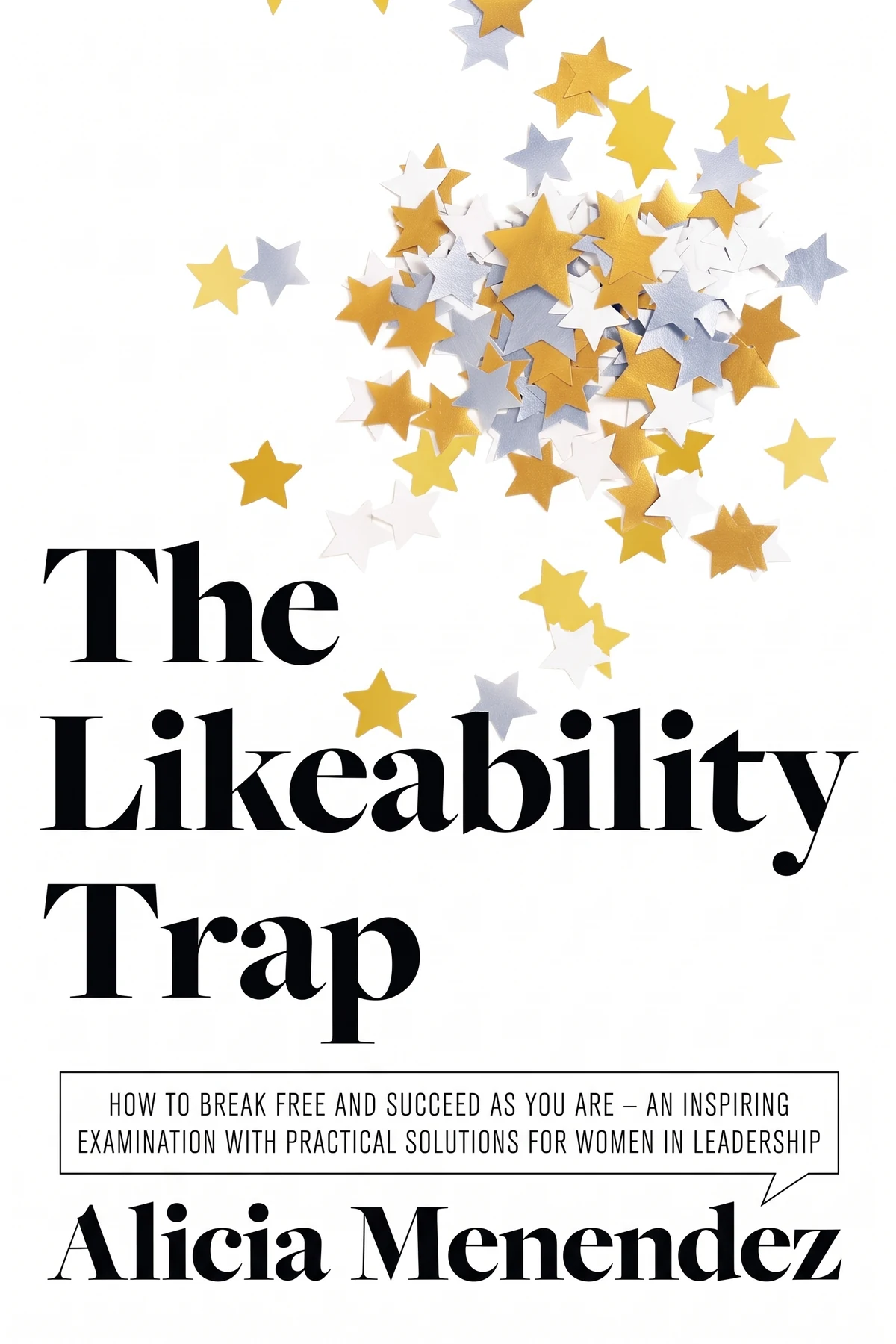
The Likeability Trap takes a deep dive into the paradoxical demands placed on women in the professional world. It addresses the exhausting reality that while competence is required for advancement, success often makes a woman seem less likable, creating a no-win situation. The book argues that this isn't just a personal hurdle but a systemic barrier that forces leaders to constantly adjust their personalities to fit narrow, often conflicting, social expectations. Through this summary, listeners will explore why the advice to just be yourself is often insufficient and how societal biases shape our definitions of leadership. It promises to reveal the mechanisms of this trap—from the Goldilocks effect to the penalty of ambition—while providing strategies to shift the focus from being universally liked to being genuinely effective. By the end, you will understand how to redefine success on your own terms and build a career grounded in respect rather than mere approval.
Alicia Menendez is an accomplished journalist and an anchor at MSNBC, where she currently co-hosts The Weekend. A graduate of Harvard College, her academic work on the social capital of women received significant attention from major media outlets. Beyond her television work, she is the creator and host of the Latina to Latina podcast. Her contributions to the field of journalism have been recognized by publications such as Elle and Marie Claire, and her interviews have been featured on ABC News, PBS, and Vice News.
Listeners view this title as a necessary resource for women in leadership, noting its polished writing and stimulating ideas. The text delivers concrete tips alongside many applicable case studies, and listeners find it easy to connect with, including one who mentioned its profound look at the expectations placed on women. They enjoy the inclusion of humor, with one review focusing on the author's specific conversations about women.
A must-read for any woman who has ever been told she needs to 'soften' her approach in the office. This isn’t your typical self-help book; it’s a rigorous and eloquent examination of how our current definitions of leadership are fundamentally biased. Menendez hits on so many points that I’ve experienced firsthand but couldn’t quite articulate until now. I think this should be required reading for every manager, regardless of gender, because it highlights the subtle ways we penalize women for the same traits we reward in men. The humor sprinkled throughout makes it an enjoyable read despite the serious subject matter. It’s eloquent, pertinent, and deeply validating for anyone tired of the double standards. I finished it feeling empowered to stop trying to 'fix' myself and start demanding better from my professional environment.
Show moreMenendez hits the nail on the head with this brilliant exploration of the double binds women face. I’ve read plenty of books on workplace culture, but few have captured the emotional toll of the likeability trap quite like this one. The truth is, the pressure to be 'nice' while being effective is a weight we shouldn't have to carry alone. I loved how the author blended personal anecdotes with broader social commentary to create a narrative that is both intimate and grand in scope. It’s a deep dive into the psyche of the modern professional woman that managed to make me laugh and cry in the same chapter. If you’ve ever felt like you’re doing everything right but still getting the wrong feedback, this book is for you. It’s an essential, relatable, and incredibly timely piece of work that I'll be thinking about for a long time.
Show moreAs someone navigating a male-dominated corporate ladder, this book felt like a deep breath of fresh air. Menendez writes with an eloquence that makes even the most frustrating workplace examples feel manageable and understandable. She dives deep into the specific pressures that women face to be perpetually helpful and supportive, often at the expense of their own career growth. I loved the pertinent examples she used from her own career in journalism, as they made the concepts feel very grounded in reality. Some might find it a bit light on the 'self-help' side, but I think the real value lies in the way it validates our shared experiences. It’s a thought-provoking read that I’ve already recommended to several colleagues who are struggling with the same likeability hurdles. It’s not a magic wand for systemic sexism, but it’s a very necessary and relatable conversation starter.
Show moreFinally got around to this after it sat on my shelf for months, and I’m glad I did. The book provides a powerful look at the structural inequality that forces women to perform a specific type of personality just to survive in business. Menendez is a talented narrator—I listened to the audiobook—and her wit really shines through the heavier sections. Look, the advice isn’t always groundbreaking, but the way she frames the discussion around 'results over personality' is a perspective more companies need to adopt. I specifically liked her point about how ambitious behavior is admired in men but labeled as 'aggressive' in women. It’s an easy read that manages to be both relatable and professionally relevant. While I agree with other reviewers that a deeper dive into gender studies would have helped add weight, its accessibility is ultimately its greatest strength.
Show moreEver wonder why you’re told to be more 'collaborative' while your male peers are praised for being 'decisive'? This book takes that exact frustration and dissects it with precision and a welcome dose of humor. Menendez avoids the typical dry tone of business books, opting instead for a conversational style that feels like talking to a very smart friend. I found her discussion on the intersection of race and likeability particularly important, even if I wish she had spent more time exploring those nuances. The book is full of 'aha' moments where you realize your past workplace conflicts weren't your fault, but rather a byproduct of an outdated system. It’s a great resource for anyone who feels like they are constantly shrinking themselves to fit in. A few parts felt repetitive, but the overall message is far too important to ignore.
Show moreThis book provides a much-needed mirror for women who feel they are constantly failing an impossible test. Menendez explores the 'trap' with a lot of nuance, showing how the desire to be liked can actually derail our long-term success. I found the examples she provided to be very relatable, especially the ones concerning how we internalize these external pressures. To be fair, she does mention early on that she isn't trying to provide a simple 10-step plan, which might disappoint some readers looking for quick fixes. Instead, she offers a way to reframe our thinking and stop caring about the wrong opinions. Her writing is sharp and the tone is just right—not too academic but still deeply informative. It’s a solid addition to the feminist business canon and a must-read for those currently in leadership positions.
Show moreThe chapter on organizational bias is easily the highlight of this book and should be pinned to every HR manager's wall. Menendez does a fantastic job of breaking down how 'culture fit' is often just code for hiring someone who looks and acts like the current leadership. I appreciated her advice on asking 'compared to who?' when receiving subjective feedback about being too demanding or emotional. However, the rest of the book felt a bit uneven in its pacing and occasionally drifted into what felt like whining. While the sentiment is spot-on, I’m not sure I walked away with enough actionable steps to actually change my day-to-day reality. It functions better as a way to make women feel seen than as a manual for structural change. It’s a solid introduction to the topic, but it definitely leaves you wanting a more rigorous psychological analysis of these deep-seated biases.
Show moreFrankly, it felt a bit like poking a bruise for three hundred pages. I appreciate Menendez’s effort to put words to the exhaustion we all feel, but reading this after a long day at the office was almost too much to handle. The prose is sprightly and she uses humor well to lighten the heavy subject matter, which I definitely appreciated during the denser chapters. My main gripe is that it focuses so heavily on the problem and only touches on the solution in the final moments. We know the trap exists; we’re living in it every single day. I was hoping for more coaching on how to navigate the 'too hard vs. too soft' balance she mentions throughout the text. It’s a valid contribution to the conversation, but I’m ready for the 'what’s next' part of the discussion. Good for validation, less so for execution.
Show moreNot what I expected after seeing it all over my professional feeds. To be fair, Menendez has a great voice and the prose flows well, but I kept waiting for a revelation that never came. The central thesis is that women are stuck between being liked and being respected, which is something most professional women have known since their first internship. I found the repetitive rhetorical questions about whether we can have both to be more frustrating than enlightening. While the intersectional mentions are a step in the right direction, they felt a bit surface-level and academic rather than deeply integrated into the narrative. If you are brand new to feminism or just starting your career, this might feel revolutionary, but for those of us already in the trenches, it’s mostly just venting. I wanted more of a roadmap and less of a mirror reflecting my own daily frustrations back at me.
Show moreAfter hearing so much buzz about this title, I picked it up hoping for a strategy guide for my mid-level management role. Instead, I found a collection of stories that felt slightly outdated, almost like a time capsule from the early 2010s. It’s a quick read, and Menendez is undoubtedly a charismatic writer, but the content is very entry-level for anyone who has been paying attention to workplace dynamics. The truth is, the 'double bind' she describes isn't a new concept, and the book stays at level one for nearly the entire duration. There was a section on intersectionality that felt like she was debating basic facts of life for women of color as if they were new theories. I struggled to finish it because it felt like a repetitive list of grievances without enough concrete solutions. It might work as a gift for a college grad, but seasoned pros will find it lacking real substance.
Show moreVirginia Woolf
Robin Ryan

Tracy Rosenthal

Jessica Valenti



Johny Pitts
AUDIO SUMMARY AVAILABLE
Get the key ideas from The Likeability Trap by Alicia Menendez, plus 5,000+ more titles in English and Thai.







