
21 min 48 sec
The Lonely Century: How to Restore Human Connection in a World That's Pulling Apart
This exploration of the modern loneliness epidemic reveals how economics, technology, and urban design isolate us. It offers a roadmap for reconnecting our fractured societies and reclaiming our collective well-being.
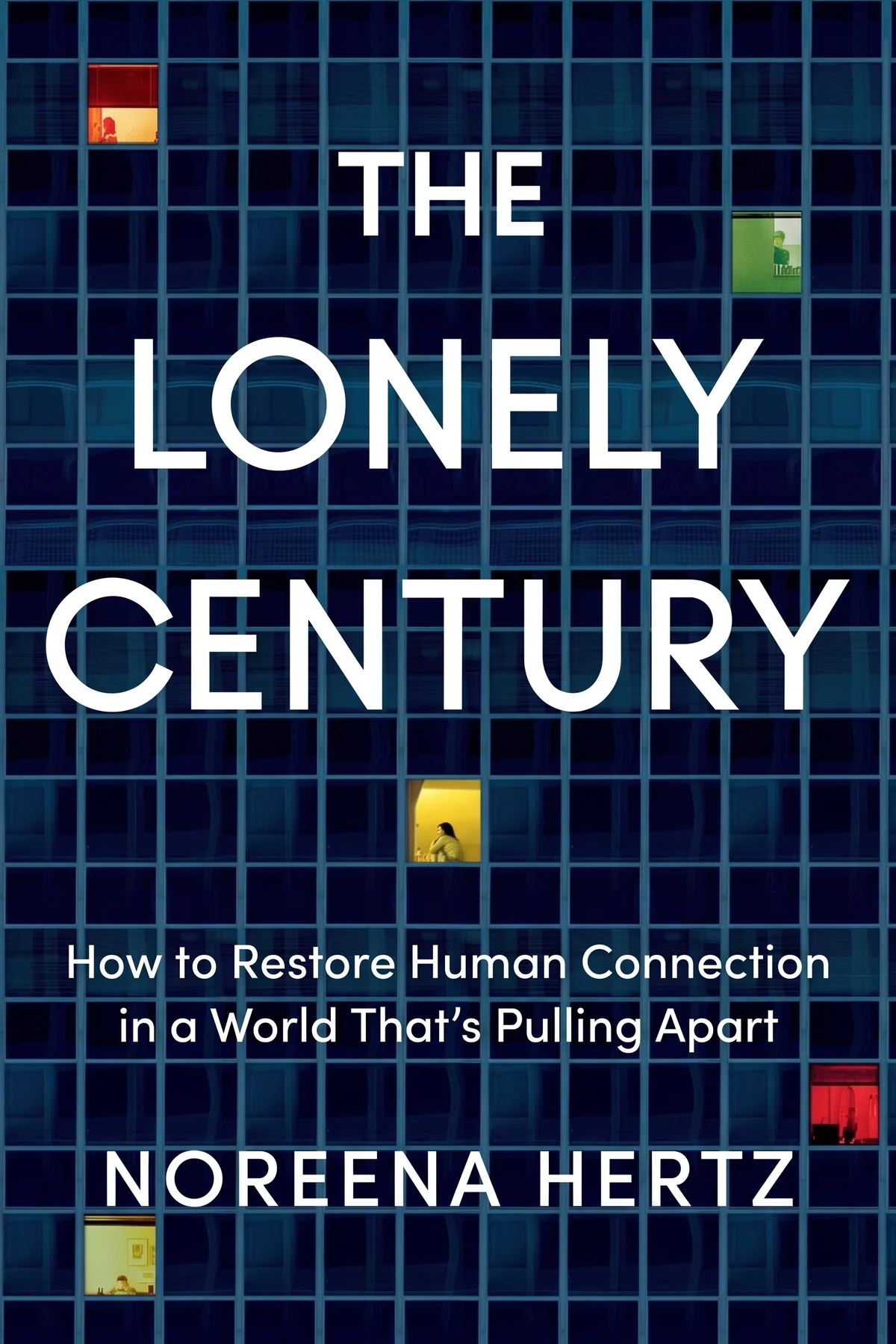
Table of Content
1. Introduction
1 min 48 sec
We are living in an age of unprecedented connectivity, yet millions of people feel more isolated than ever before. While it is easy to point toward recent global health crises and social distancing as the primary culprits, the truth is that the foundations of our loneliness were laid decades ago. This isn’t just a fleeting feeling of sadness or a temporary lack of plans on a Saturday night. It is a structural, systemic crisis that is reshaping our health, our politics, and the very way we perceive our neighbors.
In this exploration of the twenty-first century’s most pressing social challenge, we look at the ‘Lonely Century’—a period defined by the erosion of community and the rise of a hyper-individualistic culture. We often think of loneliness as a personal failure or a private struggle, but as we will see, it is deeply intertwined with the way our economies are run and how our cities are built. From the rise of ‘contactless’ commerce to the way our smartphones have become digital barriers between us and the world, the environment we inhabit is increasingly designed to keep us apart.
Throughout this journey, we will examine the surprising ways loneliness manifests in our world. We’ll look at why elderly citizens in Japan are intentionally getting arrested just to find companionship in prison, and how the loss of local libraries is more than just a budgetary issue—it’s a threat to our democratic stability. More importantly, we will seek out the pathways toward reconnection. This is a story about the high cost of isolation, but it is also a guide on how we can start to weave the social fabric back together, one interaction at a time. The goal is to move from a society of ‘I’ back to a society of ‘we,’ and to understand why our survival as a species depends on our ability to stay connected.
2. The Economic Roots of Modern Isolation
2 min 31 sec
Discover how the shift toward hyper-competitive capitalism in the late twentieth century dismantled our social safety nets and transformed our neighbors into rivals rather than allies.
3. The Biological Toll of Loneliness
2 min 32 sec
Loneliness isn’t just an emotional state; it is a physical threat that triggers stress responses and increases the risk of chronic disease and early death.
4. Loneliness as a Political Catalyst
2 min 09 sec
Explore the unsettling connection between social isolation and the rise of populist movements, where the desire for belonging can lead to exclusionary politics.
5. The Urban Paradox and Transactional Intimacy
2 min 19 sec
Living in a crowded city doesn’t guarantee connection. See how urbanization has led to the rise of ‘rented’ friends and digital spectatorship.
6. The Erosion of the Contactless World
2 min 16 sec
Modern convenience often comes at the cost of our daily social interactions. Learn why small talk with strangers is more important than you think.
7. The Digital Barrier and the Childhood Crisis
2 min 03 sec
Smartphones and social media are designed to be addictive, but their greatest cost is our ability to empathize and connect face-to-face.
8. AI and the Rise of the Social Robot
2 min 10 sec
Can technology solve the problem it helped create? Explore the fascinating world of robotic companions and the ethical dilemmas they pose.
9. A Blueprint for a Connected Future
2 min 17 sec
Ending the Lonely Century requires both bold government action and small personal changes. Discover how we can rebuild our collective life.
10. Conclusion
1 min 43 sec
As we close this exploration of the Lonely Century, it is clear that the isolation we feel today is not an accident of fate, but a consequence of the choices we have made as a society. For decades, we have traded community for convenience, and solidarity for self-interest. We have built cities that separate us and technologies that distract us, all while telling ourselves that we are more ‘connected’ than ever before. But as the data on our physical and mental health shows, the human heart cannot be fooled by digital substitutes or transactional friendships.
The throughline of this journey is that loneliness is a systemic issue, and therefore, it requires a systemic solution. We must demand that our leaders prioritize the social fabric of our nations, investing in public spaces and reigning in the addictive designs of the digital economy. We must recognize that a flourishing economy is meaningless if it leaves its citizens in a state of chronic, biological stress. The costs of our current path are simply too high to ignore—not just in terms of healthcare dollars, but in the very stability of our democratic institutions.
Ultimately, the power to end the Lonely Century lies with each of us. The next time you find yourself reaching for your phone in a moment of boredom, try reaching out to a person instead. The next time you have the choice between an automated checkout and a human cashier, choose the interaction. These small movements toward one another, when multiplied by millions, are what will eventually weave our communities back together. Reclaiming our social lives is the most radical and necessary act of the twenty-first century. It is time to put down the devices, step out of the shadows, and remember what it means to truly belong to one another.
About this book
What is this book about?
In an era where we are more digitally tethered than ever, why does it feel like we have never been further apart? The Lonely Century provides a profound analysis of the modern isolation crisis, moving beyond the obvious impacts of global lockdowns to uncover a deeper, structural shift in how we live, work, and interact. From the high-pressure environments of neoliberal economies to the silent aisles of automated grocery stores, the fabric of our communities is being systematically unraveled. This summary explores how the 'every man for himself' philosophy of the late twentieth century paved the way for a world where even our friendships can be rented by the hour. It examines the physical toll of loneliness—which can be as damaging as heavy smoking—and its role in fueling political instability and the rise of extremist movements. However, the narrative is not one of despair. It provides a hopeful vision for the future, illustrating how we can leverage technology responsibly and redesign our cities and economies to prioritize human connection. By the end, you will understand the urgent necessity of reclaiming our social muscles and the small, daily actions that can help us build a more inclusive, compassionate world.
Book Information
About the Author
Noreena Hertz
Noreena Hertz is an English academic, economist, and author who hosts the Sirius XM show MegaHerz: London Calling. Recognized by the Observer as a leading global thinker, her work has appeared in the New York Times, the Washington Post, and the Guardian. She holds a PhD from Cambridge and an MBA from the Wharton School.
Ratings & Reviews
Ratings at a glance
What people think
Listeners find the material very accessible, with one listener describing it as a fantastic read for policy wonks. They value the book's perspectives, and one listener highlights its great stats on the new world. The concepts presented elicit mixed reactions from listeners.
Top reviews
Rod
Hertz has written a definitive guide to the modern era's most quiet and devastating epidemic. I was particularly struck by her exploration of the 'loneliness economy' and how companies capitalize on our isolation. The narrative flows seamlessly between heartbreaking personal anecdotes and rigorous academic research, making it a true page-turner for a non-fiction book. Not gonna lie, the chapter on the elderly and their reliance on AI companions actually made me tear up. It’s a wake-up call for anyone who spends more time scrolling than talking to their actual neighbors. The book doesn't just complain; it provides a roadmap for rebuilding the social fabric at a community level. Frankly, this should be required reading for every city planner and politician out there today. It is truly a fantastic read for those concerned about the new world.
Show moreWoramet
Ever wonder why the world feels so fractured lately? Hertz provides a chillingly clear explanation by tracing the decline of 'third spaces' where we used to interact with people unlike ourselves. This isn't just a book about feeling sad; it’s an investigation into how our entire society has been redesigned for efficiency at the cost of humanity. I loved the global perspective she brings, moving from the 'rent-a-friend' industry in Japan to the rise of right-wing populism in Europe. It’s fascinating to see the direct link between personal isolation and the breakdown of civic life. Look, the book is a bit long in places, but the insights into how we can reclaim our communities are invaluable. It made me want to go out and join a local co-op or at least say hi to the person living next door. Essential reading.
Show moreSienna
This book cuts to the quick of what ails the Western world today. Hertz doesn’t just identify the problem; she dives deep into the causes, from the way we work to the way we shop and vote. It’s an in-depth and fascinating look at how we’ve traded our social capital for convenience, leaving us richer in goods but poorer in spirit. The solutions she offers at the individual and national levels are both practical and inspiring, making this more than just a list of grievances. I’ve read a lot of books on social issues this year, and this is the one that has stuck with me the most. It’s an essential read for anyone who wants to understand why our society feels so fragile right now. Highly recommended for anyone looking for a way out of the 'lonely century' through community and civic action.
Show moreTee
As someone who once survived a 'fun' startup environment that felt more like a cult than a career, this book resonated deeply. Hertz perfectly captures how modern offices use perks like free breakfast and game rooms to keep workers trapped in a cycle of isolation. We think we are being social at these events, but the reality is often a competitive, clique-driven atmosphere where you’re hounded for not being a 'team player.' The section on how even charity drives can become tools for exclusion was incredibly relatable to my own professional history. While some of the chapters on digital transformation felt a little repetitive of things I’ve read elsewhere, the overall message is powerful. It’s a compelling look at why we feel so alone despite being more 'connected' than ever before. To be fair, it’s a vital contribution to the conversation.
Show moreSamuel
Finally got around to this after seeing it on several 'best of' lists, and it mostly lived up to the hype. The most fascinating part for me was the discussion on how formal credit markets actually destroyed social networks in rural villages. It’s a paradox: as we gain financial independence, we lose the 'social insurance' that keeps us tethered to our neighbors and family. This perspective added a layer of depth that most books on loneliness completely miss by focusing only on iPhones. Hertz writes with a clear, urgent tone that keeps you engaged through some of the denser economic sections. My only gripe is that the second half wanders a bit too much into tech-panic territory, which felt less original than the earlier chapters. Still, it’s a brilliant synthesis of why we’ve become so atomized and what it’s doing to our democracy.
Show moreEye
Watching my kids interact with their screens instead of the world around them has been a growing worry, and this book hit that nerve perfectly. Hertz captures the heartbreaking reality of parents staring at phones while their children beg for attention, creating a cycle of loneliness from the cradle. Her observations about the lack of social skills in today’s teenagers are spot on and backed by some truly alarming data. It’s a heavy read, but the author’s tone remains hopeful enough to keep you from falling into despair. I found the suggestions for individual action, like the '10-foot rule' for acknowledging strangers, to be simple yet potentially transformative if we all did it. The book loses a little steam toward the end with some generic political advice, but the core message regarding our social fabric is absolutely vital.
Show moreChloe
Picked this up on a whim and was surprised by how much it actually made me rethink my daily routine. It’s a very readable look at a complicated subject, avoiding the dry tone you often get with these kinds of sociological studies. Hertz is a fantastic writer who knows how to keep a narrative moving, even when she’s talking about things like neoliberalism or urban planning. I particularly enjoyed the chapter on 'the lonely office' and how we’ve traded real connection for superficial perks like ping pong tables. My only real complaint is that the book can feel a bit repetitive if you read it in one sitting. However, for anyone feeling a bit disconnected in this 'digital' age, it offers some really practical ways to start plugging back into the real world. A great set of stats on the new world.
Show moreYuki
The data presented here is undoubtedly impressive, offering a wealth of statistics that paint a bleak picture of our current social landscape. Hertz argues convincingly that neoliberalism has hollowed out our communities, but I found her diagnosis somewhat incomplete. She overlooks a fundamental shift: we simply don't need each other for survival anymore. Why borrow a cup of sugar when an app delivers it in ten minutes? The book treats loneliness as a political failure, which it is, but ignores the convenience trap that we all willingly stepped into. While the section on 'contactless' services was eye-opening, the solutions offered felt a bit like trying to put toothpaste back in the tube. To be fair, it's a necessary read for policy wonks, yet it left me wanting a deeper dive into the psychology of self-sufficiency rather than just another critique of capitalism.
Show moreLayla
The statistics here are undeniably great, but the way they are woven into the narrative felt a bit disjointed to me. At times, Hertz relies on very specific, almost extreme anecdotes—like the person living with a robot—to prove points that might be more nuanced in reality. While her critique of capitalism's role in our isolation is sharp, she sometimes ignores the benefits that digital connectivity has brought to marginalized groups. I appreciated the deep dive into the 'contactless' economy, yet the book felt like it was shouting into an echo chamber. It’s a solid read that offers plenty of food for thought for policy wonks but might feel a bit repetitive for the average reader. To be fair, her writing style is accessible and she does a good job of simplifying complex economic theories for the layperson.
Show moreSuthinee
Does this book bring anything new to the table for those of us already aware of the social media trap? Personally, I felt like the author spent way too much time blaming the usual suspects—neoliberalism and big tech—without offering truly radical alternatives. The first half is a dense collection of statistics that felt more like a lecture than a narrative. When she finally gets to the solutions, they feel incredibly idealistic and disconnected from the harsh realities of our fast-paced lives. I also found the tone to be a bit patronizing at times, as if the reader has never considered that staring at a phone might be bad for their health. Truth is, if you've read any long-form essay on the 'death of the high street' in the last five years, you’ve already heard most of these arguments.
Show moreFeatured in
Readers also enjoyed

A Biography of Loneliness: The History of an Emotion
Fay Bound Alberti
A Force for Good: The Dalai Lama's Vision for Our World
Daniel Goleman

A Room of One’s Own
Virginia Woolf
Abolish Rent: How Tenants Can End the Housing Crisis
Tracy Rosenthal
Abortion: Our Bodies, Their Lies, and the Truths We Use to
Jessica Valenti

Afropean: Notes From Black Europe
Johny Pitts
AUDIO SUMMARY AVAILABLE
Listen to The Lonely Century in 15 minutes
Get the key ideas from The Lonely Century by Noreena Hertz, plus 5,000+ more titles in English and Thai.
- 5,000+ titles
- Listen as much as you want
- 7-day free trial
- Cancel anytime







