

14 min 04 sec
The Making of a Manager: What to Do When Everyone Looks to You
By Julie Zhuo
Learn how to transition from individual contributor to effective leader. Julie Zhuo shares practical insights on building teams, delivering feedback, and scaling your impact as a manager in a fast-paced environment.
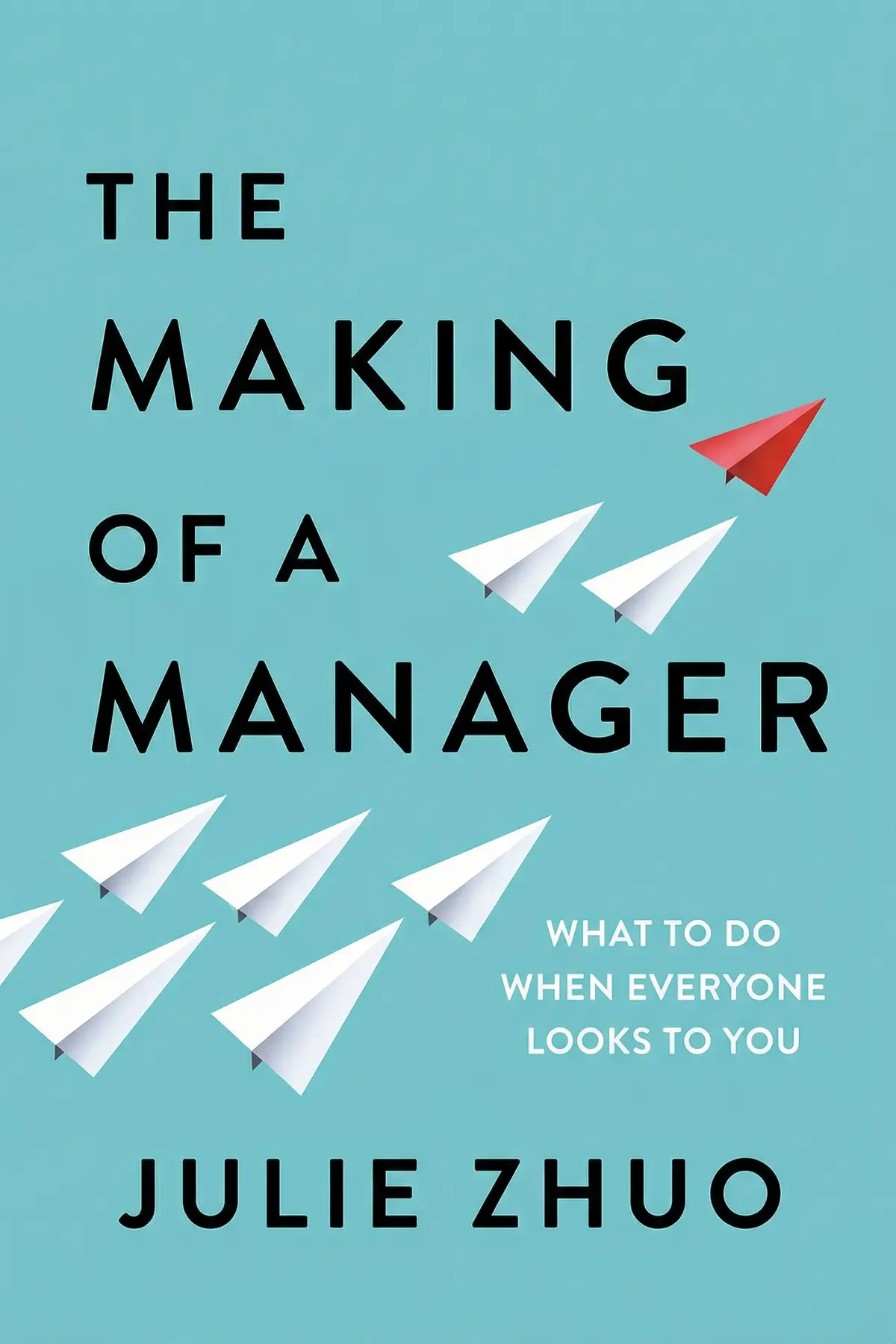
Table of Content
1. Introduction
1 min 33 sec
Stepping into a management role for the first time often feels like being handed the keys to a high-performance vehicle without ever having taken a driving lesson. You might feel a rush of excitement because your hard work has been recognized, but that is quickly followed by the sobering realization that everyone is now looking to you for answers. The transition from being an individual contributor—where your success is measured by your own output—to a manager—where your success is measured by others—is one of the most significant shifts in any professional career.
In this summary of The Making of a Manager, we are going to explore the blueprint for navigating this shift. Julie Zhuo, who became a manager at Facebook at just twenty-five years old, provides a candid look at the mistakes and triumphs that defined her early years. The central throughline here is that management is not about a title or a set of administrative tasks. Instead, it is a craft focused entirely on outcomes. We will break down how to redefine your sense of purpose, handle the various paths that lead to leadership, and master the core pillars of the job: feedback, meetings, and recruitment.
Whether you have just been promoted or you are looking to refine your existing leadership style, this guide will help you move away from the ‘firefighter’ mode of reacting to crises and toward a more strategic, intentional way of leading. You’ll learn that you don’t need to have all the answers; you just need to know how to build a team that can find them together. By the end of this journey, the goal is for you to feel less like an impostor and more like a coach who is capable of bringing out the absolute best in your people.
2. Defining the Manager’s True Purpose
1 min 52 sec
Discover why being a boss is less about checking off a list of daily chores and more about the collective wins your team achieves under your guidance.
3. Navigating Your Specific Path to Leadership
2 min 09 sec
Your first ninety days will look very different depending on whether you were promoted from within, started a new team, or joined as an outsider.
4. The Art of Constructive and Timely Feedback
1 min 51 sec
Feedback is the most powerful tool for growth, but only if it’s delivered in a way that is specific, objective, and collaborative.
5. Running Meetings with Purpose and Clarity
1 min 42 sec
Stop the cycle of wasted hours by ensuring every gathering has a defined goal, the right people, and a clear path to a decision.
6. Moving from Firefighting to Strategic Hiring
1 min 42 sec
Don’t just fill holes as they appear; learn to build a long-term recruitment plan that balances your team’s current skills with future needs.
7. The Evolution of Indirect Management
1 min 47 sec
As your team grows, your role shifts from being a hands-on coach to a leader of leaders, requiring a new level of trust and transparency.
8. Conclusion
1 min 28 sec
As we wrap up our look at the journey from individual contributor to leader, it is important to remember that management is a marathon, not a sprint. The principles we have discussed—focusing on outcomes over activities, mastering the various paths to leadership, providing specific and timely feedback, running purposeful meetings, hiring with a long-term vision, and adapting to the challenges of scale—are all designed to help you build a resilient and high-performing team.
One of the most actionable takeaways from Julie Zhuo’s experience is the importance of clear accountability. When you delegate, never leave things up to a ‘group.’ Always designate a single person who is responsible for the final decision and the ultimate outcome. This prevents the endless cycles of debate and ‘decision by committee’ that can paralyze even the most talented teams. By giving someone authority, you give them the chance to own their success.
Becoming a manager means accepting that your own brilliance is no longer the point. Your job is to be the gardener, the coach, and the strategist who ensures that the people around you can shine. It is a role that requires humility, constant learning, and a willingness to be wrong. But if you focus on the growth of your team and the quality of your collective outcomes, you will find that management is not just a job—it is one of the most rewarding ways to make a lasting impact in the professional world. Now, take these lessons and look at your team not for what they are doing today, but for what they are capable of achieving tomorrow.
About this book
What is this book about?
The Making of a Manager is a comprehensive field guide for anyone stepping into a leadership role for the first time. It addresses the common anxieties and hurdles that new managers face, moving beyond theoretical leadership to offer concrete, day-to-day advice. By following Julie Zhuo’s journey at Facebook, you will learn how to define your role through the success of your team rather than your own tasks. The book promises to equip you with the tools to run productive meetings, hire the right talent, and maintain your approachability as you rise through the ranks. It is a roadmap for transforming from a person who does the work into a person who enables others to do their best work.
Book Information
About the Author
Julie Zhuo
Julie Zhuo is a prominent figure in the tech world, formerly serving as the vice president of design at Facebook. She earned her degree in Computer Science from Stanford University. Beyond her corporate leadership, Zhuo is a prolific writer who explores the intersections of technology, design, and management on her popular blog, The Year of the Looking Glass. Her insights have also been featured in major publications like the New York Times and Fast Company.
Ratings & Reviews
Ratings at a glance
What people think
Listeners consider this guide to leadership an essential tool, especially for those stepping into management for the first time, and value its approachable tone filled with immediately applicable talking points. The material is commended for its depth, with one listener highlighting that the ideas are rooted in actual practice, while another points out how it tackles personal doubts and anxieties. Listeners describe the prose as engaging, and one listener notes that it is specifically written for managers on the ground.
Top reviews
Zoe
After hearing endless praise for this in tech circles, I finally dived in and found it incredibly grounded. Julie Zhuo moves past the usual corporate jargon to offer a conversational guide that feels like getting coffee with a mentor. The most helpful parts for me were the ready-to-use conversation starters for one-on-ones, which took the awkwardness out of those first few weeks of leading a team. Frankly, most management books feel like they were written by robots for robots, but this one actually acknowledges the imposter syndrome and anxiety that comes with the territory. It focuses heavily on the shift from doing the work to ensuring the team gets the right results. While she does draw a lot from her Facebook experience, the core principles of purpose, people, and process are universal enough for any industry. If you are struggling with the transition from being a star individual contributor to a first-time manager, this is arguably the best resource out there right now.
Show moreVipawan
Wow, this was exactly what I needed to quiet the voice in my head telling me I’m failing at leadership. The book is written for managers on the ground, dealing with the daily chaos of meetings and miscommunications. I found the section on feedback loops particularly enlightening, especially the idea that feedback is only effective if the person feels safe enough to hear it. It’s rare to find a business book that addresses the emotional labor of management with such vulnerability and clarity. Look, it isn't a manual for corporate strategy, but it is an excellent guide for the 'people' part of the equation. The author’s humility shines through in her anecdotes about her own early mistakes at Facebook. This isn't a boastful memoir; it’s a toolkit for growth. I’ve already recommended it to three of my colleagues who are currently struggling with team dynamics.
Show moreWatchara
The prompts for 1:1 meetings are literally lifesavers for an introvert like me who was thrust into a lead role. I was terrified of these conversations, but the book provided a script that feels natural rather than forced. It’s written with a refreshing lack of ego, which makes the advice much easier to swallow. Zhuo doesn't pretend to be an all-knowing guru; she’s more like a guide who is just a few steps further down the path than you are. In my experience, the biggest hurdle to being a good manager is just getting out of your own way, and this book helps you do exactly that. The breakdown of the manager's role into Purpose, People, and Process is a simple mental model that I now use every Monday to plan my week. It’s practical, heart-centered, and genuinely useful for anyone who cares about their team’s well-being. Highly recommended for any new supervisor.
Show moreCameron
Ever wonder if you're actually cut out for leadership or if you just like the title? This book asks those tough self-reflection questions right at the beginning. I loved the honesty about the fact that management means your day will be 70% meetings. If that sounds like hell to you, Zhuo tells you straight up that you might be happier as an individual contributor. That kind of directness is rare in career development books. The insights are clearly based on real-life trials and errors, not just academic theory. I found the section on 'hiring for advocates' to be a game-changer for our last recruitment round. It helped us move past lukewarm 'yes' votes to find someone the team was actually excited to work with. This book doesn't just tell you what to do; it explains the 'why' behind the actions, which makes the advice stick.
Show moreWittaya
Julie Zhuo manages to capture that specific anxiety of being a 'rookie' leader who feels like they're just faking it. Her writing style is captivating because it’s so relatable; she shares the internal monologues we all have but rarely admit to. The book is packed with real-world scenarios that address the insecurities of giving tough feedback or leading people who are older than you. I particularly liked the focus on creating a 'vision' that isn't just a vague mission statement but a concrete goal everyone can visualize. Personally, I think this should be required reading for every new hire who gets promoted into a lead position. It sets a high bar for what a healthy manager-report relationship should look like. Even if you aren't at a tech giant, the human elements of these lessons are universally applicable and deeply insightful. It’s a fantastic resource for anyone wanting to lead with more empathy and clarity.
Show moreAim
As someone who recently transitioned from a design role into management, I found the practical frameworks in this book to be a steadying hand. Zhuo captures that specific pivot point where you realize your success is no longer about your own output, but about the collective outcome of your reports. I particularly appreciated the distinction between a 'judge' and a 'coach' because it changed how I approach performance reviews entirely. My only real gripe is that the book stays very high-level when it comes to the 'ugly' side of the job. I would have loved more tactical advice on firing underperformers or communicating unpopular mandates from the executive level. Despite that, the emphasis on building a culture of trust and high expectations is solid. It’s a very modern take on leadership that avoids the stuffy, command-and-control vibe of older business texts. Definitely worth keeping on your desk for the meeting templates alone.
Show moreRosa
Finally got around to finishing this and I’m pleasantly surprised by how much I highlighted. The book shines when it discusses the 'process' bucket of management—creating systems that allow a team to scale without the manager becoming a bottleneck. Julie’s take on the purpose of meetings was a total wake-up call for me. We spend so much time in syncs that don't actually drive outcomes, and her tips on structuring those sessions are immediately applicable. I do think the book glosses over the harder aspects of corporate politics, which is a shame because you know someone in her position has seen it all. Truth is, management is often messier than this book suggests. Still, as a foundational text for a new lead, it’s incredibly effective. It provides a clear roadmap for the first ninety days and beyond, focusing on the things that actually move the needle for team satisfaction.
Show moreRungrat
Not every management book needs a complex new framework to be valuable, and Zhuo proves that here. She relies on timeless wisdom from people like Andy Grove but translates it into a modern, tech-adjacent language that resonates with today’s workforce. I appreciated the specific focus on task-specific feedback versus behavioral feedback; that distinction alone has made my coaching sessions much more productive. The writing is punchy and moves fast, which is great for busy professionals who don't have time for 400 pages of fluff. My only criticism is that it’s a bit light on how to manage 'up' or deal with difficult stakeholders. It focuses almost entirely on the relationship with your direct reports. However, for a guide specifically about 'making' a manager, it hits the mark. It’s a solid 4-star read that I’ll likely revisit whenever I feel like I’m losing the plot with my team.
Show moreTom
Frankly, I struggled with the hyper-growth tech bubble that permeates every page of this book. While the advice is generally sound, it’s clear the author’s perspective is shaped by the unique, resource-rich environment of a company like Facebook. Not every manager has the luxury of huge budgets and a constant stream of elite talent knocking at the door. Some of the lessons on hiring for 'advocates' rather than consensus feel a bit disconnected from the reality of small businesses or non-profits. That said, the chapter on 'Making Things Happen' is actually quite brilliant and offers a pragmatic view on goal-oriented execution. It’s a decent read if you can filter out the Silicon Valley Kool-Aid and focus on the fundamental psychology of team coordination. It’s not a revolutionary framework, but it serves as a helpful reminder of basic leadership tenets that we often forget in the heat of a busy quarter.
Show moreDarius
This felt more like a curated collection of Medium articles than a cohesive or groundbreaking business book. I was hoping for deep insights into the complexities of scaling a team, but instead, I got a lot of 'don't be a jerk' advice that should be common sense to anyone with basic social skills. To be fair, the writing style is breezy and easy to digest, which is probably why it is so popular. However, for anyone who has been in a leadership role for more than six months, there is very little substance here to sink your teeth into. It lacks the grit of real-world conflict management, like how to handle a massive hiring freeze or navigating the politics of a toxic upper management layer. It’s all very 'sunny day' management. If you need a basic primer on why you should listen to your employees, this might work, but seasoned professionals will likely find it repetitive and thin.
Show moreReaders also enjoyed
7 Powers: The Foundations of Business Strategy
Hamilton Helmer

A Bigger Prize: How We Can Do Better Than the Competition
Margaret Heffernan

A Year with Peter Drucker: 52 Weeks of Coaching for Leadership Effectiveness
Joseph A. Maciariello
AUDIO SUMMARY AVAILABLE
Listen to The Making of a Manager in 15 minutes
Get the key ideas from The Making of a Manager by Julie Zhuo, plus 5,000+ more titles in English and Thai.
- 5,000+ titles
- Listen as much as you want
- 7-day free trial
- Cancel anytime







