
17 min 48 sec
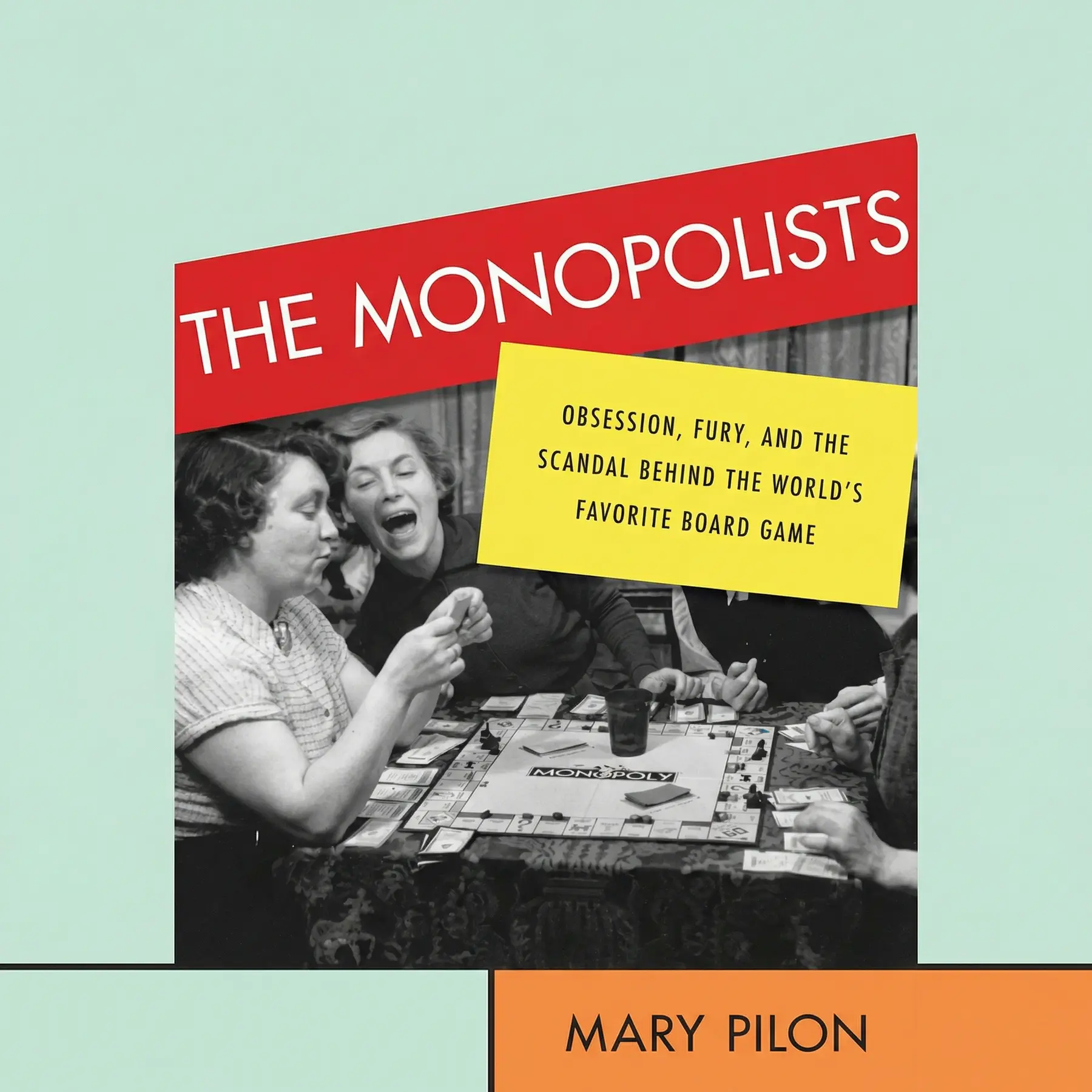
The Monopolists: Obsession, Fury and the Scandal Behind the World's Favorite Board Game
By Mary Pilon
The Monopolists uncovers the hidden history of the world’s most famous board game, revealing a corporate scandal involving a stolen invention, a manufactured rags-to-riches myth, and a decades-long legal battle for the truth.
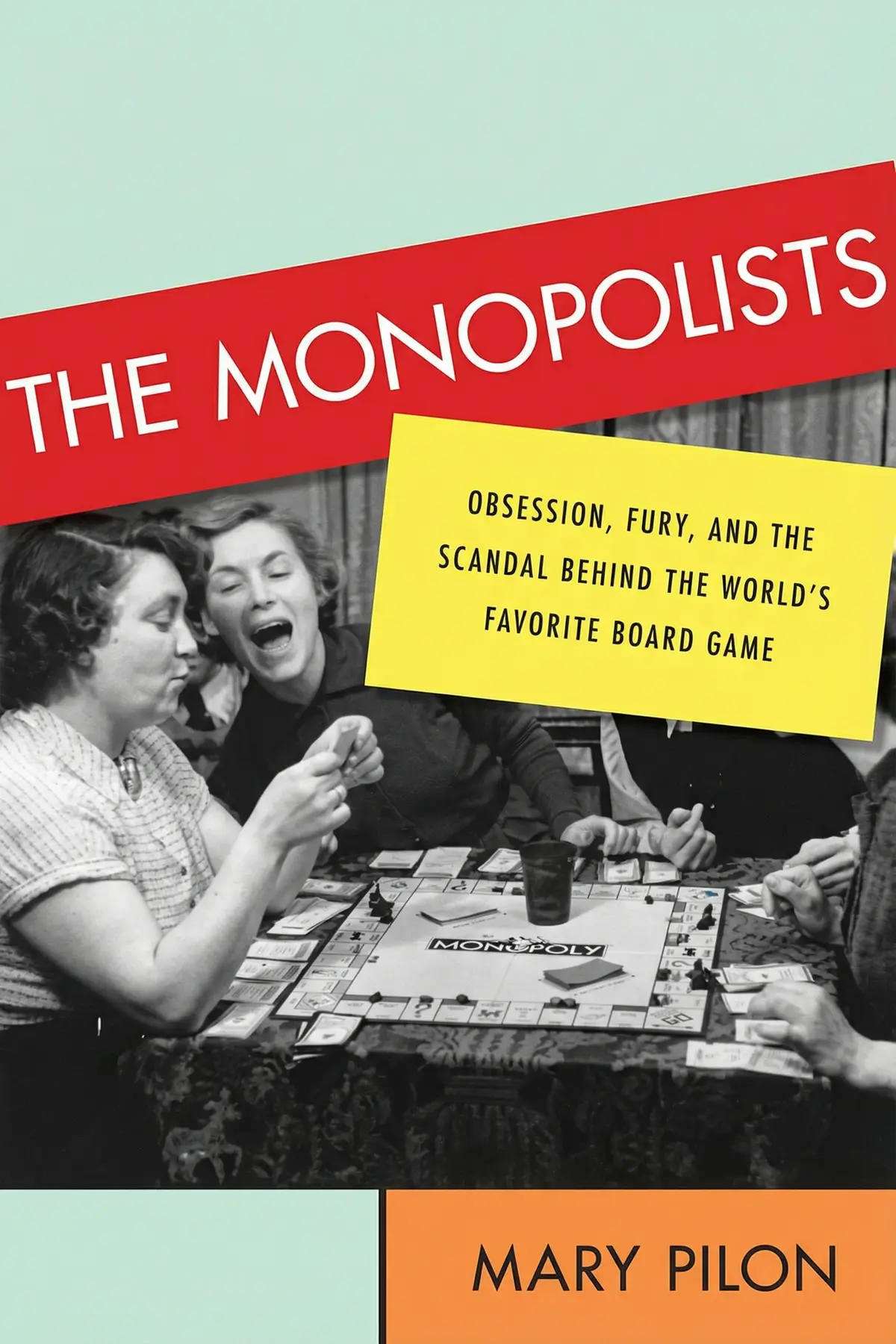
Table of Content
1. Introduction
1 min 21 sec
Almost everyone has a memory of sitting around a kitchen table, clenching a stack of colorful paper money, and feeling the sudden rush of power that comes with owning a hotel on Boardwalk. We think of Monopoly as a quintessential American pastime—a harmless way to simulate the thrill of the free market. But as you will soon discover, the history of this game is just as competitive, ruthless, and filled with tactical maneuvers as a four-hour session of the game itself.
For decades, the story of Monopoly was presented as a charming fable of individual ingenuity. We were told it was the brainchild of a struggling man who found success in the midst of national economic despair. However, that story was a carefully constructed fiction designed to serve a corporate bottom line. The real narrative involves a radical woman with a political mission, a series of forgotten inventors, and a massive cover-up by one of the biggest toy companies in the world.
In this summary, we are going to peel back the layers of the Monopoly board to see what lies beneath the surface. We will explore how the game evolved from a teaching tool for social justice into a symbol of the very greed it was meant to condemn. We will also follow the journey of a modern-day rebel who accidentally stumbled upon this hidden history and spent years in court fighting to bring it to light. By the end, you will never look at those little metal tokens or the Chance cards the same way again. This is the story of obsession, legal fury, and the scandal behind the world’s favorite board game.
2. The Fabricated Origin Story
2 min 04 sec
Discover how a desperate toy company manufactured a heartwarming rags-to-riches legend to protect its most valuable asset from competitors and legal challenges.
3. The True Visionary and the Landlord’s Game
1 min 55 sec
Years before the world heard of Monopoly, a progressive activist created a board game designed to expose the dangers of land monopolies.
4. A Folk Game Developed by the People
1 min 47 sec
Before it was a commercial product, the game was a grassroots phenomenon, evolving through the contributions of various communities across the country.
5. The Systematic Erasing of History
1 min 43 sec
Parker Brothers engaged in a ruthless campaign to buy up and bury any evidence that contradicted their version of the game’s origin.
6. The Accidental Revolutionary: Ralph Anspach
1 min 49 sec
In the 1970s, an economics professor’s desire to create a more ethical board game led him into a collision course with a corporate titan.
7. The Legal Battle Over Common Language
1 min 49 sec
Explore the fascinating legal concept of ‘genericness’ and how it became the focal point of the fight to liberate the name of the world’s favorite game.
8. A Heartbreaking Defeat and the Power of Persistence
1 min 58 sec
Despite discovering the truth, Anspach faced a devastating loss in court that nearly cost him everything he owned.
9. Victory at the Supreme Court and the Lingering Silence
1 min 55 sec
Against all odds, the highest court in the land ruled in favor of the truth, forever changing the legal landscape of American trademarks.
10. Conclusion
1 min 27 sec
We’ve traveled a long way from Lizzie Magie’s quiet protest against land-grabbing to the high-stakes legal drama of the 1970s. The story of Monopoly is a powerful reminder that the things we take for granted—the toys we play with, the stories we tell our children—often have hidden layers of conflict and compromise. It reveals a fundamental tension in our society: the battle between the communal spirit of creativity and the corporate drive for exclusive ownership.
Elizabeth Magie wanted her game to change the world by teaching us about fairness and cooperation. Instead, the world changed her game into a celebration of ruthless competition. Yet, thanks to the tireless efforts of Ralph Anspach, the true history was rescued from oblivion. We now know that Monopoly wasn’t the work of one man, but the collective creation of many people over many years.
The next time you sit down to play, remember that the board in front of you is a map of more than just Atlantic City streets. It’s a map of a century-old struggle for justice, truth, and the right to use our own language. The real lesson of the Monopoly scandal is that while a corporation can buy a patent, they can never truly own the history of an idea. The throughline of this story is persistence—the persistence of an idea that outlives its inventor, and the persistence of the truth that eventually finds its way into the light. Take that spirit of inquiry with you: look closer at the ‘official’ stories you’re told, and never underestimate the power of one person standing up to a giant.
About this book
What is this book about?
For generations, we have been told that Monopoly was the invention of a single man who struck it rich during the Great Depression. However, the reality is far more complex and controversial. This summary explores the true origins of the game, tracing it back to a feminist progressive named Elizabeth Magie, who originally designed it as a critique of capitalist greed rather than a celebration of it. You will learn how Parker Brothers carefully crafted a false narrative to protect their commercial interests and how they systematically silenced those who knew the truth. The story culminates in a high-stakes legal showdown in the 1970s, where an economics professor risked everything to challenge a corporate giant. This is not just a story about a board game; it is a deep dive into trademark law, the manipulation of history, and the enduring tension between social ideals and corporate power.
Book Information
About the Author
Mary Pilon
Mary Pilon is a dedicated investigative reporter who has contributed to prestigious publications including The New York Times and The Wall Street Journal. Her work has also been featured in New York Magazine and USA Today, where she specializes in uncovering the hidden stories behind cultural and sporting phenomena.
Ratings & Reviews
Ratings at a glance
What people think
Listeners find the narrative captivating and elegantly crafted, highlighting a rich and compelling history behind the game of Monopoly. The depth of research is also quite exhaustive, offering significant perspectives on its evolution, and one listener calls it the most important game of the 20th century.
Top reviews
Gin
Ever wonder why a game about ruthless capitalism was actually created by a feminist Quaker? It turns out the history of Monopoly is far more scandalous than any family game night fight. Mary Pilon does an incredible job of digging up the lost story of Lizzie Magie. Frankly, it is infuriating to see how her original message was co-opted and her name erased by corporate greed. The book reveals how Parker Brothers built a myth around a 'lone genius' who didn't even invent the concept. This is a meticulously researched account that changes how you look at every hotel on Boardwalk.
Show moreChanpen
As someone who grew up playing this game, I found this deep dive into its hidden history absolutely riveting. Pilon masterfully exposes the irony of a game designed to warn against monopolies becoming the ultimate tool for corporate wealth. The truth is that women have often been sidelined in the history of innovation, and Lizzie Magie is a prime example. Seeing her 'Landlord's Game' evolve through various Quaker communities before being stolen was both heartbreaking and intellectually stimulating. This is easily one of the most important books on popular culture that I have read in the last few years.
Show moreKaen
This book provides an eye-opening look at the legal tangles and trademark battles behind our most famous board game. I was fascinated by the way Pilon traces the game from its communal, folk origins to the corporate boardroom. To be fair, the technical details about patent law can get a bit dense in the middle sections. However, the narrative picks up significantly once Ralph Anspach enters the scene with his Anti-Monopoly lawsuit. It is a classic David versus Goliath story that feels particularly relevant in today’s economic climate. You will never view the Parker Brothers logo the same way again after finishing this.
Show moreAkira
The chapter on Ralph Anspach and his crusade to save his Anti-Monopoly game was definitely the highlight of this entire book. His ten-year legal battle against the giants at Parker Brothers reads like a legal thriller that you cannot put down. While the earlier sections about the 1900s are a bit slower, they provide necessary context for the eventual courtroom showdown. Pilon manages to take a seemingly boring subject like trademark law and turn it into a compelling human drama. I took off one star because the transition between the historical eras felt a little bit clunky at times.
Show moreApichat
Truth is, I had no idea that the quintessential American game was actually rooted in Henry George’s radical economic theories. Mary Pilon does a fantastic job of illustrating how a tool for social education was transformed into a celebration of greed. The legal battles over the name Monopoly are described with such clarity that even a layperson can follow the complex arguments. I did feel that the book dragged a bit when discussing the specific logistics of the early 20th-century patent office. Still, the overall message about the myth of the 'lone inventor' is powerful and remains incredibly relevant to our modern world.
Show morePing
Mary Pilon has clearly spent a vast amount of time in the archives to bring this specific piece of history to light. Her research is incredibly thorough and she manages to debunk the Charles Darrow myth with precision and sharp analytical skill. Look, the book isn't a fast-paced thriller, but it offers a profound look at how we memorialize certain figures while ignoring others. I appreciated the inclusion of the early game boards and the detailed descriptions of how the rules evolved over several decades. It is a solid piece of investigative journalism that deserves a spot on the shelf of any serious board game collector.
Show moreNim
Picked this up because I love history, but the disjointed narrative made it quite difficult to stay fully engaged. The first half jumps around between different eras and characters without much clear connective tissue to hold it together. While the story of the Landlord’s Game is vital, the writing felt more like an elongated magazine feature than a cohesive book. Gotta say, the research is clearly there, but the execution lacked the punch I was expecting from such a wild premise. It is worth reading for the facts alone, but you might find yourself skimming through some of the repetitive early chapters.
Show moreMikael
Finally got around to reading this one, and I find myself feeling quite conflicted about the overall reading experience. On one hand, the backstory of how the game spread through word-of-mouth and handmade boards is truly unique and interesting. On the other hand, the prose can be quite dry and the non-linear structure often led to some confusion. Personally, I think the book would have been much stronger if it had focused more on the people and less on the minutiae. It is a decent read for history buffs, but casual readers might struggle with the lack of a traditional narrative arc.
Show moreLillian
After hearing so much about the 'lost female inventor' of Monopoly, I was eager to finally dive into this historical account. While the information presented is undeniably fascinating, the actual writing style left me feeling a little bit cold and uninspired. The narrative tends to repeat itself in certain sections, especially when discussing the various iterations of the early folk games. It is a bit surprising that such a colorful history could feel so clinical in its delivery at certain points. I would still recommend it for the information, but just be prepared for a bit of a slow burn through the middle.
Show moreChan
Not what I expected given the high praise I had seen for this title across various book blogs. The pacing is incredibly sluggish and the book doesn't really start to get interesting until the legal drama begins halfway through. In my experience, a great history book should flow effortlessly, but this felt like a dry recitation of court documents and dates. The focus on Ralph Anspach was the only part that felt like it had any real emotional weight to it. Unless you are a die-hard fanatic of patent law history, you might find this to be a bit of a chore.
Show moreReaders also enjoyed
A Splendid Exchange: How Trade Shaped the World
William J. Bernstein
A Spy Among Friends: Philby and the Great Betrayal
Ben Macintyre
1491: New Revelations of the Americas Before Columbus
Charles C. Mann
A Year in the Life of William Shakespeare: 1599
James Shapiro
1929: Inside the Greatest Crash in Wall Street History--and How It
Andrew Ross Sorkin
AUDIO SUMMARY AVAILABLE
Listen to The Monopolists in 15 minutes
Get the key ideas from The Monopolists by Mary Pilon, plus 5,000+ more titles in English and Thai.
- 5,000+ titles
- Listen as much as you want
- 7-day free trial
- Cancel anytime







