
A Year with Peter Drucker: 52 Weeks of Coaching for Leadership Effectiveness
Joseph A. Maciariello
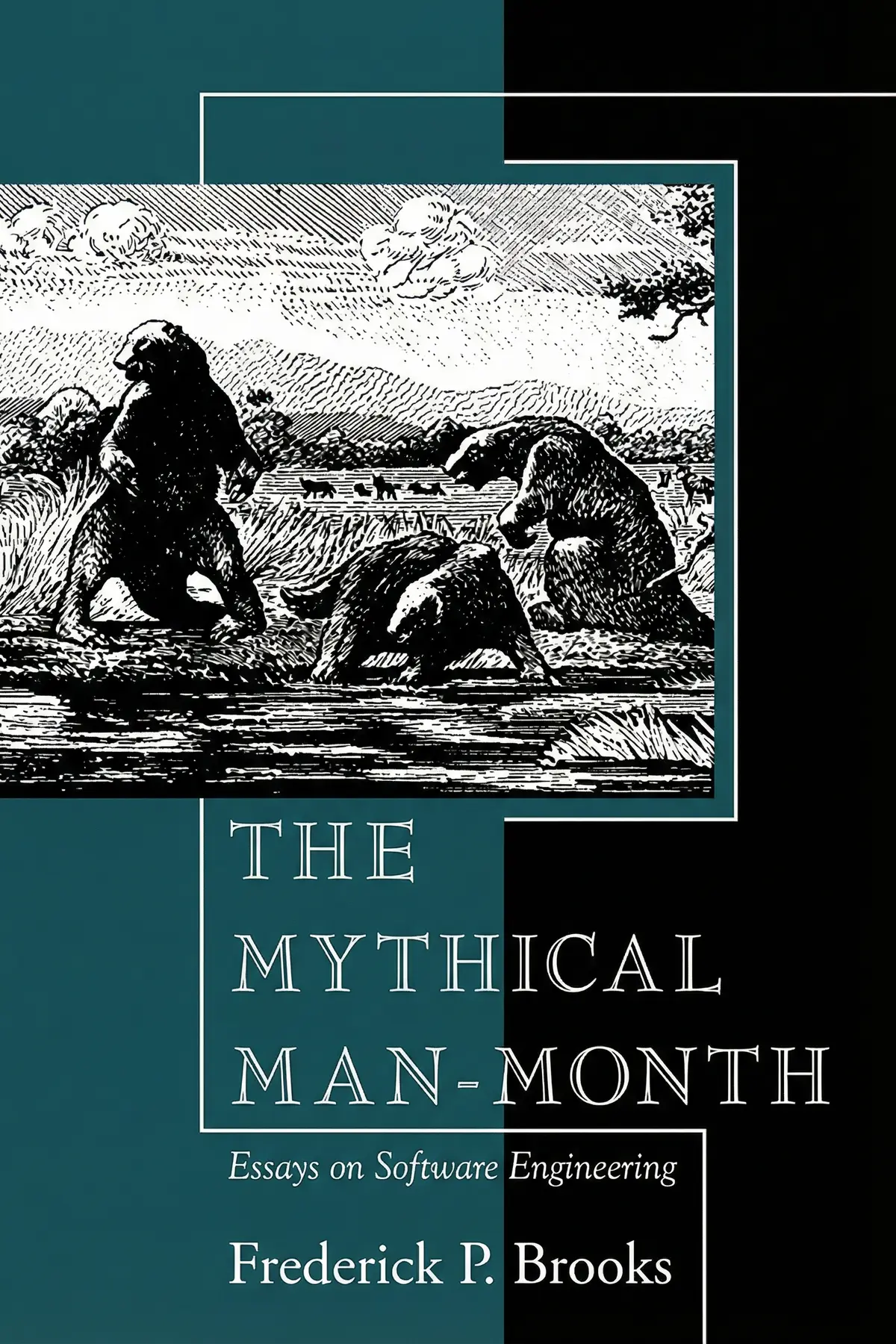
Explore the foundational principles of software engineering. This summary reveals why adding more people to a late project causes further delays and how to maintain a unified vision in complex systems.
1 min 26 sec
In the fast-moving world of technology, it often feels like we are constantly chasing the next big innovation, the faster processor, or the more efficient algorithm. But if you look closely at the history of software development, you will find that the most persistent challenges aren’t actually about the machines. They are about the humans who build the software. There is a common trap that almost every manager and developer has fallen into at some point: the belief that if a project is running behind, you can simply add more people to the team to catch up. It seems like a logical solution, a simple matter of math. If one person can do a job in ten months, then surely ten people can do it in one.
However, this is exactly the kind of thinking that leads to what is known as the mythical man-month. This summary dives into the core of why software development behaves so differently from other forms of labor. We are going to explore why traditional project management often breaks down when faced with the invisible, intricate nature of code. We will look at how to maintain a single, coherent vision across a team of hundreds, and why the most successful software isn’t just built—it’s grown. This journey is about understanding the soul of the problem, distinguishing between the technical hurdles we create for ourselves and the inherent difficulties of the tasks we are trying to solve. By the time we finish, you’ll have a new perspective on how to lead teams and design systems that stand the test of time, moving away from frantic troubleshooting and toward a more disciplined, artistic approach to engineering.
2 min 34 sec
Adding more workers to a struggling project often pushes the deadline further away rather than bringing it closer.
2 min 31 sec
A great system requires a single, unified vision that guides every technical decision and keeps the project coherent.
2 min 12 sec
Small, highly skilled units can often outperform large, disorganized groups by minimizing the burden of communication.
2 min 13 sec
Don’t aim for a finished masterpiece on the first try; build a working skeleton and let the system evolve organically.
2 min 09 sec
Clear and continuous documentation is the only way to prevent a complex project from collapsing under its own weight.
1 min 31 sec
As we look back at the insights of Fred Brooks, it’s clear that the ‘mythical’ part of the man-month is the belief that we can control software projects using the same logic we use for manual labor. Software development is a unique discipline that sits at the intersection of rigorous engineering and creative art. Its biggest challenges aren’t the bugs in the code, but the gaps in our communication and the fragmentation of our vision.
To build great software, we have to respect the human limits of coordination. We must prioritize conceptual integrity above all else, ensuring that every project is guided by a clear, unified philosophy. We should strive for small, elite teams that are supported rather than crowded. We must embrace the idea that software is grown incrementally, starting with a working skeleton and evolving through feedback and constant testing. And finally, we must recognize that documentation is not an optional extra, but the very backbone that keeps our systems coherent and understandable over time.
The next time you find yourself on a project that is slipping behind its deadline, remember the lessons of the man-month. Don’t instinctively reach for more resources. Instead, look at the structure of your team and the clarity of your vision. Ask yourself if the complexity you are facing is essential to the problem or if it is an accidental byproduct of your organization. By focusing on the ‘why’ and the ‘how’ of your process, you can navigate the complexities of the digital age with the wisdom of a seasoned architect, building tools that are not only functional but truly exceptional.
The Mythical Man-Month is a cornerstone of tech literature that addresses the systemic challenges of managing large-scale software projects. It moves beyond simple coding practices to explore the human and organizational complexities that define the industry. The book’s core promise is to explain why traditional management intuition often fails in the digital realm and how to replace that intuition with strategies that actually work. Through a series of thoughtful essays, the content explores the psychological and mathematical realities of team collaboration. You will learn about the dangers of the man-month fallacy, the necessity of conceptual integrity, and the importance of incremental growth. By understanding these timeless principles, leaders and developers can better navigate the pressure of deadlines and the intricate architecture of modern software, ultimately moving toward more predictable and successful project outcomes.
Dr. Fred Brooks was a renowned computer scientist who contributed seminal ideas to the field of software engineering. His insights shaped modern development practices, solidifying his legacy as a pivotal figure in the tech industry.
Listeners view the work as offering superb observations and consider it mandatory reading for software engineers, noting its significant worth and enduring concepts. It is regarded as a definitive text within project leadership and software development, with one listener emphasizing its particular usefulness for overseeing massive, intricate undertakings. The prose style draws varied responses, and perspectives regarding the age of the material are split between those who see it as an everlasting masterpiece and others who feel it has become slightly behind the times.
Picked this up during my first year as a lead developer, and it felt like Brooks was sitting right there in the room with me. Even though the technology is decades old, the human psychology of project management hasn't changed a bit. The famous analogy about nine women not being able to make a baby in one month is as sharp today as it was in the seventies. We still try to throw more warm bodies at a failing deadline, and it still blows up in our faces every single time. Truth is, the 'No Silver Bullet' essay should be mandatory reading for every executive who thinks AI or some new framework will solve all their fundamental organizational issues. It’s a dense read at times, and the OS/360 examples are definitely from a different era of computing. However, the core wisdom regarding conceptual integrity and the surgical team model remains incredibly relevant. You just have to look past the punch cards and the lack of inclusive language to see the brilliance underneath.
Show moreThe chapter on 'No Silver Bullet' alone is worth the price of admission for anyone serious about engineering management. We live in an industry that constantly chases the next big thing, yet Brooks reminds us that complexity is an inherent part of the job. Adding manpower to a late software project makes it later—this is a law of nature that managers still refuse to accept. I loved the metaphors, from the prehistoric beasts in the tar pit to the architectural unity of cathedrals. The writing style is surprisingly literary for a technical book, which makes the heavier sections on IBM 360 history much easier to digest. Look, the book is obviously old and reflects the societal norms of its time, which can be frustrating to read. But if you focus on the sociological aspects of how teams build complex systems, you'll find more wisdom here than in ten generic Agile blogs. It is a foundational text for a reason.
Show moreFinally got around to finishing this classic, and I’m honestly shocked by how little has changed in the world of project management. The famous quote about a project becoming a year late 'one day at a time' is something I want to tattoo on my forehead. It’s so easy to ignore small slips until they pile up into an insurmountable disaster. Brooks has this incredible ability to take complex sociological problems and turn them into clear, actionable metaphors. The 20th-anniversary edition includes some great reflections on his original ideas, proving that he was willing to admit where he was wrong. Personally, I found the discussion on the 'Second System Effect' to be the most useful part of the entire collection. It’s a warning every senior engineer needs to hear before they start their next big greenfield project. Even with the dated references to magnetic tape, the psychological insights are absolutely permanent. Every tech lead should have a copy on their shelf.
Show moreGoodness, I wish I had read this a decade ago instead of learning these hard lessons the painful way. I want to buy a hundred copies of this book and hand them out to every client who asks why we can’t just 'add more people' to hit a deadline. It is frustrating how many of these lessons we still haven't learned after four decades of software development. Brooks explains the overhead of communication and the necessity of a unified vision with such clarity that it makes you wonder why we still struggle with these basics. The chapter on 'No Silver Bullet' is a masterpiece of logic that cuts through all the marketing hype of the tech industry. Frankly, I don't care that the examples are about mainframes and microfiche because the human elements are identical to what I see every day. It’s a masterpiece of technical literature that focuses on the people behind the code. If you work in software and haven't read this, you are doing yourself a massive disservice. This is the foundation of our entire profession.
Show moreEver wonder why software projects still fail in the same ways they did fifty years ago? Reading the opening chapter on 'The Tar Pit' made me realize that the fundamental struggles of programming are universal and timeless. Brooks perfectly captures that feeling of sinking into a mess of dependencies and shifting requirements. His warnings about the 'Second System Effect'—where a designer over-engineers their follow-up project with every bell and whistle imaginable—hit remarkably close to home. I’ve seen that exact scenario play out in at least three different companies. To be fair, you have to ignore some of his more conservative social views and the constant use of male pronouns throughout the text. If you can filter out the dated context, the remaining logic about team communication and architectural consistency is pure gold. It’s not a perfect book by modern standards, but the core insights are still surprisingly sharp for their age.
Show moreAs someone who came into the industry through a bootcamp rather than a CS degree, I was skeptical about reading a book from the seventies. However, the advice to 'plan to throw one away' because you will anyway is probably the most liberating thing I’ve read all year. It’s a great reminder that the first version is always a learning experience and rarely the final product. The concept of conceptual integrity really stuck with me as well, especially the idea that a system needs a unified vision. It explains why so many modern apps feel like a disjointed mess of features designed by committee. I did find the sections on the 'surgical team' a bit weird, especially the idea of having multiple secretaries and a copilot for one lead dev. It feels very top-down and doesn't really mesh with how modern cross-functional teams work. Still, the majority of the essays are incredibly thought-provoking and relevant to the daily grind.
Show moreAfter hearing my manager quote 'Brooks' Law' for the hundredth time, I decided it was time to read the source material. I was surprised by how much I enjoyed the prose, especially the way he links software design to the builders of the Rheims Cathedral. It’s a very philosophical look at what it means to build something complex and beautiful. The 'Tar Pit' metaphor is also incredibly evocative; it perfectly describes the feeling of a project losing its momentum as it gets weighed down by its own weight. My only real gripe is the obvious lack of diversity in the examples and the constant use of male pronouns, which makes it feel very much like a 'boys club' book. In my experience, the core lessons about conceptual integrity are the most valuable part of the book for modern developers. It’s a solid read if you can look past the 1970s office culture and focus on the architecture.
Show moreHow many times can one man reference the Tower of Babel or the Cathedral of Rheims before it becomes a bit much? I recognize that Brooks is a giant in the field, but reading this in 2024 is a bit of a culture shock. The total absence of women in his worldview is glaring, and including notes about 'God’s plan for marriage' in a technical manual is just bizarre. I understand the historical importance of Brooks' Law, but the rest of the book feels like a slog through ancient IBM history. Frankly, the technical details about microfiche and manual updates just don't offer much value to someone working in a modern CI/CD environment. While there are a few golden nuggets about communication overhead, I found myself skimming large sections that felt more like a history lesson than a guide. It's okay as a museum piece, but it shouldn't be the first book you hand a new hire.
Show moreNot what I expected given all the hype, but I can see why it was revolutionary when it first hit the shelves. The 'Mythical Man-Month' concept is a classic for a reason, but the 'Surgical Team' essay with its Pilot and Copilot roles felt completely disconnected from reality. Having one person do all the thinking while everyone else acts as support staff sounds like a recipe for burnout and poor morale. Also, the heavy focus on the OS/360 manuals felt like a huge detour that didn't add much to my understanding of modern dev. To be fair, Brooks writes with a lot of authority, and his observations on the 'Tower of Babel' communication breakdown are spot on. It’s just that you have to do a lot of mental translation to apply these concepts to a remote, agile team. I’d say it’s worth a skim for the big ideas, but don’t feel bad if you find yourself bored by the technical specifics of mid-century computing.
Show moreThis book is basically the 'The Elements of Style' of programming: people keep recommending it because they're supposed to, not because it's actually helpful. Most of the practical advice is buried under mountains of anecdotes about mainframe development and microfiche. Do we really need to read pages of data on OS/360 manual updates in the age of GitHub and Stack Overflow? Not gonna lie, the fact that the entire book never uses a single female pronoun makes it feel incredibly alienating. Even the core metaphor of 'man-months' feels like an antiquated and dehumanizing way of looking at human labor. While I get that Brooks' Law is important, you can learn that in a five-minute YouTube video without suffering through his religious analogies. The industry has moved on from this rigid, hierarchical way of thinking, and I think our reading lists should move on too. It’s time to stop treating this as the holy grail of dev management.
Show moreJoseph A. Maciariello

Deborah Gruenfeld
Mike Michalowicz
Hamilton Helmer

Margaret Heffernan
AUDIO SUMMARY AVAILABLE
Get the key ideas from The Mythical Man-Month by Frederick P. Brooks, plus 5,000+ more titles in English and Thai.







