
16 min 59 sec
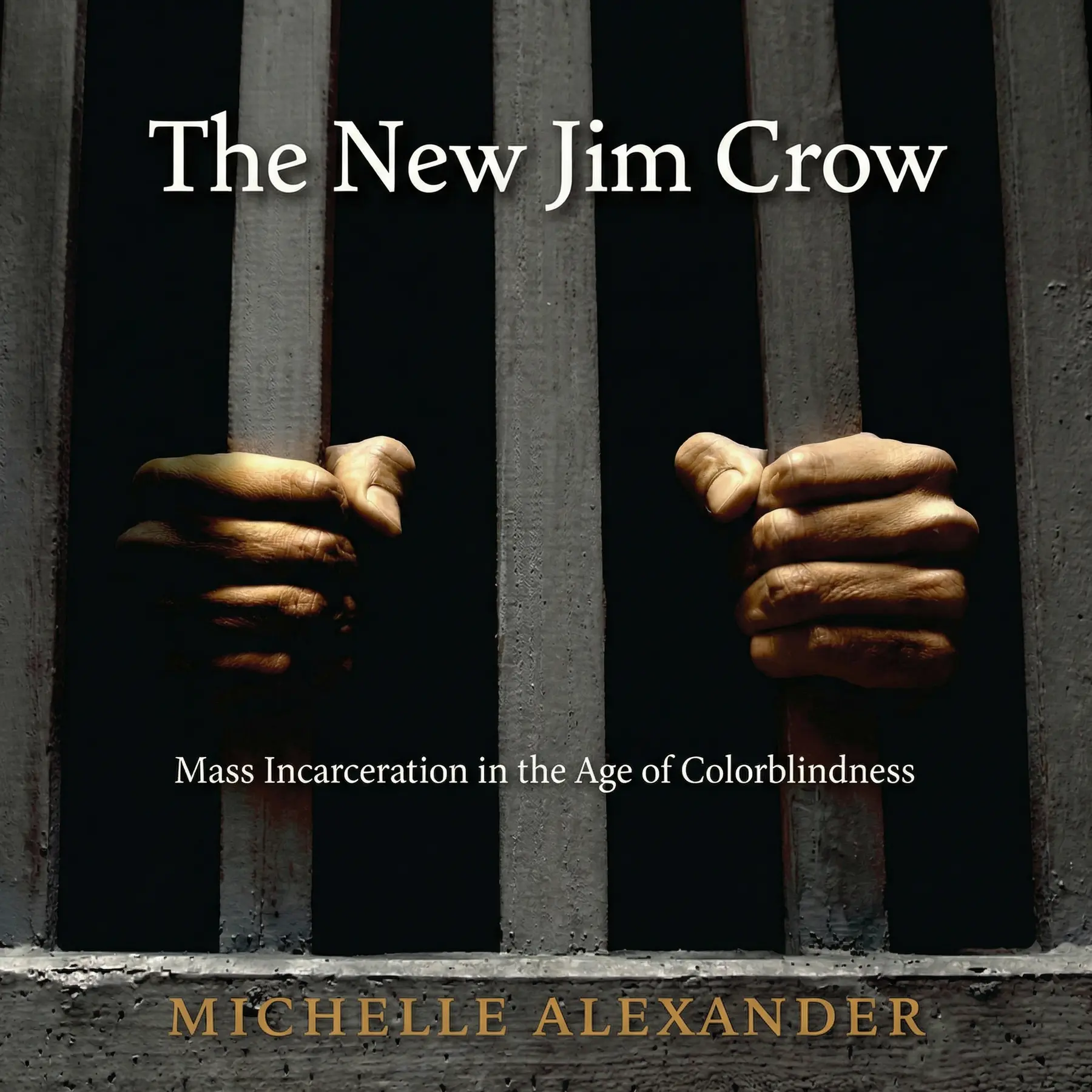
The New Jim Crow: Mass Incarceration in the Age of Colorblindness
A profound examination of how the American legal system and the War on Drugs created a new racial caste system. This summary explores the mechanisms of mass incarceration and its lasting social impact.
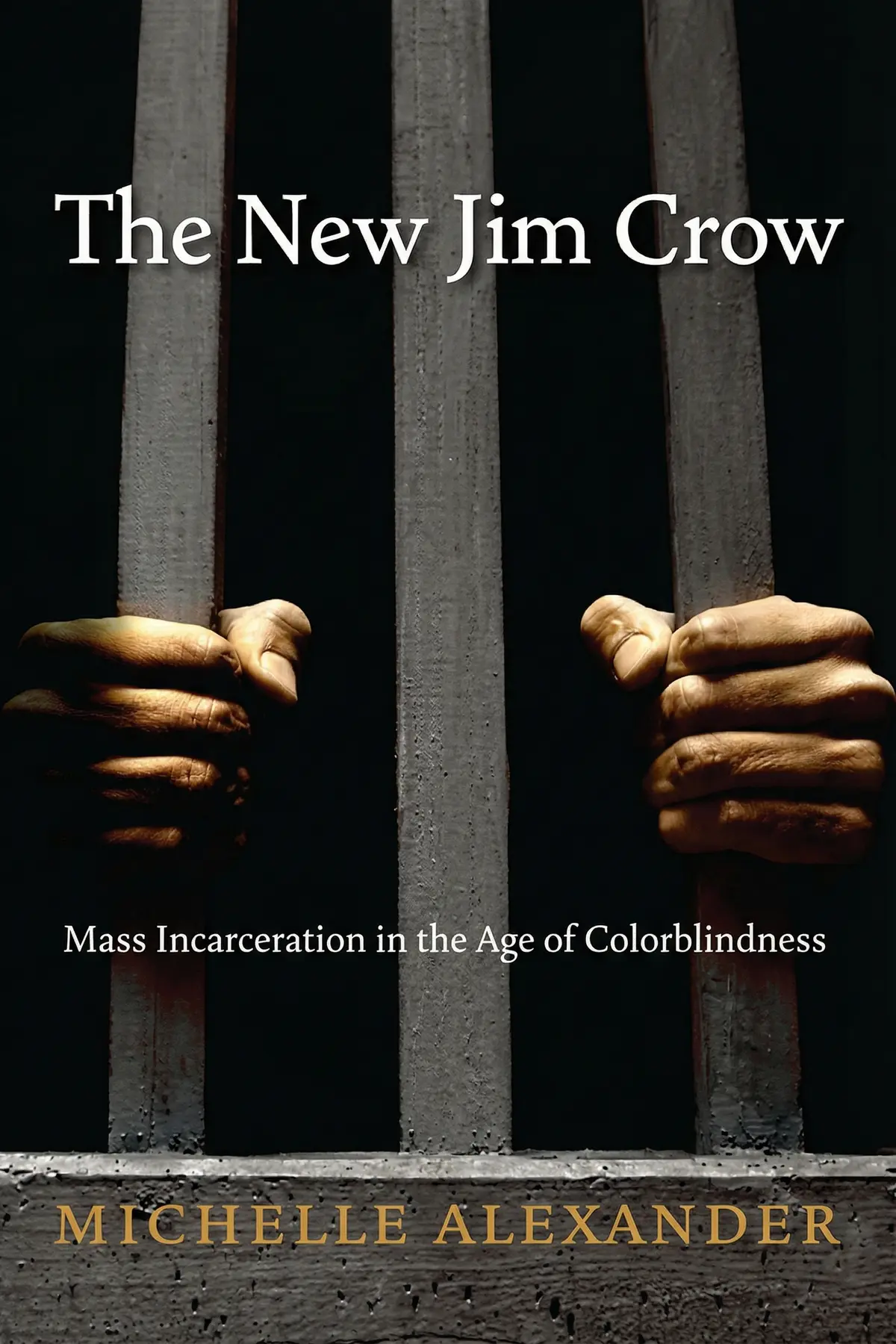
Table of Content
1. Introduction
1 min 57 sec
When we look at the United States today, we see a nation that prides itself on being the ‘land of the free.’ Yet, there is a staggering paradox at the heart of the American experience. Despite its foundational ideals of equality and liberty, the U.S. currently maintains the highest incarceration rate in the entire world. To put that into perspective, the American rate of imprisonment is about eight times higher than that of Germany. But the numbers tell an even more specific and troubling story: this massive expansion of the prison population has disproportionately targeted people of color.
You might find yourself wondering how a modern, democratic society—one that has supposedly moved past the era of overt segregation—could end up with a justice system that looks so fundamentally biased. The answer lies in a phenomenon known as mass incarceration. As we explore the throughline of this summary, we will see that the current state of the criminal justice system isn’t an accident or a simple failure of policy. Instead, it represents a sophisticated redesign of racial control.
We often think of the Jim Crow era as a dark chapter of the past that was closed by the civil rights movement of the 1960s. However, the reality is more complex. While the old laws of segregation were indeed struck down, a new system emerged to take their place. This system doesn’t rely on explicitly racist language; instead, it uses the ‘War on Drugs’ and the label of ‘criminal’ to achieve similar ends. By the time we reach the conclusion of this journey, it will become clear that mass incarceration has created a new undercaste in America—a group of citizens who are systematically stripped of their rights and relegated to a second-class status. This isn’t just a story about crime and punishment; it is a story about how a country’s political and legal institutions can evolve to maintain a racial hierarchy under the guise of being ‘colorblind.’ Let’s begin by looking at the specific historical and political shifts that set this entire system in motion.
2. The Political Origins of the Drug War
2 min 20 sec
Discover how a campaign against narcotics was strategically launched not to stop drug use, but to win over specific voters through a calculated ‘law and order’ narrative.
3. The Disparity Between Usage and Arrests
2 min 10 sec
Explore the shocking statistics that prove drug enforcement targets Black and Latino communities despite similar rates of drug use across all racial groups.
4. The Structural Trap of the Legal System
2 min 09 sec
Learn why the American judicial process often forces innocent people to plead guilty and how mandatory sentences remove all room for mercy.
5. The Impact of Unconscious Bias and Profiling
2 min 03 sec
Uncover the psychological roots of racial profiling and how the unique nature of drug crimes allows personal prejudices to drive police action.
6. The Permanent Status of the 'Ex-Felon'
2 min 14 sec
See how the punishment for a drug offense continues long after a person leaves prison, creating a cycle of exclusion that is nearly impossible to break.
7. The Illusion of Progress and Colorblindness
2 min 14 sec
Challenge the idea that ‘colorblindness’ is the solution to racism and see why a new kind of social movement is the only way forward.
8. Conclusion
1 min 52 sec
As we look back at the landscape we’ve covered, the picture is clear and sobering. The system of mass incarceration in the United States is not a neutral tool of justice, but a deeply racialized engine of social control. By tracing its roots from the strategic political maneuvers of the late twentieth century through the devastating tactics of the War on Drugs, we can see how the label of ‘criminal’ has been used to strip millions of their basic human rights.
The central throughline of this summary has been the recognition that we are living under a ‘New Jim Crow.’ This modern version is arguably more durable than the old one because it is hidden behind a mask of legal procedures and the language of being ‘tough on crime.’ It doesn’t need ‘Whites Only’ signs to keep people of color in a second-class status; it simply needs a drug conviction and a permanent felony record.
So, what is the path forward? The most important takeaway is the need for awareness and a refusal to remain silent. We must challenge ourselves to look past the surface-level narratives about crime and see the structural reality of the system. This means questioning our own unconscious biases—asking ourselves why we associate certain crimes with certain faces. It also means recognizing that ‘colorblindness’ is often a form of denial that allows injustice to flourish in the dark.
The call to action here is for a new kind of movement—one that prioritizes the rights of the most marginalized and seeks to dismantle the legal structures that make mass incarceration possible. Change will not come from minor tweaks to policy or from the success of a few individuals. It will come from a collective awakening to the fact that as long as a permanent undercaste exists, the promise of American freedom remains unfulfilled. By understanding the mechanics of this system, we take the first essential step toward tearing it down and building something truly just in its place.
About this book
What is this book about?
The New Jim Crow explores the troubling reality that the United States incarcerates a higher percentage of its racial minorities than any other nation, including those with famously repressive regimes. It argues that the War on Drugs was not a response to a spike in drug use, but rather a political strategy that effectively redesigned a system of racial control for the modern era. The book promises to pull back the curtain on the 'colorblind' legal system to reveal how discretionary policing, mandatory minimum sentencing, and the permanent loss of civil rights for felons have created a new undercaste. It challenges the reader to look beyond surface-level diversity and confront the systemic forces that keep millions of African Americans trapped in a cycle of poverty and prison.
Book Information
About the Author
Michelle Alexander
Michelle Alexander is an acclaimed civil rights lawyer and legal professor at Stanford Law School. Her extensive background in legal advocacy and academia provides a rigorous foundation for her analysis of systemic inequality and criminal justice reform.
Ratings & Reviews
Ratings at a glance
What people think
Listeners view this work as essential reading, delivering well-researched insights through an expertly written, fact-based narrative. They find the material both revelatory and stimulating, with one listener observing how it effectively debunks misconceptions regarding the criminal justice system. The text receives praise for its thoroughness, as one review highlights the extensive documentation and references provided. Listeners value its ongoing significance and weight, with one characterizing the book as a gamechanger in the world of racial justice.
Top reviews
Viroj
Picked this up after hearing about it for years, and it is every bit as gut-wrenching as people say. Michelle Alexander meticulously dismantles the myth of a colorblind justice system by showing how the 'War on Drugs' functioned as a tool for social control. It’s not just about the time spent behind bars. The book highlights the permanent undercaste created by the loss of voting rights and employment opportunities. I found the section on how police departments are incentivized through asset forfeiture particularly eye-opening and deeply disturbing. While some of the historical parallels are heavy, the writing remains accessible for someone without a legal background. This should be mandatory reading in every high school across the country to understand why our current system looks the way it does. It definitely changed how I view the 'Law and Order' rhetoric used by politicians from both parties.
Show moreKaen
Wow. This book completely shattered my understanding of what 'justice' means in the United States today. The stories of individuals branded as felons for minor drug offenses—offenses that white college students often get a pass for—made me feel a mix of rage and profound sadness. Alexander shows how this system creates a cycle of poverty and disenfranchisement that is nearly impossible to escape once you’ve been 'labeled' by the state. I was particularly struck by the discussion on how 'colorblindness' actually prevents us from addressing systemic racism by making it invisible. It’s a heavy, sobering experience to read this. This is especially true when you realize how much of this was intentionally designed through political maneuvering. I had to take breaks because the implications for our democracy are so staggering and urgent.
Show morePooja
Finally got around to this and it’s a total gamechanger for anyone trying to understand racial justice. Alexander’s argument that we’ve simply redesigned Jim Crow rather than ended it is supported by a mountain of evidence. The book doesn't just complain; it uses rigorous research to document how the legal system traps black men in a permanent second-class status. It’s fascinating and horrifying to see how 'War on Drugs' funding transformed local police into what feels like occupying forces in certain neighborhoods. Even if you think you know everything about the prison-industrial complex, this book will give you new facts to chew on. To be fair, it’s a depressing read, but it’s absolutely essential for any informed citizen.
Show morePruet
As someone who has followed the reform movement for a while, I still found plenty of new insights in these pages. Alexander does a masterful job of explaining how 'intent' doesn't matter as much as 'purpose' when it comes to the outcomes of our legal policies. The transition from explicit segregation to a system of 'mass incarceration' is traced with such precision that it’s hard to look away. I appreciated the critique of even the most well-meaning civil rights organizations for being slow to recognize this shift. The book makes a brilliant case for why small tweaks to the system won't work; we need a fundamental shift in how we view humanity and punishment. It’s a dense, footnote-heavy work, but the narrative flow keeps it from feeling like a dry textbook.
Show moreEli
After hearing so much buzz, I expected a dry academic study, but instead, I found a deeply moving and revolutionary text. Michelle Alexander writes with a sense of urgency that makes it impossible to remain indifferent to the plight of those trapped in the system. The way she describes the loss of basic citizenship rights—like the right to vote or get public housing—is simply heartbreaking. It's a reminder that for many, the 'War on Drugs' never ended; it just evolved into a permanent state of surveillance and exclusion. This book forced me to confront my own biases and the ways I’ve benefited from the very systems she critiques. It is an uncomfortable read, but that discomfort is exactly what makes it so powerful and necessary for our times.
Show moreJackson
The chapter on the Fourth Amendment alone is worth the price of the book. Alexander explains how the Supreme Court has gradually stripped away protections against unreasonable searches, essentially giving police a green light to target whoever they want. Truth is, most people have no idea how much their constitutional rights have been diluted in the name of the drug war. The book is excellently written with facts that are hard to dispute once you see the sheer scale of the numbers. I was particularly interested in how private prison interests and police incentives create a self-sustaining cycle of arrests. It’s a comprehensive approach that looks at the problem from legal, social, and political angles. It’s definitely a must-read for anyone who cares about the future of civil liberties.
Show morePun
This book is a masterclass in social commentary and legal history. Truthfully, I was blown away by how Alexander connects the dots between the end of the Civil Rights movement and the sudden explosion of the prison population. She dispels the myth that this was just a response to rising crime, proving it was a calculated political strategy. The concept of the 'new undercaste' is chilling because it shows how we’ve legalized discrimination by simply changing the labels we use. While the book is heavy on documentation and references, it never loses its soul or its connection to the real people living through these injustices. It is a thought-provoking, eye-opening experience that I will be thinking about for a very long time. Every chapter offers a new revelation about the structural traps hidden in plain sight.
Show moreSomboon
Alexander’s thesis regarding mass incarceration as a modern-day caste system is incredibly compelling and backed by a wealth of references. She argues persuasively that the criminal justice system doesn't just punish crime, but effectively locks a specific demographic out of mainstream society forever. The analysis of the Fourth Amendment's erosion was the most technical but also the most frightening part of the narrative for me. My only slight gripe is that some of the data points felt a bit repetitive by the final chapters. I also wish there was more focus on potential legislative solutions. That said, the way she connects the dots between the Reagan era and the Clinton-era crime bills provides a necessary historical context that many Americans lack. It’s a dense read, but the clarity of her prose helps navigate the complex legal arguments she presents.
Show moreNikolai
Look, if you want to understand why the US has the highest incarceration rate in the world, you have to read this. The author explores how the 13th Amendment was essentially bypassed through clever legislation and 'get tough' policies. I found the comparisons between the current system and historical Jim Crow laws to be the most enlightening part of the entire book. While I think some of the chapters on the Clinton administration were a bit one-sided, the overall message about the 'new undercaste' is undeniable. It's a wake-up call that challenges you to look past the surface of 'colorblind' rhetoric and see the actual results of our laws. If you don't have time for the full book, at least watch the documentary '13th,' though the book offers much more depth on the legal mechanics.
Show moreDivya
The central premise of this book relies on statistics that are, frankly, quite questionable upon closer inspection. Alexander leans heavily on self-reported survey data to claim that drug use rates are identical across races, which ignores the inherent unreliability of such metrics. When you look at actual conviction rates and violent crime data in urban centers, the 'systemic conspiracy' narrative begins to feel more like a reach. While the prose is certainly passionate and evokes a lot of sympathy, I felt like the author was cherry-picking anecdotes to fit a preconceived conclusion. She also tends to gloss over the reality of high crime rates in the very communities she claims are being unfairly targeted by police. It’s an interesting sociological perspective, but as a factual legal analysis, it lacks the objectivity I was expecting.
Show moreReaders also enjoyed
All About Love: New Visions
bell hooks

A Biography of Loneliness: The History of an Emotion
Fay Bound Alberti
A Force for Good: The Dalai Lama's Vision for Our World
Daniel Goleman

A Room of One’s Own
Virginia Woolf
Abolish Rent: How Tenants Can End the Housing Crisis
Tracy Rosenthal
Abortion: Our Bodies, Their Lies, and the Truths We Use to
Jessica Valenti
AUDIO SUMMARY AVAILABLE
Listen to The New Jim Crow in 15 minutes
Get the key ideas from The New Jim Crow by Michelle Alexander, plus 5,000+ more titles in English and Thai.
- 5,000+ titles
- Listen as much as you want
- 7-day free trial
- Cancel anytime







